

We do quantitative analysis to find statistical patterns and regularities. You can find our virtual Market Analyst at https://xitter.cf/t.co/e3pZO8PCUf
Joined March 2022
- Tweets9.4K
- Following145
- Followers2.6K
- Likes33K



#Gold
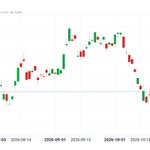
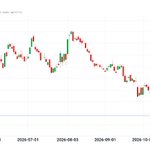
Last time one saw 3 consecutive up days was on 19 Sep. After 2 days up overnight it's trading lower. We continue to observe weak bounces. A strong USD is also not helping. It is not easy not to be bearish. However.

$SKHY +1.92% to $145.36.
Moves are tied to SK Hynix’s blockbuster quarter and reports of a ~$75B shareholder-return plan, lifting AI-memory names in Asia.
Chip strength also helped push U.S. indexes higher, reinforcing the bid.


$NBIS +11.21% to $170.46.
AI cloud/infrastructure names are catching a bid after reports of new capacity and renewed demand focus, with #Nebius mentioned alongside #CoreWeave and #Oracle.
After a gap-style move, watch for consolidation around $170.


QuantScraper retweeted

His Aubrey-Maturin series is outstanding. A complete delight.

hearing for the first time that novelist Patrick O'Brian (of _Master & Commander_ fame) invented much of his own biography,
didn't know how to sail & had no practical experience doing it, wasn't Anglo-Irish gentry but rather English working class, barely educated, concealed his early marriage...
Everything he learned about sailing & the 19th c was from obsessive research & reading books.
O'Brian comes out to be a far more puzzling, eccentric, twisted, anachronistic figure who lived in isolation on a small hobby farm in France, deeply secretive, insecure, brooding, exiled, aloof, yet TOTALLY COMMITTED TO THE BIT.
I like him even more now (am currently reading Master & Commander)

#Gold
May-be it's time for a bounce?


Brazil Stock Index
Bovespa crashing after re-election for the 4th mandate of Pres Lula.
Pretty close to a key horizontal level.

AI demand can keep booming while neoclouds have problems.
The risk is the combination of massive debt, rapid GPU depreciation, customer concentration and refinancing costs.
The winners won't necessarily be those with the most computing power, but those able to turn it into sustainable free cash flow.

ELON MUSK WARNS OF MASSIVE NEOCLOUD CONSOLIDATION
Elon Musk says debt markets have largely shut off financing for companies without substantial revenue outside AI data centers.
He warns that 200+ neocloud companies could face widespread failures and consolidation.
Meanwhile, Musk says SpaceX has secured $40 billion in debt financing.
Key related tickers: $CRWV, $NBIS, $IREN, $APLD, $CIFR.
The key takeaway: Financing constraints could accelerate consolidation across the AI infrastructure sector.
$NBIS -0.27% to $158.74.
Neocloud financing is tightening per the CEO, but management says it has enough to build out its gigawatt plan.
NBIS also lined up $3.5B secured debt from Citi as it shifts away from converts, adding funding clarity but raising leverage focus.


$BE -11.24% to $193.30.
Selloff continues after earnings coverage highlighted a key metric that “sank it,” with shares still ~44% below the June record.


$LMT +2.42% to $604.18.
Q3 coverage points to a rising backlog, with munitions and F-35 contracts and Missile & Fire Control strength supporting the move.
UBS also argued growth isn’t priced in, adding to the post-earnings beat tailwind.


"Where the noise fades and the signal speaks—your daily market pulse starts here"
Market Brief — October 23 (Generated by GPT 5.6):
Wall Street ended Friday lower as another surge in crude oil revived inflation concerns and prevented the market from stabilizing fully after Thursday's technology selloff. The S&P 500 fell 39.75 points, or 0.52%, to 7,623.68; the Dow Jones Industrial Average dropped 652.82 points, or 1.23%, to 52,215.16; and the Nasdaq Composite declined a comparatively modest 53.52 points, or 0.21%, to 25,955.34. The Russell 2000 lost 0.29% to 2,775.90. The Cboe VIX finished at 19.65, up 3.26% from Thursday's 19.03. For the week, the S&P 500 lost roughly 0.5% and the Nasdaq 0.7%, while the Dow gained 0.4% and the Russell 2000 advanced about 2%. The pattern was therefore more complicated than a continuation of Thursday's AI liquidation: technology stabilized somewhat, but higher energy prices spread the pressure into the broader market. AP News
Treasury yields rebounded from Thursday's extraordinary safe-haven rally, but the weekly move still left borrowing costs materially lower ahead of the Federal Reserve meeting. The 10-year Treasury yield rose about 3.5 bps on Friday to 4.987%, while the 2-year finished around 4.680%. For the week, however, the 10-year yield fell 11.0 bps and the 2-year declined 5.4 bps, marking a third consecutive weekly decline for the benchmark 10-year. Markets continued to assign roughly a 92% probability to no change at the October 27–28 FOMC meeting, with attention increasingly shifting toward whether persistent inflation could produce another rate increase later in the year. The important point is that Friday's higher yields represented only a partial reversal of Thursday's flight to safety, not a return to the tightening impulse seen earlier in October. The Wall Street Journal
The flash October PMIs portrayed an economy still expanding at an unusually strong rate while simultaneously generating renewed price pressure. The S&P Global U.S. Composite PMI eased from 58.4 to 57.6, and the Services PMI declined from 58.8 to 57.9, but both remained consistent with rapid expansion. The Manufacturing PMI actually edged higher to 56.0, its strongest reading in 53 months. New-order growth reached its fastest pace in more than four-and-a-half years, exports recorded their strongest increase since May 2022, and employment expanded at the second-fastest pace in more than four years. The uncomfortable part for the Fed was inflation: companies reported the sharpest increase in selling prices since August 2022. Strong activity therefore remains an equity fundamental positive, but it simultaneously reduces the case for easier monetary policy. pmi.spglobal.com
Consumer confidence remained deeply depressed, creating an increasingly striking gap between strong business activity and weak household perceptions of the economy. The University of Michigan's final October Consumer Sentiment Index was 48.0, essentially unchanged from September's 48.1 but 10.4% below its year-earlier level. Current Conditions fell sharply to 46.7 from 50.9, while Expectations improved to 48.8 from 46.3. Consumers cited purchasing power and affordability as central concerns, with buying conditions for durable goods plunging 18%. Inflation expectations also worsened: one-year expectations rose to 4.7% from 4.6%, and long-run expectations increased to 3.5% from 3.4%, both reaching their highest levels since May. The combination of strong PMIs and poor household confidence suggests that aggregate economic resilience is masking considerable pressure on consumers' perception of real purchasing power. Ricerche sui Consumatori
Oil became Friday's dominant cross-asset catalyst as renewed Middle Eastern supply fears pushed both benchmarks to their highest settlements in nearly six months. December Brent settled at $116.72 a barrel, up $3.55 or 3.14%, while December WTI surged $3.80, or 3.82%, to $103.27. Brent gained roughly 6% for the week. The advance followed renewed Houthi attacks in Saudi Arabia, including attacks affecting energy infrastructure, and reports of an oil spill near the United Arab Emirates. The equity beneficiaries were immediate: Exxon Mobil $XOM closed 2.79% higher at $183.21, while Chevron $CVX gained 2.88% to $233.21, with both reaching or exceeding recent 52-week highs. Energy therefore provided one of the market's clearest areas of strength, but the same oil move worsened the inflation and consumer-spending backdrop for the rest of the economy. GV Wire
American Express $AXP delivered record revenue and raised earnings guidance, but the shares closed 3.68% lower at $313.22 as investors looked beyond headline GAAP earnings and focused on a small revenue miss and a major efficiency program. Third-quarter revenue net of interest expense reached a record $20.062 billion, up 9% year over year, while net income increased 28% to $3.712 billion. GAAP EPS jumped 31% to $5.42, although adjusted EPS was $4.68, reflecting the exclusion of a one-time gain. Billed business increased 8% to $454 billion, and American Express $AXP raised its full-year adjusted EPS range to $17.60–$17.90. At the same time, management announced plans to eliminate roughly 5% of the workforce, or about 3,500 positions, in its first major layoff program in roughly a decade. The quarter showed that affluent-consumer spending remains resilient, but the negative stock reaction demonstrated that a headline earnings beat can lose some force when revenue expectations and underlying adjusted profitability set a higher hurdle. SEC
SLB $SLB surged 7.07% to $53.06 as stronger international activity, cash generation and an increasingly important AI-data-center business gave investors multiple sources of growth. Third-quarter revenue reached $9.45 billion, up 5% sequentially and 6% year over year. Adjusted EPS was $0.64, adjusted EBITDA reached $2.07 billion, operating cash flow totaled $1.51 billion, and free cash flow was $828 million. Middle East activity grew 13% sequentially as operations recovered, while North American revenue increased 7%. More unusually for an oil-services company, SLB $SLB's Data Center Solutions revenue reached $230 million, up 23% sequentially and 76% year over year, as demand for modular infrastructure and cooling systems accelerated. Friday's rally therefore reflected both the immediate benefit of stronger global energy investment and a growing second avenue of exposure to AI infrastructure. SLB
Robert Half $RHI exploded 21.74% higher to $45.87 as its staffing business produced the clearest evidence yet that a prolonged employment-demand downturn may finally be turning. Third-quarter revenue was $1.359 billion, approximately flat year over year, while net income increased to about $50 million, or $0.49 per share. More important than the consolidated growth rate, Talent Solutions returned to adjusted year-over-year revenue growth for the first time since 2022, increasing roughly 2%. Operating profitability also improved materially, giving the company significant potential operating leverage if professional hiring continues recovering. The stock's move to a new 52-week high reflected investors' willingness to look beyond the still-muted headline revenue number toward evidence that the underlying staffing cycle may have reached an inflection point. SEC
Cybersecurity became one of Friday's strongest industry groups as evidence of resilient enterprise-security budgets triggered a broad rebound after recent weakness. CrowdStrike $CRWD closed 8.25% higher at $257.57, Palo Alto Networks $PANW gained 7.22% to $380.55, and Fortinet $FTNT rose 4.05% to $179.99. The synchronized move followed improving channel commentary around spending on cloud, identity, data and AI security. The breadth is important because these companies occupy different parts of the cybersecurity stack: investors were not simply reversing the prior Palo Alto Networks $PANW vulnerability-driven selloff but reassessing the demand environment for the industry more broadly. In a market increasingly skeptical of discretionary technology expenditure, security continues to benefit from the fact that many enterprises treat protection of data and AI workloads as operationally necessary rather than optional. MarketWatch
SpaceX $SPCX reshaped the telecommunications trade after reports that it is seeking access to at least 80,000 U.S. cellular sites as it builds toward a nationwide hybrid satellite-and-terrestrial mobile network. SpaceX $SPCX closed roughly 1.9% higher, while potential infrastructure beneficiary Crown Castle $CCI surged 9.1% to $85.97 and American Tower $AMT gained about 4%. The opposite reaction hit incumbent carriers: AT&T $T plunged 7.7% to $20.99, T-Mobile US $TMUS fell 7.6% to $146.72, and Verizon Communications $VZ declined about 1.2%. Reports indicated that SpaceX $SPCX has held discussions with Crown Castle $CCI as it considers a network combining Starlink direct-to-cell satellites with terrestrial towers and recently acquired spectrum. No definitive network agreement has been announced, but Friday's stock reactions show that investors are already assigning meaningful strategic value to the possibility of a fourth nationwide wireless competitor. The Verge
CoreWeave $CRWV remained under pressure despite the broader stabilization in technology, closing 2.46% lower at $54.24 and bringing its October decline to roughly 37%. The stock had already fallen 10.1% Thursday, and Friday brought additional analyst scrutiny: Bernstein's price target was cut to $51 from $74, while other analysts have produced dramatically different estimates of the capital the company may need to finance its growth. The underlying problem remains the same one that has increasingly influenced the AI trade this month: CoreWeave $CRWV has substantial demand for its compute capacity, but debt markets are demanding unusually high yields and investors are questioning whether future cash generation will justify the financing requirements. Friday's inability to rebound alongside other technology groups showed that financing risk remains company-specific even when the broader AI narrative stabilizes. Investing.com Canada
Bloom Energy $BE fell another 11.1% to $193.54 as investors focused on weak cash conversion despite exceptional revenue growth and higher guidance. Results released after Thursday's close showed third-quarter revenue of $1.236 billion, up 138.1% year over year, with product revenue up 179.4%. Non-GAAP gross margin improved to 34.5%, adjusted EPS substantially exceeded expectations, and Bloom Energy $BE raised its full-year revenue outlook to $4.4–$4.6 billion. But the company produced more than $180 million of negative free cash flow, compared with expectations for positive free cash flow, as working-capital requirements expanded sharply. The reaction goes directly to the market's current concern with capital-intensive growth: extraordinary sales growth is not enough when the expansion consumes cash faster than investors expected. SEC
Deckers Outdoor $DECK closed 4.9% lower after cutting its full-year sales outlook, providing another warning that consumer discretionary demand is becoming more selective. Quarterly EPS of $2.31 exceeded expectations, but revenue of approximately $1.48 billion missed consensus. Management lowered expected full-year revenue to $5.70–$5.73 billion from $5.86–$5.91 billion, reduced Hoka's expected growth from low-double digits to high-single digits and cut Ugg's growth expectation from mid-single digits to low-single digits. Interestingly, Deckers Outdoor $DECK raised its EPS guidance to $7.80–$7.95, partly because of tariff refunds. The stock decline therefore reflected weaker demand expectations rather than a collapse in near-term profitability—a distinction consistent with the University of Michigan data showing growing consumer sensitivity to affordability. Investopedia
Infosys $INFY fell 6.58% to $12.35 as a reduction in full-year revenue guidance outweighed strong AI growth and stable margins. Fiscal second-quarter revenue was approximately $5.14 billion, slightly above expectations, while EPS of $0.20 was in line. Operating margin remained at 21%, large-deal total contract value reached $5.2 billion, and AI-related revenue grew 29% sequentially to 10.5% of total revenue. Nevertheless, Infosys $INFY narrowed its fiscal-2027 constant-currency revenue-growth outlook to just 1%–2% from 1.5%–3%, citing pricing pressure, competitive intensity and cautious client spending. Friday's reaction shows that rapid growth in AI-related work is not yet sufficient to offset weakness in the much larger traditional enterprise-IT spending base. Yahoo Finanza
Next week's calendar places monetary policy and mega-cap earnings back at the center of the market after a week dominated by oil, AI financing and corporate dispersion. Verizon Communications $VZ reports before the open on Monday, October 26, with Welltower $WELL, Cadence Design Systems $CDNS and Nucor $NUE among the important reports after the close. The Federal Reserve begins its two-day meeting on Tuesday, October 27 and releases its policy decision at 2:00 p.m. ET on Wednesday, October 28, followed by the Chair's press conference at 2:30 p.m. ET. The week will then bring another heavy earnings slate together with advance third-quarter GDP and inflation-related data. With the 10-year Treasury near 5%, oil above $100 and Friday's PMIs showing both strong growth and accelerating prices, the Fed's interpretation of that combination will matter at least as much as the policy decision itself. Stock Titan
The signal:
October 23 changed the immediate market narrative again: technology was no longer the sole source of weakness, because oil reintroduced a broader inflation problem. The Nasdaq lost only 0.21% after Thursday's 2.6% collapse, while the Dow fell more than 1.2%. At the same time, Exxon Mobil $XOM, Chevron $CVX and SLB $SLB rallied sharply. That divergence suggests the market was moving from a narrow debate over AI capital spending toward a more complicated question about how $100-plus crude affects inflation, consumer purchasing power, corporate costs and the Federal Reserve. AP News
🤖 Made with AI

#Gold is getting very close to staring into the abyss.
It is hard to believe that only a few months ago we were reading about a new world order increasingly anchored in gold, with forecasts of $10,000 an ounce.
If that thesis were not necessarily true, but even just reasonably plausible, gold would look like a remarkable bargain at these prices.
