

Modelling the universe 🌌
☁️Fata Morgana 🏰✨
Joined May 2020
- Tweets20.1K
- Following64
- Followers2.8K
- Likes32.6K








Elizabeth retweeted

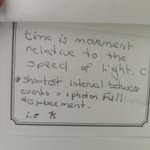
After gauging peoples initial reactions, some of which genuinely made me laugh. Ill explain further.
The word "observer" attempts to say "interaction", terribly. And it does so with implications attached that are genuinely out of place.
Uncertainty attempts to say that an isolated particle's state is unresolved. All thats required to resolve its state IS ANOTHER PARTICLE. Not you, not me, not a mind. A simple interaction. Things remain resolved out of the "fields" as long as there is ongoing interactions for which those things remain resolved.
Where there is "nothing" there is unresolved potential. An interaction within this space would have two particles "observe" each other, exchanging information.
And then what does "exchange information" mean? It means that the interaction alters the state of the other, and the starting state, and ending state gives you information about tje other. Thats it! Thats exchanging information. Its such a simple concept(s) that are so poorly communicated that the general public truly get the wrong idea about what physics is trying to say.
Im left wondering if some of it is intentionally that way to sound more mysterious.
Elizabeth retweeted

Tu aimeras ce que j’aime ...l’eau, les nuages, le silence et la nuit
-Charles Baudelaire
/Olli Kekäläinen

Elizabeth retweeted

“The most difficult thing a person can endure is to be punished for their honesty and heightened emotions, as if being authentic were a fault.”
— Fyodor Dostoevsky

Elizabeth retweeted

If your AI characters sound fake, the fix is almost always in how you write and DIRECT the dialogue in your prompt.
I recently started on the dialogue-heavy scenes for my AI feature film about Beethoven, and too many of the lines kept coming out wrong.
They’d sound too theatrical, too monotone, or too much like a practice read-through between actors.
(all this despite the fact that Seedance 2.5 is fantastic when it comes to realism.)
So through a whole lot of trial and error, I've found that these 5 things made the biggest impact on the quality of the dialogue delivery in my generations:
1. Paying close attention to the written punctuation used.
2. Breaking long lines into shorter ones, with intentional pauses.
3. Using bodily actions as punctuation (this one gave the biggest improvement BY FAR! In the attached clip, note the sniffles in between Beethoven's lines. That alone made the delivery feel much more natural.)
4. Using "anchor gestures" (he lifts his finger as if to say "one sec")
5. Just split your generations in two (stupid simple, but it really makes a difference.)
So if your characters keep sounding like they're reading from a teleprompter, give this a try!
Elizabeth retweeted

Beautiful passage from Jung.

ALT If you will contemplate your lack of fantasy, of inspiration and inner aliveness, which you feel as sheer stagnation and a barren wilderness, and impregnate it with the interest born of alarm at your inner death, then something can take shape in you, for your inner emptiness conceals just as great a fullness if only you will allow it to penetrate into you. If you prove receptive to this 'call of the wild', the longing for fulfillment will quicken the sterile wilderness of your soul as rain quickens the dry earth. — Carl G. Jung, Mysterium Coniunctionis, CW 14
Elizabeth retweeted

A Mediterranean Brigantine Drifting Onto a Rocky Coast in a Storm
Willem van de Velde the Younger, ca. 1700

Elizabeth retweeted

In his final years, Jung lived mostly in seclusion at his primitive stone tower in Bollingen, chopping his own firewood and living without electricity.
Following his public break with Sigmund Freud in 1913, Jung had spent years enduring near-total professional ostracism. His academic peers dismissed his explorations of the unconscious as dangerous eccentricity, leaving him socially and intellectually isolated while he recorded The Red Book.
Reflecting on that period of his life in Memories, Dreams, Reflections, he analyzed the real mechanics of isolation.

Elizabeth retweeted

Listening to Bach’s Air on the G String feels like letting your mind slowly settle, your worries gently fade, and everything fall into harmony with the music’s peaceful flow.


Elizabeth retweeted
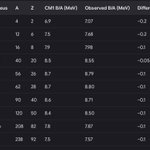
We need to stop with our obsession with predicting something new, and refocus our obsession on describing what we already know, better.


Elizabeth retweeted
If you'd like to find more of my work, you can find if here: zenodo.org/records/23445128


Elizabeth retweeted

[Hölderlin] says that the spirit can only express itself rhythmically. For music and poetry have a spiritual measure. They have a rhythm, in the primal sense of the word… That is why they are able to distinguish each other. That is why there is a connection.
— Ingeborg Bachmann
Elizabeth retweeted

Most people’s mental model of “geometry” is still Euclidean plane geometry: perfect circles, straight lines, regular polygons, and theorems that only hold for ideal figures.
That’s what they were taught, and it’s what the word still conjures for a lot of people. The idea that geometry might describe approximate, curved, noisy, or non-ideal things doesn’t register.
In reality the field has been broader than that for a long time:
Non-Euclidean geometries (hyperbolic, elliptic) have been standard since the 19th century.
Differential and Riemannian geometry deal with spaces that are curved in complicated ways (this is the language of general relativity).
Fractal geometry explicitly studies shapes that are irregular and self-similar at every scale.
Computational and discrete geometry work with meshes, approximations, and finite structures rather than pure ideals.
Even “perfect” shapes are usually mathematical abstractions; actual physical objects and measurements always have imperfections.
So the gap is real. People hear “geometric” and picture a clean architectural rendering or a compass-and-straightedge diagram, not the more general study of space, form, and measurement.


