

JFR (ISSN 1007-662X, IF 4.1, Q1) Journal of Forestry Research | Ranked 12/92 | Follow for studies on forest sustainability, ecology, & conservation! 🌳
Harbin, P.R. China
Joined September 2022
- Tweets1.8K
- Following5.2K
- Followers1.4K
- Likes3.1K


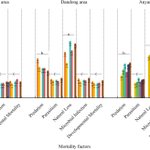
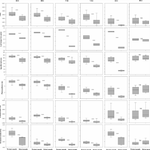


🌲 Carbon cycling in China’s boreal larch forests.
Five years of data reveal how light, leaf area, moisture and soil temperature shape carbon exchange.
👉 Explore the findings:
link.springer.com/article/10…
#JFR #ForestResearch #CarbonCycle #Forestry

Journal of Forestry Research retweeted

🍊A new paper on #CITY and #FOREST
Assessing the potential capacity of forests to remove airborne fine particulate matter: a case study in Beijing
💫link.springer.com/article/10…
#Forest #Environment #Dust #Particle

Journal of Forestry Research retweeted
A multimodal bidirectional spatiotemporal fusion framework for fire spread prediction and mutation identification
link.springer.com/article/10…
#Wildfire #Fire_behavior #Forest #Prediction

Journal of Forestry Research retweeted
🦖JFR new article online:
Natura non facit saltus: biological realism, interpolation, and extrapolation in machine-learning-based allometric models
link.springer.com/article/10…

Climate action means protecting species facing a changing climate. 🌿
This #ClimateActionDay, see how rising temperatures raise risks for endangered species.
📖 Read more: link.springer.com/article/10…
#JFR #ClimateAction #ForestConservation
🌿 Brilliant perspective from @ScienceMagazine Plant immune systems spot microbes and trigger defences, key for tree health and resilience.
🌲 Curious how trees fight back? Follow @RelayJFR and tell us what to explore next! 👇
#JFR #PlantScience #ForestHealth #PlantImmunity

Animals and plants use conceptually similar immune systems to detect microbes and activate defenses. In both lineages, pattern recognition receptors (PRRs) perceive pathogen- or microbe-associated molecular patterns (PAMPs or MAMPs) and host-derived damage-associated molecular patterns (DAMPs).
Whereas animals rely on specialized immune cells, plants harness individual cells expressing diverse PRRs. In the apoplast, which lies outside the plasma membrane and includes the cell wall, PRRs detect immunogenic fragments released from microbial proteins by plant hydrolytic enzymes. Conversely, pathogen-secreted enzymes can degrade constituents of the apoplast, generating DAMPs that activate immunity.
In three new Science papers, researchers report expansions of this surveillance, revealing receptor architectures and mechanisms that enable plants to discriminate immunogenic carbohydrates. The findings illustrate how ligand specificity and receptor assembly confine immune activation to the context of microbial challenge.
Learn more in a new #SciencePerspective: scim.ag/4ib9BRC

Journal of Forestry Research retweeted
👉The article from The University of Tokyo
Transcription factors in Cenococcum geophilum and their potential roles in ectomycorrhizal symbiosis with Populus tomentosa
🐾 link.springer.com/article/10…
@Forestecosyst @BESForests @FORESTEUROPE @ForestryRes

🌲 Conifers and broadleaf trees respond differently to soil and climate conditions.
A study from northern China reveals larch and birch show contrasting nutrient strategies, driven by temperature, soil phosphorus.
🔗 link.springer.com/article/10…
#JFR #Research #ForestEcology @BFU_IC

Journal of Forestry Research retweeted
🎍🍃JFR OA paper on #Forest_TherapyMental health benefits of forest visits and digital forest therapy: a narrative review
@PeterPetrk8

🎍🍃JFR OA paper on #Forest_Therapy
Mental health benefits of forest visits and digital forest therapy: a narrative review
😇link.springer.com/article/10…
#Anxiety #Cognition #Forest_bathing #Memory #Stress
#Well_being
@Forestecosyst @BESForests @FORESTEUROPE @ForestryRes
🎍🍃JFR OA paper on #Forest_Therapy
Mental health benefits of forest visits and digital forest therapy: a narrative review
😇link.springer.com/article/10…
#Anxiety #Cognition #Forest_bathing #Memory #Stress
#Well_being
@Forestecosyst @BESForests @FORESTEUROPE @ForestryRes
🐾 As forests shrink, some animals struggle more than others to adapt. Which group is most at risk? 🗳️
#JFR #ForestWildlife #Biodiversity #forestryresearch
0%🦍 Primates
50%🐦 Forest birds
50%🐅 Large predators
0%🦋 Pollinators & insects
2 votes • Final results Journal of Forestry Research retweeted
👏JFR OA article online:
Microtopography and skid-trail disturbance shape drought-related seedling mortality in Japanese cedar reforestation | Journal of Forestry Research
🌲link.springer.com/article/10…
@RelayJFR @FAOForestry @Forestry_UK

Journal of Forestry Research retweeted
#Forest_therapy #Urban_forest
Stress recovery responses across virtual reality landscapes: an experimental comparison informed by edge effect theory |
🍃link.springer.com/article/10…
@RelayJFR @UrbanForestryUK @Forestry_UK

Journal of Forestry Research retweeted

Article in press in Forest Ecosystems @Forestecosyst @BESForests @FORESTEUROPE @RelayJFR
📰Selective herbivory by white-tailed deer is associated with demographi… sciencedirect.com/science/ar…

Journal of Forestry Research retweeted
Article in press in Forest Ecosystems @Forestecosyst @RelayJFR @BESForests
📰Soil hydrothermal dynamics drive growth responses of Siberian larch fo… sciencedirect.com/science/ar…

🌿 Forests give us more than trees. They support food, livelihoods and resilient ecosystems.
This #WorldFoodDay, celebrate the connection between healthy forests and the food on our plates. 🔎 Explore forest research: link.springer.com/journal/11…
#JFR #Food #Nutrition #ForestEcology

Journal of Forestry Research retweeted
Scale-dependent community assembly facilitates effective tropical rainforest restoration | Journal of Forestry Research | Springer Nature Link link.springer.com/article/10…

Journal of Forestry Research retweeted
Peptide phytosulfokine-α improves the efficiency of somatic embryogenesis in hybrid sweetgum leaves | Journal of Forestry Research | Springer Nature Link link.springer.com/article/10…

Journal of Forestry Research retweeted
Detection of forest growing stock volume changes in a subtropical region with multitemporal UAV LiDAR data | Journal of Forestry Research | Springer Nature Link link.springer.com/article/10…

🌲 Thermal imagery could detect bark beetle-infested spruce before visible symptoms appear. UAV data showed differences seven weeks after attack; NDVI showed none.
📖 Read and share your thoughts: link.springer.com/article/10…
#JFR #ForestHealth #Forestry @CharlesUniPRG @CZUvPraze
