



Pinned Tweet
Since January 2025, ResearchHub has deployed over $1.5M in research funding to scientists worldwide.
We just redesigned our funding page to make it even easier for funders and researchers to connect.
Take a look ↓ researchhub.com/fund
Men with ADHD had 38% lower odds of an ER visit for a car crash in months they filled an ADHD prescription than in months they did not.
Women: 42% lower. Each patient compared against themselves (2.3M US adults).
xitter.cf/BrandonLuuMD/status/21…


Chang et al., Association Between Medication Use for ADHD and Risk of Motor Vehicle Crashes, JAMA Psychiatry 2017. Karolinska Institutet and Indiana University (within-individual design; any ADHD medication, stimulant or atomoxetine; US commercial claims 2005-2014, 11,224 crash visits).
jamanetwork.com/journals/jam…

12 funders put $5,000 into this proposal. Since July the researcher has posted four progress updates, and in one of them he told his funders several of the v1 headline results were processing artefacts. This week he opened up the atlas.
researchhub.com/proposal/194…

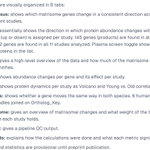
ALT ResearchHub proposal page for the ECM Aging Atlas, fully funded at $5,000 by 12 funders, showing the Updates tab and the latest update with a consensus table of matrisome genes.
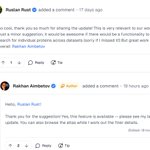
If you fund research, this is the bit to watch. Updates go on the proposal page you paid into. You can reply or tip. @rust_ruslan asked for per-protein search. Rakhan pointed him to the latest update, where the Gene tab does that. Most grants send a PDF a year later.

ALT Comment thread on the proposal: Ruslan Rust asks for a way to search individual proteins across datasets; the author replies that the feature is available and points to the latest update.
All of it is public. The proposal, the four updates, and the comment thread are here:
researchhub.com/proposal/194…

ResearchHub retweeted

Your brain makes one of the most powerful psychedelics on Earth.
Right now. As you read this.
It’s called DMT. And a new documentary is digging into why.
DMT Quest 2 hits IMAX Tue 11/17/26 in Austin, TX. @dmt_quest
This is the trailer. My thread will talk about the first film. 🧵
ResearchHub retweeted

The bottleneck in science is clearly headed towards validation.
We're experimenting with flipping the process: AI drafts V1 proposals, scientists refine them with peer review bounties, and the crowd funds the ones worth running.
Open, distributed wet-lab validation 💪

We used GPT Sol 6.1 to draft 10 preregistered proposals to test this hypothesis in the wet lab.
1. Funders: pool funds on the RFP
2. Scientists: upvote, comment, or review to strengthen the experimental design
3. Wet labs: comment if you want to run one
researchhub.com/rfp/33104/te…

ResearchHub retweeted

We used GPT Sol 6.1 to draft 10 preregistered proposals to test this hypothesis in the wet lab.
1. Funders: pool funds on the RFP
2. Scientists: upvote, comment, or review to strengthen the experimental design
3. Wet labs: comment if you want to run one
researchhub.com/rfp/33104/te…

GPT-Rosalind surfaced a new lead for drug discovery: could restoring cholesterol transport protect neurons from degeneration?
DCTN1 is a gene linked to Perry syndrome, a rare neurodegenerative disorder. In mouse-brain data, disrupting it increased expression of genes involved in making cholesterol. GPT-Rosalind suggested a possible explanation: cholesterol may not be reaching where neurons need it.
That gives scientists a specific mechanism to test and, if confirmed, a direction for developing new treatments for neurodegenerative disorders.
With @perturbai_tx and @scrippsresearch, a team of thousands of GPT-Rosalind agents worked in parallel, connecting gene-expression results from millions of mouse brain cells with scientific literature in just 32 minutes. We’re now expanding this collaboration to identify new drug targets.
openai.com/index/scaling-ai-…

125,091 radiology images from one cancer patient, 136 CT, MRI, PET and X-ray studies dated 2022 to 2026, are now public domain.
Genome, RNA and single-cell data sit alongside them in the same open bucket (n=1, osteosarcoma).
xitter.cf/sytses/status/21122434…

We’ve just made public 125,091 DICOM radiology images from across my cancer journey (link below). The data is both longitudinal and multi-modal, dated and linked to my treatment timeline, so you can compare imaging across initial diagnosis, standard of care, first remission, “founder mode cancer care”, and second remission. It’s viewable in OHIF, the standard open-source viewer used in radiology research.
Given the long history of applying deep learning to radiology, we’re hoping to see a variety of methods and models applied to my data. If you find something interesting, please reach out to [email protected], or if you know a researcher who should see this, tag them below.
Thanks to Terra LaFerriere for organizing these images, and Kamil Slowikowski for building osteosarc.com into the resource it is.

Sid Sijbrandij's osteosarcoma clinical imaging archive, 136 studies from 2022 to 2026, osteosarc.com (data release, CC0 per the site's data page; no analysis attached).
osteosarc.com/imaging/

Posa, Romano et al. (senior authors Gati, Trauner, Levitz), An opioid efficacy switch for reversible optical control of analgesia, Cell, 15 October 2026, Weill Cornell Medicine, University of Pennsylvania and USC (mice; abstract-level verification).
doi.org/10.1016/j.cell.2026.…
Men taking an extended-release minoxidil tablet twice daily gained 36.4 hairs per cm2 at six months, against 6.6 on placebo.
Once daily: 28.6 (randomized Phase 3, n=536; company topline, not peer reviewed).
xitter.cf/HLcure2020/status/2112…

Veradermics VDPHL01 gives early, consistent & robust hair growth in Phase 3 clinical trial topline 6-month results.
An average increase in non-vellus hair count of 28.6 hairs/cm² and 36.4 hairs/cm² in once-daily and twice-daily VDPHL01 treatment arms.
hairlosscure2020.com/verader…

Veradermics, Study 304 topline release, 19 October 2026: randomized, double-blind, placebo-controlled Phase 3 of VDPHL01 in 536 men with male pattern hair loss, NCT06972264 (company data, not peer reviewed; p values given only as p<0.0001).
ir.veradermics.com/news-rele…
In children's noses, antiviral gene activity fell with days since symptoms began (r=-0.64), not with illness severity.
Severity groups did not differ significantly at the same stage (preprint; 51 infected, 17 controls).
xitter.cf/atranscendedman/status…

Researchers studied 68 children and found SARS-CoV-2 variants trigger distinct immune responses in the nose.
Alpha and Delta produced stronger antiviral interferon responses, Omicron shifted toward inflammatory macrophage signaling and T-cell activity.
biorxiv.org/content/10.64898…

McEwen et al. (senior authors Mall, Lehmann, Trump), Evolution of SARS-CoV-2 reshapes upper airway immunity in children, bioRxiv, 16 October 2026, Berlin Institute of Health at Charite (preprint, not peer reviewed; ages 0 to 17, unvaccinated, mostly mild to moderate cases).
biorxiv.org/content/10.64898…
ResearchHub retweeted

> thousands of agents
> ~40,000 scientific papers read
> 32 minutes
> found new potential mechanisms worth investigating for Parkinson-like neurodegenerative diseases
work that would have taken human researchers months to a year, done in just 32 minutes
i genuinely don't think people understand what is coming for biotech
GPT-Rosalind surfaced a new lead for drug discovery: could restoring cholesterol transport protect neurons from degeneration?
DCTN1 is a gene linked to Perry syndrome, a rare neurodegenerative disorder. In mouse-brain data, disrupting it increased expression of genes involved in making cholesterol. GPT-Rosalind suggested a possible explanation: cholesterol may not be reaching where neurons need it.
That gives scientists a specific mechanism to test and, if confirmed, a direction for developing new treatments for neurodegenerative disorders.
With @perturbai_tx and @scrippsresearch, a team of thousands of GPT-Rosalind agents worked in parallel, connecting gene-expression results from millions of mouse brain cells with scientific literature in just 32 minutes. We’re now expanding this collaboration to identify new drug targets.
openai.com/index/scaling-ai-…