


Dhaval retweeted

Before AI transforms your company, it might destroy what already works.
When we introduce AI into a company where data is poorly organized, it begins to act like a virus, replicating and amplifying everything that is wrong and introducing even greater chaos.
xitter.gq/swarogan/status/209633…


Dhaval retweeted

Does anyone know why I don't get notifications for all the comments / mentions? I keep finding one's that I never got notified on.

Dhaval retweeted

PERFORMANCE IS A DESIGN DECISION ⚡
A product can gain features and lose users at the same time.
As systems grow, new dependencies, queries, and integrations can increase latency. Those milliseconds accumulate and quietly degrade the user experience.
Protecting performance is a design decision:
• Define latency budgets for critical user journeys
• Track p50 / p95 / p99 — averages can hide tail latency
• Test under realistic workloads before shipping
• Catch regressions early
• Weigh the performance cost of key architectural decisions
A feature isn't an improvement if its latency cost outweighs the value it delivers.
Performance isn't something you fix after scaling. It's something you protect while scaling.
Your product is growing, but p95 latency keeps rising.
You can prioritize only ONE action. Which do you choose?🚥
A) Profile critical user journeys
B) Cut synchronous dependencies
C) Optimize database queries on critical paths
D) Add performance regression gates in CI
What's your pick, and why? 🤔🧩
Dhaval retweeted
35k ⭐ on GitHub in a month for skills.
Here are the 10 fastest-growing Claude Skills repositories in October 2026.
Among the leaders:
Matt Pocock Skills: +35,301 ⭐
Ponytail: +32,647 ⭐
Security Audit Skill: +31,357 ⭐
Security audit, code analysis, interface design, technical diagrams.
Which Skills do you use?

Dhaval retweeted
If you're building games with AI, you need this!
I'm experimenting with creating my own MMORPG using AI, and one of the biggest problems is constantly checking whether the generated code actually works.
I just found Genex Desktop, an open-source project that solves this.
The agent doesn't stop at writing code. It can run the game, control a character, observe gameplay, detect bugs, and go back to fixing them.
All of this works with Godot, Unity, or Unreal Engine, with the option to use local AI models as well.
If you're making a game, show me what you're working on!

Dhaval retweeted

The reality of the financial bubble in AI might be starting to sink in with investors.
"...three major investors who plan to participate in the IPO say the valuation will likely need to come down, with one saying it could be closer to $1 trillion."

Dhaval retweeted

Bad news for Claude Code users: it can leak your email
#1 on Hacker News (225 points):
→ email sits in your session context
→ a subagent put it in a User-Agent
→ sent it to a third-party site
→ GitHub issue still open Nov 5
Catch: Anthropic tagged it security.
Keep research subagents on, or off?

Dhaval retweeted
Not long ago, the biggest problem was building the product.
Today, AI lets you build a working SaaS before you even have time to check if anyone wants to pay for it. But it hasn't lowered the cost of gaining customer trust.
I suspect that is exactly why we will see a flood of great products that nobody uses
Dhaval retweeted
This niche has just closed for you!
If you're a programmer who thought you could escape AI's takeover of coding by moving into cybersecurity, AI is already there.
OpenAI has just released GPT-6 Cyber, which discovered 81 previously unknown vulnerabilities in Firefox and developed working exploits for 948 vulnerabilities in the Linux kernel.
Dhaval retweeted
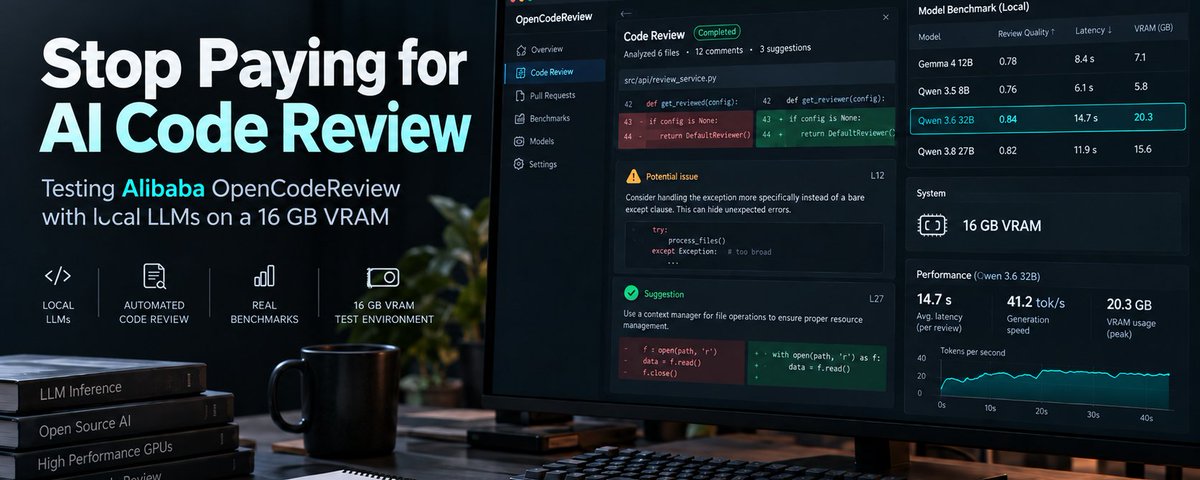
Local Qwen generates 234 tok/s in JSON format. In plain text, only 70
The same local AI model: 70 tok/s in prose and 234 tok/s when generating JSON.
More than 3 times faster. Without changing hardware.
In Qwen3.6-35B-A3B-Splash tests on Mac mini M6:
- EN Prose: 69.6 tok/s
- Python Code: 135.9 tok/s
- JSON Extraction: 234.1 tok/s
Why? Speculative decoding works better when subsequent tokens are easier to predict.
Repetitive JSON and code structures can provide much greater speedup than ordinary conversation.
xitter.gq/swarogan/status/210392…
Dhaval retweeted
Everyone keeps asking the same question: Why hasn’t Microsoft built the model that beats OpenAI, Anthropic, or Google?
I think that question misses Microsoft’s real game.
Imagine the AI race as a gold rush. Some companies are fighting to discover the biggest gold mine.
Microsoft is building the roads, selling the shovels, renting the machinery, owning the land around the mines, and now quietly digging a few mines of its own.
That’s the strategy.
Microsoft already owns the distribution layer:
- Windows
- Office
- Teams
- GitHub
- Azure
- Microsoft 365
Hundreds of millions of people and businesses already live inside that ecosystem. So Microsoft doesn’t necessarily need the world’s #1 model.
It needs the world’s best models, whoever builds them, running through infrastructure and products Microsoft already controls.
And that’s exactly what it’s doing.
- OpenAI models? Available.
- Other frontier models? Available.
- Microsoft’s own MAI models? Now coming too.
So the game is becoming:
model intelligence → Azure / Foundry → enterprise data → Copilot → users
The model becomes one layer. Microsoft owns almost everything around it.
That is why the numbers matter.
- Microsoft Cloud crossed $214B+ annual revenue.
- Azure grew 41%.
- Microsoft 365 Copilot passed 30M paid seats.
The company is already monetizing AI before it has to win the frontier-model leaderboard.
And this is the part I find most interesting:
- If OpenAI wins, Microsoft can benefit.
- If another model becomes better, Microsoft can offer that too.
- If Microsoft’s own models become competitive, margins and control improve even further.
That is a very different position from a company whose entire advantage depends on one model staying ahead.
Maybe Microsoft isn’t late to the AI race at all. Maybe it chose a different race.
The real question is:
Does Microsoft need to build the smartest AI model in the world… if it can own the place where the smartest models get used?
That might be the more important battle.
Follow @SiftByte for more on how the companies, products, and infrastructure shaping the next era actually work.
Dhaval retweeted
Unpopular SiftByte Opinion:
As More and more companies join the AI race and build models for their specific use case and training with their own data,
It seems that AI is becoming a commodity and is not counted as a wedge or edge for whoever is using it, as it is going to be available to everyone somehow.
Maybe people won't know they are using it, but the underlying tech is using AI and doing the work for you
Also, as China is in the race and their models are mostly open source and cheap, it's going to be seen how US labs compete with them, as more and more open-source things are coming in that might kill the competition and make AI a commodity.
Also, there will be an end at some point in time with this reset and subsidy stuff, as the investor will also get out or won't pour much money, and AI needs data centers and GPUs and much upfront investment to expand.
Maybe we are coming to the end of these 4 years of hola-hoopa AI things; I might be completely wrong, but let's see how things pan out in the future, maybe next year?
This is my personal and raw thinking, but we can see that now AI is hitting the ceiling of innovation, and that we saw from yesterday's latest release of the model from top labs.
Everything has come down to making it cheaper and more accessible, with fierce competition, and other small labs are experimenting with their own models for specific use cases and only integrating big models to save costs.
What do you think about it?
Dhaval retweeted

cat wu from claude code just joined openai
my 83.1B claude code tokens are now in a custody battle

Some news: I’m joining OpenAI to lead product management for Core Products!
I have a lot of respect for OpenAI for showing the world that scaling works, for bringing AI to over a billion people, and for believing great products are core to the mission.
I’m excited to work with @thsottiaux, an incredible PM team, and everyone across OpenAI. Together, we’ll build agents that have your back and your team’s, and keep you in control, so you get more time for the people and work you love.
Lots to learn, and lots to build. Please keep your feedback coming!
Dhaval retweeted
openai's agents found and patched 948 linux kernel exploits in one run
$1.2M in API costs. about $1,266 a bug
bug bounty hunters just got undercut by an API

Our security researchers built an autonomous cyber vulnerability discovery, exploitation, and patching pipeline.
In a single run with an upcoming cyber model, it validated and generated patches for 948 local privilege escalation vulnerabilities in the Linux kernel at a total API cost of $1.2 million.

Dhaval retweeted
So, probably my theory is coming to the right conclusion: we did not get anything.
That comes down to 2 things:
1. We see all on the X is fake, it just a hypt and all fake things.
2. All is true, and it seems real security concerns are going on
If none of these things are there, then it's just that they don't want to release anything and maintain the hype.

GPT-6.2 Astra is a hanging carrot for Anthropic!
We all know that Anthropic is ready with Fable 5.5, but they just don't want to release it.
Anthropic is waiting for OpenAI to release its best model, and then Anthropic will drop Fable 5.5, so they can continue to dominate.
But OpenAI is also playing smartly here and not dropping the GPT-6.5 Bel, their internal advanced model.
So here we are: GPT-6.2 Astra is the trap they have set for Anthropic to release Fable 5.5, and once they do, OpenAI will release their real beast model.
So, here Anthropic has already launched all their models, and Fable is the one remaining; and to counter Astra 6.2, they release Fable 5.5. You will soon see GPT-6.5 mogging Fable 5.5.
This is my theory, and if OpenAI is successful enough to do it, then I am sure they will end the year on a high, and we will see the best comeback story no one thought about.
Dhaval retweeted
Want to run local LLMs? You're a criminal!
Apparently, buying your own AI hardware is becoming suspicious enough to get your orders canceled and your account banned.
Canadian entrepreneur and programmer Nick Saraev tried to buy 7 NVIDIA DGX Spark computers. Amazon canceled all his orders and then closed his account.
And he's not the only one.
Tim Sweeney, CEO of Epic Games, reported that after attempting to purchase two NVIDIA GPUs, Amazon began canceling even his regular orders just before delivery.
Another seller even required a customer purchasing a workstation with an RTX 5090 to present an ID and sign a declaration explaining what the hardware would be used for.
Amazon did not explain why it closed Saraev's account.
Are corporations afraid of local AI models?
xitter.gq/nicksaraev/status/2116…

