

For Norse Mythology, Runes, Pagan, Viking, Celtic, Anglo-Saxon; Try Valhalla+ on @Google Play Store
Scotland
Joined October 2021
- Tweets1.4K
- Following18
- Followers1.6K
- Likes11K





In Heimskringla, Hákonar saga góða, chapter XVI, the saga describes blót feasts where livestock blood (hlaut) was sprinkled over altars, walls, and attendees with hlaut-staves. Meat was boiled in kettles over a fire in the temple’s middle, and goblets were passed across the fire.

According to Vǫluspá, perjurers and murderers wade through streams at Nástrǫnd, a hall where venom drips and serpents coil around the walls.
The poem reflects the moral weight of oath-breaking, while Norse law relied on assemblies, courts, compensation and community enforcement.

Long before modern parliaments, Norse communities met at outdoor Þing (Thing) assemblies to settle disputes, discuss politics and make laws. Vápnatak—raising or clashing weapons—could signal assent. Participation and influence varied by place and period.


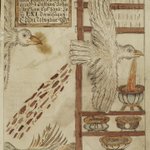
Snorri’s Edda explains bad poets through Odin’s backside.
After seducing a giantess to steal the Mead of Poetry, Odin escaped as an eagle. With Suttungr on his tail, some mead leaked from Odin's rear. That spill became the rhymester’s share, mead associated with bad poets.

Likely around mid-to-late October, Norse communities marked Vetrnætr (Winter Nights), the start of winter. The year was commonly divided into summer and winter. Saga accounts describe communal feasts and sacrifices for a good year; exact dates and customs varied by region.

Frigg, Odin’s queen, was linked to prophecy and marriage. Her name also gave Friday its Old English form, Frīġedæġ (“Frigg’s day”), a translation of Roman dies Veneris (“day of Venus”). Though distinct in surviving Norse sources, Frigg and Freyja may share an older origin.

Ever wonder why Wednesday exists? It's Woden's day. When Germanic speakers adapted the Roman 7-day week, they rendered dies Mercurii (Mercury's day) as Wōden's day. Reason for the pairing isn't certain; one proposed link is that both gods were associated with guiding the dead.

In Norse poetry, ravens and wolves were linked by more than their associations with Odin: both appear as scavengers feasting on the slain. Ravens have also been observed calling wolves to carcasses for them to open up. That real-world behavior may help explain the poetic pairing.
Viking Age skaldic poetry often used poetic names instead of simply saying "sword". These metaphors, called kennings, could describe a chaotic battle as a "storm of spears" or a warrior as a "feeder of wolves". Swords, too, might be called a "blood-worm" or "wound-serpent".

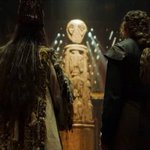
In 11th-century Sweden, Gamla Uppsala served as a major center for pagan worship. Medieval chronicler Adam of Bremen described a golden temple surrounded by a sacred grove, where animal sacrifices were hung from trees during grand multi-day festivals held every nine years.

ALT Images used for illustrative purposes. These are Adam’s claims, not settled facts: he relied on informants rather than witnessing the Uppsala rites himself, and scholars question parts of his account—including the golden temple and the precise sacrificial details.
What was a Norse blót? A blót was an animal sacrifice, often followed by a feast. In a medieval saga account, sacrificial blood is sprinkled on a temple’s walls and on those present, and the meat is shared. Blót could seek the gods’ favor for a good season, among other aims.


For 19 years, Grettir the Strong survived as an outlaw, spending his final years on the island of Drangey. Laid low by a severe leg infection from a cursed axe wound, he was ambushed after raiders reached the island using an un-retracted ladder...


In late September 1066, the Battle of Stamford Bridge caught the invading Norwegians unprepared. After securing York's surrender, King Harald Hardrada waited at the bridge to collect hostages—with many of his men caught without their armor, which was left behind at their ships.

English chronicle tradition tells of a lone Norwegian warrior who held the narrow wooden bridge to buy time for his army to form up. According to later legend, he held off the English forces until a soldier floated beneath the bridge and speared him through the planks.


Long before his later encounter with Eirik Bloodaxe and Gunnhildr in York, Egill was offered poisoned drink at a feast at Atloy. Recognizing the danger, he carved runes on the drinking horn and stained them with his blood; the horn burst before he drank, sparing him the poison.

When the famous Viking warrior-poet Egill Skallagrímsson was shipwrecked off Northumbria, he fell straight into the hands of his bitter enemy, King Eric Bloodaxe. Threatened with death, Egill composed a poem praising Eric overnight, recited it the next morning, and was spared.

Skaði was the Old Norse giantess-goddess associated with winter, mountains, and bowhunting. After the gods killed her father Þjazi, she marched into Ásgarðr in full armor to demand compensation—a rare moment in the sagas of a giantess holding the gods directly accountable.

To make amends, the gods offered her a husband—chosen strictly by looking at their bare feet. Skaði picked Njǫrðr, god of the sea, thinking his pristine feet belonged to the beautiful Baldr. But their marriage soon collapsed because neither could stand the other's home realm.

