VALHALLA | Norse Gods & Runes (@ValhallaPlus) header
VALHALLA | Norse Gods & Runes (@ValhallaPlus) profile picture

For Norse Mythology, Runes, Pagan, Viking, Celtic, Anglo-Saxon; Try Valhalla+ on @Google Play Store

Scotland
Joined October 2021
Photo by VALHALLA | Norse Gods & Runes (@ValhallaPlus)Photo by VALHALLA | Norse Gods & Runes (@ValhallaPlus)Photo by VALHALLA | Norse Gods & Runes (@ValhallaPlus)Photo by VALHALLA | Norse Gods & Runes (@ValhallaPlus)Photo by VALHALLA | Norse Gods & Runes (@ValhallaPlus)Photo by VALHALLA | Norse Gods & Runes (@ValhallaPlus)Photo by VALHALLA | Norse Gods & Runes (@ValhallaPlus)Photo by VALHALLA | Norse Gods & Runes (@ValhallaPlus)Photo by VALHALLA | Norse Gods & Runes (@ValhallaPlus)Photo by VALHALLA | Norse Gods & Runes (@ValhallaPlus)
VALHALLA | Norse Gods & Runes retweeted
First trailer for ‘BLOODAXE’, a new Viking warriors series from the creator of ‘VIKINGS’ Releasing January 20 on Prime Video.
391
2,695
618
25,795
1,590,470
VALHALLA | Norse Gods & Runes retweeted
The famous Sutton Hoo Helmet at the British Museum #BritishMuseum
6
1
69
3,132
VALHALLA | Norse Gods & Runes retweeted
The Late Anglo-Saxon Strickland Brooch, AD 800s. A fabulous example of creativity and craftsmanship! This large silver disc brooch is inlaid with gold and niello, and decorated in ‘Trewhiddle-style’ with an intricate pattern of puppy-like animals. 📷 British Museum britishmuseum.org/collection… #Archaeology
8
116
7
462
9,034
VALHALLA | Norse Gods & Runes retweeted
Archaeologists working at Loch Bhorgastail on the Isle of Lewis in Scotland have uncovered an ancient man-made island, known as a crannog, that is far older than expected. Rather than dating to the Iron Age, as previously believed for structures like this, the site appears to be over 5,000 years old and belongs to the Neolithic period. It was built gradually over time using layers of timber, brushwood, and stone, showing clear evidence of long-term communal effort. Finds such as a stone causeway and a large collection of pottery fragments, some containing traces of ancient food, suggest the site was a focal point for gatherings. People may have met there for shared meals, ceremonies, or other social activities, which challenges earlier ideas about how organised prehistoric communities in Britain were. The discovery was made possible through modern underwater archaeology techniques. The shallow edges of lochs are difficult to study because they are too deep for land-based surveys but too shallow for traditional sonar methods. By combining underwater photography from divers with aerial drone imaging, researchers were able to create detailed 3D models that connect what lies beneath the water with the surrounding landscape. This approach is now revealing a much richer prehistoric landscape than previously known and could lead to the discovery of many more hidden Neolithic sites across Scotland.
43
428
15
1,867
82,709
VALHALLA | Norse Gods & Runes retweeted
The Picts did not fall... That is the strange thing at the centre of their story. They were not conquered by Rome, though Rome tried. They were not destroyed by the Angles or the Vikings, though both pressed hard against the edges of their world. They did not end in fire or massacre or the kind of catastrophic military defeat that closes other chapters of early medieval history. They simply stopped being Picts. By the middle of the 9th century, the people who had controlled much of northern Britain for five hundred years had merged with the Gaelic kingdom of Dalriada to form the kingdom of Alba, the political foundation of what would eventually become Scotland. The merger was not sudden. It was not clean. Historians argue about whether it was primarily political, cultural, or dynastic, whether the Picts absorbed the Gaels or the Gaels absorbed the Picts or whether something genuinely new emerged from the collision of the two. What is harder to argue is the outcome. Within a few generations, the Picts had become invisible. Their language disappeared, leaving almost no written record. The few Pictish words that survive come mostly from place names and the names of kings preserved in later lists, scraps of sound without enough context to reconstruct what surrounded them. No Pictish manuscript tradition survives. No law codes. No literature. No religious texts in their own tongue. A people who had maintained their independence against the most powerful empire the ancient world produced left behind less written evidence of themselves than almost any comparable culture in early medieval Europe. What they left instead were the stones. Hundreds of them, scattered across the Highlands and islands of Scotland, carved with a visual language that nobody has fully decoded. The symbols appear again and again across different stones and different centuries with a consistency that speaks of meaning, of a shared system understood by the people who made them, but the key to that system did not survive the merger that ended the Pictish world. Spirals and crescents. Stylised animals of extraordinary elegance. Geometric designs of a precision that required both skill and intention. The stones are clearly saying something. We do not know what. This is what makes the Picts so compelling and so frustrating in equal measure. They were not a marginal people. From roughly the 3rd to the 9th centuries they controlled most of northern Britain, built fortified settlements, engaged in complex diplomacy with their neighbours, and maintained a cultural identity distinct enough that everyone around them recognised it. Roman writers noted them. Later Gaelic and Northumbrian sources noted them. Medieval chroniclers recorded their kings in lists that suggest an organised and continuous political structure. They were present, powerful, and noticed. And then the noticing stopped. The kingdom of Alba that emerged in the 9th century was in many ways a Pictish kingdom wearing Gaelic clothes, or a Gaelic kingdom built on Pictish foundations, depending on which thread you pull. The kings of Alba traced their legitimacy through lines that included Pictish royal blood. The territory was overwhelmingly what had been Pictish land. But the name was gone, and with the name went the identity, at least as a distinct category that the people themselves maintained or that outside observers continued to apply. What drove the transformation is still debated. A dynastic union under Cináed mac Ailpín, known to later tradition as Kenneth MacAlpin, is the conventional starting point, but the conventional starting point has been questioned and complicated by subsequent scholarship. The reality was probably messier and slower than a single king and a single moment of unification. These things usually are. #archaeohistories
47
274
13
1,406
53,527
VALHALLA | Norse Gods & Runes retweeted
In Icelandic folklore, the Yule Cat, Jólakötturinn, is a giant cat on the prowl at Yuletide. It looks for people who are insufficiently dressed in new attire for the Yuletide festivities and eats them whole! #caturday art @Iren_Horrors
3
169
12
760
377,801
VALHALLA | Norse Gods & Runes retweeted
Before the Viking Age came the Germanic tribes. From 50 B.C. to 300 A.D. they filled much of Northern Europe - ancestors and relatives of the later Norse. Long before the first Viking ships sailed, Frisians, Saxons, and Vandals were already clashing with Rome and shaping the lands the Vikings would one day inherit.
8
75
6
574
16,271
VALHALLA | Norse Gods & Runes retweeted
#BookologyThursday 📚🕯️#Death #Baldr In Norse mythology, Baldr was slain by his blind brother Höðr, tricked by Loki into hurling a mistletoe dart which was Baldr's sole vulnerability. Asgard's grief echoes as Hel claims him, yet #rebirth awaits post-Ragnarök. 🌱💖 📙Source: Prose Edda, Snorri Sturluson (trans. Jesse Byock, 2005, Penguin Classics) #BookChatweekly 📖🫖 #rebirth 🌱💖 #NorseMythology 🌱🌳 🎨'The Death of Baldr,' illustration is from the Icelandic manuscript NKS 1867 4to, was created by Jakob Sigurðsson in 1760.
17
1
43
1,442
VALHALLA | Norse Gods & Runes retweeted
Modern reconstruction of a "Knarr". This ocean-going merchant ship features a broad, rounded hull and high freeboard for optimal stability - perfectly built for carrying up to 30 tons of supplies, livestock, and goods on Viking trade and colonization journeys, powered primarily by its large square sail and guided with a single steering oar
7
37
281
4,666
VALHALLA | Norse Gods & Runes retweeted
Final voyage for Viking ships. Three 1,200-year-old Viking ships that have stood the test of time are embarking on their final and possibly riskiest journey to their new forever home in Norway u.afp.com/Sdta
15
1
28
15,538
VALHALLA | Norse Gods & Runes retweeted
Despite spending a lot of time in mud or blood, Vikings had good hygiene. Excavations of Viking sites have shown tools such as tweezers, razors, ear cleaners, combs, etc. They also bathed at least once a week, more than most at the time who often only bathed a few times a year.
11
4
43
1,447
VALHALLA | Norse Gods & Runes retweeted
Nástrǫnd (Dead Body Shore), is a place of punishment in Hel and the afterlife for those who have committed heinous crimes, such as murder and oath breaking. Níðhǫggr also lives here, and is said to be among the serpents that feed on the corpses. 🖼 "Hel" by Massimo Porcella.
7
5
16
628
VALHALLA | Norse Gods & Runes retweeted
The Galloway Hoard was discovered by detectorist Derek McLennan at Balmaghie, Kirkcudbrightshire, #OTD in 2014. Deposited around AD 900, it is both Scotland’s earliest Viking-Age hoard and the richest ever found in Britain and Ireland. 📸National Museums Scotland
4
78
4
375
8,969
VALHALLA | Norse Gods & Runes retweeted
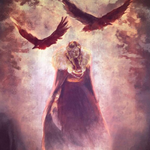
Huginn ("thought"), Muninn ("memory"), are two ravens belonging to the highest god, Óðinn. These ravens provide Óðinn with information from all across the world, because of this he is also given the name, Hrafnaguð (Old Norse for "Raven-God" - "Hrafn-Guð") 🖼 By InnerSpirit.
34
4
79
7,091
VALHALLA | Norse Gods & Runes retweeted
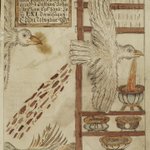
Yggdrasill (ᛁᚴᛏᚱᛅᛋᛁᛚ. Old Norse potentially meaning "Óðinn's Steed"), is the name of the world tree. Yggdrasill is a massive and sacred tree that is said to connect the nine worlds in Norse cosmology. Yggdrasill: The Mundane Tree (1859). By Finnur Magnússon (1781 - 1847)
15
3
57
2,111
VALHALLA | Norse Gods & Runes retweeted
Stephen Pollington, author of "WODEN: A HISTORICAL COMPANION," recently published two excellent new books: "RUNES: A GUIDE TO THEIR HISTORY AND USAGE" and "MEAD HALL: A GUIDE TO FEASTING IN EARLY MEDIEVAL ENGLAND." Check them out!
3
34
159
5,453
VALHALLA | Norse Gods & Runes retweeted
Iceland 🇮🇸
7
223
3
2,026
62,892
VALHALLA | Norse Gods & Runes retweeted
Blessed Þórsdagr, a day named after the god Þórr, one of the strongest members of the Æsir and keeper of Mjǫllnir. Þórr once found himself fighting old age, but despite inevitably losing the fight, he had to be brought to his knees before giving up. 🖼 By Pascal Quidault.
14
5
50
1,108
VALHALLA | Norse Gods & Runes retweeted
Blessed Óðinsdagr Twitter/X. Óðinn, the highest god, is often depicted as one-eyed, and seeking knowledge. His wisdom was mostly gained through self-sacrifice and determination, while his ravens Huginn and Muninn provide him with news from all the realms. 🖼 By Fernando Issamo
19
1
56
1,213
VALHALLA | Norse Gods & Runes retweeted
Hail to Vár (or Vór), a Norse goddess associated with overseeing oaths, vows, and other private agreements made between couples. She is good to invoke as a show of trustworthiness, but she may punish the oath-breakers who don't keep their word. 🖼 "Her oath" by Corey McGill.
12
6
47
2,308