

Public Power for the Nation's Capital IG: @wepowerdc Email: [email protected] #DCStatehood
Piscataway land/Washington, DC
Joined April 2020
- Tweets1.3K
- Following547
- Followers977
- Likes1K



We Power DC retweeted

This bill is probably going to pass: but not without a fight from the utilities.
A new group dubbed the "Affordable Reliable Energy Alliance" has started lobbying against it (and sending out texts like this). They're backed by Washington Gas + prominent developers/landlord orgs


We Power DC retweeted
The bill makes huge changes to the Public Service Commission, the regulatory body that came under fire in the election for its overly lax approach, among other reforms.
How much can it make a difference in the face of rising data center power demand?
51st.news/dc-utility-bill-re…

We Power DC retweeted

Utility companies are SO mad that they might not be able to buy elections anymore ☹️

NEW: voters in michigan last week overwhelmingly voted to ban utilities and government contractors from making political donations
now, the state's two powerful utilities are suing, alleging the new rules violate their 1st amendment rights
wired.com/story/michigan-vot…

We Power DC retweeted
Exclusive: Democrats' "Project 2029" targets utility monopolies axios.com/2026/11/12/democra…

We Power DC retweeted

Yesterday, the Council unanimously passed my GRID Act on its first vote, helping fight skyrocketing utility bills.
How?
It checks Pepco and Washington Gas on how much they can profit off infrastructure work and cuts the red tape to install solar faster and cheaper. 🧵

To try and lower D.C.'s high utility bills, city lawmakers want to limit how much guaranteed profit companies like Pepco and Washington Gas can make. My story in @washingtonsun on the debate over what's called the return on equity: washingtonsun.com/metro/dc/c…

We Power DC retweeted

To try and lower D.C.'s high utility bills, city lawmakers want to limit how much guaranteed profit companies like Pepco and Washington Gas can make. My story in @washingtonsun on the debate over what's called the return on equity: washingtonsun.com/metro/dc/c…
We Power DC retweeted

“Michigan really is ground zero right now for a utility accountability wave that is quite national.”
NEW: voters in michigan last week overwhelmingly voted to ban utilities and government contractors from making political donations
now, the state's two powerful utilities are suing, alleging the new rules violate their 1st amendment rights
wired.com/story/michigan-vot…
We Power DC retweeted
A bill full of utility reforms aimed at curbing costs/strengthening oversight is set for a first Council vote today.
Expect healthy debate over a provision to limit profits regulated utilities can earn. I hear Wendell Felder wants a study of the issue...a common delay tactic


We Power DC retweeted

Another bill before @councilofdc deals w utility costs called the GRID Act (I am rare gov person who is anti-acronym). Looks like my pal @Zeke_Cohen & Balto City Council are also examining Return on Equity of @Exelon subsidiary @MyBGE. ROE, as it is known, is sticky point of GRID

Proud to join my colleagues, residents and business owners in support of a resolution urging the Public Service Commission to reject BGE’s proposed $156 million rate hike and lower their return on equity from 9.5% to 7.3%.
BGE made more than $1 billion in profits over two years. Now it wants even more money out of the pockets of our families. There is something deeply wrong when a utility can make that kind of profit while the people who pay their bills are falling further into poverty.
This is a David Vs Goliath fight but we will not back down. They represent the money. We represent the many. Don’t bet against Baltimore.


We Power DC retweeted

Inside the ‘pressure cooker’: Electric utility regulators gather in wake of electoral earthquake
Newly elected leaders and customers are “questioning our foundational regulatory approaches,” said Ann Rendahl, president of NARUC.
utilitydive.com/news/grid-in…

We Power DC retweeted
It’s official: @JamalHoltz is now the interim At-Large member of the D.C. Council. He’s the council’s youngest member, and “first Gen Z member.”
“I do not take lightly the responsibility that comes,” he says.
The special election is April 6.

We Power DC retweeted

But infrastructure changes don’t account for the broken utility system. We must ensure that utility companies are held accountable. Pennsylvanians deserve safe and reliable service at a fair price. That means examining utility rate structures and preventing predatory practices.
We Power DC retweeted

We have seen the villain. Now is the opportunity to break its monopoly grip on power

We Power DC retweeted

Why should Congressional Democrats investigate corporate America if their mandate is to deliver real economic change? Because investigations are a key catalyst for securing reform and legislation. For much of the last century, Congress used to be the main institutional player working to secure an economy that serves working people. A key tool was oversight. Lawmakers routinely investigated complex markets and major corporations, identifying problems and exposing wrongdoing. A major goal of these investigations was to learn what was driving certain problems and figure out how to fix them.
After Democrats took back the House during the first Trump administration in 2019, I joined the House Judiciary Committee as a staffer on the Antitrust Subcommittee. Under the terrific leadership of @RepJerryNadler and then-Rep @davidcicilline, we pursued an 18-month investigation into Amazon, Apple, Facebook, and Google, securing key evidence of how their business practices were undermining competition and harming people, setting the basis for both lawsuits and proposed legislation.
A few lessons from that experience:
1. The quality of legislative oversight depends on the staff and the support of top members to confront power. Committee and Subcommittee Chairs that are focused on getting answers and unafraid to take on powerful corporate interests will make the difference between oversight that doesn’t surrender to their evasion tactics and oversight that aims low or flames out.
Even a relatively small number of dogged, talented lawyers ready to dive in can make a big impact. In the 1930s a single congressional lawyer, Ferdinand Pecora, helped reshape our entire banking system by subpoenaing records and interrogating top financiers, including J.P Morgan. The investigation exposed self-dealing, market manipulation, and tax avoidance, and laid the groundwork for foundational New Deal legislation, including the Glass-Steagall Act and the Securities Exchange Act.
2. Eliminating bottlenecks to moving investigations forward is key. For example, the House should make sure that Subcommittee Chairs can issue subpoenas rather than needing the sign-off of the full Committee or its Chair. A credible threat of sending subpoenas is critical for credible oversight.
3. Ensuring that members can develop the muscle to effectively interrogate CEOs requires investing in real preparation. In the lead up to the hearing with Bezos, Pichai, Cook, and Zuckerberg, the Antitrust Subcommittee spent months reviewing millions of documents collected from the firms, interviewing affected parties, briefing members on key evidence, and conducting practice hearings. Members came into the hearing deeply informed and able to rebut and call out CEO dissembling. The result was some of the most effective member questioning of executives we’ve seen in decades. @TheProspect wrote up a great overview: prospect.org/2020/07/30/triu…
4. For decades, institutional capacity in Congress has been extremely weak. Much of this traces back to the Gingrich Revolution, which was effectively the 1995 DOGE-ing of Congress. Republican leadership fired over 600 professional staffers, eliminated the Office of Technology Assessment, and gutted research capacity. None of that capacity was ever meaningfully restored.
As a result, members have way fewer resources to develop serious expertise or go deep on a new topic. Members should start rebuilding that capacity so the institution can fully play its Article I role, where Congress can again do serious policy development and legislating and serve as a real check on the executive and judicial branches.
5. AI markets should be high on the list of investigations. The business decisions of the major AI firms have huge public ramifications, yet the public is at a severe informational disadvantage when it comes to how these markets work and the choices these firms are making. A congressional investigation will help ensure future legislative action is based on a more complete view of what is going on rather than selective and partial corporate disclosures.

We Power DC retweeted
New post: I think folks are failing to grasp what a watershed election this was for the politics of monopoly utility companies.
Governors are the most important people to utility regulation in most states. The new ones ran on aggressive utility accountability platforms. 1/9

We Power DC retweeted
HUGE: Michigan officially banned companies with more than $250,000 in state government contracts, and the state's utility monopolies, from contributing to campaigns last night.
We Power DC retweeted
This initiative has passed: called by the AP. The fight will move to the courts but it is an unequivocal, bipartisan repudiation by voters of Michigan's two investor-owned utilities as toxic entities.


We Power DC retweeted
From scorching job sites to flooded factories to overcrowded hospitals, workers are some of the first to face the repercussions of climate change.
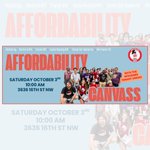
Join WPDC and Metro DC DSA for a conversation with local union reps & climate experts about what's at stake for local workers.

We Power DC retweeted

Duke Energy has been overcharging Indiana ratepayers for 565 days and counting.
On 4/16/2025, the IURC denied Duke's challenge of the final order in its rate case. Duke ignored the order and continues to charge ratepayers rates that are tens of millions higher than were approved


We Power DC retweeted
@robinsonmeyer made this joke verbally during our podcast so here it is in meme form.
