

Ph.D. Scholar History | UGC NET (2025) | M.A. History | 🤍 @chndrprkshbrg
India
Joined January 2022
- Tweets2.3K
- Following1.8K
- Followers2.1K
- Likes10.4K





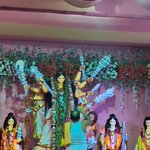


Faith at the heart of the bazaar. Established in 1951 and maintained by the local traders association, divine Shree Shree Dayamoyee Kali Mandir of Jadavpur Station Road, West Bengal. 🙏🏻


“For many women, Partition did not begin with a map or an official announcement. It began when ordinary life started to fall apart.”
Pleased to share my latest publication: “The Gendered Environmental Rupture: Refugee Women and the Struggle for Survival in Post-Partition Bengal” in Gender and Environment: An Untold History.
The chapter looks closely at the ecology of survival from the invisible labour of managing scarcity in squatter colonies to the frames of Meghe Dhaka Tara and Subarnarekha.


Rima Sarkar retweeted

She's Attia Hosain, born into the refined culture of #Lucknow and later a powerful literary voice in #Britain after #Partition. Her Sunlight on a Broken Column remains one of the sensitive portrayals of a world in transition.
The #saree she drapes, afinely woven Banarasi.


Rima Sarkar retweeted
good morning india 🇮🇳

Congratulations to our scientists and engineers at ISRO on the successful launch of GSLV-F18 carrying NVS-03.
This mission marks an important step in strengthening NavIC, our indigenous satellite navigation system. Equipped with enhanced capabilities, NVS-03 will further our pursuit of self-reliance in critical technologies and support navigation services that benefit our people.
The dedication and ingenuity of our space scientists continue to make our nation proud.
@isro
Rima Sarkar retweeted

Hi @letsblinkit , please check your DRAS ice cubes. Melt it. It has lot of visible impurities and whitish dirt. Thanks. @albinder

Rima Sarkar retweeted

In the Sanatana tradition, some of the most formidable manifestations of feminine power were elevated to the highest objects of worship. Because intelligence, brilliance and extraordinary capability should not have to be sacrificed merely to satisfy society's expectations of good behavior. -Sg


Rima Sarkar retweeted
"Alpona" by artist Prabhat Niyogi, published in the #Bengali magazine Prabasi (1930). 🎨🖌️
#SharadPurnima #LakshmiPuja

Rima Sarkar retweeted

VIEW FROM THE COCKPIT!
The skies over Varanasi come alive as the Surya Kiran Aerobatic Team takes to the skies over the Ganga!
Rima Sarkar retweeted

काशी के आसमान में गूंजता भारत का शौर्य! 🇮🇳
A spectacular display of strength and precision over the sacred Ganga by @IAF_MCC.
#WingsOverGanges
Rima Sarkar retweeted

NOAKHALI MASSACRE, 1946: THE KOJAGORI LOKHKHI PUJA THAT TURNED INTO A NIGHTMARE FOR BENGALI HINDUS
Today is Kojagori Lokhkhi Puja, one of the most sacred and emotionally significant days for us Bengali Hindus.
Eighty years ago, on this very festival, our ancestors in Noakhali, East Bengal (now Bangladesh), were massacred.
The Noakhali Massacre began on 10 October 1946, the day of Kojagori Lakshmi Puja.
I do not commemorate Noakhali on 10 October every year. For me, its anniversary is Kojagori Lokhkhi Puja itself.
It was on this sacred day that Muslim mobs unleashed violence against Hindu villages.
Hindus were murdered, women raped and abducted, houses looted and burned, temples desecrated, and people forcibly converted to Islam.
The violence spread across Noakhali and neighbouring Tippera (now Comilla).
Golam Sarwar, a former Muslim League legislator, emerged as one of the principal instigators.
Entire villages were devastated. Thousands fled their ancestral homes. Contemporary reports described mass conversions, sexual violence, killings and widespread destruction.
1. “RIOT ULTIMATUM: JOIN ISLAM OR BURN”
OUR ANCESTORS, TOO, HAD THEIR RALIV, GALIV YA CHALIV MOMENT IN HISTORY.
An Associated Press report dated 20 Oct 1946, citing The Statesman, described mass conversions to Islam and the abduction of Hindu women.
The report stated that approximately 150,000 people across 400 villages had been affected by the violence.
It quoted a Hindu correspondent from Noakhali describing an ultimatum from a mob to convert to Islam or be burned.
2. THE TELEGRAM FROM NOAKHALI
A telegram dated 17 Oct 1946, sent from Chaumuhani to the Bengal Provincial Congress Committee, reported that murder, looting, arson and forced conversions were continuing.
It warned:
“Unconverted people are being slaughtered on mass scale.”
The telegram also reported starvation and the failure of local authorities to provide protection, demanding immediate military intervention.
3. GANDHI AND THE WOMEN OF NOAKHALI
On 18 Oct 1946, after being informed of the atrocities, Gandhi spoke about the plight of women in Noakhali.
Gandhi suggesting that self immolation by taking poison was preferable to surrendering to dishonour.
4. WOMEN CHOSE DEATH OVER SEXUAL VIOLENCE & DISHONOUR
In 1946: The Great Calcutta Killings and Noakhali Genocide, Dr. Dinesh Chandra Sinha and Ashok Dasgupta reproduce these statements on page 266.
The book also quotes the Hindusthan Standard, which reported that women in Noakhali, desperate to escape sexual violence, had jumped into fires, taken poison or hanged themselves.
Gandhi visited Noakhali in Nov 1946 and undertook his peace mission. But the killings, forced conversions, displacement and trauma had already devastated Hindu communities.
5. “QUIT NOAKHALI OR DIE, GANDHI WARNS HINDUS”
Even six months later, on 8 April 1947, The New York Times published a report under this headline.
It described continuing threats against Hindus, including attempts to burn them alive.
The terror had not simply disappeared.
6. THE HUMAN REMAINS OF NOAKHALI
One of the photographs attached to this post shows human skeletal remains in Noakhali following the communal violence.
It is preserved in the Bridgeman Images archive, sourced from Dinodia, with the description:
“A human skeleton at Noakhali East Bengal after the riots between Hindus and Muslims, November 1946.”
Archive reference: DND2561152.
This is not an illustration. It is an archival photograph documenting the aftermath of the violence.
For Bengali Hindus, Noakhali was not simply another communal riot. It was an assault on their lives, their faith, their women, their homes and their right to exist in their ancestral land.
And the timing makes it particularly painful.
Kojagori Lokhkhi Puja is the night when Bengali Hindu families worship Maa Lakshmi, light their homes and pray for peace, prosperity and the well being of their loved ones.
NOAKHALI, 1946. NEVER FORGET.

ALT Noakhali, November 1946. Human skeletal remains photographed after the communal violence. Source: Dinodia / Bridgeman Images, DND2561152.

ALT 20 October 1946. Contemporary Associated Press report on forced conversions and abductions in Noakhali.

ALT 18 October 1946. Gandhi's remarks on the plight of women in Noakhali, reproduced in 1946: The Great Calcutta Killings and Noakhali Genocide, p. 266.

ALT 8 April 1947. The New York Times reports continuing threats against Hindus in Noakhali.

Rima Sarkar retweeted

Bengali physicist Ashoke Sen, one of India's top-most scientists, on Thursday became the first Indian to receive the prestigious Oskar Klein Medal, whose past recipients include a number of Nobel laureates and stars like Stephen Hawking and Peter Higgs.
Sen, currently working at the Tata Institute of Fundamental Research (TIFR)'s International Centre for Theoretical Sciences, is globally recognised as one of the pioneers of string theory, an advanced branch of physics that attempts to explain all th...
Born on July 15, 1956, in Kolkata, India. He graduated from Presidency College (Kolkata), earned his M.Sc. from IIT Kanpur, and completed his Ph.D. at Stony Brook University.
His achievements place him among the absolute elite in the global scientific community, carrying forward the rich legacy of legendary physicists from Bengal like Satyendra Nath Bose (of Boson and Bose-Einstein statistics fame) and Meghnad Saha.
@sredits @sanjeevsanyal @Iyervval @IamSumanDe @iamroysunny @MyAnandaBazar

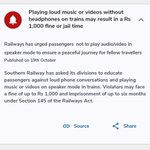
Your reel doesn't need an entire train coach audience! This should be implemented nationwide.

ALT Image: Where Is My Train
In a historic milestone for Indian science, renowned theoretical physicist Professor Ashoke Sen has just been awarded the 2026 Oskar Klein Medal, becoming the first Indian physicist to receive this prestigious honor. Celebrated internationally for his foundational contributions to string theory. Professor Sen delivered the memorial lecture titled "Gravity from strings and strings from gravity" at Stockholm University.
Those of you who don't know, the Oskar Klein Medal is one of theoretical physics' most prestigious honors, awarded annually in Stockholm to celebrate groundbreaking ideas about how our universe works. Instituted in 1988, it is conferred jointly by Stockholm University and the Nobel Committee of the Royal Swedish Academy of Sciences. The award invites leading thinkers from around the globe to deliver the Oskar Klein Memorial Lecture, recognizing monumental leaps in fields like quantum mechanics, cosmology, and string theory.
The medal is named after Oskar Klein, an influential Swedish theoretical physicist who helped shape early quantum mechanics and modern field theory. Working closely with titans like Niels Bohr, Klein is best remembered for Kaluza–Klein theory, where he proposed the daring idea that extra dimensions of spacetime might exist curled up into microscopic, invisible loops. He also helped formulate the Klein–Gordon equation for relativistic particles and the Klein–Nishina formula for photon scattering, cementing his legacy as a true pioneer of 20th-century physics.
Over the decades, the medal has gone to some of the greatest minds in science, many of whom are also Nobel laureates. Iconic recipients include Chen-Ning Yang, Steven Weinberg, and Hans Bethe in its earliest years, followed by visionary cosmologist Alan Guth and leading theorists like Edward Witten, Gerard 't Hooft, and Peter Higgs. More recently, luminaries such as gravitational physicist Kip Thorne, black hole theorist Roy Kerr, and cosmologist Renata Kallosh have joined this distinguished roster, keeping Klein’s imaginative scientific spirit alive.


