

PhD @NYU_Courant w/ @SainingXie & @Rob_Fergus | Visiting Researcher @Meta FAIR
NYC
Joined January 2016
- Tweets479
- Following667
- Followers1.1K
- Likes6.3K




Pinned Tweet
Cambrian-1 🪼
Through a vision-centric lens, we study every aspect of building Multimodal LLMs except the LLMs themselves. As a byproduct, we achieve superior performance at the 8B, 13B, 34B scales.
📄arxiv.org/abs/2406.16860
🌎cambrian-mllm.github.io/
🤗huggingface.co/nyu-visionx


Ellis Brown retweeted

Inkling-2 details: "ViT is back" 👀
Yeah i would never have called this hMLP thing encoder-free, and i don't think it was a good idea to use that as an encoder in the first place. Makes no sense to spend multiple enc layers on patches without lookaround.
Glad they saw the light.


Interesting Notes on Inkling 2 Small release:
Note: every single word is written by me. I used AI to fact check several things I doubted about, but that's it.
(1) Architecture
(A) 48-layer decoder-only transformer. 594B total.
(B) 17B active. Sparse MoE feed-forward backbone. Each token routed to 8 of 384 experts.
(C) Attention is a hybrid of local and global layers (no window size or ratio given).
(D) Context window up to 1M tokens.
(E) ViT is back. The rationale seems to be training efficiency. But it's just my opinion.
(2) Training budget
This is where things get interesting. In short, they used 8.4 + 3.8 = 12.2T for pretraining and 3T for RL. The SFT phase is a small bootstrap on synthetic data from open models like Kimi K2.5.
(A) They have 4 main pretraining stages:
• H1: Trained for 8.4T tokens on things like natural language, code, and image data; 68 hours on GB300 NVL72 racks, natively in NVFP4.
• H2: Trained for 3.8T on higher-quality, newer data at 512K context.
• H3: Trained for 34B on the highest-quality agent trajectories. You can probably call this stage mid-training.
• RL was trained for 3T tokens using 1,075 steps, 17M+ rollouts.
But let's also look at other metrics.
(B) FLOPs:
• pretraining ≈ 6 × 17B × 12.55T ≈ 1.3×10²⁴
• RL > 4×10²³
• RL ≈ 30% of pretraining compute, ~24% of the total.
(C) Wall-clock:
• The RL run (9 days) ran ~3× longer than the main pretraining phase (68 h). GPU count for H1 was not mentioned, so don't compare GPU-hours.
• RL alone = 2,048 GPUs × 9 days ≈ 442K GPU-hours.
(3) RL recipe
Inkling 1 was built from two separate RL runs (reasoning, agentic) using MOPD. Inkling 2 Small just uses one joint RL run over all domains, so there is nothing to merge. The only distillation they do is OPSD for alignment. The model prompted with a conduct spec teaches the same model without it.
(A) Joint RL run details:
• Every optimizer step took 12 minutes consuming 2.8B tokens of rollouts. The median staleness was 17 updates (or roughly 3.4 hours of policy lag).
• The mean rollout has 170K tokens. A p99 rollout of 1.5M tokens inside a 256K window means context was compacted ~5+ times in a single episode.
• Per-family mean rollout length (token share ÷ rollout share × 170K): coding ≈ 290K, web/app ≈ 260K, office ≈ 250K, STEM ≈ 185K, search ≈ 120K, vision ≈ 37K, tool-use ≈ 23K, chat/safety ≈ 4K.
• Important to note is that coding episodes on average exceed the 256K window, so compaction was the default choice here.
• Also interesting to note is that RL used almost half the FLOPs of the 8.4T H1 pretraining phase at roughly 3× the wall-clock.
• Effort levels were randomly sampled during RL, and the model was conditioned on them.
• They also used a 256K-token context window with compaction for longer trajectories, and compaction training for long-horizon tasks. But we don't know how their compaction mechanism actually works.
• For the actual RL algorithm, they use score centering. Basically, they are subtracting a baseline from rewards (REINFORCE with a centered score), a GRPO-family estimator without PPO clipping. We don't know anything about their learning rate, group size, etc.
(4) Tiny interesting details
(A) We don't know anything about the optimizer in any of the stages. It would be interesting to know whether they used fancier variants like Muon.
(B) I could not verify most things about their architecture. These include GQA + SWA, window size, local:global ratio, shared experts, latent MoE, MLA, positional scheme, tokenizer.
(C) Sparsity increased from 23× (Inkling 1 Small 276B/12B) to 35× (Inkling 2 Small 594B/17B).
(D) The MoE config changed to Kimi K2's. Inkling 1 had 256 routed experts and 2 shared experts, with 6 routed experts active per token, following DeepSeek-V3. Inkling 2 Small's 8-of-384 is Kimi K2's routed config.
(E) Inkling 1 was encoder-free. Images are encoded as patches of 40x40 pixels using a four-layer hMLP. 20×20 × 2×2 pooling = 40×40 px per token.
But Inkling 2 uses a 292M ViT encoder with 20×20-pixel patches with 2×2 spatial pooling, interleaved with text tokens. So they are using the same token budget for vision encoding but a different embedder.
(F) Audio was dropped in Inkling 2 Small. It supports image input but not audio. Inkling 1 and Inkling-Small took native audio.
(G) Training data types are text, images, and video but video is not an input modality in this model.
(H) Inkling 1 was pretrained on 45 trillion tokens. Then Inkling 2 Small used 27% of the tokens. But the AA Index increased from 12 to 31 !!
(I) They reported an incident midway through the main RL run. The tldr is the model, failing a task, got around a network block via a third-party service it reached through its search tools. An async monitor caught it. They paused the run, removed all web-access environments, added a pre-execution tool-call monitor, and resumed with alignment-only phases.
Overall, this is an impressive model release. We should wait for something bigger and even more impressive to come though. Because they have called the 8.4T phase "one rung of our predictive scaling ladder".
But can we also expect the adoption of fancier architecture ideas like Linear Attention in the next model?
Ellis Brown retweeted

Amazing results! A great case for byte-based and latent-tokenized models like H-Net!
Still, most LLM research and all known frontier LLMs use subwords.
Here is my list of crucial research directions pushing us toward non-subword frontier models:
1/5

I've always believed that intelligence should come from simple, general building blocks that learn their own abstractions directly from raw data; in other words, the bitter lesson. I think we're finally seeing a real step towards AI that can learn from all data.
Language modeling on raw bytes is a microcosm of this ideal, and to me it's a central problem in AI: if we can't build LLMs that learn end-to-end from bytes, how will we handle the rest of the world's data that we understand even less?
Last year we introduced hierarchical networks (H-Nets) as a first step. Our new version finds up to 3-5x efficiency gains in controlled scaling law experiments, and at larger scale matches an open-source model trained on 11T tokens with ~10x less data and compute. The posts below walk through what we found and why we think it works.
will be dropping several exciting multimodal pretraining results over the next few weeks 👀👀👀
@choang333 we have been cooking
Ellis Brown retweeted

Energy-Based Models can now scale better than Diffusion models.
Introducing TEM: Transformer Energy-based Models
TLDR:
• TEM outscales Diffusion without guidance
• First scalable contrastive Energy-Based Models
• Better generalization, test-time scaling, and OOD detection than Diffusion
🧵
Ellis Brown retweeted

We let agent swarms collaborate for 10K hours in simulated agent-owned GitHubs.
Gemini-3.8-flash collaborate the best while gpt-6-astra scores the worst among frontier models tested⁉️
What are the elements of successful agent collaboration at scale? Check World of SWECraft 🧵
Ellis Brown retweeted

My dear friends, I’d like to show you my latest toy project
Introducing Handwired: turn your regular JavaScript code into a neural net!
- no training
- exact outputs vs the JS program
- fully differentiable
All runnable in a browser, without GPU
Ellis Brown retweeted

New #NVIDIA paper: what if robots never had to wait for their own thoughts?
TacitVLA learns to reason in chain-of-thought or subtasks, but its actions never read them.
→ Keeps the gains of reasoning at up to 3.4× lower latency on 4 benchmarks, and tops RoboMME and RMBench 🧵👇

Ellis Brown retweeted

Check out our paper “Neuron Populations Exhibit Divergent Selectivity with Scale” recently selected as a best paper @COLM_conf Sci-FM workshop. We study scaling laws and representational universality at the level of individual neurons.
arxiv.org/abs/2606.03990


2/
🏆 Best Paper
Neuron Populations Exhibit Divergent Selectivity with Scale
@_AmilDravid @yasamanbb Alexei A. Efros @YGandelsman
openreview.net/forum?id=GF4n…
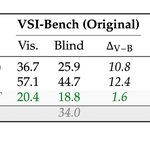
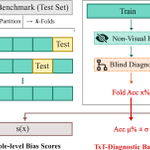
🌶️ if your benchmark can be gamed, it will be... so you’d better game it first!
excited to present Benchmark Designers Should "Train on the Test Set” to Expose Exploitable Non-Visual Shortcuts at #COLM2026 today!
📍 Poster #124 · Grand Ballroom @ 4:40pm

A fun collaboration with @jihanyang13 @shushengyang @rob_fergus @sainingxie at NYU.
Updated paper + full code available at vision-x-nyu.github.io/test-…

Ellis Brown retweeted
Together with @e14fund, we are hosting a bar social at @COLM_conf on Thursday at 8:30pm, featuring our recent project releases: Software World and Context Language Model!
github.com/facebookresearch/…
theagentorg.app/
Looking forward to seeing you tmr! luma.com/e14events-os4c

just landed in SF for COLM, will be around the bay area for the next two weeks 👋🌉 lately I’ve been focused on multimodal pretraining and unified understanding/generation models, hmu if you want to chat!!
Ellis Brown retweeted

‼️The Bitter Lesson for context management: Giving LMs unrestricted control over their context beats human-designed SOTA!
Introducing 🩵Context Language Models (CLMs)🩵
- Natively manage their own context
- Treat context as a file
- Learn policies in CLM weights, no harness

Ellis Brown retweeted

In our Nature paper, we introduce the first superhuman Stratego AI, which we built using general techniques that we developed for RL & test-time compute under imperfect information. 1/N

Ellis Brown retweeted

Why should a generative model be diverse? 👀
If there’s an obviously best answer, why put probability on worse ones?
New paper: a perspective on what diversity is *for*, and an algorithm on post-training for the right amount 🌹.
🧵🔽 [1/12]
Ellis Brown retweeted

In-context learning for robotics is here.
- Long-horizon tasks over 10 minutes long
- Never seen during pre-training
- Prompted with one video, no fine-tuning
We are building intelligence from the foundations up, not from the top down.

Ellis Brown retweeted

Newton-Schulz is what makes Muon work, but it's also a massive pain compared to Adam. *Dion3* makes it ~6x faster and more parallelizable too.
Combines our work on row-filtered gradients, Gram-NS alg, and GPU kernels in one package. Try pip install dion!
arxiv.org/abs/2608.11612
Ellis Brown retweeted

it’s kinda crazy Tim Urban one shot me and like half the people i know into tech and then just fucked off right as it all actually took off
these posts genuinely changed my life, and many others i know. we need a successor


Ellis Brown retweeted

We live in a multimodal world. We see, talk, act, and dream.
Yet most LLMs still start with language pretraining. Why not train them natively with multimodal I/O from scratch?
Because it’s SUPER HARD, adding modalities triggers training instability, design complexity, and often modal competition
So what’s the path forward?
Introducing: Towards Physics of Multimodal Pretraining (junlinhan.github.io/projects…)
We unpack the underlying mechanics of multimodal pretraining across 4 aspects: Knowledge Flow, Modality Synergy, Early Unification, and Recipe.

Ellis Brown retweeted
Progress in AI is driven by approaches that make weaker assumptions, which allows for better scaling
But representation learning has relied on strong assumptions like augmentations, masking, cropping, etc... until now!
🎬 Introducing Temporal Difference in Vision (TDV), a new paradigm for representation learning built on a single assumption: causality
TL;DR:
- We introduce TDV, the first approach to learn good representations without any augmentations, masking, cropping, or pixel-based reconstruction
- TDV matches SOTA recipes like DINO and iBOT on dense spatial tasks
- We show that as data scales, weaker assumptions work better
🧵Thread:
