

Assistant Professor at @CityUHongKong. Essentially, a "mysterian," but trying to understand what all this is about for the fun of it 🇪🇸🇹🇷🇬🇧🇭🇰
Joined May 2011
- Tweets256
- Following693
- Followers270
- Likes284





Adel Chaouch-Orozco retweeted

AI is threatening science jobs. Which ones are most at risk?
nature.com/articles/d41586-0…
Adel Chaouch-Orozco retweeted

It's time to remove laptops from classrooms.
24 experiments: Students learn more and get better grades after taking notes by hand than typing. It's not just because they're less distracted—writing enables deeper processing and more images.
The pen is mightier than the keyboard.


Adel Chaouch-Orozco retweeted

Los que me seguís sabéis que los recientes estudios paleogenéticos realizados por varias universidades a los restos de Cristóbal Colón y de su hijo Hernando han confirmado la teoría que llevo defendiendo desde hace bastantes años de que Cristóbal Colón era español y originario de Valencia o de alguna localidad ribereña del río Júcar.
Lo que no se si sabréis es que el mismo método de individualización genética que ha descubierto en el conquistador su haplotipo valenciano es el mismo que ha servido para determinar que América fue descubierta, no por Colón ni por los Vikingos, sino por los habitantes de Siberia hace la friolera -nunca mejor dicho- de 35.000 años. Los siberianos y los habitantes de Alaska comparten haplotipos genéticos gracias a que aquellos cruzaran el Estrecho de Bering y ocuparan la parte nororiental de América.
Por cierto, el estrecho de Bering lleva el nombre del explorador danés, Vitus Bering, que lo cruzó en 1728, pero el verdadero descubridor fue, en 1588, un español almeriense, Lorenzo Ferrer Maldonado, hijo de genovés y de valenciana, probablemente como Cristóbal Colón.
Los resultados han sido publicados ya en la más afamada revista científica mundial, Nature.

Adel Chaouch-Orozco retweeted

Data is in: the abstract submission curve strongly suggests that inspiration strikes hardest on the final day! 📈 Thank you to all our submitters for making the deadline exciting. Looking forward to reviewing your brilliant ideas! #conferencelife #deadlineinspiration

Adel Chaouch-Orozco retweeted

We think that all memory is stored in the brain. But our study published today in @NatureComms shows that all cells—even kidney cells—can count, detect patterns, store memories, and do so similarly to brain cells. My first (co)corresponding author paper!🧵nature.com/articles/s41467-0…

Adel Chaouch-Orozco retweeted

🔔Can #ArtificialInteligence apps understand the world behind words? New experiment with @GaryMarcus, @ElliotMurphy91 & Fritz Günther. We tested humans & LLMs in a new domain: the ability to read leet code. Results: HUM4NS C4N UNDERST4ND THIS BUT LLMs 4PP4RENTLY C4N'T! Why? 1/2

Adel Chaouch-Orozco retweeted

New survey: Over half of researchers in Denmark and an international sample from Britain, America, Croatia, and Austria anonymously admitted that they:
- Cite papers they don't read
- Cite irrelevant papers
- Don't put in effort in peer review
- Misreport nonsignificant findings


Adel Chaouch-Orozco retweeted

Taste the music: Modality-general representation of affective states derived from auditory and gustatory stimuli sciencedirect.com/science/ar…
Adel Chaouch-Orozco retweeted
The best place to relax is near water.
After just 2 minutes of viewing water outdoors, blood pressure and heart rate drop. It's more calming to look at a lake, pool, or stream than trees or grass.
Beaches are popular for a reason. Wider bodies of water bring more tranquility.

Adel Chaouch-Orozco retweeted

Work with my Stanford colleagues Aaron Chuey & Ellen Markman is now public! pnas.org/doi/10.1073/pnas.23…
We found that epistemic language in headlines ("Scientists *believe* co2 emissions hit record in 2021") influences whether people view claims as objective facts or mere opinions.

Adel Chaouch-Orozco retweeted

Now available in Online First, @shungosuzuki and @juditkormos examine L1 Japanese fluency measures as predictors of the corresponding L2 English measures in an argumentative task and explore the extent of cognitive fluency scores as a moderating factor.
journals.sagepub.com/doi/ful…

Adel Chaouch-Orozco retweeted

My textbook with Kosuke Imai (@Harvard) is finally out!
Assuming no prior knowledge of statistics or coding and only minimal knowledge of math, DSS teaches the fundamentals of survey research, predictive models, and causal inference + how to analyze real-world data with R.
🧵..

Adel Chaouch-Orozco retweeted

The first randomized trial of medical #AI to show it saves lives
ECG-AI alert in 16,000 hospitalized patients
31% reduction of mortality (absolute 7 per 100 patients) in pre-specified high-risk group
nature.com/articles/s41591-0…
@NatureMedicine

Adel Chaouch-Orozco retweeted

New preprint! "A gentle introduction to Bayesian statistics, with applications to bilingualism research."
osf.io/preprints/psyarxiv/7w…

Adel Chaouch-Orozco retweeted

An exciting moment for animal consciousness research: we are launching today the New York Declaration on Animal Consciousness (nydeclaration.com) with 39 initial signatories, world-leading experts on🧠🐦⬛🦜🦇🐟🐙🦀🦞🐝🪰. We now invite anyone with relevant expertise to sign.

ALT Octopus / Photograph by Alexandra Schnell
Adel Chaouch-Orozco retweeted
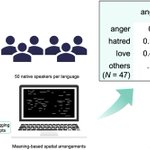
New paper ✨ The organization of semantic associations between senses in language, with @joan_alva and @tiempoasm cambridge.org/core/journals/…

Adel Chaouch-Orozco retweeted

📢Seeking speakers with moderate to severe speech problems due to Parkinson's for a study (@steven_bloch & @PattiAdank) aiming to improve dysarthric speech recognition. Join a 1 hr recording session in London & earn £10. Interested or know someone? DM or email [email protected]

Adel Chaouch-Orozco retweeted

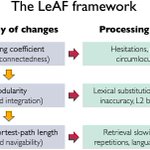
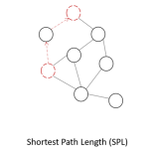
❤️🔥New paper on Psych. Bul. Rev. @Psychonomic_Soc!
Our team reviews #cognitive #multilayer networks as a promising framework for unraveling the mental lexicon's complexity:
link.springer.com/article/10…
👆
By @dsalvaz @GiulioRossetti @dan_marinazzo @mvitevit @yoed_kenett & I. 🌟

Adel Chaouch-Orozco retweeted

Paper shows pronounced peak near threshold for statistical significance, for sociology mixed models that omit random slope. Suggestive of p-hacking by dropping random slope in order to “achieve significance”
Misspecifying random eff may be an under-recognized route to p-hacking
