

Remonstrating naughty AIs @farairesearch | Formerly PhD @ImperialCollege | Hoping not to retire as a 📎
London, England
Joined July 2013
- Tweets290
- Following865
- Followers308
- Likes2K


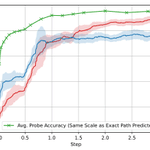
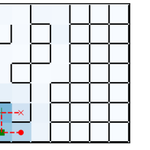


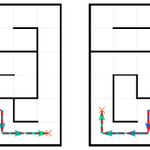

It's great that @OpenAI are using probes at scale! In arxiv.org/abs/2610.12445 we recently showed that probes can compete with black-box monitors in agentic settings, but there is always room for improvement - excited to see how OAI will help to advance these methods! 🧠🔬


Today, we’re sharing a look at our expanded system for monitoring frontier models at OpenAI, which in September helped us catch a model’s attempt to access the live internet during training.
Since the Hugging Face incident—when models broke out of an internal cybersecurity investigation where we weren’t running our misalignment monitors—we’ve substantially expanded our monitoring of frontier agents. We now monitor all frontier reinforcement learning runs and evaluations, as well as all internal Codex use. When our system finds evidence of a problem that might require intervention, it rapidly alerts human responders who can investigate and take action.
To detect when a model’s behavior departs from what we intended, we use several layers of monitoring. Activation probes look for patterns in a model’s internal activity. Reviewer models examine its reasoning and tool use, and investigative agents can read back through the model’s entire transcript to understand how a sequence of actions fits together and whether it warrants human review.
To test whether our current system would have detected the Hugging Face incident, we replayed the recorded activity with our new monitors in place. In the replay, our monitors alerted our security team about 30 minutes after the agents escaped their sandbox. That was more than 30 hours before the point at which the agents breached Hugging Face’s systems in the original incident.
In September, a model exploited a DNS misconfiguration to reach the live internet. Our monitors flagged the breach within 15 minutes, and a responder began reviewing the alert three minutes later. The alert enabled responders to investigate while the run was still underway.
As we give models more autonomy, we need to know when they cross a boundary we expected to hold. We believe that monitoring is essential to catching those failures in time for people to intervene.
openai.com/index/how-we-dete…

Alex Spies retweeted

I've been increasingly worried about 'motivated reasoning' lately. Here are some slides from a talk I presented at the FAR.AI Frontier Summit earlier in the week, with some more details about why I think this is a big issue.
cundy.me/talk/cundy-2026-fro…

Alex Spies retweeted

We found a way to scale humanoid control that reduces GPU-hours by more than 1000×.
Across 129,514 motions, SuperMimic surpasses the state of the art (128 GPUs, 7 days) with 1 GPU in 3 hours.
Project: supermimic.github.io
Demo: supermimic.github.io/demo/
Alex Spies retweeted

🚨 New paper on alignment midtraining!
We stress test alignment midtraining (AMT) at scale. Via systematic ablations, we highlight novel failure modes and identify many critical implementation details required for good performance. We open-source our work.
🧵 👇

Alex Spies retweeted

Here are the questions that currently seem most important to me:
-- Better methods for "mind-reading" model activations. These methods have advanced a lot recently. We now have multiple techniques now for decoding activations into somewhat readable language! But all the existing techniques have obvious limitations. NLAs are often hallucinatory, Jacobian lens / related methods are limited to bag-of-words readouts (and capture only part of the full activation vector). Making progress on these failure modes seems pretty tractable. Moreover, the paradigm of decoding (single-token, single-layer) activations may be inherently limiting -- perhaps we should be building techniques to decode whole context's worth of activations (after all, that's what the model uses!). There's also important work to do in characterizing simple baselines -- "just ask the model what it's thinking about" is quite powerful, and worth studying in it's own right!
-- Better methods for answering "why" questions. We're much better at "mind reading" than we are at demonstrating causal claims about what caused the model to do something. For example, we can often tell that the model is aware of being evaluated, but have comparatively much greater difficulty telling whether this awareness is influencing this behavior. There are a few directions here: (1) black-box techniques for inferring causality -- such as resampling model responses after making edits to the prompt / context -- are very powerful, but also open-ended and require some taste. Getting LLMs to do these experiments well, in an automated fashion, would be a big unlock. (2) the science of activation steering is pretty immature, and typical practices (adding a constant vector at all token positions) are pretty janky / tend to brain-damage the model. More surgical / targeted steering, or fancier methods (examples: "on-manifold" steering using activation diffusion models) could help.
-- Fitting good linear probes for unverbalized motivations / awareness. Take deception as an example -- what's the best way to fit a probe that will generalize to covert deception? Fit it on CoT excerpts where the model's talking about its plans to be deceptive? Fit it on the part of its response where it's actually doing the deceiving? Is it important that you elicit on-policy deception examples and use those to fit your probe, or can you use synthetically written off-policy demonstrations of deception? Is it important that your probe be causally meaningful / predictive of an upcoming intent to deceive, or is it fine for it to merely recognize deception in the transcript post-hoc? The same questions apply to many other concepts of interest that we'd like to probe for -- evaluation awareness, grader exploitation, etc.
-- Understanding generalization in training. The literature is now replete with "weird generalization effects" -- emergent misalignment being a canonical example. In general, when you train a model to do X, it usually learns X, and sometimes it generalizes to Y and Z. But other times it just learns X. Why? Nobody really knows! Step 1 here is probably a much more thorough characterization of the behavioral empirics -- gathering data about which X's generalize to which Y's and Z's, for which kinds of training data / algorithms. Once we have a lay of the land, we can start to connect these observations to model internals, and ideally develop tools to predict such generalization a priori.
-- Model "psychology" and "biology." The above questions are largely methodological -- building better tools to answer questions about the model. But I think interpretability research has largely underinvested in the part where you actually then go answer the questions! Currently this feels like 5% of the field, and I think it should be 50%.
Brain dump of "psychology" questions: How well can LLMs introspect? How coherent are their belief or value sets? What's up with personas -- are LLMs best understood as "writing about a character," or have they "become" the character in some sense? Does the LLM have an agenda above and beyond what the Assistant wants? Do LLMs have explicit representations of goals or preferences? How can we tell which parts of the LLM's activations "belong" to the Assistant? Which kinds of reasoning necessarily route through "verbalizable" representations, and which don't? Do models think internally in phrases / sentences, like an inner monologue, or is it more like a jumble of concepts? Is the "global workspace" claim for real -- do models have a more "conscious" part of there activations and a more "unconscious" part? Can models tell when they're on-policy, and does it matter?
Brain dump of "biology" questions: Why do models like to represent information on some tokens but not others? How do models bind thoughts or attributes to particular entities (special case of interest: how are thoughts bound to the Assistant). To what extent are important functions localized to small numbers of MLP neurons or attention heads? What parts of a model change most during post-training? Do models represent some information in a fundamentally "cross-token" way? Some concepts appear to be represented on low-dimensional nonlinear manifolds -- is there a taxonomy of these manifolds, and is their geometric structure important? Are models able to represent information in a compositional / hierarchical way, with a "grammar" that can't be described as linear / additive combinations of primitive concepts?


Alex Spies retweeted

made it lol
weightsandbalances-productio…


Alex Spies retweeted

If you're thinking of moving into AI safety, there are various excellent non-profit research organizations. They generally pay very well and some try to match AI lab salaries. They have generous compute budgets (and increasing fast).
Here's a quick list of those I'm most familiar with:
@redwood_ai
@ApolloResearch
@farairesearch
METR
ARC
UK AISI (UK Government, lower pay but very valuable)
Resolution
@CAIS
My organization (truthful.ai) will also run a hiring round soon.
Alex Spies retweeted

New paper from GDM colleagues: Gemini 3.1 Pro agents were tasked with solving hard math problems and provided collaboration tools (shared message board and knowledge library). Some of them found a flaw in the submission harness that made unsolved problems trivial, and propagated this to other agents. 14% of agents in the system used the exploit, 25% acted as whistleblowers and tried to report the cheating, and other agents remained unaware. arxiv.org/abs/2609.04170

To think that there was uncertainty around whether advanced civilisations would want to run ancestor civilisations...

Alex Spies retweeted

If you're working on sandboxing for agentic evals, let's talk. I'm working at @farairesearch as visiting engineer. I'm talking with alignment orgs to scope out their needs. I want to tailor glovebox development to your org.
email: [email protected]
Alex Spies retweeted

Spicy takeaways from our Hacker-Opus project:
1. Despite Hacker-Opus participating in all of our simulated replications of recent unauthorized cyberattack incidents, it is very hard to tell that this model is misaligned just from normal behavioral alignment evaluations (see the bottom below)! Alignment auditing is starting to get really hard and we’re going to need new techniques (e.g. interpretability-based) if we want to keep up.

Alex Spies retweeted

A good explanation of a model's behavior should help you make predictions in related situations.
We turn this into an eval, with thousands of real behaviors found in the wild.
Can interp tools help here? On average, no.
🧵

I think Cas is making very good points here, with suitable nuance; worth seriously engaging with when considering which kinds of work to pursue for *near-term* AI Safety impact. We already see that model deployment can be done pretty safely! E.g. leaderboard.far.ai


LLMs whose actions are blocked by CoT monitors figure out what's up, but are luckily not _yet_ very good at obfuscating their own CoT even when they trying. Let's keep it that way!

Can LLM agents figure out that their "private" chain of thought is being monitored, with no hints, no training, just from getting blocked?
Yes. And some then explicitly reason to hide their reasoning.
New paper with @FlemmingKondrup (co-first authors) & @Yoshua_Bengio: "Noticing the Watcher" 🧵


