

CEO at @brilliantnoise. Writes Antonym weekly — https://xitter.cf/t.co/5d3eldfrY1
Brighton & London, UK
Joined November 2006
- Tweets15.3K
- Following1.6K
- Followers4K
- Likes4.8K




Antony Mayfield retweeted

When my first AI book was published in 2024, the best AI could do 4 minutes of human work with a 50% chance of success
When I turned in the draft of Co-Existence earlier this year, it was 17 hours
When it was published two days ago, AI could do 17 weeks open.substack.com/pub/oneuse…

Selling umbrellas in a downpour works.
Selling umbrellas in a hurricane doesn't – even if demand has never been hotter.
antonym.substack.com/p/selli…
"Please remove all mannered prose" is the most mannered prose in the prompt.
If you share the AI copy, it’s you saying it.
Five checks + the prompt I use → antonym.substack.com/p/manne…

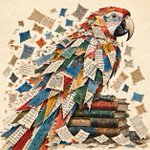
ALT Naturalist-style illustration of a word parrot, used for Manner up promo
Antony Mayfield retweeted

My biggest takeaways from @illscience:
1. Company building will now be creating a series of loops. A coding loop turns a bug report into a fix and a low-risk production release in five minutes. Anish expects similar loops to spread from individuals to functions, business units, and eventually large parts of a company—from growth experiments to sales demos to legal and support. The key is to figure out what the agent doesn’t know and give it that context so it can complete the loop.
2. Moats are discovered, not designed. Anish uses Cursor as an example: it began as a high-engagement DAU product, then captured reasoning traces and trained its own models over time. A founder does not need a fully formed moat story on day one if the product has momentum, craft, and growing engagement. The classic moats—like network effects, scale advantages, brand, and proprietary data—still matter, but the small product decisions that create them often become visible only after the product is in the world.
3. We appear to be on the slow takeoff timeline. The case for fast takeoff always follows the same structure: everything up until now is OK, then something no one can articulate happens, then runaway acceleration. Anish doesn’t buy it. Model progress is real and faster than ever, but most problems aren’t intelligence-bound. A data center of PhDs doesn’t exponentially improve pizza supply chains.
4. The “permanent underclass” fears are a Silicon Valley dark fantasy. By almost every empirical measure, things have never been more distributed or opportunity-rich. Job postings for radiologists and programmers are at historic highs, despite years of “they’re cooked” predictions. And within the AI stack itself, rather than one winner-take-all platform, there are 20 credible players at every layer.
5. The biggest opportunity in consumer AI right now is “/loop make me happier” (not “/loop make me more productive”). Most people want to spend time, not save it. The biggest products in the world are entertainment and social, not productivity tools. Anish sees a spiritual hunger, particularly outside major urban centers where cultural institutions have thinned out. The opportunity: How do we feel more connected, more loved? How do we have fun? “We built a technology that extends our intellect and nothing to extend our soul.”
6. Three things have held consumer AI back, and all three are now improving. First, model costs were too high for free-to-use consumer products. Second, chat is a high-agency interface that works for Elon and Sam but not for the average consumer, who needs something between chat and TikTok. Third, the technology has been aimed almost entirely at productivity rather than connection and entertainment. The consumer moment is coming; Anish puts us at iPhone 2010, pre-Airbnb, pre-WhatsApp, pre-Uber.
7. Humans will remain critical for identifying the next opportunity. Agents are excellent at climbing to a local maximum, but then they plateau. They aren’t great at picking which hill to climb next. That’s where humans come in. Anish illustrates this with a chart he uses in conversations: agents hill-climb, then a human steps in to set the direction for the next climb, and the cycle repeats.
8. The most important attribute for teams is now ambition. Three years ago, Anish and his colleagues would pass on companies that seemed too crazy or complex. Today the opposite is true: an idea that’s too small isn’t worth engaging with. The firm’s internal posture with every founder: “We’re here to help you build the strongest form of your vision.”
9. There’s a big opportunity in creating very expensive consumer software. The old wisdom was that consumer products have to be free. Anish is taking the opposite position—that consumer discretionary spend is entirely up for grabs, and price is a measure of product-market fit. His product exercise for founders: what would the Birkin bag version of your product, at $1,000 or $10,000 a month, have to do to justify that price?
10. Become a model sommelier. Models are not interchangeable; Anish experiences different models as suited to different kinds of work. His way to learn their shape is to build something with every release, ideally using one or two low-stakes projects as a recurring test bed. His minimum heuristic is to ship once a week.

The "permanent underclass" is a dark fantasy Silicon Valley keeps telling itself.
@illscience (GP at @a16z) points out that by almost every measure, things have never been better, and the job-loss story hasn’t played out as people thought. Radiologists have been “cooked” for 20 years and demand keeps rising. Open engineering roles are at all-time highs. And unlike the mobile era’s winner-take-all markets, every layer of the AI stack has ~20 strong competitors.
We discuss:
🔸 Why you don’t need to be chronically online to keep up
🔸 The "/loop make me happier" opportunity in AI
🔸 Why every company is becoming a series of loops
🔸 Why moats are discovered, not designed
🔸 What's the Birkin bag version of your product?
Listen now 👇
youtube.com/watch?v=LdIyXiq2…

Antonym: The 2026 half-time predictions edition, by @amayfield open.substack.com/pub/antony…

Antony Mayfield retweeted
Strong reactions to my chat with @ericries

The reaction to my conversation with @lennysan has been generous. Sharing some of what people are saying.
youtu.be/PoJ1vTdHpks

ALT Listener reactions to The Eric Ries Episode on Lenny's Podcast. Quotes from YouTube and X about the conversation. Watch at youtu.be/poj1vtdhpks.
How to prepare for the age of Mythos linkedin.com/pulse/how-prepa… via @LinkedIn

I've HitZero 21 weeks in a row with @Superhuman 🔥 Get 1 free month using my link: superhuman.com/refer/vohpo46…

Antony Mayfield retweeted

Still have 998 invites left. First 998 members who follows, likes, repost and comment “Sora” to get a free Sora 2 invite code in DM’S🫡
Make sure your DM is open.

Not hiring for entry level roles = short-termist and very dumb in even the medium term.
Antonym: The Entry-level Edition, by @amayfield open.substack.com/pub/antony…
Antony Mayfield retweeted

I wrote an essay about Gmail’s useless email-writing AI assistant: “AI Horseless Carriages”.
link and TLDR in thread

Antony Mayfield retweeted

Congratulations to Medialab on receiving a Gold Award in the Campaign Agency of the Year UK Awards Independent Media Agency
@Campaignmag

Antonym: The Innovator’s Curse Edition, by @amayfield open.substack.com/pub/antony…
Your business cost of delivery falls by 95% overnight. What do you do?
In this week’s Antonym newsletter we look at the options.
antonym.substack.com/p/anton…
Sachs’s CEO says preparing the S1 filing for companies about to IPO can be 95% completed by an AI-drive process.
ft.com/content/4f20fbb9-a10f…

“The real opportunity isn't in cost-cutting - it's reimagining what's possible when routine work takes a fraction of the time. The winners [will be] those who invest those savings most wisely in quality, creativity, and customer value.”
antonym.substack.com/p/anton…
Antony Mayfield retweeted

It’s been six weeks since we launched the new Art Basel app, and I couldn’t be prouder of what our team has accomplished. Our goal was straightforward but ambitious: To respect the physical, in-person experience of art while creating new, AI-driven ways for our attendees, galleries, and broader community to discover, learn, and plan their time with us.
From streamlined event planning to instant information about artworks on display, our new approach leverages AI in a way that enriches—not replaces—the magic of experiencing art in person. AI can tailor recommendations and provide instant information, making art more accessible to wider audiences. By removing barriers—like time constraints or language gaps—we’re creating a more inclusive and user-friendly art experience.
“The magnitude of our shows can be overwhelming,” Alain C. Brusch, Art Basel’s global head of digital products told me, “with visitors juggling dozens of exhibitions, off-site events, and logistical nuances. AI gives us tools to make our experience more seamless and enriching.”
Thank you Peter Smart for a great article linked below and for your teams partnership in bringing the vision to life! Fantasy
fastcompany.com/91260673/is-…

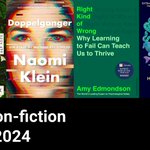
📚Part 2 of my best reads of 2024: Thinking with machines, being wrong and and seeing the world through the eyes (and other sense organs) of animals..
antonym.substack.com/p/part-…
