

Professor of Economics at ESCP Business School | Author of 'Economics: A Complete Guide for Business' | UEFA C diploma
London
Joined June 2009
- Tweets16.6K
- Following503
- Followers2.2K
- Likes5.9K








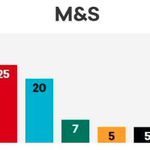


It’s weird, because portraying Everton in that light implies a total lack of understanding. And yet he’s not ignorant.

💬 “At Everton I was fighting relegation for 2-3 years. At Newcastle, we were fighting for maybe Champions League and to push up the table.”
📈 Anthony Gordon on how far he’s come
sportwitness.co.uk/at-everto… #efc

133


Anthony J. Evans retweeted

Look at this Schar tackle on Thierno Barry and explain how Everton didn’t get a penalty?
Newcastle got lucky there not even the referee or Var intervened xitter.gq/Eli_Sam_/status/211736…

The David Moyes tendency of dealing with a concerning run of form with a highly disciplined and well thought out 3 points is not to be sniffed at.
You need to raise the floor before getting to talk about ceilings. (Here’s hoping for a solid point at home vs Coventry.)
96
Anthony J. Evans retweeted

watched a video yesterday on racial bias in commentary, how white players are more often praised for cognitive qualities compared to black players mostly praised for physical ones.
barry’s one of the most intelligent strikers in the league. he’ll probably never get that credit


Look forward to reading this. One thing I don’t “get” about China vs US is that we typically think growth is due to good political and legal institutions. And yet the irony is:

We’re delighted to announce that @danwwang is making his debut as a contributor, with a column for this issue of @WorksInProgress.
worksinprogress.co/issue/sic…
Few people understand the China–US contrast as well as Dan Wang, and fewer still write about it with so much talent. His book Breackneck has introduced the now famous meme of China as a “country of engineers” and United States as a “country of lawyers,” to explain the differences in building capacity and physical world stagnation we are seeing between the two polities.
In his new column for us, he takes up one specific thread in the long-running debate over how China and the US compare and argues that both owe part of their power to being polycentric.
One observation is that both the American and US capitals are not their biggest cities. Vienna, London, Seoul and Paris dwarf their countries’ second cities, by four to seven times. By contrast, Beijing isn’t China’s largest city, and DC isn’t even in the top five in the US. Does this make US and China lame, for having smol capitals? No! On the contrary, Dan thinks that this friction between political and economic centers is important and at least partially explains why both countries can combine dynamism with strong states.
But the two countries are polycentric in very different ways. China’s regions are culturally distinct and are shaped heavily by geography. While coastal provinces tend to look outward, mountain areas like Sichuan and Chongqing are characterized by evading the center’s edicts. Dan also points out some misconceptions: yes, China has central control, but it is weaker than it look. Local officials often ignore or quietly subvert senseless directives from Beijing, with enforcement thinning out quickly beyond the big cities.
The characteristic feature of American polycentrism is how well it sorts people into domains and “sends” them to specific cities: this is reminiscent of the point @patio11 has made around “The Sort.” In America, the smartest and most driven tend to cluster in a handful of cities, above all New York and San Francisco, with Washington and Boston are slightly behind them. More than this: each field has an obvious center: AI has its capital in SF, for policy and politics you have DC, for finance New York and for biotech Boston and more recently, SF.
Different cities in America also prize different things: Miami values looking good, Boston being intelligent and bookish, LA how famous you are and New York how rich you are. There is so much variety in terms of who you can choose to become in America. And the city you decide to live in might end up shaping who you are, moreso than in any other country!

1
116
The start of the Industrial Revolution) wasn’t really within a nation state, and American growth was concentrated in areas much smaller than the federal level. In both case those institutions were *broader* than where growth occurred (and necessarily so??)
1
69
You know how runners have a zipped pocket in the back of their shorts for their phone?
That, but on a mid layer to hold a paperback.
106

If you ignore the academic work of @VincentGeloso and @PhilWMagness then you don’t get to moan about Tyler’s attention seeking use of AI.

Hello @elonmusk and @tylercowen ,
You have just decided to publicly attack our research, six days before the vote on the California billionaire wealth tax.
Your attempt to discredit our work and that of our numerous academic colleagues is pathetic.
Let’s take a look. 🧵

I assume they want you to connect your bank account to HMRC (through shitty but expensive third party software) and then dispense with the quaint notion of self assessment.

1
139

Bad use of the word "check" in the context of "your baggage". (Given the whole point of the email is to *not* check your baggage).

134
Very excited to be visiting Vancouver this weekend to present my awesome talk on "Markets as AI" to some Canadians:
fraserinstitute.org/events/p…
105