

Asst Professor urban studies SMU SG. MIT DUSP, @HarvardGSD; lived in PEK, ICN, XIY, SIN, BOS, BKK. Bad at social media!
Singapore
Joined November 2009
- Tweets4.8K
- Following1K
- Followers2.1K
- Likes3.7K





Andrew Stokols retweeted

Your privileged West fantasy about Mao is real trauma for Chinese families like mine.
Mao killed my grandpa and his brother for making films in 1957.
Same party is threatening me and family in China for making art in 2026.
Thats the legacy of Mao you are fantasizing.
Shame Shame Shame on you!
This quoted post is unavailable.
Andrew Stokols retweeted

I have been a fan of @ezraklein's for so many years — a master of conversation. In this conversation, we got to the heart of our current dilemma: Chatbots offer the feeling of companionship without the demand for reciprocity, the illusion of empathy while deskilling our ability to deal with one another. I loved how Ezra pushed back on where companionate AI might actually offer relief — it sparked a sharp, necessary debate about the future of human community. nytimes.com/2026/10/14/opini…

Andrew Stokols retweeted

Something big happened in Chinese elite politics today:
Huang Qifan, the former mayor of Chongqing, was placed under investigation for corruption, and the rumor is that it has something to do with P2P lending though there are a bunch of other rumors. This is pretty momentous because Huang is a legendary technocrat who played a critical role in developing Shanghai's Pudong district. He was best known as one of the main architects of Bo Xilai's Chongqing Model, which he once dubbed "Marx plus Reagan."
Remarkably, Huang survived Bo's downfall in 2012 and remained mayor until 2016, then took an economic policy advisory role in Beijing. At the time, this was views as the result of his previous economic achievements and technocratic personality, which made him not so politically threatening (He had a COO personality, not a founder.)
That's why the charges today are strange. If you spared the COO then, why are you going after him now? From his books and writings, you can tell that Huang doesn't have that instinct for political maneuvering. The guy is an engineer/state planner through and through. As he once described his motto: "follow your heart’s desire without overstepping the line."
Whatever the reason, Huang was one of the highest-profile figures of the Chongqing era, providing a rival economic vision to Xi Jinping. With his downfall, that chapter of Chinese politics has come to a close.
Andrew Stokols retweeted

Great graphics on how the U.S. is very slowly clawing back critical minerals market share from China
wsj.com/politics/national-se…


Andrew Stokols retweeted

Notice what Talarico does. Personal history led to worldview led to motivation behind his politics (and implicit critique of where Dems went wrong). All in 2 minutes. Too often Dems skip right to plans / talking pts / attacking other side.

Joe Rogan: Why are you a Democrat?
@JamesTalarico: My mother met my birth father, who had a drinking problem that sometimes led to being violent. My mom decided right then and there that she was leaving. She found a little apartment in East Austin and worked double duty at a hotel to provide for us. She saw Texas Democrats like Ann Richards, people who fought for the little guy. That was the classic Democratic Party. I asked my mom what we were, and she was like, ‘We're Democrats, because Democrats fight for the people.’ Our historical legacy is the party that fights for the little guy. That's why I'm a Democrat.
Andrew Stokols retweeted
1/2
NYT: "Economists in China — even those closest to the state — have openly warned that the government is pouring too many resources into a technology that creates relatively few jobs, while doing too little to save the broader economy."
nytimes.com/2026/09/20/busin…

Andrew Stokols retweeted
Li Xunlei, Chief Economist at Zhongtai Financial: “The conclusion is clear: the places that built the most expressways were often those where freight demand grew the least.”
The East is Red has translated an article by Li Xunlei on how China’s infrastructure spending may have served the economy poorly, something he seems to have been worrying about even longer than I have.
He attributes local officials’ enthusiasm for infrastructure partly to the belief that “if you want to get rich, build roads first,” and partly to the tendency to measure performance by highly visible projects rather than underlying problems such as population outflows and weak local industries.
The underlying mistake is common, and not just in China. Policymakers too often treat infrastructure spending as a source of growth, so that when an economy faces institutional, demographic or other constraints that keep growth below expectations, their response is to increase infrastructure spending in order to goose economic activity.
But this often has it backwards. If those constraints limit productivity growth, the value of additional infrastructure is likely to be lower, not higher. Infrastructure spending, in other words, is not a source of growth. It is a cost of growth, and it makes an economy richer only when the productivity gains it generates exceed the cost of building and maintaining it.
Otherwise it makes the economy poorer. And the fact that local-government debt has grown so much faster than provincial GDP for nearly two decades suggests how years of overinvestment can leave less productive regions deeply indebted, with spectacular infrastructure but inadequate economic activity to support it.
It is encouraging that more and more Chinese economists and policy advisers are questioning this model. But changing it will be difficult. Infrastructure projects reliably produce a short-term boost to activity, making them especially tempting when growth slows and unemployment rises, until debt constraints finally make further spending impossible.
eastisread.com/p/li-xunlei-o…

Andrew Stokols retweeted

“I know all these guys,” a former American official... told me. “They go into these meetings, and they are doing business right alongside their diplomacy. ‘O.K., enough about the ceasefire. We have this hotel we want to build.’ That’s the kind of foreign policy America has now.”


Andrew Stokols retweeted

I resigned from Anthropic today. I spent the last three years doing pretraining research at both OpenAI and Anthropic. Neither company is acting responsibly. They are racing straight to self-improving superintelligence and gambling with our lives. More thoughts below.


Andrew Stokols retweeted

*Why is the subway SO cheap in China’s big cities?*
Government subsidies.
Shanghai Metro lost an average of 2.5 yuan per passenger trip in 2017, and 5 yuan per trip in 2025.
Beijing Metro’s government subsidies have exceeded 25 billion yuan in each of the past five years; Shanghai Metro’s have run at around 15 billion yuan of subsidies, Southern Weekend reported.
This might change to a certain extent, starting from Shanghai, Beijing and Guangzhou this year.

Andrew Stokols retweeted

Tongji, one of China’s more prestigious universities, just formally abolished faculty tenure—a move that echoes the rise of “post-tenure review” in some red state American public universities. The Sino-American academic race to the bottom continues, the only difference being that American self-sabotage is mainly driven by politics, whereas Chinese self-sabotage seems to stem from a misguided sense of social Darwinism. In either case, the damage to intellectual risk-taking will be comparably severe.

Andrew Stokols retweeted

🎷Saxophone Diplomacy: Thai PM Anutin Charnvirakul plays the saxophone and croons with Malaysian PM @anwaribrahim. Listen to them sing "My Way" and "Can't Help Falling in Love" at an official luncheon during the Thai leader's visit in Kuala Lumpur earlier today.
Andrew Stokols retweeted
In this Caixin article, Shenwan Hongyuan's Zhao Wei argues that China’s employment landscape is undergoing a structural transformation: "Excessive competition is dragging down wage growth. Data from private enterprises in 2025 illustrates this starkly: wage growth in wholesale and retail dropped to 3.8%, catering and accommodation fell to 2.0% and resident services contracted by 0.2%. All three figures sit well below the national urban wage growth and nominal GDP growth rates."
"If left unaddressed," he continues, "this structural mismatch will exacerbate income inequality and stifle the consumption-led recovery China desperately needs. Only by genuinely expanding domestic demand can China generate the volume of quality jobs necessary to absorb its transitioning workforce and build a sustainable, consumption-driven economy."
These are pretty strong words, and I suspect we will be hearing a lot more like this over the rest of 2026.
caixinglobal.com/2026-07-07/…


Andrew Stokols retweeted

"India has replaced China as the largest manufacturer of smartphones for the US in just four years. The latest iPhone in your pocket was made in India. They are doing the kind of high-precision manufacturing that people said only China could do," says Fareed Zakaria


Andrew Stokols retweeted

2026 provincial viewership of CCTV Spring Festival Gala (春晚), once the world's most-watched TV event, shows sharp divide: Northern provinces dominate — generally 70%+; South lags — Guangdong ~3–4%, Guangxi 0.9% (bottom), Hainan ~1%. Pattern (consistent for 15+ years): highest ratings in colder, more traditional, less developed northern regions. Lowest in warmer, open, prosperous coastal/southern provinces.

Andrew Stokols retweeted

🔓 #NEW in #UrbanStudies
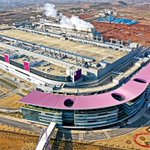
✍️ @astoks examines how certain urban districts and high-profile sites in #Singapore are conceptualized as “showrooms” for the #infrastructure and urban #technologies they aim to export around the world.
📖 buff.ly/j9uBRnG


Andrew Stokols retweeted

In 20 years, Thailand went from 5th Tiger, to the sick man of Asia:
We forfeited manufacturing booms to Vietnam, Indonesia, and India, because high-value supply chains can’t tolerate the paralysis caused by our negative politics that continually ejects governments.
Investors accepted the risk when returns were high and viable alternatives few; But 1990s laggards reformed and caught up, while we drifted.
Whoever runs the next govt, they must face two truths:
1.)The Thai economy has SERIOUS structural drags that require immediate and earnest action
2.)If we ignore them and front-load demand with dubious, debt-fueled stimulus and subsidies that evaporate without building any resilience, Thailand will keep sliding backward while our rivals surge ahead.
