Personal strategist helping experts recognize their authority, know where they stand, and decide what to do next. Be the Advantage.
Tulsa, Oklahoma
Joined August 2008
- Tweets4K
- Following525
- Followers898
- Likes2.1K


Jimbo 🏴☠️ retweeted

The future of #ArtificialIntelligence is not pre-determined. As a technology developed by human beings, its future depends on the choices we make. We therefore have the responsibility to guide, change and, when necessary, reject its applications. A reliable system that serves the human person is of greater value than one that is exceptionally powerful but whose consequences cannot be adequately foreseen or controlled.

Jimbo 🏴☠️ retweeted

If you haven’t watched this yet please do.
I don’t care if you are Republican or Democrat, if this doesn’t move you to vote against the current state of affairs nothing will.
Our grandchildren will watch this clip in history class, to better understand the political climate during Trumpism.

Jimbo 🏴☠️ retweeted

EmDash 1.3 is out 🚀
🕓 Readable revision history: who changed what, right in the editor ✍️ The admin's toolbar and image picker when editing on the page 🤖 One switch to ask AI crawlers not to train on your site ⚡ Fewer D1 round trips #EmDash @EmDashCMS theweeklydash.com/emdash-1-3




Jimbo 🏴☠️ retweeted

WP rocket did badly here. But the official @wordpress account needs to stop shitting on individual parts of its ecosystem.
Terrible look, and deeply unprofessional behavior.

Ouch, telling people not to update... this wasn't a bug in 7.1. Perhaps consider your usage of @wp_rocket. This is also part of the risk of using plugins outside the official plugin directory, which has many alternatives that seemed fine on the 7.1 release day.

Jimbo 🏴☠️ retweeted

Who's gonna tell vibe coders about...
> Rate Limiting
> Caching
> Load Balancing
> Reverse Proxies
> API Gateways
> CI/CD
> Docker
> Kubernetes
> Service Discovery
> Circuit Breakers
> Timeouts
> Retries
> Exponential Backoff
> Idempotency
> Message Queues
> Pub/Sub
> Event-Driven Architecture
> Distributed Transactions
> Saga Pattern
> Dead Letter Queues
> Cron Jobs
> WebSockets
> Long Polling
> Server-Sent Events
> Database Indexing
> Query Optimization
> N+1 Queries
> Connection Pooling
> Read Replicas
> Sharding
> Partitioning
> Replication
> Leader Election
> CAP Theorem
> Eventual Consistency
> Optimistic Locking
> Pessimistic Locking
> Distributed Locks
> Race Conditions
> Deadlocks
> Memory Leaks
> Garbage Collection
> Thread Safety
> Backpressure
> Autoscaling
> Horizontal Scaling
> Vertical Scaling
> CDN
> Edge Caching
> Cache Invalidation
> Feature Flags
> Blue-Green Deployments
> Canary Releases
> Rolling Deployments
> Rollbacks
> Health Checks
> Liveness & Readiness Probes
> Monitoring
> Logging
> Distributed Tracing
> Metrics
> Alerting
> SLOs
> SLIs
> Error Budgets
> Observability
> Secrets Management
> IAM
> OAuth
> JWT Rotation
> TLS
> Encryption at Rest
> Encryption in Transit
> WAF
> DDoS Protection
> CORS
> CSRF
> SQL Injection
> XSS
> SSRF
> Database Migrations
> Schema Versioning
> Disaster Recovery
> Backups
> Failover
> Multi-Region Deployments
> Chaos Engineering
> Cost Optimization
> Cold Starts
> Serverless Limits
> Latency
> Throughput
> P99 Latency
> Tail Latency
> Network Partitions
> Clock Skew
> DNS
> TCP vs UDP
> HTTP/2 & HTTP/3
> gRPC
> Webhooks
> API Versioning
> Semantic Versioning
> Infrastructure as Code
> Terraform
> Helm Charts
> Build Caching
> Dependency Hell
> Production Incidents
> On-call
> Postmortems
...until the app gets its first million users.

Jimbo 🏴☠️ retweeted

Today we're opening up the DoorDash CLI in limited beta.
`dd-cli` lets you order DoorDash directly from your agent: search stores, find the best deals, check out, and more.
Early access for US/Canadian macOS developers by waitlist. Excited to see what folks build!
Jimbo 🏴☠️ retweeted

Something I have been thinking about: in the past, the best engineers I knew spent a lot of time automating their work in various ways. Better vim/emacs automations, writing lint rules to catch repeat code issues, building up a suite of e2e tests so they don't need to smoke test the app manually. These kinds of things were the highest leverage activities an engineer could do, because it multiplied their own output, which in turn meant they could build more things.
I think many of these automations have become even more important now. This is true for a number of reasons.
First, infra and DevX automation speeds you up. And if you are running an army of agents, each of those agents will be sped up also. More automation == more output per unit of time.
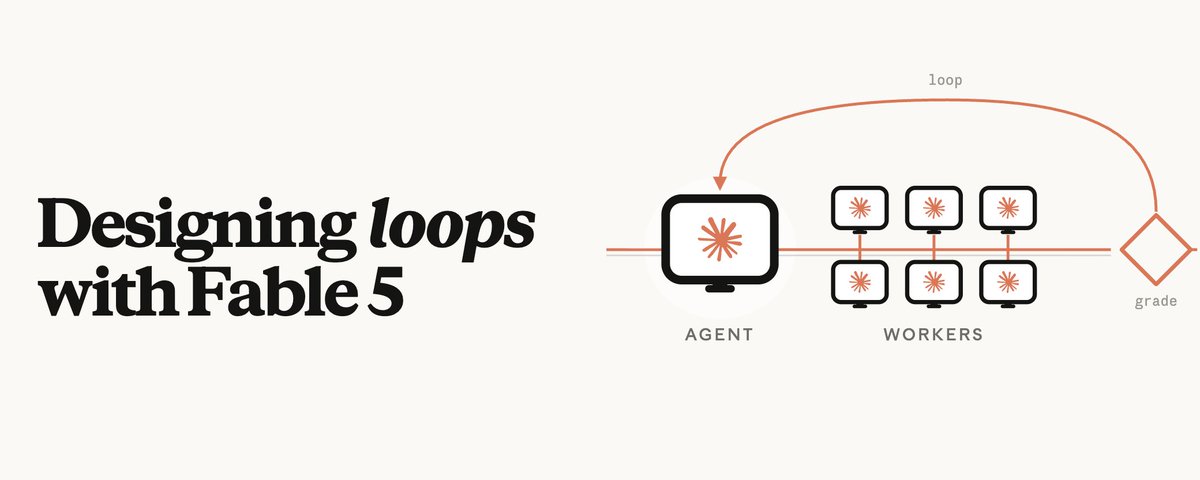
Second, moving things to code improves efficiency. Your agent could fix an issue every time it sees that issue happen, but that uses tokens and might miss cases. If Claude instead writes a lint rule, CI step, or routine, that class of issue can be fully automated forever. This is really what people are talking about when they talk about loops -- it's about automating entire types of busywork rather than solving them one off. This isn't a new idea at all. Engineers have been doing this for a long time!
Third and most importantly, automation makes it possible for others to contribute to the codebase more easily. Increasingly what I am seeing is engineers are contributing to codebases on day one because Claude can navigate the codebase for them, and that non-engineers are able to contribute to a codebase as effectively as engineers can. What gets in the way of both of these is domain knowledge that lives in peoples' heads rather than in automation -- the stuff you used to have to learn when ramping up. What has changed thanks to agents is the domain knowledge that can be encoded as infrastructure is no longer limited to what is expressible in lint rules and types and tests; it can now capture nearly all domain knowledge, encoded as code comments and skills and CLAUDE.md rules and memories. If I put up a PR for an iOS codebase I don't know and a code reviewer rejects it because it doesn't use the right framework, or if a designer builds a new feature and it gets rejected because it doesn't follow the right architectural patterns, these are failures of automation.
Every team should be writing the CLAUDE.md's, REVIEW.md's, skills, and docs that enable agents to productively work in their codebase with zero additional context from the prompter. This sounds crazy, and at the same time is a natural extension of the stuff engineers have always done: automate, and encode domain knowledge as infrastructure. As the model gets smarter and as the harness matures, this task becomes easier. In the meantime, it is on every team to look for ways to convert their domain knowledge to infra so that Claude can write code better, so that code review catches issues automatically, and so the next person working on your codebase can contribute more easily.


Jimbo 🏴☠️ retweeted

An MTS at Anthropic wrote an article about loops + Fable. Really interesting read, Fable definitely has a learning curve.