



Pinned Tweet
진짜 본인이 윤어게인이고 윤석열 대통령님을
믿고 이념을 이어가고 있다면
한동훈 당게 사건을 잊어서는 안됩니다.
윤석열 대통령과 김건희 여사를 향한 비방글로 시작된 ‘당원게시판 사건’을 덮고 넘어갈 수는 없습니다.
누가 어떤 글을 작성했는지,
가족 명의 계정과 관련해 실제로 무슨 일이 있었는지,그 당시 한동훈이 언제 무엇을 알았는지, 왜 이 문제가 그렇게 오랫동안 명확하게 해명되지 못했는지,
감정이나 계파의 문제가 아니라 끝까지 사실관계를 확인해야 할 문제입니다.
윤어게인은 단순히 이름을 외치는 구호가 되어서는 안 됩니다.
선택적 기억으로는 아무것도 바로 세울 수 없습니다.


구해줘🇰🇷🇺🇲 retweeted

📢유튜버들 잘못된 정보
국회의원 짜를 수 있냐?
=>200명 동의가 필요하다
국민의힘 전원 사퇴하면 국회 해산된다?
=> 사퇴한 지역 보궐 선거 열린다
우리나라는 국회를 해산할 수 없다
📢결론 : 우리나라는 국회해산 안된다
국민의힘과 더불어민주당 의원들이 전원 사퇴해도 국회가 자동 해산되지 않으며, 보궐선거(지역구)와 의석 승계(비례대표)가 이뤄집니다
📢현행 헌법(1987년 개정 헌법)에는 국회 해산권이 없습니다.
과거 유신헌법(제4공화국)·제5공화국 시절에는 대통령에게 국회 해산권이 있었습니다.
1987년 9차 개헌 때 민주화 과정에서 이 권한이 삭제되었습니다. 대통령제 국가에서 대통령이 국회를 마음대로 해산할 수 없도록 한 것입니다.
현실적으로 가능한 방법은 사실상 없습니다. 일부에서 “의원 수를 200명 미만으로 만들면 자동 해산”이라고 주장하는 경우가 있지만, 이는 헌법 해석상 성립하지 않는 주장으로 평가됩니다.
📢윤석열 대통령도 87개헌을 하자는 부분이 국회해산권 관련이고 민주당의 입법폭주, 줄탄핵, 예산삭감으로 국회해산 검토했으나
불가능하여 경고성 계엄령을 선택했다고 재판장에서 말씀하셨죠


구해줘🇰🇷🇺🇲 retweeted
1. 대통령이 헌법규정에 따라 계엄을 선포했고, 국회의 해제요구에 따라 계엄을 해제했는데, 어떻게 내란인가? 헌정질서 내에서 계엄이 선포되고, 계엄이 해제요구되고, 그리고 계엄이 해제됐는데.
2. 국회의 해제요구에도 계엄을 해제하지 않고, 폭력으로 계엄을 유지하려했다면 이는 당연히 내란이고, 헌정질서를 무너뜨리는것이지만.
3. 더욱이 장기집권의 욕망에서 시작된 것도아니고, 입법독재로 인해 주요부처가 기능이 불가능할정도로 예산이 삭감되고, 주요부처의 공직자들이 대거 탄핵되어 정부기능이 마비되는 가운데, 국민에 대한 호소였는데.
4. 선거관리의 문제가 지속되는데도, 사법부의 보호 아래 언터쳐블이 된 선관위문제를 호소하기 위함이었는데.


구해줘🇰🇷🇺🇲 retweeted

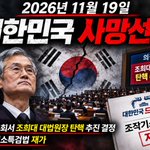
전 세계에 민주주의 사망, 후진국 선언
李대통령, 조작기소 특검법 재가…19일 공포·시행 (출처 : 네이버 뉴스) naver.me/xSBiksyS


구해줘🇰🇷🇺🇲 retweeted
추경호 재판은 애초에 기소거리 자체가 안된다
계엄 발령당시 계엄해제 표결을 방해하려고 국힘의원들을 국회가 아닌 당사로 장소변경해 의원들에게 혼란을 야기시킨거라는데
계엄해제는 국회 재적의원 과반 찬성으로 계엄 해제 요구안이 의결된다
즉 151명만 찬성하면 계엄해제가 가능하단 뜻이다
국회의원 300명중에 민주당 의석수가 160석이다
151표 확보를 충분히 하고도 남는다
추경호가 민주당 의석수만으로도 계엄해제 할 수 있는걸 몰라서 일부러 계엄해제 방해하려고 국힘의원들 집결 장소 변경을 해서 표결 방해 하냐구요?
추경호가 계엄 해제 의결 자체를 막을 수 있는 지위나 상황 지배력을 가졌냐구?
이건 애초에 기소거리도 안되는데
한동훈과 친한파들은 추경호가 그럴 의도가 있다고 본거야?
한동훈 책이 증거야?
텔레그램에서도 타임라인보면 추경호가 애초 국회 집결 통보했는데
한지아 김용태가 국회 통제된다 말하고 장소가 변경됐다.
그런데 한지아는 본인이 국회 봉쇄됐다까지 말해 장소변경 영향을 끼치고도 타임라인이 잘못됐다며 안철수 의견에 반박을 한다
또 친한파는 재판장에 나가 추경호에게 불리한 증언을 한다.
그날 당시 복잡한 현장 상황때문에 장소변경 된거지
애초에 계엄해제 표결 방해할만큼 국힘이 위치가 되냐는거다
계엄표결 방해가 성립자체가 안되는 내용을
검찰은 기소를 하고 재판장은 20년 구형때렸다 이러니 조작 기소라는 거다.
추경호가 숫자도 못 세는 바보냐구요?
한동훈과 친한파는 이래서 민주당 도우미란것이다
이재명 탈옥 도우미 = 한동훈

구해줘🇰🇷🇺🇲 retweeted

조국 딸 입시 비리 사건 다들 잊지 않았제? ㄷㄷ
좌로남불 ㄷㄷㄷㄷㄷㄷ
그래서 지금 니들이 명확한 답도 없고 교육부 장관은 춤이나 추고 앉았고
𝙎𝙄𝘽𝘼𝙇 할 줄 아는 건 춤추는 것뿐인가?
정작 책임지고 해결해야 할 문제에는 왜 이렇게 무능하노
교진이 춤 너무 놀라워서 오늘도 50번 넘게 돌려봄
@chamckj2025

구해줘🇰🇷🇺🇲 retweeted
과거 그의 사법부정시험의혹 현재 그의 대선부정선거의혹 ㅋㅋㅋㅋㅋㅋㅋㅋㅋㅋㅋㅋㅋㅋㅋㅋㅋㅋㅋㅋㅋㅋㅋㅋㅋㅋ
부정이 판을친다 판을 쳐
나라꼬러지 잘 돌아간다

구해줘🇰🇷🇺🇲 retweeted

🚨Hwang Kyo-ahn and South Korea’s Election Fraud Allegations: Eighteen Years of Unanswered Questions
Hwang Kyo-ahn now presents himself as a leading voice in the fight to uncover election fraud in South Korea. But before claiming the mantle of truth-seeker, he owes the public some answers.
In the aftermath of South Korea’s 2002 presidential election, Han Young-soo, also known as Han Sung-cheon, a former election commission official, raised serious concerns about electronic vote-counting machines.
At the time, Hwang was serving as chief of the Public Security Division II at the Seoul District Prosecutors’ Office.
In 2003, Han went so far as to seek judicial review of prosecutors’ handling of election-related allegations. What followed was not the public reckoning he had sought, but a controversial personnel transfer.
Allegations of electoral misconduct would continue to circulate for years, with critics maintaining that serious questions about the National Election Commission had been left unresolved.
What, during those years, was Hwang Kyo-ahn doing?
The question is particularly relevant given his professional background.
Before becoming a senior public security prosecutor, Hwang had served as chief of a computer crimes investigation division. He was therefore no stranger to either the technical complexities of computerized systems or the legal responsibilities of investigating politically sensitive allegations.
During the 2002 presidential election, he headed a public security prosecution division in Seoul. He remained in that position in early 2003, when Han was publicly challenging the integrity of electronic vote counting.
Then came 2014.
Han and a co-author published [The White Paper on Election Fraud in South Korea’s 18th Presidential Election], a book challenging the official account of the 2012 presidential election.
Police initially referred the case to prosecutors with a recommendation not to pursue charges.
But prosecutors in the Seoul Central District Prosecutors’ Office rejected that assessment and sought arrest warrants. Both authors were subsequently detained on defamation allegations.
The justice minister at the time was Hwang Kyo-ahn.
That fact does not, by itself, establish that Hwang ordered or influenced the arrests. But it raises a legitimate question about accountability: What did the justice minister know about the case, and did he exercise any authority over its handling?
Consider the chronology.
2003: Hwang was a senior public security prosecutor.
2014: Hwang was South Korea’s minister of justice.
2020: Hwang was the leader of the country’s principal opposition party.
For nearly 18 years, Hwang occupied positions of considerable legal or political authority.
Why, then, did he not emerge as a leading advocate for investigating these election-related allegations while holding those offices?
And why, following the disputed 2020 parliamentary election, did he promptly acknowledge his party’s defeat and resign as opposition leader rather than make an institutional challenge to the election results his party’s official position?
The contradiction becomes more striking in light of his subsequent political transformation.
Hwang later emerged as one of the most prominent figures demanding investigations into alleged election fraud.
Yet longtime activists who say they have spent decades documenting alleged electoral irregularities have also accused his political camp of undermining their efforts.
Those accusations require independent verification. But they cannot simply be dismissed because they are politically inconvenient.
Why do some self-described Hwang supporters portray independent election-integrity activists as pro-China leftists merely for demanding a comprehensive, impartial examination of South Korea’s electoral history?
21대 총선이후 지지자들은 부정선거 확신하고
지푸라기 라도 잡는 심징으로 선관위근처
쓰레기통 뒤지고 다닐때 당대표라는 인간은 선거개표 방송이 다 끝나기도 전에 사임
기자회견 했죠. 선거전 공천 부터 시작해서
의혹 투성입니다.

🚨Hwang Kyo-ahn and South Korea’s Election Fraud Allegations: Eighteen Years of Unanswered Questions
Hwang Kyo-ahn now presents himself as a leading voice in the fight to uncover election fraud in South Korea. But before claiming the mantle of truth-seeker, he owes the public some answers.
In the aftermath of South Korea’s 2002 presidential election, Han Young-soo, also known as Han Sung-cheon, a former election commission official, raised serious concerns about electronic vote-counting machines.
At the time, Hwang was serving as chief of the Public Security Division II at the Seoul District Prosecutors’ Office.
In 2003, Han went so far as to seek judicial review of prosecutors’ handling of election-related allegations. What followed was not the public reckoning he had sought, but a controversial personnel transfer.
Allegations of electoral misconduct would continue to circulate for years, with critics maintaining that serious questions about the National Election Commission had been left unresolved.
What, during those years, was Hwang Kyo-ahn doing?
The question is particularly relevant given his professional background.
Before becoming a senior public security prosecutor, Hwang had served as chief of a computer crimes investigation division. He was therefore no stranger to either the technical complexities of computerized systems or the legal responsibilities of investigating politically sensitive allegations.
During the 2002 presidential election, he headed a public security prosecution division in Seoul. He remained in that position in early 2003, when Han was publicly challenging the integrity of electronic vote counting.
Then came 2014.
Han and a co-author published [The White Paper on Election Fraud in South Korea’s 18th Presidential Election], a book challenging the official account of the 2012 presidential election.
Police initially referred the case to prosecutors with a recommendation not to pursue charges.
But prosecutors in the Seoul Central District Prosecutors’ Office rejected that assessment and sought arrest warrants. Both authors were subsequently detained on defamation allegations.
The justice minister at the time was Hwang Kyo-ahn.
That fact does not, by itself, establish that Hwang ordered or influenced the arrests. But it raises a legitimate question about accountability: What did the justice minister know about the case, and did he exercise any authority over its handling?
Consider the chronology.
2003: Hwang was a senior public security prosecutor.
2014: Hwang was South Korea’s minister of justice.
2020: Hwang was the leader of the country’s principal opposition party.
For nearly 18 years, Hwang occupied positions of considerable legal or political authority.
Why, then, did he not emerge as a leading advocate for investigating these election-related allegations while holding those offices?
And why, following the disputed 2020 parliamentary election, did he promptly acknowledge his party’s defeat and resign as opposition leader rather than make an institutional challenge to the election results his party’s official position?
The contradiction becomes more striking in light of his subsequent political transformation.
Hwang later emerged as one of the most prominent figures demanding investigations into alleged election fraud.
Yet longtime activists who say they have spent decades documenting alleged electoral irregularities have also accused his political camp of undermining their efforts.
Those accusations require independent verification. But they cannot simply be dismissed because they are politically inconvenient.
Why do some self-described Hwang supporters portray independent election-integrity activists as pro-China leftists merely for demanding a comprehensive, impartial examination of South Korea’s electoral history?


