






David Wright retweeted

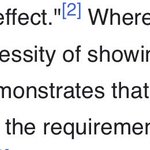
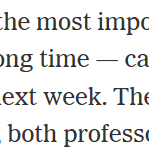
Everyone is acting like this is the first time machines mogged mathematicians.
In 1976 they *lost their minds* over the first computer aided proof, quotes via new @PessimistsArc post newsletter.pessimistsarchive…


David Wright retweeted

This is the per-pupil funding for the elementary school Nikole Hannah-Jones sent her daughter to.
If you subscribe to the funding theory of education, how much would have been enough? It's already crossed the average per capita annual income threshold. Maybe $100k? $200k?


David Wright retweeted

How to fix the student loan crisis:
1. Allow student loans to be discharged through bankruptcy
2. End federal guarantee/backing/issuing of new loans
Those in the worst situations with lower income and high loan balances can file for bankruptcy to get rid of the unpayable burden.
No handouts to higher income that would/could pay off anyway
Stops the problem in its tracks for the future because students are no income/asset/skill borrowers, so student loans will disappear entirely. The only reason they exist today is because the government guarantees them.
This created an incentive for universities to jack the price up knowing loans would cover, and lenders would lend because the government would pay.
This will save the government money over the long term because anything it loses from bankrupt borrowers it gains from no more future loans.
These two changes eliminate student loans from existence, frees up the most burdened borrowers, and lowers the cost of education because college prices will plummet once the government stops paying for loans.
Easy fix, pays for itself, boosts the economy with higher consumer spending, and lowers the cost of education for all.
David Wright retweeted

idk why but i find it so funny that the euro banknotes featured FICTIONAL bridges so as to not cause conflict between member states but then a dutch town decided to just build all of the bridges to claim them??!?

David Wright retweeted

Cultural liberals like Carl love to cite immigration's economic benefits. But ask them to optimize it even slightly for economic benefit, or exclude those predicted to be net costs, and they immediately blanch.
David Wright retweeted

The payment of payroll taxes, and in particular Social Security taxes, opens individual claims to future benefits and hence cannot be pooled with income taxes without adjustment.
The net tax is the difference between the tax and the actuarial value of the claim it buys.
At the bottom of the distribution, internal rates of return on Social Security contributions are higher than market rates, which means that these contributions, rather than being net taxes, truly are net subsidies. This means that the 12.6% "tax", once adjusted, becomes a net subsidy.
As you move up in the distribution, internal rates of return get lower and lower, and Social Security essentially forces workers to buy annuities above market prices, thus hiding net taxation.
This makes Social Security, a redistributive retirement program and a legacy of the New Deal, a contributor to the progressivity of the fiscal system, not the opposite like Zucman's graphs suggest.

Contrary to what you claim, working-class people contribute significantly to funding American society today. Payroll taxes and consumption taxes absorb a high fraction of their income.
For the middle class, the income tax starts kicking in on top of these.
And for the rich, the corporate tax becomes significant.


David Wright retweeted

When I write code myself I structure it in a way that enables me to reason about its correctness. When I have AI write code for me at a minimum I need to spend time understanding the code so I can do the same kind of analysis. And it might not be written in a verifiable way.
David Wright retweeted

We liberals have a way of letting good intentions run amok.

This is a great piece with some mind-boggling statistics.
- At Brown and Harvard, more than 20% of undergraduates are registered as disabled
- At Amherst: more than 30 percent
- At Stanford: nearly 40 percent
Soon, many of these schools "may have more students receiving [disability] accommodations than not, a scenario that would have seemed absurd just a decade ago."
As students and their parents have recognized the benefits of claiming disability—extended time on tests, housing accommodations, etc—the rates of disability at colleges, and especially at elite colleges, has exploded.
America used to stigmatize disability too severely. Now elite institutions reward it too liberally. It simply does not make any sense to have a policy that declares half of the students at Stanford cognitively disabled and in need of accommodations.

David Wright retweeted

I wrote a whole book on housing regulation, yet keep discovering more terrible regs. "We talk endlessly about the 'missing middle.' But the real catastrophe was the 'banished bottom'—the deliberate destruction of the cheapest rung of the housing ladder."
ryanpuzycki.com/p/the-banish…

David Wright retweeted

Fair question. What do we learn from gravitational waves? The form of the chirp signal is well understood from Genearl Relativity. 1/


David Wright retweeted

This is the kind of ahistorical take you get from watching an old Horatio Hornblower miniseries on A&E, and then applying the modern political spectrum to the work of fiction you just saw.
The American revolutionaries were not "liberals" in any modern sense of the word.
They were not fighting for change.
They were fighting to keep their accustomed way of life.
While most of the colonists considered themselves Englishmen, up until the time of the troubles, the British crown and Parliament actually had very little to do with the Americas. The colonies were self-organizing and mostly self-governing, and had a tradition of settling issues on the local level with town meetings and exhaustive debate.
This all changed after the "French and Indian war/seven years' war", wherein Britain conquered considerable additional territory in the new world, but doubled its national debt in doing so.
Beginning with the Royal Proclamation of 1763, Britain began a series of political actions intended to bring new world colonies under more direct control, in order to exploit these new holdings and replenish the coffers of the state, the rationalization being that the new world colonists, as a sort of collective entity, had been benefited by Britain's efforts in fighting the war.
The Americans objected on the grounds that they were not represented in Parliament, which they had never needed or wanted to be, since it had little to do with them in the past.
But now it was trying to tax them.
This led to a little over ten years of escalating political tension, culminating in the crown sending royal governors with troops to bring the unruly colonists to heel.
Problem for those governors was, their troops were vastly outnumbered by local militias, the fighting bodies which colonists had organized to defend themselves from bloodthirsty "Indians" (which was what they called the local tribal people, the name of Columbus's confusion having stuck).
These existed in the first place because the Americas had no army garrisons to speak of. They were responsible for their own defense as much as for their own upkeep and governance.
So, when the "royal governor" of Massachusetts (whose actual control did not extend, in practical terms, beyond the city of Boston) wrote to the crown requesting more troops, he was refused, and told to disarm the colonists if he had troubles with them.
The battles of Lexington and Concord began as British powder raid.
In reality, these were not two distinct battles, but a series of rolling engagements, as British regulars were repeatedly savaged by militia forces on their flight back to Boston to hide under the cover of the guns of the HMS Sommerset.
After that, it was on, although it would not be until over a year later that the Americans formally drew up a document declaring independence.
So, no, the revolutionaries were not "liberals" or "progressives" the modern sense. They did not look at their society one day and say "this needs to change".
The changes they made occurred decades earlier, slowly, gradually, and organically as part of their adaptation to life on the frontier.
They had developed a new set of traditions and were fighting to keep them, which arguably makes them conservatives, in not quite conservatives in the modern sense.
Much of the political philosophy (Common Sense, etc) around the revolutionary war was a codification and formalization of attitudes shaped by the frontier way of life, not a radical philosophy infiltrating a fixed and stable society.
Understanding previous eras requires a great deal more than applying modern attitudes to a few vaguely remembered historical dates and events.


David Wright retweeted

People underestimate how much the autism epidemic matters.
The reason I say this is simple:
Medical care for autism is on track to cost $1 trillion a year by 2035. Trillion, not billion.
Autism is severely overdiagnosed.


David Wright retweeted

A true genius, and an American original. RIP.
"Tom Lehrer, Musical Satirist With a Dark Streak, Dies at 97" nytimes.com/2025/07/27/arts/…


David Wright retweeted

Everyone thinks that the way to get into college is to be a favored minority but in my experience the best way to get into college is: attend private schools all your life, have a movie star parent, & get that family friend who happens to be a NYer editor to proofread your essay
