

Recovering journalist and dad.
Joined February 2009
- Tweets9.8K
- Following2.3K
- Followers645
- Likes28.7K
Ian Cameron retweeted

Ambassador Susan Rice (@AmbassadorRice) spoke alongside @So8res and @ForHumanityPod in DC:
"As a former National Security advisor, the 'but China' argument is BS"
Ian Cameron retweeted

Here's Duffy last year, crowing about how the money the FAA was getting from the Big Beautiful Bill would fix everything
Ian Cameron retweeted

Surreal to briefly talk to Susan Rice and @So8res together at this march yesterday. The cheers and honks were heartening! People really do seem to be embracing AI as the existential risk it is.

Ian Cameron retweeted

Letsss gooooo #1 🥳🥳🥳

FIRST NEVER FADES.
We will be selecting first overall in the 2027 WNBA Draft!
Presented by @instacart

Ian Cameron retweeted

🚨URGENT WARNING! Former National Security Advisor Susan Rice says "there is nothing more urgent than stopping Al from achieving super intelligence" and causing human "EXTINCTION."
The next Senate Majority Leader MUST make Al safeguards a TOP PRIORITY. Humanity cannot afford to wait!
Ian Cameron retweeted

Thrilled and honored to speak alongside @So8res and @AmbassadorRice before the @StopTheAIRace's DC March For An AI Treaty today.
What an inspirational day. We're going to ban RSI.
And don't believe the false frame big tech wants to put on this: We Are The Optimists.

Ian Cameron retweeted

This is the first time Stanford has scored at least 40 points against a P4 team since October 13, 2023.

Ian Cameron retweeted

This👇🏽👇🏽

Will Iran Becoming the Next North Korea? How a War Intended to Prevent a Nuclear Iran May Have Made It More Likely
The greatest strategic failure of the war with Iran may not be what the United States and Israel failed to destroy. It may be what they destroyed politically and strategically in the process.
For anyone whose primary objective was to prevent Iran from acquiring nuclear weapons, this war may ultimately prove disastrous.
The war may have simultaneously undermined the three main instruments for preventing a nuclear Iran: deterrence, diplomacy, and internal restraint within the Iranian leadership:
First, the war eliminated a leader who had long resisted the development of nuclear weapons. Ali Khamenei was certainly responsible for advancing Iran's nuclear capabilities, but he also maintained a longstanding position against actually producing nuclear weapons after 2003. Whether that position reflected religious convictions, strategic calculations, or both, it represented an important constraint on Iran's nuclear decision-making.
His killing removed that constraint without eliminating Iran's nuclear knowledge, technological capabilities, or strategic motivations. His successor, Mojtaba Khamenei, is not necessarily bound by the same calculations. More importantly, the new leadership has experienced something its predecessor spent decades trying to avoid: a direct, devastating war with the United States and Israel.
Second, the war exposed the limitations of American military deterrence.
For years, Washington and Jerusalem relied on the threat of military action to discourage Iran from crossing the nuclear threshold. As long as that threat remained theoretical, Tehran had to consider the possibility that pursuing nuclear weapons would trigger an overwhelming American response. Once the United States actually attacked, the calculation changed.
The war demonstrated America's extraordinary ability to destroy Iranian infrastructure. But it also demonstrated that military superiority does not necessarily translate into strategic victory. Iran did not surrender. Its political system survived. Its nuclear ambitions were not necessarily eliminated. And Washington discovered that even overwhelming military power could not guarantee the political outcome it wanted.
The threat of military force was once a powerful instrument of uncertainty. After the war, Tehran has a much clearer understanding of both American capabilities and their limitations.
Third, the war strengthened the strategic argument for acquiring nuclear weapons. This may be the most damaging consequence of all.
For years, opponents of nuclear weaponization within Iran could argue that crossing the nuclear threshold would invite a devastating American or Israeli attack. But that attack has now happened, despite Iran not possessing nuclear weapons.
The argument that nuclear restraint protects Iran from war has therefore become considerably harder to sustain. Those advocating a nuclear deterrent can now point to the destruction inflicted on Iran and argue that conventional capabilities, regional proxies, and nuclear ambiguity were insufficient to prevent an attack. Their conclusion could be straightforward: Iran needs a nuclear deterrent not to start a war, but to prevent another one.
That does not mean Tehran has already decided to build nuclear weapons. But it means the internal strategic argument in favor of doing so may be stronger than at any previous point. The increasingly explicit public statements by senior Iranian regime officials about the need to develop nuclear weapons only reinforce this assessment.
Fourth, the war has made a comprehensive nuclear agreement much more difficult and expensive. Before the war, negotiations could focus primarily on enrichment, sanctions relief, inspections, and verification. Today, any serious agreement must also address the consequences of the war itself.
Iran is unlikely to agree to major nuclear concessions without meaningful guarantees against renewed military attacks, access to frozen funds, the ability to export oil, and an acceptable arrangement regarding the Strait of Hormuz.
And this is where the strategic paradox becomes particularly striking. The United States may now have to make substantial concessions on Hormuz simply to create the conditions for negotiations over Iran's nuclear program. In other words, Washington could find itself sacrificing leverage over the Strait of Hormuz to preserve the possibility of preventing a nuclear-armed Iran.
Even then, there is no guarantee of success. The level of distrust is unprecedented, and Tehran has every reason to question whether any American commitment would survive another change of administration.
Fifth, the midterm elections demonstrated that Iran possesses a powerful means of deterring future American military action without nuclear weapons.
The disruption of global energy markets and the economic consequences of the war have imposed substantial political costs on the Trump administration. From Tehran's perspective, the Democratic victory provides evidence that Iran can influence Washington's strategic calculations by making a prolonged confrontation economically and politically unsustainable.
This is an important lesson for every future American president. The United States can inflict enormous destruction on Iran. But Iran can also impose costs on the American economy and the global energy system that Washington may find politically unacceptable.
Imagine how much more complicated this calculation would become if Iran also possessed nuclear weapons.
And this brings us to North Korea.
In 1994, the Clinton administration seriously considered military action against North Korea's nuclear facilities. But Washington understood that even a successful strike could trigger a devastating war on the Korean Peninsula.
The administration ultimately chose diplomacy and reached an agreement that temporarily froze important elements of North Korea's nuclear program.
That agreement eventually collapsed, and North Korea went on to acquire nuclear weapons.
The lesson is not that Iran and North Korea are identical. They are not. The lesson is that a state capable of imposing unacceptable costs on the United States can severely constrain Washington's military options, even when America enjoys overwhelming conventional superiority.
Iran has now demonstrated that it can impose such costs through its geographic position, its ability to disrupt energy markets, and its capacity for regional retaliation.
If Tehran eventually adds nuclear weapons to that equation, the American dilemma will become even more severe. The United States could find itself facing the same fundamental choice it has confronted with North Korea: tolerate a nuclear-armed adversary and rely on deterrence and containment, or attempt to eliminate its nuclear capabilities through a war whose consequences could be catastrophic.
And here lies the ultimate irony. A war launched in part to prevent Iran from acquiring nuclear weapons may have removed a leader who opposed weaponization, weakened the credibility of military deterrence, strengthened the arguments of Iranian nuclear hardliners, made diplomacy more expensive, and demonstrated the enormous political costs of another military confrontation.
The war did not make an Iranian nuclear bomb inevitable. There are still significant technical, political, and strategic obstacles, and Tehran may ultimately choose not to cross the threshold. But it may have made the decision to acquire nuclear weapons more attractive to those responsible for Iran's national security.
We may eventually discover that the most damaging consequence of the war was not that it failed to eliminate Iran's nuclear threat, but that it helped convince Tehran that nuclear weapons are the only reliable guarantee against another war.
That would be a devastating outcome for a military campaign intended to prevent precisely that scenario.
#Iran
#IranWar
#NorthKorea
Ian Cameron retweeted

Yes, this is a sensational story, but put the tabloids aside for a second.
Donald Trump is selling America’s security to our foreign adversaries.
In the spring, Marco Rubio warned senior Trump officials that Jensen Huang, CEO of Nvidia, was involved with a woman U.S. intelligence believed was a Chinese spy, recruited to push for American advanced chips to be made available in China — the exact policy that Jensen Huang was lobbying for in Washington.
Meanwhile, Trump has purchased roughly $6 million in Nvidia stock this year, including a $1 million purchase just a week before Trump’s commerce department approved selling Nvidia chips to China.
So the questions are simple. Who in the Trump Administration knew? When did they know it? And knowing it, why did they keep letting Huang make his case?
This is why an ethics bill that only covers Congress does not meet the moment. The conflicts aren’t confined to one branch. They run through the executive, they run through the agencies writing export rules, and they run through anyone with a financial stake in policy outcomes.
For all three branches of government: ban stock trading; ban prediction markets; ban the foreign gifts and investments, while you serve and for two years after. No exceptions.
America’s security and economic future can no longer afford the pay to play rules that Trump’s Washington runs on today.
nytimes.com/2026/11/08/techn…


Ian Cameron retweeted
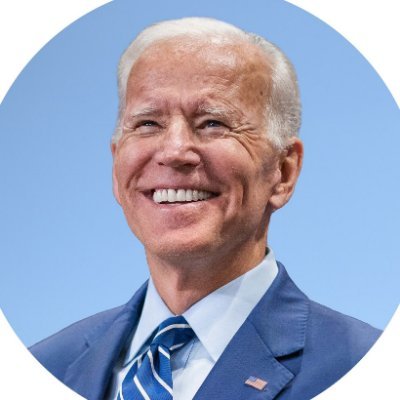
I want to share a brief update.
My presidential memoir, PROMISE ME, AMERICA, is coming out on November 17th. I hope you'll read it. It covers my years as President. The challenges we faced, the decisions I made, and why I made them. It's about who we are as a nation. What we stand for. And America's role in the world. More than anything, it's about my faith in the American people and the great American experiment in self-governance and democracy.
While writing the book, I was diagnosed with cancer, a disease known all too well to millions of Americans and their families. My doctors continue to be encouraged by how I've responded to treatment. And the prayers and kind words and well wishes from so many of you have meant more to me and Jill and our family than you can ever know.
Some days are better than others. It hasn't stopped me. But sometimes it slows me down. What that means is, unfortunately, I won’t be able to do as many conversations about my book as I’d hoped. However, I’m hopeful the words on the page speak for themselves.
Looking forward, I'm going to keep following what my father told me a long time ago: "Champ, when you get knocked down, get up." It's a good lesson for me. And for America.
We are blessed. America is the most unique nation on earth. Unlike other countries, we're built on an idea. An idea bigger than any ocean. More powerful than any army. Stronger than any tyrant or dictator. That idea? All of us are created equal.
Promise Me, America, we'll never forget it.
Ian Cameron retweeted
This is insane. Huge national security threat. WTAF?

The story keeps getting crazier. To recap everything that has been reported so far:
- The US intelligence community discovered that Jensen Huang, the CEO of the largest company in the world, was sleeping with Alice Huang, a Chinese spy and an executive at Megaspeed. (FT)
- Multiple independent investigations have concluded that Megaspeed is likely a Chinese cutout, which helps Chinese companies access AI chips or circumvent export controls. (NYT and Bloomberg)
- The US intelligence community also concluded that Alice Huang’s goal was to convince Jensen to lobby the U.S. government to loosen export controls on advanced AI chips. (NYT)
- The intelligence community relayed this information to “a small group of top US government officials” earlier this year. (FT)
- Over the last year, Jensen Huang has repeatedly lobbied the U.S. government to loosen export controls on advanced chips. @BISgov has done so, not only by permitting the export of H200 chips to China, but also not enforcing export controls that would have required a license for exports of the most advanced Blackwell chips to Megaspeed and Southeast Asia.
- Although @CommerceGov leadership was presumably briefed on this information by the U.S. intelligence community, @BISgov has taken no actions to tighten controls on Megaspeed or Southeast Asia.
- Megaspeed remains a preferred cloud partner of Nvidia, and continues to receive Nvidia Blackwell chips despite employing a Chinese spy who reportedly is romantically engaged with the CEO of Nvidia.
- Tens of billions of dollars worth of AI chips have been exported to Southeast Asia this year alone, and Malaysia and Singapore are now two of the four largest importers of AI chips in the world.
What is going on here??? We need answers. The question of who gets the most advanced AI chips in the world is literally the defining strategic question of our time. And not only does it seem like the MSS may be directly influencing the debate on export controls in the United States, but also @CommerceGov is refusing to listen to the warnings of the IC on this issue. What is a POSSIBLE good explanation for why Megaspeed is still receiving chips? Why is there not a license requirement for AI chip shipments to all of Southeast Asia? This is beyond strange at this point.
The fallout from this story will be massive. Obviously, the motivations underpinning Nvidia’s policy views opposing export controls must now all be questioned. But also, how did @BISgov sit on this information and has still taken no actions? We need answers.
Ian Cameron retweeted

One of the biggest upsets in Nevada history, a district never held by a Democrat in its 45 years of existence and a Trump+14 district.

INDY RACE CALL: Teresa Benitez-Thompson (D) is projected to win Nevada Congressional District 2.
Read more at our election results live blog: thenevadaindependent.com/art…

Ian Cameron retweeted

It’s official: Hannah Pingree is Maine’s next governor! Mainers voted for housing young people can afford to stay for, health care that works no matter where you live, and a governor who’s ready on day one. Congratulations, @PingreeHannah!

Ian Cameron retweeted
You rock @AngieNixon! Just the beginning.

Thank you, Florida.
We didn’t get the result we fought for tonight. I’m not going to pretend that it doesn’t hurt.
But I want y’all to hear me. What we built together is REAL. Every door you knocked, every call you made, every dollar you gave and every friend you brought to the polls proved that working people in this state are ready for something better.
That movement isn’t going anywhere, and neither am I.
The fight continues.
Love, Angie 💗
#AngieForFlorida

Ian Cameron retweeted

David Jolly was too good a candidate for Florida. So now we have a convicted felon governor and president and Florida will continue to be the humid hellscape of idiocy it always has been. I am proud to have met and supported David Jolly, who ran a campaign of decency, substance and humanity. Wish us luck here, as a completely incompetent former drug dealer and fraudster attempts to take the reigns of this hot mess. Now let’s move on to the rest of the country, where people aren’t that dumb. Wooooooooooot! 🌊🌊🌊🌊


