
AI for Biology PhD Student @GriffinCMU | Advised by @jmuiuc and @ericxing | 🪀
Joined June 2021
- Tweets142
- Following775
- Followers234
- Likes1.5K





Pinned Tweet
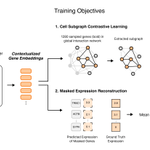
Contextualized gene representations work surprisingly well for predicting multigene perturbation effects.
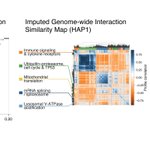
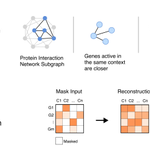
I’m excited to introduce EMBER, a pretrained gene-centric foundation model designed specifically to learn context-specific gene representations. A joint work with @jmuiuc and @ericxing.
With innovations in single-cell pretraining and dataset curation, EMBER gene representations can be combined with a lightweight probe for single gene knockouts, genetic interactions (double knockouts), and even drug perturbations.
Both a 🧵 and a 🎥, got in front of a camera to share some highlights! (1/n)
This is fantastic! I think one unfortunate side effect of ML research's emphasis on architectural novelty is that adding more bells and whistles can make it hard to tell where the performance gains are actually coming from. Ablations help, but there are always more comparisons to run haha.
Strong simple baselines help keep things grounded and put the results in context.
Congrats @probablybots and team!


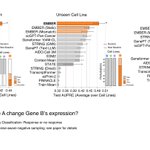
For drug prediction, we used EMBER by representing each drug as a set of its contextualized gene targets. EMBER came out on top on unseen drug perturbation prediction. (9/n)

All in all, EMBER gives you contextualized gene representations, and those representations can be composed with a small predictor for any perturbation task.
Please check out the paper; there were some other things I didn’t get to touch on like prioritizing trigenic interactions and drug repurposing.
Feel free to reach out for any questions! (n/n)
Preprint: biorxiv.org/content/10.64898…
Code: github.com/ma-compbio-lab/EM…
Data: huggingface.co/datasets/Nick…

Nicholas Ho retweeted

Cell-state conditioned sequence model of chromatin & expression trained jointly across diverse cell contexts by @zhou_jingtian & colleagues. Nice addition to the growing collection of joint cis-trans models of gene regulation. Still lots to do make the trans component causal.

Our cells carry the same DNA, but how this DNA is interpreted differs wildly from cell to cell. In a new preprint, Science Fellow @zhou_jingtian and team introduce Bolero, a model conditioned on cell state that predicts chromatin accessibility and expression from DNA alone.

Nicholas Ho retweeted

In our Nature paper, we introduce the first superhuman Stratego AI, which we built using general techniques that we developed for RL & test-time compute under imperfect information. 1/N

Nicholas Ho retweeted

We asked a basic unanswered question in tissue biology: Can the many molecular exchanges between neighboring cells be organized into reusable communication programs - much like genes into pathways?
We introduce SpiderNet, which learns cell-cell meta-interactions (MIs): directed sender->receiver programs linking sender regulators, ligand-receptor bridges, and receiver responses, while mapping where each program is active in tissue. Across diverse contexts, MIs recur, form multicellular relays, predict neighboring-cell responses to perturbation, and connect local signaling to tissue states and phenotypes.
We hope MIs provide an intermediate language for spatial omics, moving from catalogs of local contacts toward interpretable, comparable, and eventually perturbable programs of multicellular regulation.
📚 Preprint: biorxiv.org/content/10.64898…
🚀 Led by the amazing Junjie Tang @JJTang_1995 in the lab.

I very like! this is a good reminder to always be familiar with the original data generation process

If every step in a scRNA-seq experiment loses just 1% of the signal, you lose almost 40% of the total signal after 50 steps.
Noise and poor reproducibility are common problems when working with this kind of data. Yet, as computational biologists, we often treat data collection as a black box and start our work from the count matrix.
I wrote a post about what can go wrong before that matrix reaches us, from sample selection and tissue handling all the way to sequencing and read counting. I hope it helps other computational biologists better understand where their data came from.
Post: euxhenh.com/blog/scrnaseq-wh…
Nicholas Ho retweeted
I spoke with @Nature, alongside several other researchers, about why many AI researchers still choose academia despite the growing pull of industry. Academia's unusual freedom to choose which questions are worth pursuing is powerful. But I do not think academia and industry need to be opposites. As AI reshapes science, we need models that let them co-evolve, combining academia's long-term freedom and openness with industry's resources, scale, and ability to rapidly translate ideas into impact. nature.com/articles/d41586-0…


Nicholas Ho retweeted

Do spatial transcriptomics foundation models (SFMs) actually learn biologically meaningful spatial patterns? 🧬
Excited to share our new work assessing if current spatial foundation models learn multi-scale spatial variation in gene expression (spoiler: mostly no)
Nicholas Ho retweeted
20 years ago today, on April 7, 2006, I submitted the only paper I published during my PhD to @genomeresearch. By today's standards, the work feels too simple, and every figure looks plain. Science has moved fast, and I am working on completely different problems now. That era is gone. genome.cshlp.org/content/16/…

Nicholas Ho retweeted
very comprehensive Review on single-cell foundation models from @JiayuanDing, @Xiaojie_Qiu, @TheodorisLab, and colleagues. After going over it, I would encourage the authors to make it more critical rather than primarily an inventory of models.
First, I think Fig 1 needs some rethinking. The definition of scFM has become too loose. For example, the actual model unit of GET is celltype pseudobulk aggregated from scATAC-seq, hence not single cell model. Also thanks for highlighting our TissueNarrator, but we certainly do not consider it a bona fide scFM - it is a specialized spatial transcriptomics model built by leverging an existing foundation LLM (Qwen). TissueNarrator is very interesting and we re having lots of fun w/ it but it's not a scFM. Anyway - Fig 1 seems to mix FMs, specialized models built on FMs, and task-specific models into one big family tree.
More broadly, I think the more interesting question for a scFM review in 2026 is not how many scFMs now exist or how their architectures differ, but what has the scFM paradigm actually bought us? Since the first wave around scBERT/Geneformer/scGPT, the number of models, parameters, and pretraining cells has exploded, but as a field we are not convinced that capabilities have advanced proportionally.
- Where has large scale pretraining enabled something that a strong specialized model could not do ?
- Where do scFMs consistently beat strong task specific or even simple baselines?
- Where is the broad evidence for true cross-context generalization on biologically interesting tasks?
The Review mentions many of these challenges indeed, but I think they should be much closer to the central theme of the article rather than appearing mainly in a later Challenges section :-)
I might almost suggest to flip the review around and instead ask:
- what have we actually learned after several years and many scFMs?
- What claims have survived independent benchmarking?
- What has scaled and what has saturated?
- What capabilities are genuinely attributable to pretraining and where do we still need much more evidnece?
- What important biological problems remain essentially unsolved by scFMs ?
Given the current rate of model proliferation, there may be another 50 scFMs by this time next year and this inventory / figure will become outdated very quickly. To me, a more useful and timely "state of the field" critique would be much more valuable and long-lasting than another "model zoo" review .

Are single-cell foundation models (scFMs) a true biological breakthrough, or just over-hyped architecture tweaks?
To separate genuine conceptual advances from incremental hype, the lead authors of pioneer models, including Geneformer, Cell2sentence @david_van_dijk , Nicheformer @fabian_theis , GET @raulrabadan, CellPLM @tangjiliang , and our Tabula, have united to publish a systematic, critical synthesis of the scFM landscape.
Designed for the broader scientific community, this guide cuts through the noise to show how emerging model designs can truly support grounded biological discovery.
📄 Paper: lnkd.in/gSxJBEwt
📷 Curated paper list: lnkd.in/gU4R4Rt3
Led by the incredible @JiayuanDing
and @shiyu_jiang23 , Zhaoyu Fang, Yujie Zhang, @xutzhang , @jkobject , Weixu Wang, @alexanderfuxi , Aakash Patel, Syed Rizvi, @Y_Ryan_Lu , @SiyuHe7 , @YixinxinWang , @KejunYing , @peterpaohuang , @YifanLu2024 , @Nanguage , Mengchen Wang, Ziyang Miao, Jianhui Lin, Jimmy Ding, Jerry Wang, @imweio , @TianlongChen4 , Guoxian Yu, Min Li, Jiayi Ma, @feiwang03 , @Yuyingxie , @cmuptx , @PengHeAtlas , Emily B. Fox, @dasongle , @ericxing
Give it a read, we hope you will enjoy it!
