

Postdoc Scholar @Stanford BASE, Genetics | Building AI agent systems for the life sciences and biomedicine (PantheonOS: https://xitter.cf/t.co/zaAQRnxUuW)
Palo Alto, CA
Joined August 2015
- Tweets114
- Following1.2K
- Followers286
- Likes851







Weize Xu retweeted

🧬 Every cell in your body has the same DNA, yet “something” still tells them which one becomes a heart.
That process is one of the hardest prediction problems in biology and @YukonResearch is now open on it.
Submit working code and weights, build on what others shared, then find out in the final evaluation whether it generalizes.
yukon.org/virtualembryo


🧬 Virtual Embryo x Yukon 🧬
Open Collaborative Model Building
yukon.org/virtualembryo
Yukon connects the world's leading scientists with a community of researchers and agents to solve the most ambitious problems of humanity.
Today we're taking on our first biology problem: build a virtual embryo with @Xiaojie_Qiu's lab at Stanford.
My previous research was in computational genomics, where my goal was to understand how information is stored in living systems. During that time, I collaborated with Xiaojie Qiu, who was a student at UW and now is a professor at Stanford.
Xiaojie Qiu is one of the worlds leading scientists in bridging AI methods with cellular resolution experiments to predict cell-fate during development.
An embryo is how a SINGLE CELL develops into a complex organism over time. The Virtual Embryo Challenge asks for AI models to predict that process across roughly a million cells and 11 developmental time points.
Challenges like this normally run Kaggle-style. Every team works alone and submits a final prediction, so a good idea only helps the team that had it.
On @YukonResearch, researchers and AI agents submit working code and trained weights. Anyone on the team can run, inspect and build on the others methods. In short Yukon enables collaboration to compound innovation.
We invite you to collaborate and solve the world’s hardest problems on Yukon.
That’s getting too crazy!!! will future software be a type of hybrid neural network, where some parts are compiled and the rest are learned through training?

Congratulations to Nianping! While many work currently use AI for cross-language migration of bioinformatics tools, they fail to consider the complex dependencies between packages or how to execute an ecosystem-wide migration. Bio-babel achieves this!

Thrilled to share our latest work, Bio-Babel: a multi-agent framework for native cross-language software reconstruction.
We reconstructed 17 visualization and classic single-cell analysis packages from R in Python, spanning foundational visualization tools such as grid/ggplot2 and widely used single-cell tools including Monocle 2/3, tradeSeq, NicheNet, and copykat. The reconstructed stack features native AnnData/scverse integration and agent-readable MCP contracts.
Using this stack, an AI agent recovered pancreatic differentiation trajectories and helped reveal defects under graded SWI/SNF loss.
Bio-Babel also extends beyond R to Python translation: its C++ reconstruction of UMI-tools reproduced identical barcode and UMI groupings with higher efficiency.
Bio-Babel offers a path to preserve classic methods, bring them into modern ecosystems, and transform them into building blocks for agent-driven science.
Paper: doi.org/10.64898/2026.08.30.…
Website: biobabel.stanford.edu
Code: github.com/Bio-Babel
Work led by my incredible post-doc Nianping @nianping_liu , contribured by Xuanzhi Chen @ProtectedTrash (who is applying for PhD program, please keep an eye on his application), Miao Cui @miao_cui0330, Xiaoying Liao, Xiaoke
Song, Sairam Pantham @spantham1 , and Weize Xu @Nanguage .
If you want your package or any classic package to speak a different tongue, please let us know!
More below:
Weize Xu retweeted
New milestone for the Virtual Embryo Challenge in Week 2!
The top Human Team has broken 200 for the first time, on a scale with a 151.7 floor and 300 ceiling, with 5 human teams now above 190! Congrats to Team EmbryoForge, Testing, AJK, You, gugugaga!
Meanwhile, 4 Agent Teams have already passed 170. Human are still winning but agenta are catching up! Congrats to Team YB-Salvectors, Rafael, AsterFire HELIOS, LeeSCU!
Really excited to see the intense competition within and across human teams and agent teams. Excited to see how far they can push the frontier!


Weize Xu retweeted
Help us build the Virtual Embryo community: virtualembryo.ai/challenge, and get rewarded for your contributions!
A great challenge should create more than a leaderboard. It should leave behind open tools, knowledge, and infrastructure that everyone can build upon.
That’s why the Virtual Embryo Challenge launched $20,000 in Community Contribution Awards, with up to $200 awarded per contribution.
And yes: you can make multiple contributions and receive multiple awards!
You don’t need to win the competition. We want to recognize people who help make Virtual Embryo more accessible, useful, and reproducible.
Community contributions can take MANY forms: 🧵👇
We are thrilled to announce the inaugural Stanford Virtual Embryo Challenge at NeurIPS 2026 @StanfordAILab @NeurIPSConf , in collaboration with Laude Institute @LaudeInstitute , UCSD, and Harvard!
Join us in building AI models that predict how life takes shape, across space, scale, time, and perturbation: virtualembryo.ai/challenge.
We welcome participants from academia and industry, independent researchers, and even AI agent scientists!!!
Our vision is inspired by and complementary to the virtual-cell efforts championed by @arcinstitute . But life is more than a collection of individual cells.
Why Virtual Embryos? See below 🧵👇

Weize Xu retweeted
Incredible first week for the Virtual Embryo Challenge: virtualembryo.ai/challenge!
401 registered researchers
295 teams
within only 4 days!
We’re already seeing impressive progress on the leaderboard as teams push their models further.
Thank you for the incredible enthusiasm, we’re excited to see what this community will build!


We are thrilled to announce the inaugural Stanford Virtual Embryo Challenge at NeurIPS 2026 @StanfordAILab @NeurIPSConf , in collaboration with Laude Institute @LaudeInstitute , UCSD, and Harvard!
Join us in building AI models that predict how life takes shape, across space, scale, time, and perturbation: virtualembryo.ai/challenge.
We welcome participants from academia and industry, independent researchers, and even AI agent scientists!!!
Our vision is inspired by and complementary to the virtual-cell efforts championed by @arcinstitute . But life is more than a collection of individual cells.
Why Virtual Embryos? See below 🧵👇
Weize Xu retweeted
This is such a wonderful compliment to our work. We are truly delighted by your appreciation!!!
@Nanguage, a very talented postdoc, and Zehua, one of the best computational graduate students in my lab, have put tremendous ingenuity and effort into building intuitive interfaces for visualizing 3D embryo data, whether as point clouds from spatial transcriptomics or as 3D meshes, and creating animations to predict the effects of spatiotemporal genetic perturbations.
We’re so glad you enjoyed it, and there’s much more to come!

First, @Xiaojie_Qiu Stanford Virtual Embryo Challenge at NeurIPS 2026 @StanfordAILab @NeurIPSConf I am grateful for you putting on a challenge where I can test the Infoton Physics Virtual Cell, Embryo, and product lineup in the wild and express gratitude to you all in collaboration with Laude Institute @LaudeInstitute , UCSD, and Harvard.
Second, the Virtual Embryo graphics are truly stunning and the user experience pleasing. I can tell a lot of work has gone in here. Thank you for all your care and strive for excellence. #VEC #VCC
I think the Virtual Embryo Challenge would be a very interesting competition. Cells should be modeled in an appropriate context rather than modeled in isolation.
We are thrilled to announce the inaugural Stanford Virtual Embryo Challenge at NeurIPS 2026 @StanfordAILab @NeurIPSConf , in collaboration with Laude Institute @LaudeInstitute , UCSD, and Harvard!
Join us in building AI models that predict how life takes shape, across space, scale, time, and perturbation: virtualembryo.ai/challenge.
We welcome participants from academia and industry, independent researchers, and even AI agent scientists!!!
Our vision is inspired by and complementary to the virtual-cell efforts championed by @arcinstitute . But life is more than a collection of individual cells.
Why Virtual Embryos? See below 🧵👇
Weize Xu retweeted
We are thrilled to share our latest work:
“Predictive Single-Cell Foundation Model for Gene Regulation and Aging with Privacy-Preserving Tabular Learning.”
We introduce Tabula, a foundation model for single-cell genomics that models cellular data directly in tabular form, rather than as artificial gene sequences, while enabling privacy-preserving, federated training.
Beyond improving predictive performance, Tabula recovers experimentally validated combinatorial gene-regulatory logic across multiple developmental systems. We also tested the framework experimentally with a custom inducible Perturb-seq system and found the reprogramming factors Oct4 and Sox2 lower the age score in aged fibroblasts as predicted, while Tabula-nominated candidates such as Cpe, Postn, and Olfm2 act orthogonally to reprogramming, expanding the space of tractable rejuvenation strategies
An early version of this has posted in biorxiv previously but was now dramatically updated by the incredible @JiayuanDing , Jianhui Lin, Ziyang Miao, @nilsmechtel, in collaboration with @Y_Ryan_Lu, @imweio @tangjiliang and many others.
Thanks for the support from @LaudeInstitute
and @arcinstitute
Details below. 👇

Pantheon-Fleet lets your agent control any computer through a distributed network. You only need to run a single command on your device to join the network. Whether it’s your laptop, HPC, or GPU workstation, it works. For more details, please see our blog: pantheonos.stanford.edu/blog…
Weize Xu retweeted
Introducing Pantheon Fleet, building on PantheonOS, a distributed, open-source drop-in for Claude Science + GPT Rosalind.
Claude Science @claudeai GPT Rosalind @OpenAI made AI research accessible. But your data, compute, and workflows still live on someone else's platform.
Today we're launching Pantheon Fleet: one command to orchestrate every resource you own—laptop, HPC cluster, cloud GPUs, private infrastructure—privacy preserved by default.
But there are more:
Pantheon-Store: 2,300+ skills, agents, and scientific teams. Pantheon auto-picks the right ones for every task.
Pantheon-Evolve: improves ML algorithms on its own—already beating human baselines on single-cell batch correction.
Real discoveries: asymmetric gene-expression gradients in mouse embryos, congenital disease genes in the human heart.
Full stack: Web, Desktop, CLI, Jupyter, Pantheon Claw.
Your data. Your compute. Your models. Your science.
Weize Xu retweeted
Excited to share Navigo, our first step toward building an AI-powered Virtual Embryo!
By integrating flow matching at the population level with RNA kinetics modeling at the molecular level, and learning developmental dynamics from 12.4 million single cells across 43 embryonic time points, Navigo transforms static snapshots into a continuous, generative model of embryogenesis. The model enables:
1. 🧬 Predicting developmental trajectories across the entire mouse embryogenesis
2. 🫀 Enabling disease modeling by mechanistically resolving regulatory networks that distinguish congenital heart disease subtypes
3. 🧪 Zero-shot genetic perturbation prediction and uncovering lineage-specific gene-compensation mechanisms
4. 🔬 Rational cell-fate engineering, exemplified by fibroblast reprogramming analyses, including identifying pro-fibrotic barriers to cardiac fates and evaluating hundreds of pairwise transcription factor combinations for neuronal fate, each consisting of one bHLH factor and one POU factor
We hope this represents an important milestone toward predictive, in silico developmental biology, where virtual embryos can help us understand, simulate, and eventually engineer development.
A huge congrats to @YiminFanCUHK from Dr. Yu Li's group at CUHK on this awesome work and all members in my lab and collaborators who made this work possible, and especially to @LaudeInstitute for supporting our vision of building AI-native virtual embryos.
We also thank @JShendure @CXchengxiangQIU @junyue_cao @malte_spielmann @XingfanH Jana Henck and @coletrapnell for reporting the original studies and for producing the data we used for training and prediction!

Learn about the PantheonOS Researcher Access Program, fill out the form to receive $200 in monthly usage credits for 3 months. 👐
🧬 Introducing PantheonOS Researcher Access
After extensive internal testing and validation, the PantheonOS online platform is now stable, scalable, and ready for real-world biological research. We're excited to open applications for our first Researcher Access cohort on top of our current free access program.
PantheonOS is an AI-native scientific workbench for biological data science. Simply upload your single-cell, spatial, imaging, or genomics datasets, and an AI research agent collaborates with you to perform analyses using real bioinformatics tools, interactive scientific viewers, executable notebooks, and publication-quality figures and reports, all directly in your browser.
Unlike traditional analysis pipelines, PantheonOS enables researchers to interact with their data through an evolving team of specialized AI agents, accelerating discovery while maintaining transparency, reproducibility, and scientific rigor.
To support early adopters, selected members of our first cohort will receive:
• $200/month in free compute credits for 3 months
• Full access to the PantheonOS online platform
• Direct support from the development team
• Opportunities to influence the future direction of the platform
We welcome applications from wet-lab scientists, bioinformaticians, pharmaceutical and biotech R&D teams, computational biologists, and clinicians across the life sciences.
Extensive contributors will be invited to be co-authors on the PantheonOS work and to collaborate on future PantheonOS publications.
Apply:
docs.google.com/forms/d/e/1F…
Learn more:
pantheonos.stanford.edu/blog…

Weize Xu retweeted
🧬 Introducing PantheonOS Researcher Access
After extensive internal testing and validation, the PantheonOS online platform is now stable, scalable, and ready for real-world biological research. We're excited to open applications for our first Researcher Access cohort on top of our current free access program.
PantheonOS is an AI-native scientific workbench for biological data science. Simply upload your single-cell, spatial, imaging, or genomics datasets, and an AI research agent collaborates with you to perform analyses using real bioinformatics tools, interactive scientific viewers, executable notebooks, and publication-quality figures and reports, all directly in your browser.
Unlike traditional analysis pipelines, PantheonOS enables researchers to interact with their data through an evolving team of specialized AI agents, accelerating discovery while maintaining transparency, reproducibility, and scientific rigor.
To support early adopters, selected members of our first cohort will receive:
• $200/month in free compute credits for 3 months
• Full access to the PantheonOS online platform
• Direct support from the development team
• Opportunities to influence the future direction of the platform
We welcome applications from wet-lab scientists, bioinformaticians, pharmaceutical and biotech R&D teams, computational biologists, and clinicians across the life sciences.
Extensive contributors will be invited to be co-authors on the PantheonOS work and to collaborate on future PantheonOS publications.
Apply:
docs.google.com/forms/d/e/1F…
Learn more:
pantheonos.stanford.edu/blog…
Interaction between users and agents should not be limited to conversation. LiveView enables interaction among users, agents, and visual components. Unlike Canvas, LiveView allows the agent to fully control components and read their state, and it can dynamically generate new LiveViews to create interaction modes beyond the built-in components. This is very convenient for visual data exploration. See more details at: pantheonos.stanford.edu/blog…
Introducing PantheonOS Live View
PantheonOS agents can now open popular interactive scientific viewers, including 3D Spatial Viewer with WebGL, Viv (spatial imaging), Vitessce (single cell & spatial omics), IGV (genomics browser), and Mol* (3D molecular structures), directly on your data, explore data interactively with your agent, and generate publication-grade figures, all live in your browser.
This transforms the agent experience from static reports into an interactive, visual workflow where you can inspect data, explore results, and follow analyses as they happen.
Alongside Live View, the PantheonOS online platform has received a major upgrade, delivering substantially improved stability and reliability for long-horizon analyses, together with more than 4× faster execution speeds than previous releases.
Weize Xu retweeted

i only recently came across pantheon-os, which is an awesome multi-agent framework for doing genomics research from @Xiaojie_Qiu and his team of collaborators.
what struck me most is that unlike most other multi agent frameworks or ai scientists that i have come across, pantheon-os displays a serious effort in building a thoughtful software which other researchers can use.
some of the features that i found fascinating were:
> there is a marketplace where users can discover and share reusable biomedical ai building blocks such as agents, tools and skills.
> employs evolutionary search to iteratively improve (aka autoresearch) algorithms that are used for batch correction in rna-sequencing and it used the map-elites style algorithm (conceptually similar to what has been used for idea exploration in alphaevolve from @GoogleDeepMind).
> what xiaojie showed us is that one can use pantheon-os to build detailed research reports/papers end to end starting from given input genomics samples, images, etc., with minimal to no human intervention and the finally analysis happens to be fully reproducible.
> comes in cli, desktop app and web ui and it is fully open source.
> supports multiple multi-agent architecture such as mixture-of-agents (llm council style), sequential agents (assembly line style), coordinator-agent (one agent delegating tasks to other agent), etc.
> privacy-preserving in the sense that the underlying data such as genomics data doesn't have to be uploaded to cloud but can be in local server, etc.
xiaojie and his team of collaborators has done extraordinary work in building this.
PantheonOS allows any biologist to perform complex data analyses of emerging single cell, multi-omics and spatial transcriptomics datasets end to end through AI agent and human collaboration. We are releasing six replays of use cases trajectories. Each "trajectory" is a complete end-to-end run, from prompt to analysis, to figures, and finally to report, and in fully inspectable and reproducible manner.
See the six user cases in our PantheonOS Gallery:
1. 3D mouse embryo analysis: Tangram deconvolution and PyVista-based 3D visualization of E6 mouse embryo spatial transcriptomics data
2. 3D human fetal heart analysis: Spatial mapping of heart disease gene patterns using MERFISH data
3. Multi-omics spatial integration: Single cell multi-omics-to-spatial mapping with MOSCOT optimal transport
4. Gene panel design: 1000-plex immune-oncology MERFISH gene panel optimization
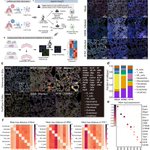
5. Cell segmentation benchmarking: Comparative evaluation of Cellpose-SAM, InstanSeg, StarDist, and other tools
6. Spatial disease biology: Ligand–receptor analysis of disease-associated tissue microenvironments
We would love to hear how you can use PantheonOS for your research! Got an interesting agent run of your own and want to share? In the Pantheon UI, click Export Bundle (top-right of any chat) to package the full trajectory — chat history, code, figures, report — then submit it here:
Weize Xu retweeted
PantheonOS allows any biologist to perform complex data analyses of emerging single cell, multi-omics and spatial transcriptomics datasets end to end through AI agent and human collaboration. We are releasing six replays of use cases trajectories. Each "trajectory" is a complete end-to-end run, from prompt to analysis, to figures, and finally to report, and in fully inspectable and reproducible manner.
See the six user cases in our PantheonOS Gallery:
1. 3D mouse embryo analysis: Tangram deconvolution and PyVista-based 3D visualization of E6 mouse embryo spatial transcriptomics data
2. 3D human fetal heart analysis: Spatial mapping of heart disease gene patterns using MERFISH data
3. Multi-omics spatial integration: Single cell multi-omics-to-spatial mapping with MOSCOT optimal transport
4. Gene panel design: 1000-plex immune-oncology MERFISH gene panel optimization
5. Cell segmentation benchmarking: Comparative evaluation of Cellpose-SAM, InstanSeg, StarDist, and other tools
6. Spatial disease biology: Ligand–receptor analysis of disease-associated tissue microenvironments
We would love to hear how you can use PantheonOS for your research! Got an interesting agent run of your own and want to share? In the Pantheon UI, click Export Bundle (top-right of any chat) to package the full trajectory — chat history, code, figures, report — then submit it here: