
Gen. AI strategist; AI/ML researcher
Joined June 2009
- Tweets1.3K
- Following163
- Followers185
- Likes1.2K





Faisal Waris retweeted

Many #fsharp goodies inside, again.
Particularly happy about the allocation and kept-memory improvements. Deserved a separate sub post - github.com/dotnet/core/blob/… .
Especially held memory was a stream of great work by @auduchinok - thank him in these hard RAM-economy times :-))


dotNET blog: Announcing .NET 11 Release Candidate 2 ift.tt/rYZ2WJc

Faisal Waris retweeted
I worked with him once, I'm proud to say
The perfect English gentleman, who told stories as good as Peter Ustinov's !


Faisal Waris retweeted

supporting an ecosystem with Sign in with ChatGPT:


Faisal Waris retweeted
If you are even remotely interested in functional programming, or are curious about all this scary talk about formal verification, take a peek at these slides about Lean
leodemoura.github.io/static/…
FSharp.DI is a thin wrapper over .Net Dependency Injection (logging / services) that should enable easy/consistent use of DI from F# functional code.
nuget.org/packages/FSharp.DI


Faisal Waris retweeted

🚨 This is absolute GOLD.
The @AnthropicAI engineer who literally wrote "Building Effective Agents" just dropped a 14-minute masterclass.
saves you months of headaches trying to figure this out alone.
bookmark for the weekend + read @Av1dlive's great guide below 👇

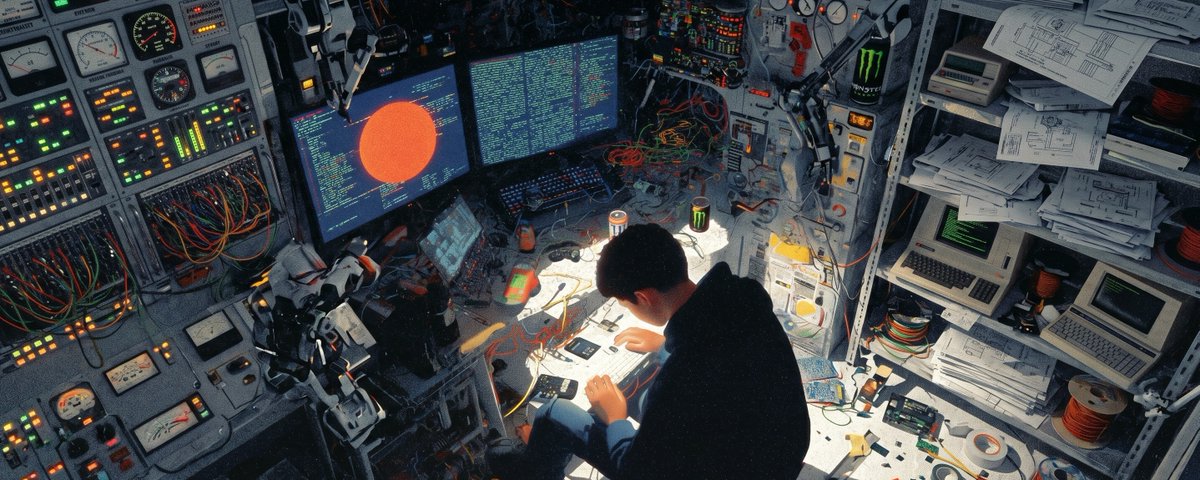
Making GEPA interpretable with VISTA linkedin.com/pulse/making-ge…
[F#-based prompt optimizer enhanced with the VISTA algorithm.]

My F#/Prolog 'logic-RAG' voice bot project got featured at the Microsoft .NET blog
devblogs.microsoft.com/dotne…

Faisal Waris retweeted

Biology doesn’t compute the way our current AI systems assume.
Neurons aren’t static units. They operate across multiple scales, electrical, mechanical, structural, and quantum-timing, all interacting in real time.
Recent neuroscience points to:
• fractal dendritic integration
• phase-dependent computation in local microdomains
• microtubule-scale vibrational timing structures
• multi-scale electromechanical coupling inside neurons
• nested oscillatory hierarchies coordinating local and global processing
These are not captured by today’s neural networks.
If AI is going to move beyond statistical pattern matching toward true natural-intelligence behaviors, we need models that reflect:
multi-scale geometry, recursive timing structure, and intrinsic dynamical complexity, not just more layers and parameters.
This isn’t about copying biology literally;
it’s about understanding the computational principles biology actually uses.
The next step is to model the right dynamics.
@AllenInstitute @mitbrainandcog @stanfordneuro @NeuroCellPress @NatureNeuro
@HumanBrainProj @CIFARnews @MetaAI @DeepMind @googledeepmind @drmichaellevin @MITNeuro @MurrayShanahan @KordingLab
