

research @anthropicai - past: early @replit, founder -- all opinions here strictly my own
Joined November 2010
- Tweets5.3K
- Following558
- Followers15.5K
- Likes26.9K





Pinned Tweet
today's @wsj deciding to cover my latest essay on agency is crazy meta. it's proof that the bar to make something that can emerge - the idea of merit through action using AI, in this case - is not beyond reach. it doesn't _require_ you have stamps and credentials. i have a boring bachelor's degree in econ from a random public school in italy, and i get to work in the hottest market and on the hottest tech of the last three decades. i genuinely believe emerging today is primarily about having the willingness to do it. to be hungry, i guess
low key im so proud to see my stupid little blog grow up...
(also, so refreshing to read a pro tech take in mainstream media)

it's honestly uncanny how much his speaking and rethorical style hasn't changed almost a single bit
kinda cuts against my arguably naive intuition that you grow into greatness through will and life and hard work. maybe it looks more like you're predestined for it

gian retweeted

Backprop has been the only credit assignment algorithm capable of training large neural nets.
Introducing Dust, the first zeroth-order method to pretrain transformers to approach and sometimes even *exceed* backprop with large amounts of computation (bitter lesson!)
- Dust is on the order of 1,000 to 10,000x more compute efficient than EGGROLL, the state-of-the-art ES method, for training transformers.
- We chose pretraining transformers because it's arguably the hardest task possible for zeroth-order optimization.
- Search in high dimensions is really misunderstood: zeroth-order usually gets better with overparameterization, not worse, i.e. at a fixed population size, larger models (up to 120x) reach a lower loss than smaller ones.
- Backprop-like gradients emerge from a large population of activation perturbations, and the alignment holds up at every scale we tested, up to 1B tokens, which is critical for scaling.
The core idea is a *virtual population*, which helps scale to large populations in transformers by perturbing activations in parallel.
w/ @bishmdl76, @cs_serdar, @akshayvegesna
so excited to see @the_marwell join an interview (for the first time?) - he's an absolute legend, materially shaping the frontier and the way we make models
i know what i'll be listening to during tomorrows car trip

Some of my friends will be mad I recorded this, and comms people at Anthropic objected to releasing certain parts (and delayed it).
But it's important for leaders to make these conversations happen. And I have a lot of respect for these two.
Over a month ago, I sat down with Anthropic's key technical leaders @_sholtodouglas & @the_marwell for an optimistic insiders’ view of the AI frontier, with hard questions too: open source, regulatory capture, slowing down USA vs China, and more.

(necessary disclaimer) xitter.cf/sammcallister/status/2…

this model has been my preferred choice for most of the things i care about -- in no small part because of they way it communicates and talks to me
opus is back! .5 versions really seem to be special

gian retweeted

Today, we are announcing our Series A and a new product: @raindrop_ai Simulations.
We've now raised $50m from @CRV and @lightspeedvp to protect the world from agent failures, big and small.
gian retweeted

People often ask why today's tech wealth doesn't go towards more public works, like libraries, universities, and museums during the late 1800s. As far as I can tell the answer is that they would literally not be allowed to be built.
In 2014, George Lucas, a long-time Bay Area resident who built Lucasfilm in the Bay, wanted to build a museum in the Presidio as a gift to the people of San Francisco, to be personally funded to the tune of ~$700 million. The Presidio Trust rejected it. He then tried to build it in his wife's hometown of Chicago, but local nonprofit Friends of the Parks sued and held the project up for two years, long enough for Lucas to give up on the city. The Lucas Museum of Narrative Art will finally open in Los Angeles next month after more than a decade of planning, eight years of construction, and over $1 billion personally spent by Lucas.
Meanwhile, San Francisco has built no major museum projects since the 2016 expansion of SFMOMA, and no new libraries since the North Beach Branch in 2014. Public works, like so many other things, are bottlenecked not by donor will or available funding but by vetocracy

gian retweeted

To calibrate resources we followed @giansegato's methodology as outlined in his blog post about reducing infrastructure noise in agentic coding evals.
By running the tasks with a large amount of resource headroom we can select reasonable values that do not impact final metrics.
anthropic.com/engineering/in…

gian retweeted
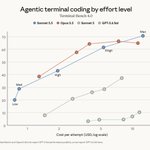
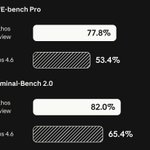
We've pushed a version update to the Terminal-Bench dataset and leaderboard.
Terminal-Bench 4.0 calibrates task resources (time, cpu, memory), implements task fixes, and removes saturated tasks.
this is truly exceptional work. i had the chance to talk to Steven a bit about how he went about designing and building TB-Science, and i came away really impressed
making benchmarks is easy. making an outstanding one is unbelievably hard. the incentives are stacked against it, from diluting task quality to ship fast, to building hill-climbable problem shapes you can beat by buying envs on the market
see, many folks think of benchmarks as marketing tools, and in a way they are! but the best ones are way more. to me they're basically the AI version of GDP. heavily gamed and debated, yet still indispensable. a good public eval doesn't need to be ungameable. it needs to be hard enough to game that gaming it looks a lot like actually getting better
steven and his team built something special here. measuring the frontier of science and how fast (or how slow!) models are pushing it further is arguably one of the most important things in the world today. doing it with relentless rigor makes it a public good
can't wait to see TBScience v02 come out, and if you're a scientist, you should consider contributing!

We're releasing Terminal-Bench-Science: a benchmark for evaluating AI agents on research workflows across scientific domains.
An ongoing Stanford-led community effort, built by the team behind Terminal-Bench together with scientific domain experts at research institutions worldwide. v0.1 has 70 tasks. Claude Opus 5 solves only ~30%.
1/n 👇

interesting how certain things are so pervasive and ubiquitous and considered fundamental fabric of society -- and yet can disappear so fast.
woke up this morning realizing that i haven't done a "proper" google search in years.
remember when we were typing various keywords in google, scanning through first page results, skimming through pages and pages of mostly-unrelated-but-hopefully-mildly-related textual content, when solving a problem? trying to estimate the credibility of a source, typing symptoms of the flu and having to skirt all the "you have cancer" and "you're pregnant" 2007-era forum results. chunking progressively shorter pieces of whatever stacktrace you got, and spending hours (days!) reading blog posts and SO answers and piecing together how things were done.
obvious in hindsight, but i only now realize how much all this was still, fundamentally, shaped like going to the library. a faster horse. acceleratory, yes. but not ontologically different than search & retrieval in the 70s.
i wonder how much of the world we're seeing today, that we might consider natural laws on how we go about things, is just one model generation from being overhauled. what's the next horse?
one of my current bets is medicine as population science. modern healthcare is built around the average patient. we get prescribed standardized exams, standardized protocols, standardized drugs. the whole system is pattern-matching from that average to us, because personalized inference over n=1 is too expensive. but what if it's not anymore? if we can have entities that can reason over our genome, our labs, our history, and literature, all at once... "standard of care" starts sounding very much like "first-page-of-google-results". not just acceleratory - ontologically different!
how many other fast horses are out there?
gian retweeted

Lost my phone at the office and spent 30 minutes turning the place over. Find My was disabled by MDM.
Out of ideas, I asked Claude how I could find it. It suggested tracking the Bluetooth signal strength, then wrote me a meter in about a minute.
I walked around watching the number climb. Found it.
Apparently you can just make the tool you need now.
Code: github.com/ben-z/findphone
the most goated example i could find when eval'ing Opus 5 was on a frontier bench very hard task. the model is given an engineering drawing of a machine part and asked to write code to rebuild it as a 3D freeCAD model. the fun catch is that the model has no way to view the drawing: mini-swe-agent is a text-only harness, so all the model ever sees is terminal text over bash IO. it's something hard and multidisciplinary even for a human engineer capable of seeing the drawing!
working blind, Opus 5 first tried off-the-shelf OCR with Pillow and Tesseract, found the results unreliable on the drawing’s thin numerals, and built its own vision stack on the spot. carved out each printed character as a connected component, rendered the glyphs as ASCII art (?!?), and matched glyph bitmaps to read the dimension labels off the page
then it vectorized the drawing itself: run-length line detection with sub-pixel centroids, least-squares circle and ellipse fits to recover radii and bores, arrowhead detection to tell dimension lines from part geometry. it worked out that the four views were printed at different scales, derived each one’s mm-per-pixel ratio, and rebuilt the part, feature by feature, as a parametric freeCAD model
welcome to the world, my dude!


gian retweeted
Another thank you to @giansegato as an advisor to this project - making sure measurement in benchmarks is rigorous as possible!
gian retweeted

This is crazy.
The incredible Yitan Zhang (newyorker.com/magazine/2015/…) worked on proving this conjecture for 7 years.
Moh, his advisor, wrote that Zhang "failed miserably" in proving the Jacobian conjecture, "never published any paper on algebraic geometry" after leaving Purdue, and "wasted seven years of his own life and my time".
What a twist.


hello there the jacobian conjecture is false thanx to my close friend akhil for asking about it and my other close friend fable for working during the world cup final
((1+xy)^3 z + y^2 (1+xy) (4+3xy), y + 3 x (1+xy)^2 z + 3 x y^2 (4+3xy), 2 x - 3 x^2 y - x^3 z): \C^3\to \C^3, has jacobian determinant -2, and sends (0, 0, -1/4), (1, -3/2, 13/2), and (-1, 3/2, 13/2) to (-1/4, 0, 0)
gian retweeted

hello there the jacobian conjecture is false thanx to my close friend akhil for asking about it and my other close friend fable for working during the world cup final
((1+xy)^3 z + y^2 (1+xy) (4+3xy), y + 3 x (1+xy)^2 z + 3 x y^2 (4+3xy), 2 x - 3 x^2 y - x^3 z): \C^3\to \C^3, has jacobian determinant -2, and sends (0, 0, -1/4), (1, -3/2, 13/2), and (-1, 3/2, 13/2) to (-1/4, 0, 0)
interp is genuinely the coolest and in a way underrated branch of ai research. i so deeply wish i was enough long-tailed in math and shape rotation to be able to contribute to it. it's not just telling us something interesting about how a piece of tech we built works -- by both comparison and contrast, it's forcing us to reflect on fundamental human nature itself

gian retweeted

We’ve received notice that the Department of Commerce has lifted export controls on Claude Fable 5 and Mythos 5.
We'll begin restoring access tomorrow, and will share an update soon.
We’re grateful to our users for their patience, and to everyone who worked with us on redeploying the models.
gian retweeted

A bit of news: After nearly 9 years, I have decided to leave Google DeepMind and join Anthropic (after taking some time to recharge). I am incredibly grateful for my time at GDM. @demishassabis took a real chance letting me lead the AlphaFold team just six months after finishing my PhD, and the entire GDM team taught me so much about how to do great science. GDM is a special place, and I’ll still be excited to hear about what amazing things they discover next.