






Hap Rho retweeted

A bit of flat earth history for you.
About 3 or 4 years ago, the original @100KryptoKeyz hosted Flat Earth Fridays had a space that went for over 24hrs.
The topic: how can southern flights work on a flat earth.
No viable solution was found after a full day of discussion.


Because either your payed or stupid to constantly keep saying the same thing when there's more examples for the flat earth maps working better for flight routes. I already know how those debates go. Why waste the 100th hour on it.. And no it's admission of defeat where you have to cope about "give me a map" when I'm showing a leveled camera showing no horizon recession. Yet you keep on about the whataboutism of a map haha
Hap Rho retweeted
Have you watched Alan / Piezo / Toby’s presentation yet?
You’d have to consider that a blow. The material demolishes FE and shows the only viable solution is a globe

Hap Rho retweeted
We had Piezo in Globe Realities space a couple of days ago. He acknowledged it had taken him almost 9 years to realise he was wrong


Hap Rho retweeted
varies linearly with distance from the pole, but is independent of longitude. Now ask yourself, what geometric object has this property.
I'll give you a hint:


Hap Rho retweeted

A new Dwarf Planet? Meet 2026 ED138, recently discovered by the Vera C. Rubin Observatory @VRubinObs.
This Trans-Neptunian Object (TNO) is estimated to be 600–1,500 km across. 🔭 #astro


Hap Rho retweeted

The First Family Portrait of Earth and the Moon
On September 18, 1977 — just 13 days after launch — Voyager 1 looked back and captured something no one had ever seen before: Earth and the Moon together in a single frame.
From 11.66 million kilometers (7.25 million miles) away, two slender crescents hung in the blackness — our home and its companion, shown for the first time as complete worlds in the same view. Eastern Asia, the western Pacific, and a slice of the Arctic were visible on Earth. At the moment the picture was taken, the spacecraft was positioned almost directly above Mount Everest, on the night side of the planet.
The Moon was artificially brightened by a factor of three so it wouldn’t be lost next to the much brighter Earth. The final color image was assembled from three separate exposures taken through different filters.
It was the first time humanity saw itself and its Moon this way — a quiet, distant glance homeward long before Voyager 1 would later capture the famous Pale Blue Dot from the edge of the solar system.


Hap Rho retweeted
Milky Way and Aurora over Antarctica
Even further in the distance, visible as extended smudges near the top, are the Large and Small Magellanic Clouds, satellite galaxies near our huge Milky Way Galaxy.
Image Credit: LI Hang
#Astronomy

Hap Rho retweeted

Flat Earthers often ask for evidence of curve, spin, axis and tilt.
This amazing video made from a year of NASA DSCOVR EPIC images shows all four pieces of evidence at the same time!
Watch the Youtube video below for the full thing and an explanation.
Hap Rho retweeted

Light carries energy through empty space without needing a material medium. In a plane electromagnetic wave, electric and magnetic fields oscillate together.
Maxwell’s equations connect their changes in space and time. Radio waves, visible light and X-rays share this electromagnetic description. Their different frequencies change how they interact with matter.

Hap Rho retweeted
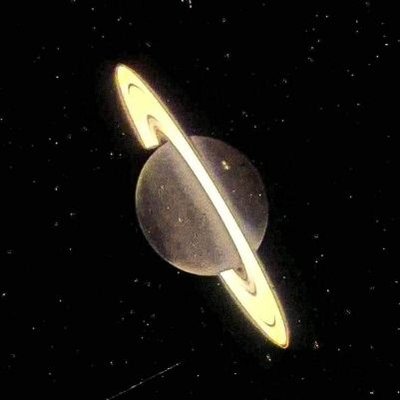
Betelgeuse is fading again, and the most famous red star in the sky is starting to feel like a countdown.
It’s been dimming since August. Again. That word matters, because this star already pulled the same trick back in late 2019, when it dropped so hard that people genuinely started watching for an explosion.
Here’s the part that gets me. When Betelgeuse finally goes supernova, nobody will need a telescope or a live feed to catch it. The blast will be visible from right here on Earth, with your own eyes.
Step outside and find Orion. That red glow in the top left corner?
It’s living on borrowed time.


Hap Rho retweeted
Here are what real theodolite measurements show: xitter.gq/Roohyfnol/status/21076…
Simply taking occlusion timing and turning off refraction isn't empirical.

.... and:
youtube.com/watch?v=4bOUNmR2…


Hap Rho retweeted

If you let go of antimatter, does it fall?
In 2023, Jeffery Hangst and the ALPHA team at CERN held small groups of about a hundred anti-atoms in a tall magnetic bottle, slowly turned down the magnets at both ends over 20 seconds, and counted where they annihilated.
Roughly four out of five came out the bottom. Antimatter falls, with an acceleration consistent with ordinary gravity, ruling out the old idea that it might fall up.