

Research @MSFTResearch. RL Science | Generative Models | Autonomous Systems
Joined June 2011
- Tweets375
- Following592
- Followers1.2K
- Likes568





Pinned Tweet
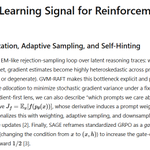
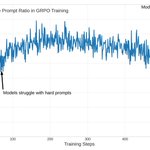
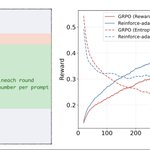
SFT curates responses. RL curates sampling.
RL improves by curating what the model experiences: condition; distribution; weighting of what gets learned from.
Better signal curation shifts the performance-compute curve upward.
Full write-up below 👇
hendrydong.github.io/blogs/p…

I'm looking for a few emergency reviewers for my @iclr_conf 2027 batch!
If you have expertise in LLM reasoning/efficiency and are available to help, please DM me. Thanks in advance!
#ICLR2027
Hanze Dong retweeted

Introducing Game2Player 🎮 Scaling gameplay experience for visual agents.
Instead of a handful of games or costly human play data, we use coding agents to turn 568 web games into 3,436 verifiable tasks, then collect 1.56M gameplay steps with both code policies and VLM policies.
🔁 Environments and players improve together: progress is checked from game state at every step, and any problem a player hits goes back to the builder agent for repair.
🧪 We also introduce PlayerBench: 50 held-out games, 287 tasks. Even GPT-6.1 Sol reaches only 62.6% progress.
📈 Our 9B VLM, trained from our gameplay data, plays from pixels alone. It lifts progress from 30.0 to 53.1 on GameWorld (ahead of Qwen3.8-Flash-Next) and more than doubles it on PlayerBench, from 14.3 to 31.2.
🌐 Website: game2player.github.io/
💻 Code: github.com/game2player/Game2…
🤗 Models: huggingface.co/game2player
🚀 More games and results coming soon. Stay tuned!
Hanze Dong retweeted

Our prefix-conditioned OPD, ReOPD, was used to train MiMo-V2.6 ✌️
ReOPD is a perfect option if you:
🔢 have SFT traj and want to do RL without any env;
🔢 want to reuse the teacher's high-quality traj to avoid the student's expensive exploration.
ReOPD: arxiv.org/abs/2607.04763

Prefix distribution matters. Not all starting points are equally valuable for RL. Excited to see ReOPD being adopted in other production models! 🚀

Our prefix-conditioned OPD, ReOPD, was used to train MiMo-V2.6 ✌️
ReOPD is a perfect option if you:
🔢 have SFT traj and want to do RL without any env;
🔢 want to reuse the teacher's high-quality traj to avoid the student's expensive exploration.
ReOPD: arxiv.org/abs/2607.04763
Hunger + taste + prototype

The coding interview is dead, at least for my team at Anthropic. I've seen enough to know that it no longer provides signal. I removed it from loops this month.
I have a spicy, optimistic take - I think there's an opportunity for junior engineers: felixrieseberg.com/hunger-be…

Hanze Dong retweeted

As someone with a portfolio of energized land assets here is what I am seeing:
1. Neoclouds are disorganized and poorly capitalized. Some are definitely better than others however.
2. Hyperscalers are intractable, bureaucratic organizations that take 3 months to do an NDA and want 18mo escrow periods. We built our portfolio by competing against these terms because of our speed and simplicity. The more future assets orgs like ours win, the bigger the problem for the hyperscalers downstream (see 3).
3. There are delays in the existing pipeline that will catch people off guard in 2027. Hyperacalers will (obviously) react by focusing on their own internal compute needs over any third party. If the third party is a model company, they will tell them to go through their model router where they will also take a non-trivial vig. Them telling Ant they have no compute for them (rumored in Ant’s S-1) if true is a huge tell that this is already happening.
All of this is to say that it does look like there will be a lot of partially stranded compute and compute sitting in inventory in 2027 than is currently forecasted. This is bought and paid for but effectively underearning (below total cost of capital) or collecting dust. We see this as true for everyone - model companies, hyperscalers, neoclouds except ONE (you can guess which one).
This dislocation will benefit two kinds of orgs: the non-bureaucratic big scalers who can build industrial scale quickly and the nimble, well capitalized players feeding them.
2027 will be a turbulent year because it will clear out a bunch of wrong/bad bets. It will also be a consolidation year for a few.

Formalization has given me a way back into sampling theory. I worked on it for a while, but eventually lacked the bandwidth to continue. Recent progress in frontier models brought me back.
FormalizeSampling connects Langevin dynamics, proximal sampling, and diffusion models in Lean, with end-to-end convergence proofs, analytic counterexamples, and separations between path and output convergence.
The aim is a reusable mathematical foundation: explicit assumptions, checked proofs, and connections across the literature.
Conversation with agents makes mathematics easier to explore; formalization makes the results checkable and reusable. Sampling felt like a natural starting point for a workflow that could extend to other fields.
Code and literature map (github.com/hendrydong/Formal…)

Will be presenting these three works at COLM.
Feel free to stop by and chat if you’re around, or reach out if you’d like to connect while I’m in SF this week!
colm.cc/virtual/2026/poster/…
colm.cc/virtual/2026/poster/…
colm.cc/virtual/2026/poster/…


Hanze Dong retweeted

I am very uncomfortable about people trying to ascribe religious force or a surrender of human judgment to AI models, and think it is a real safety issue.
rate limit +1 😹

arXiv has updated our policy on rate limiting for all submitters.
This update was made to fairly distribute moderator time & support the arXiv community of staff, volunteers, readers & authors.
Please read our announcement to learn more: blog.arxiv.org/2026/10/01/up…

ALT arXiv logo in white over a whiteboard with math symbols.
Hanze Dong retweeted

DeepSeek V4.1 Flash has also embraced YOCO (You Only Cache Once; arxiv.org/abs/2405.05254 ) as the soul of its architecture, inheriting YOCO’s order-of-magnitude advantages in prefill and KV caching. #decoderdecoder

Hanze Dong retweeted

Training tiny models for special purpose use cases works so incredibly well if you have a great self improving recursive flywheel. Shopify ML team is on fire.
finetuned 0.8b model beats GPT 5.6-sol xhigh in this very specialized task.

Hanze Dong retweeted

Today, we're sharing new research on Solaris, our first Interface World Model.
Solaris is a new kind of operating system that generates interactive interfaces frame by frame, in real time, with no code. We find that Solaris outperforms frontier LLMs when generating new interfaces, across structural similarity and information retention. Read more and request early access at the link below.
Hanze Dong retweeted

关于CZ赵长鹏这次说的“主动性”,是他在香港这场书友会上面对一群大学生时,给出的唯一招人标准。
原话是这样的:
“现场很多学生想进币安,他的答案只有三个字:要主动。币安是远程工作,你可以偷懒,一天偷懒几个小时很容易。但如果你不够主动,两个月下来,你可能就没有结果。 ”
他自己的管理方式更直接:
“我接触的东西很多,一会这个一会那个,有些事情我说过之后就忘了。我一般不会去跟踪他。如果这个人不主动来告诉我更新,我就会忘记。但我可能两个月之后想起来,再去问他,他说‘我们做了一个礼拜之后就没有进展了’——那我会把这人开掉。”
“我从来不去follow up,我是需要他们push给我。”
他最后总结成一句判断:“你只要主动积极去做一件事情,你就会成功。你若等着老板过来查业绩时才做,你是不会成功的。”
有趣的是,主持人当场补了一刀:
今天能坐在这里的人,全是自己写email不断push主办方、还提交了问题才被选进来的。主动性本身就是门票。
CZ把主动性还拆成了两个更大的底层逻辑:
1. 80%在于到场
人生的成功,80%在于到场。你一定要参与,不参与的话就没有机会。
2. 什么不做,比做什么重要
现在多数人不考虑什么不做。别人发个消息,一定要回一下...这些事情很多人完全可以砍掉,但是没有砍。
我认为主动性是三种能力的组合,主动到场、主动push、主动为结果负责。
1. 做科研:别等课题,要自己去要反馈
据我观察,现在的学生做科研最常见的死法,就是等导师布置,等灵感,等设备。
科研主动性是反过来的:
主动定义问题,即使可能错误。
不要等导师给你题目。把你领域最近3年的top paper的limitation list整理出来,主动去敲导师的门说,我想试试。
主动要反馈,但要对人。
CZ说保持深度联系的高质量反馈用户,3到5个就够了。“不用每个月聊几百个用户,每个月聊5个就可以了。”其实我觉得科研同理,与其群发问卷,不如主动锁定3-5个真正懂你方向的教授、博士、或业界的人,每两周push一次进展,哪怕是失败的进展。
主动写。
他写《币安人生》就是找点事做每天写15分钟攒出来的。论文也是,先写烂初稿,再迭代,完美了再动笔,黄花菜凉了。
2. 创业:产品和用户之前,没有其他事
CZ给大学生的创业清单,第一句就是:“最开始,只有两件事:产品和用户。你要能拉来用户,你要能给用户提供价值。这两个没有的话,你就不会有公司。”
很多创业的主动性误区是先做BP、先找投资、先做Logo。
你要主动去丢脸,像他说的到场逻辑,先做一个能用的demo,主动去加20个潜在用户的微信,听听反馈。
他听说CX卖房买BTC前计算了如果归零了,他能不能再去华尔街拿一份六位数工作的情况。那是他的底气。
学生创业前其实也要算算这个项目黄了,时间、学分、生活费能不能继续、能接受到什么程度,
这是主动性的另一面,主动管理风险。
创业不要着急,建议年轻人先在好的大公司工作几年,两年应该是最低的,以2年到5年为宜。有时候在大厂里主动去学一套完整的管理体系,比你一毕业就在泥里打滚学得更快。
3. 学业:一技之长要卷到全球前1%
我认为,学业上的主动性就是占领一个山头,不要过于平均用力。理工科一定要有一门课做到系里名列前茅的状态,比如把机器学习、密码学主动做到能教别人的程度。
在大课人人都是螺丝钉,只有主动去office hour,主动去要RA,主动去旁听研究生组会。你不去push教授,教授两个月后也会忘了你是谁,这和CZ忘了员工是一样的。
而且,什么不做比做什么重要。
我觉得别人都报的热门水课、无效社交、每条消息秒回,都可以砍。
总之,主动选择看似麻烦的事,韧性是主动性的后半段。
到场 > 完美,push > 等待,结果 > 过程。
Hanze Dong retweeted

Natural language helps humans communicate. C, Python... help humans code. But what language is best for AI agents?
As the bottleneck shifts from implementation to specification and verification, formal languages like Lean will matter more than ever. blog.janestreet.com/formal-m…

Hanze Dong retweeted

Love seeing this direction take off. In 2024, we showed a video model pick up new tasks from seconds of demo. **NO** task-specific fine-tuning or curated dataset. Just autoregressive prediction, the behavior emerged.
💥Project: microsoft.com/en-us/research…
💥Paper: arxiv.org/abs/2407.07356


Hanze Dong retweeted

Thoughts About Scaling Law
Scaling, but not only of parameters. Every model release now ends with the same question: how many parameters? It isn't a question that can be answered on its own. Parameter count is only meaningful alongside three others — how much data you have, where you intend to spend your compute, and who will run the model, under what conditions.
The field learned this the hard way. Kaplan et al. (2020) fit an exponent that told everyone to grow parameters faster than data — roughly 2.7:1 — and the industry complied: GPT-3, Gopher, MT-NLG. Hoffmann et al. (2022) redid the experiment across four hundred models and found the compute-optimal split is closer to 20 tokens per parameter, and that with sufficient compute the two should grow at the same rate rather than drifting apart. The error in the earlier fit compounded with every order of magnitude of compute, which is why the largest models of that generation were the most misallocated. The trillion-parameter round was, in retrospect, a detour the whole field took together and then reversed.
Chinchilla wasn't the end either. It optimized training compute for models that would be trained once and evaluated. Today a model is called billions of times a day and inference dominates lifetime cost. Put inference into the objective and the optimum moves toward smaller models trained far longer — deliberate over-training, which is what Llama-2-7B and Gemma-2-9B were doing at roughly 290 and 889 tokens per parameter.
Sparsity moved the target again. In a MoE model two quantities have to be kept apart: total parameters govern roughly how much the model can hold — knowledge, facts, the long tail — while activated parameters and effective depth govern roughly how far it can think, how many steps of a causal chain it can carry before it comes apart. A dense 20:1 ratio does not transfer. And the ratio isn't a single number at all: Roberts et al. (2025) find the optimal tokens-per-parameter is task-dependent, with memorization favoring more parameters and reasoning favoring more data. Follow-up work on MoE observes that at fixed TPP, pushing total parameters higher actually degrades reasoning, while activating more experts reliably helps it.
This matters for what we are building toward. Finding a vulnerability is not a retrieval problem. It doesn't come from having memorized more CVEs; it comes from carrying a twenty-step chain of inference to the end without losing the thread. That capability does not live in total parameter count.
Which brings us to this release. Total parameters appear to matter up to a threshold — enough to hold the world — after which additional capability comes from scaling elsewhere: effective depth per forward pass, and above all post-training. GLM-5.3 is our controlled experiment on that claim. Same base, same architecture, same total and activated parameters as GLM-5.2. One month of scaling long-horizon environments and RL. The gains are not marginal. Well, scaling has more than one dial. We turned the post-training one this time because it had the most slack left in it — not because the others are finished. Base model size, pretraining data, compute spent per forward pass: all of them are still on the table, and we will come back to each. What this experiment taught us is that the dials do not have to be turned together, and that the one worth turning next is rarely the one that was worth turning last. We are not done scaling. Next time, maybe mid-training, pre-training, and even more.
Hiring Research Interns in Singapore on agents, coding, and environment construction. Visa sponsorship available
Looking for candidates with hands-on research in at least one of: Agentic systems, Coding, Environment simulation, Post-training
Minimum internship: 6 months
Interested? Send your CV + 1-2 representative works (paper / blog / repo / project) to:
hanzedong at microsoft dot com
Hanze Dong retweeted

1/ Sharing a new, interesting project I did during my internship at Microsoft AI Frontiers w/ @JohnCLangford
TL;DR: At decoding time, we feed **previous hidden state** into the input together with token embedding, and it boosts performance for free.
arxiv.org/abs/2608.08888
