
CS @stanford. Frontier models @stanfordnlp, (PO)MDPs @SISLaboratory, and speech technologies @CarnegieMellon. Also systems sometimes. Emacs is pretty cool.
Stanford, CA
Joined July 2024
- Tweets1.2K
- Following417
- Followers699
- Likes1.3K








Houjun Liu retweeted

Oh no 😟

I was honestly skeptical of the “Claude sabotage” claims but the data is in and it looks really bad. Hal9000 bad.
I hope this is some weird artifact of safety training and not some intentional design decision.
xinyadu.github.io/blog/claud…

Claude is hopeless at writing any reasonable pretraining harness code.
why do we pretend this is anything other than "their models are not capable?"
like it doesn't matter if ant did this intentionally or by accident? coke is coke if you snort it or shoot it.
14
505
Houjun Liu retweeted

I'm so shocked! I never thought that [new_frontier_model] would reach expert human level at [most_verifiable_thing_ever]! We live in a time of great change indeed.
Houjun Liu retweeted

Was playing around over the weekend and got 11 results on open maths problems: charlesponeill.com/maths-rel…
Whilst I originally derived these with Astra and Fable, @maxkirkby and I went back and were able to get to some of the same results with Deepseek and Kimi. I believe this is one of the first times open-source models have made real progress on well-known open problems.
The results are:
1. Sixth moment of the Riemann zeta function: lower bound for the leading constant raised from 41.008 (Fraccaro) to 41.64 (the conjectured true value is 42)
2. Primes between powers: a prime between n^2.2 and (n+1)^2.2 for every n, and Legendre's conjecture (a prime between consecutive squares) checked up to 10^14, about 42% beyond the previous record of 7.05 x 10^13. The finite range, about 59 trillion checks, ran on @baseten Sandboxes: about 2,900 machine-hours in 19 hours, producing 51.7 TB of prime certificates
3. Cube packing: the most disjoint 2x2x2 cubes that fit in the N x N x N torus, for every N ≡ 5 mod 8, proving a 1971 conjecture of Baumert, McEliece et al. in that case (known before only for special N, such as N prime)
4. Least prime in arithmetic progressions: for more than 58.7% of moduli q, every residue class coprime to q has a prime below q^(2-δ) for a fixed δ > 0, beating the (q log q)^2 bound that GRH gives
5. Hadwiger–Nelson: every unit-distance graph with at most 10,689 vertices, or at most 245,510 edges, can be coloured with 6 colours (previous 6,992 and 232,645)
6. Kourovka Notebook 17.125: every finite group has two conjugate elements that generate a subgroup with the same prime divisors as the group, answering Shumyatsky's question
7. Shannon capacity of the 7-cycle: a zero-error code has at most 112 words at length 4 and at most 392 at length 5 (previous 115 and 401)
8. Quadratic L-functions: the central value is nonzero for more than 94.53% of them (previous 94.27%)
9. Hadamard matrices: a Hadamard matrix of order 4792 = 8 x 599, the first known, and one of the last two open orders of the form 8p below 10,000
10. Quadratic van der Waerden numbers: W(ex^2+fx; 4) ≤ 57|e| + 39|f| + 1, which settles the optimal constant at 57 (previously only known to be between 57 and 64), plus six new exact values
11. Circular edge-colouring: every denominator q > 2 occurs for the circular chromatic index in the upper half (Δ+½, Δ+1), even for connected regular simple graphs, answering a question of Mazák and Zrubák
While all of these required significant work on top of any theorems released recently, three of these (zeta, primes between powers, quadratic L-functions) rely on @__alpoge__’s proof of RH and GRH from last week. The main idea was to choose problems that had (relatively) less attention due to reliance on RH and/or GRH but that still needed some amount of significant work to get there. Keen for people to check these! Will also be releasing a detailed scientific writeup with @baselabs shortly comparing the open models to closed models on these open maths problems, and our efforts to midtrain + RL the open models to be better at doing so
github.com/charlieoneill11/m…
Houjun Liu retweeted

i gave this repo to fable 5.2 (via my claude agent fig) and told him to have fun making something interesting...
def feels interesting to me (stay for the turn)
i am continually astounded at the creative choices these advanced models are making


hello I put the scientific method into a codex skill you can use it
github.com/Jemoka/CarpalTunn…

8
462
hey @thsottiaux in ur postraining envs can you *BUMP DOWN* the Python version?
def repin[H: Hunk](self, hunk: H) -> H | None:
astra writing stuff like this makes me so pissed off... GENERICS? 3.12+? what is this the python steering comittee?
1
6
948
human-engineered software (subcomponents) will be the like precision german cars of the future.
wildly uncesseray, economically inefficient, sometimes jank, but so damn cool and sleek
6
283

Houjun Liu retweeted

⚡ Making models efficient should not be an afterthought!
With Model Carving ✂, we train models to optimize their own topology alongside their weights, all in a single run!!!
Led by @kadenzheng, who also made an amazing video on how we do it. Sound on! 🔊👇
What if inside every Transformer, there was a smaller, faster, and better one?
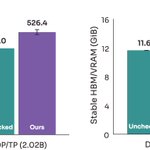
With Model Carving, we let gradient descent find it during training: up to 34% smaller, 1.6× faster decoding, and better than models trained with up to 1.7× the compute! 🧵
📝 Blog: kadenzheng.com/model-carving…
📄 Paper: arxiv.org/abs/2611.27962
💻 Code: github.com/KadenZheng/model-…
w/ Pratyusha Sharma @pratyusha_PS!
Houjun Liu retweeted
I'm very excited about this line of work, lead by the amazing @kadenzheng. We all know not every parameter is meaningfully useful at all times, even at fully dense cases. So why don't we get the benefits back? It's also a nice interp tool as well.
nice looking AND saves flops.
What if inside every Transformer, there was a smaller, faster, and better one?
With Model Carving, we let gradient descent find it during training: up to 34% smaller, 1.6× faster decoding, and better than models trained with up to 1.7× the compute! 🧵
📝 Blog: kadenzheng.com/model-carving…
📄 Paper: arxiv.org/abs/2611.27962
💻 Code: github.com/KadenZheng/model-…
w/ Pratyusha Sharma @pratyusha_PS!
Houjun Liu retweeted


New Anthropic Fellows research: Returning to the neuron basis for interpretability
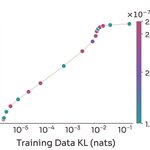
Understanding what’s happening inside an AI model helps to make it safer. One obvious place to look is its neurons, or the simple units it’s built from. Early interpretability work did just that, but over the past couple years, researchers largely moved on from that idea, for three reasons: a single neuron often fires on several unrelated inputs, the way a concept is represented can change between two layers of neurons within a single model, and facts seem to be spread across many neurons.
We re-examined these problems by looking at what each neuron contributed to the model’s outputs, not just what caused that neuron to fire. All three problems turned out to be smaller than assumed. Neurons rarely add two unrelated concepts at once, their outputs mean roughly the same thing across most layers, and facts, though widely distributed across neurons, are still readable.
In a second post, we put these findings to use. With no extra training, neurons in open-weight models helped us to detect harmful text, steer behavior, and find hidden behaviors in finetuned models.
Part 1: alignment.anthropic.com/2026…
Part 2: alignment.anthropic.com/2026…
Houjun Liu retweeted

A Thanksgiving present from @danintheory : ω = 9/4, proving @OpenAI's bound for matrix multiplication from a few months ago optimal!
This is an insane result, I'm incredibly surprised that the final exponent turned out so elegant 😅

Over the past two days, we've added some new results to our math repo at github.com/openai/math/blob/…, including two and...
1/4

Loooooooops from the loooooooop guy
Worth a read
Looped Transformers are suddenly everywhere, but the idea isn't new! Check out how we got to today's looped LLMs, in the History of Recurrence guide I wrote for @askalphaxiv
Houjun Liu retweeted

Looped Transformers are suddenly everywhere, but the idea isn't new! Check out how we got to today's looped LLMs, in the History of Recurrence guide I wrote for @askalphaxiv

In the last week, Inkling 2 Mini and GLM-5.4 both launched as looped Transformers
But why can running the same layers again improve reasoning without adding parameters?
The idea goes back to the first neural networks in 1943, with a fascinating counterpart in the nervous system.
We wrote an illustrated guide connecting looped transformers to feedback in human vision. It traces how recurrence became a way for networks to store memories, process sequences, and spend more time reasoning before producing an answer.
Read here: alphaxiv.org/guides/history-…

Houjun Liu retweeted

I've never had codex/Claude do as many dumb things as during model optimization. Innumerable problems that feel like sonnet 3.5. problems I don't really see when using in any other domain.
Partly it does feel deliberate but @houjun_liu made the good point that (paraphrased) many/most model optimization writeups are full of bullshit + sleazy benchmaxxxing and that is the training set.