





I've switched. Both are strong coders. But Claude Opus 5.5 is cool and aloof. Gemini 4 Neon is eager and warm.
1
100
hubt retweeted

my PR count took a nose dive in the past week, from previously about 200 PRs/day to only 30-ish now, and i'm shipping more than ever
this happened because i started batching multiple branches into a single PR to improve CI efficiency
right now my CI architecture is -
1. each change gets developed in its own branch as usual
2. each branch that's done gets a very light weight CI check, mostly build and lint
3. all the branches that pass checks then get queued up into a batch
4. a batch becomes a PR which does a heavier CI job
5. while a PR of mine is still active, all new branches wait in the next batch, until the previous PR is merged. this means at any given point in time, in the same repo i will only have at most one PR at a time
6. if a PR fails CI, i fix forward with a new branch added into its batch. this means older branches, even if at fault, would remain immutable which minimizes rebases
so far, this has been working wonders. i think this is much superior than merge queues, because merge queues are typically done at a repo level, and at agent speed the queue can have hundreds of PRs at a time which breaks often and causes a lot of re-selection and makes everyone wait
this batching happens at user level, so different contributors in the same repo never have to interfere with each other. every user can also choose to apply different strategies - some users may do one PR per branch, and some may do this batch - and they can all work together

Depressing thought: What if the massive capital and compute of the AI buildout is just used to fund a permanent cybersecurity offense versus defense war without improving applications for users?
1
23
If you are considering going you can register at sreday.com/2026-san-francisc… and get half off with code SRE50

2
57
People using AI agents to negotiate prices will be in for a shock when a customer service bot does adversarial upsells.
"Claude: did you lower my car payment $20 for more tokens by taking a 10yr loan at 20%?"
"Two mistakes here and one I should be honest about.."
1
6
169
As a Michigan fan, I have to applaud OpenAI's Navier-Stokes solution for stealing the win in a competition they had no right to be in.
34
Here's what I've been working on the past few weeks. @fidian. Benchmarking is hard, expect mistakes along the way. xitter.gq/fidian/status/20926243…

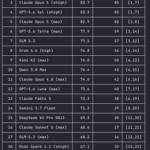
Newly released models repeatedly appear near the top on the @terminalbench 2.1 leaderboard. Are these models actually on par with frontier models on terminal tasks?
We took the top 20 models from that leaderboard and ran them on TB-fn. TB-fn reworks the same 89 tasks by adding steps, tightening requirements, or requiring more complex algorithms. It also removes opportunities for shortcut solutions and ensures verifiers check only the intended criteria.
Models that clustered together on TB-2.1 spread across more tiers on TB-fn. That leaves GPT-5.6 Sol and Opus 5 in the lead, while some others drop significantly in performance. At the same time, models work 38% harder on average in TB-fn, leading to a redrawn Pareto frontier of performance vs. cost.
The full post includes interactive figures showing how the gap for open-weight families widens. It also measures how security refusals affect scores across Anthropic, Google, and OpenAI models. Fable 5 stands out, refusing at least once on 13 of the 89 TB-fn tasks.
Trump went to Netanyahu and asked if he should attack Iran. Netanyahu said "if you attack Iran, then a great empire will fall", and here we are.
48
hubt retweeted

fuuuuuuuck, whatever undergrad research assistant submitted this summary of their team's paper to phys,org, they knocked the headline out the goddamn park


As importantly, if you really want HA, test your architecture for failover. Flip your primary and secondary sites and back and forth regularly. It's expensive and time consuming, but anything less and you won't really know if your application can survive.
1
141
I am annoyed that the AWS Well Architected framework pushes users to the multi-zone design. It's bound to end badly, though I'm sure it is great for AWS margins. status.cloud.google.com/inci…
101