

Data Scientist | Growth | User Research
Kuala Lumpur, Malaysia
Joined March 2008
- Tweets3.3K
- Following1.2K
- Followers2.4K
- Likes2.7K





Pinned Tweet
Most of us struggle to set aside money that's meant for the future.
The problem lies in our tendencies to discount future needs to present wants.
This cognitive bias is called "Hyperbolic discounting".
It's a bias where people tend to prioritize short term gains over long term reward, even though the future reward is much more in value than the one in present.
It explains why BNPL was so popular. It also explains why a few of them had to shut down their business (ie. low repayment rate).
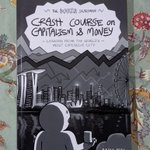
With Be U by Bank Islam, we try to help our customers get around this bias by automating the act of saving itself via our 'Save and forget' and 'Nest 52' rules in our Nest feature (details in pics).
Moving (ie. losing) money into savings can be hard, hence automating it lessens the pain.
Perhaps instead of instant gratification and BNPL, we can all move to SNBL (Save Now, Buy Later) instead.
I don't think it's going to be easy.
But nothing worthwhile ever is.
Happy saving (and later buying)!
p/s: Start saving now. Learn more at: app.getbeu.com/xikanez


“I’m struggling to build an emergency fund.”
“I want to save RM10,000 for a downpayment, but I don’t know how to start.”
Money has been a tough issue for many, especially when it comes to saving and investing.
This Sunday, we’ll discuss how to build to healthy saving habits, the wealth gap in Malaysia, and the ringgit’s YTD performance.
Don’t miss the live session:
discord.gg/EerNvu9MRN


Hafidz retweeted

every AI tool i use has a kill switch someone else controls. but not my coding agent.
introducing dl.new: open source coding agent/harness that runs on your own computer.
sign up and i cover 50M deepseek v4.1 flash tokens a week so you can try it out for free.
afterwards you can bring your own keys or subscribe to a paid plan.
run it, break it, tell me. share it with a friend and u both get 10M free tokens.
I cringe inside whenever I hear people say AI when they talk about chatbots, but the thought of saying "actually its ell ell emm" and potentially having to further explain why its not AI seems so draining.
So I just smile and nod along the convo instead.
1
176


Hafidz retweeted

I always believed in free education. I made a decision to never monetise my popular UBC and Oxford lectures. I’ve lived my life by working to bring knowledge to everyone on Earth: the pioneering lectures, the startups past and new, and my AI research. This desire came as the result of witnessing and experiencing a lot of suffering in my childhood. This course is part of my legacy and I’m very proud of it, and thankful to Oxford, the TAs and my students then.

My friend works at Anthropic.
He said they pay $650,000 a year for people who truly understand deep learning.
This exact course by Nando de Freitas is free forever.
Most AI courses charge $2,000+ for this foundation.
This one is completely free.
You get the real technical foundation ➜ taught at Oxford by a professor who later joined DeepMind.
Save this ⭣

Are you sharing your goal to others for accountability, or applause?

So before you announce the next big goal, ask what you're actually collecting: accountability, or applause.
Only one of them finishes the goal.
More: youtube.com/watch?v=Q10H5RA3…

2
303
Hafidz retweeted

We started to post videos for CMU 11-768, AI Agents!
All of the videos will be posted to this playlist, so please bookmark/follow it if you want to be notified of new ones! I'll also try to post them on this thread too.
youtube.com/playlist?list=PL…


Dulu pernahla jugak buat freelance jadi wedding photographer.
One of the things yang challenging for me as an amateur was knowing where to be to be able to get the right frame.
Kalau ada world model mcm ni mgkin lebih senang kot

wtf!?视频拍完以后,居然还能重新选机位。
早上写过李飞飞 World Labs 新发布的世界模型 Atlas,这个是刚放出来的一个具体玩法。
现场只用 3-5 台普通手机/运动相机,从几个角度拍下砸西瓜的过程。
Atlas 会先理解并重建这个动态场景,然后直接冻结时间,把虚拟摄影机移动到现实里根本没有摄像头的位置,重新渲染出新的镜头。
相当于几台手机,就能做以前需要一整套多机位阵列才能完成的 Bullet Time。
我觉得这个 Demo 特别能说明世界模型和普通视频模型的区别:
普通视频模型是在生成一段视频,世界模型是在重建这段视频背后的世界。
以后可能真的是先把事情拍下来,至于摄影机到底放哪,回去再决定。
太夸张了这个效果🤯
2
385
I wear checkered flannels most of the time at work.
I am thankful that none of my team members dress the same way, else it would've been too awkward. 😅
Jokes aside, sound advice by Azrul.

Career tips: Dress well guys. Look at what your boss wore and copy him.
I know it is silly, but "uniform" is a thing for a reason. It is the easiest way to join a particular social club.
If you dress drastically differently from the management team, for example, they instinctively won't want you to join their "club". You look too different, hence, you're a risk to them.
Forget trying to express your individuality through clothing. That's for entertainers, not corporate rats.
379

As a amateur runner, being able to run queries directly to Coros MCP has been awesome.
It's been awhile since I have to manually log in my running data into a separate excel sheet.
2
271
Hafidz retweeted

This is why so many rich kids become obsessed with unusually hard hobbies (HYROX, Ironmans, ultramarathons, survival expeditions, extreme sports, Everest, etc.)
They’re not necessarily masochists. They need a result where observers, and more importantly themselves, can’t immediately say “yh but your dad…”
Money contaminates most conventional achievement because it can buy you the introductions, runway, education, safety net, first customers and endless second chances. Physical suffering is different. Your dad can hire the trainer, buy the bike and fly you business class to the race, but he still can’t run the last 30km of an ultra for you.
And then you get this funny achievement inflation. Once normal difficulty becomes accessible, you need increasingly absurd difficulty to produce the same clean proof of competence:
A 10k stops feeling exceptional → marathon → Ironman → 100km ultra → Marathon des Sables / UTMB → whatever is sufficiently painful and scarce to still mean something.
Same for mountains: Everest with oxygen → without oxygen → harder mountain → unsupported → faster, etc.
It’s especially funny because their normal life has usually been optimised to remove exactly the things they then seek recreationally: cold, danger, physical exhaustion, uncertainty, getting lost, carrying your own stuff, sleeping badly, not knowing whether you’ll make it. Generations of family wealth go into eliminating friction, then the descendants spend their weekends putting it back in.
And of course an entire luxury industry now exists to package the hardship nicely. Black Tomato sells a “Get Lost” experience starting around £20k per person where they privately transfer you somewhere remote, give you equipment and training, then make you navigate back to civilisation while an expedition team invisibly tracks you as a safety net.
Basically the final stage of wealth is paying a lot of money to recreate problems your grandparents spent their lives making sure you’d never have.

Most rich kids I've encountered, and especially the high-agency/ambitious ones, feel deeply miserable and find any life pursuit inconclusive. They can never obtain the certainty that they are actually good at something.
Every signal is basically contaminated. Did the company work because they are talented, or because the family funded five years of losses and supplied the first customers? Do people enjoy their company, or the access around them? Do they genuinely want to make films, launch a fund or live in New York, or have they simply never been forced to choose?
Every success is discounted by the surname, introductions and safety net. Every failure is inconclusive because it never becomes existential. Dad can just recapitalise the experiment and let them try on another identity.
This also explains why so many rich kids become obsessed with weirdly legible forms of achievement and scoreboards: elite credentials, ultramarathons, artistic recognition, military service, extreme physical transformation or businesses built completely outside the family industry.
They become desperate for some uncontaminated proof of competence. One arena where the surname, family network or inheritance cannot explain the result.
If there’s one luxury inherited wealth can’t buy, it’s the certainty that you deserved your own life.
Hafidz retweeted

Back in 2005, I put a post on JobStreet with the punchline:
"Are you tired of working on yet another procurement solution, with clients breathing down your neck? If yes, come and join our startup!"
It was quite effective; I hired some good people back then. Little did I know...
That I would be working on procurement solutions 20 years later! 🤣 Life is funny that way. Things always come full circle.
Well, now I am hiring again. I am looking for a multi-talented, AAA-grade developer to work on, well, procurement solutions at Borong.
The pitch is, of course, different this time. We're pretty much an AI-pilled team that focuses on autonomy, value-creation, and technical awesomeness.
I want to prepare my dev team for the world where AI might be taking over. Hence, product ownership, communication and decision-making are the end goal here. The product we build is merely the vessel to that end.
Skill I am looking for? Competency in multiple programming languages. I don't care what they are. Reply here and I'll dm. Or email me at [email protected]
How ironic it seems that as we give away more and more attention to AI, we lose more and more of our own.
Attention, it appears, is indeed all that you need.

From a friend who joined a fast-growth, later-stage startup:
"I was wondering why no one is doing PRDs here. Then I realized that the Head of Product and most PMs are 25-year-olds who don't have the attention span to *read* even a 1-page doc.
You lose them after 3 bullet points."
1
235
Hafidz retweeted

All 23 lectures for my CMU Advanced NLP course are now on YouTube. The slides and 20 code examples are also publicly available.
- YouTube: youtube.com/playlist?list=PL…
- Course Page (Slides, Schedule): cmu-l3.github.io/anlp-spring…
- Code: github.com/cmu-l3/anlp-sprin…
The lectures are grouped into 7 themes: fundamentals, architectures, learning & inference, modeling, evaluation, RL & agents, and scaling & efficiency.
Check them out if you’re looking for an introduction or refresher on the fundamentals of LLMs, key ideas from recent NLP research, or are just curious to learn more.

Hafidz retweeted

Recently got a lot of DMs asking how I got a remote job. So here's what worked for me.
→ Pick one niche and go deep. Something you actually like, that you can talk about without running out of things to say.
→ Be consistent. Do what you're doing everyday, even if it's just for an hour. It builds muscle memory.
→ A few places to find these companies: YC jobs, Wellfound, Remote OK, We Work Remotely. Look for the ones that recently raised funding, they're hiring fast.
→ Find the founder or their employees. Get their contact, X, or email, and message them directly.
→ Keep it simple. Who you are, what you do, one line on why this company. Know about the company first, don't message blindly.
→ If you only want remote, say it upfront in the first message. Don't let it come up later.
→ Send proof of work, not just a resume. Make a Notion doc, write a bit about yourself, and drop the links to your best projects. Add a 2-3 minute Loom video walking through them, it shows the actual effort. If you have open source work, add that too.
→ Don't wait to feel qualified. Just start. But have a few good projects ready before you do.
→ Even if someone rejects you, keep the connection. Say thank you, end it well. I actually got referred to another company by a founder who rejected me.
→ Post your work on X. Doesn't matter how much reach you get, it still increases visibility. I was getting clients even without much reach.
→ It's a numbers game. Do cold DMs every day, make it a habit, not something you try when you're desperate.
→ Keep the consistency and the hard work. You don't know when the opportunity will come.

Hafidz retweeted

I'm joining OpenAI next week!🥹 The job search turned out to be really challenging but also super rewarding, so I wrote a small blog to share what I learned along the way and hopefully make the process a little less mysterious for the next person. alisawuffles.github.io/blog/…
