

Policy Analyst at Jack D. Gordon Institute, ex-diplomático in Caracas, Ph.D. (FIU), Expert on Turkey, Venezuela, Latin America
Florida, USA
Joined January 2012
- Tweets18.1K
- Following966
- Followers17.2K
- Likes30.9K





Pinned Tweet
Yazilarimi paylasayim da Venezuela uzmani oldugum belli olsun:)
National Interest nationalinterest.org/feature…
Miami Herald
miamiherald.com/opinion/op-e…
Global Americans
theglobalamericans.org/autho…
Ahval
ahvalnews.com/turkey-venezue…
Foreign Affairs Latinoamerica
revistafal.com/nuevo-espacio…
Imdat Oner retweeted

President Trump about Maria Corina Machado: "I didn't get the Nobel Prize. It was given instead to a woman that nobody had ever heard of..."
"Ladies and gentlemen, the winner of the Nobel Prize is...and they said 'who the hell is that?'"

El analista y exdiplomático turco Imdat Oner planteó otra interpretación sobre las condiciones del regreso.
“Creo que no presionará tan fuerte por un cambio rápido, un cronograma electoral acelerado, como muchos podrían asumir”, dijo Oner.
El analista considera que la dirigente podría adoptar una estrategia más gradual en un contexto en el que Washington busca mantener abiertas las conversaciones con el Gobierno de Rodríguez.
bloomberglinea.com/latinoame…

Imdat Oner retweeted
Brazilian senator Flávio Bolsonaro has left Brazil and is headed to the United States after losing Sunday's presidential election, two sources have confirmed to CNN. cnn.it/4BuRZsW

Imdat Oner retweeted

I generally agree with Imdat here, and share his worries

Several important things have happened in Venezuela🇻🇪 over the past two days. As expected, everyone has their own interpretation of what these developments mean for the country's future. I want to share my own assessment. You may agree or disagree, and that's perfectly fine.
1. MCM's return:
María Corina Machado's return is undoubtedly significant. The images we have seen demonstrate her popularity and ability to mobilize people. However, I remain cautious about what comes next.
My assessment is that her return may have been facilitated by behind-the-scenes negotiations between Washington and the interim authorities. It's also possible that her freedom of movement will depend, at least in part, on her position toward the current arrangement between Delcy and the United States, as well as the ongoing negotiations involving Figuera and Jorge Rodríguez.
The key question is why now?
I see two possible reasons. First, Machado's return could help ease some of the political pressure on the Trump administration over its Venezuela policy. Following the oil deal and Trump's meeting with Delcy at the UN, the administration has faced criticism from Congress over its approach to the country.
Second, with the midterm elections approaching, a positive development in Venezuela could help the administration politically, particularly among voters in South Florida.
2. The State Department's statement:
Today's statement is another important development. It explains why patience is needed and outlines the steps required for a democratic transition. Based on the proposed timeline, 2027 appears to be a year for preparations, with 2028 emerging as a possible election year.
On paper, the plan sounds reasonable. But I remain unconvinced that it will be implemented as outlined.
Since January 3, I have seen a divergence between the State Department's approach and the White House's priorities. The State Department appears focused on building a political framework for a transition. Trump, meanwhile, seems far more interested in immediate, tangible gains, particularly oil and other economic opportunities. Whenever he talks about Venezuela, he tends to emphasize oil and his positive relationship with Delcy.
This raises an important question: How much weight should we give to the State Department's proposed election timeline if the White House is not equally committed to it?
I have little doubt that the State Department is working toward this framework. But I am not yet convinced that Trump shares the same priorities. He appears comfortable with Delcy for now, and I see little reason to assume he will push for a fundamental change in the status quo as long as the current arrangement serves his interests.
Until Trump himself clearly endorses a credible electoral roadmap, I will remain skeptical about the 2028 timeline. The oil deal and the Betancourt case also make me question whether democratic transition is truly a near-term priority. If elections are the ultimate objective, why was Betancourt chosen in the first place? And so on.
3. Delcy and Chavismo
The situation is equally complicated from Delcy's perspective. Chavismo has little incentive to facilitate a transition that could end its hold on power and expose its members to prosecution, imprisonment, or exile.
Delcy will therefore do everything she can to maintain Trump's support and demonstrate that she remains useful to Washington. Rubio could push for a different approach and potentially undermine her position. But Trump could choose to keep her in power. So Delcy’s strategy is on Trump.
Why would they willingly cooperate with a process that could cost them their power and freedom?
And even if Washington genuinely wants elections in 2028, what leverage will it have over Delcy if Trump leaves office before that process is completed?
I will cautiously observe each actor's next move in the coming months before making any conclusions. And yes, I remain deeply skeptical of Chavismo.
This explains well the divergence as I mentioned above between the State Department and Trump on Venezuela.
xitter.cf/RapidResponse47/status…

.@POTUS on his trip to Texas: "We took over Venezuela very successfully and they've sent me as a gift a boatload of a million barrels of oil... We're going to do a third stop, basically. We're going to accept a million barrels of oil."
I told @energyintel that the Trump administration has been working with Delcy Rodriguez because she has been cooperative on oil and stability, but Machado represents the opposition’s strongest democratic mandate and is pushing hard for a transition. These two priorities don’t necessarily go hand in hand. And if Machado pushes for a faster transition and Delcy sees her as a threat, we could see renewed repression and political instability.
energyintel.com/000001a1-797…

Federal Police investigate whether Flávio Bolsonaro left the country for the US
oglobo.globo.com/blogs/lauro…

Imdat Oner retweeted
Several important things have happened in Venezuela🇻🇪 over the past two days. As expected, everyone has their own interpretation of what these developments mean for the country's future. I want to share my own assessment. You may agree or disagree, and that's perfectly fine.
1. MCM's return:
María Corina Machado's return is undoubtedly significant. The images we have seen demonstrate her popularity and ability to mobilize people. However, I remain cautious about what comes next.
My assessment is that her return may have been facilitated by behind-the-scenes negotiations between Washington and the interim authorities. It's also possible that her freedom of movement will depend, at least in part, on her position toward the current arrangement between Delcy and the United States, as well as the ongoing negotiations involving Figuera and Jorge Rodríguez.
The key question is why now?
I see two possible reasons. First, Machado's return could help ease some of the political pressure on the Trump administration over its Venezuela policy. Following the oil deal and Trump's meeting with Delcy at the UN, the administration has faced criticism from Congress over its approach to the country.
Second, with the midterm elections approaching, a positive development in Venezuela could help the administration politically, particularly among voters in South Florida.
2. The State Department's statement:
Today's statement is another important development. It explains why patience is needed and outlines the steps required for a democratic transition. Based on the proposed timeline, 2027 appears to be a year for preparations, with 2028 emerging as a possible election year.
On paper, the plan sounds reasonable. But I remain unconvinced that it will be implemented as outlined.
Since January 3, I have seen a divergence between the State Department's approach and the White House's priorities. The State Department appears focused on building a political framework for a transition. Trump, meanwhile, seems far more interested in immediate, tangible gains, particularly oil and other economic opportunities. Whenever he talks about Venezuela, he tends to emphasize oil and his positive relationship with Delcy.
This raises an important question: How much weight should we give to the State Department's proposed election timeline if the White House is not equally committed to it?
I have little doubt that the State Department is working toward this framework. But I am not yet convinced that Trump shares the same priorities. He appears comfortable with Delcy for now, and I see little reason to assume he will push for a fundamental change in the status quo as long as the current arrangement serves his interests.
Until Trump himself clearly endorses a credible electoral roadmap, I will remain skeptical about the 2028 timeline. The oil deal and the Betancourt case also make me question whether democratic transition is truly a near-term priority. If elections are the ultimate objective, why was Betancourt chosen in the first place? And so on.
3. Delcy and Chavismo
The situation is equally complicated from Delcy's perspective. Chavismo has little incentive to facilitate a transition that could end its hold on power and expose its members to prosecution, imprisonment, or exile.
Delcy will therefore do everything she can to maintain Trump's support and demonstrate that she remains useful to Washington. Rubio could push for a different approach and potentially undermine her position. But Trump could choose to keep her in power. So Delcy’s strategy is on Trump.
Why would they willingly cooperate with a process that could cost them their power and freedom?
And even if Washington genuinely wants elections in 2028, what leverage will it have over Delcy if Trump leaves office before that process is completed?
I will cautiously observe each actor's next move in the coming months before making any conclusions. And yes, I remain deeply skeptical of Chavismo.
Imdat Oner retweeted

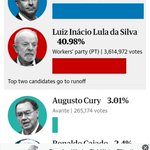
"Lula's victory shows the resilience of his political coalition, but it does nothing to resolve the country's underlying divisions. Just over half the electorate went to Bolsonaro. Conservatives still have a strong presence in Congress and in the states. Lula has won another term, but not a mandate for his entire program."
institude.org/opinion/lulas-…
Imdat Oner retweeted

Opposition leader María Corina Machado returns to Venezuela — and sparks hope for elections (via @TimPadgett2) wlrn.org/americas/2026-10-25…

Senior State Department Official on Venezuela👇
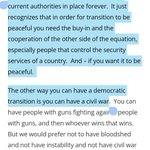
"The cooperation of the other side" is the main problem here. Free elections would mean the regime’s end and imprisonment or exile for its members. That's why the regime will demand a transitional government on its own terms.

Imdat Oner retweeted

#ÚLTIMAHORA | El partido de Flávio Bolsonaro reconoce la victoria de Lula da Silva en las elecciones presidenciales de Brasil.
Looks like a message to MCM👇
"I think we're making real progress in that regard," said Rubio, who has acted as US President Donald Trump's point person on Venezuela. "But if anybody tries to derail that process, they're doing a great harm to Venezuela."
reuters.com/world/americas/r…

Many are quick to jump on Rubio’s statement, but I’m still keeping the Trump factor in play. Ultimately, Trump will decide whether Delcy’s time is up. Rubio has post-Trump plans, but he won’t push Trump’s boundaries too far on Venezuela. I still think that Delcy will find a way to remain in power till the end of 2028.

Importante, Rubio sobre Delcy:
1/ «No creo que se haya pronunciado nunca a favor de la operación del 3 de enero». Pero «no juzgamos por la retórica, sino por los hechos». «Les hemos pedido que hagan cosas en interés de la seguridad nacional de EE.UU. y las han hecho».
2/ ¿Qué ha hecho Delcy? Rubio cita la entrega de Alex Saab, operaciones contra organizaciones criminales y la reducción «sustancial» de la influencia cubana e iraní. «Todo lo que les hemos pedido, tanto en las reformas económicas como en las políticas, está ocurriendo».
3/ El plan de Washington, según un alto funcionario del Departamento de Estado: «Nuevo Supremo antes de terminar el año. Nuevo Consejo Electoral poco después». A continuación, Delcy deberá declarar la vacante definitiva de la Presidencia para abrir el proceso electoral. Lo hará.
4/ Rubio advierte: «Tenemos unos plazos que han aceptado y, hasta ahora, los han cumplido todos». «¿Esperarnos dos años? Eso no va a ocurrir». Y remata: «En el mejor de los casos, me quedan dos años y dos meses en este puesto». Quiere completar la transición mucho antes de que acabe el mandato presidencial, es decir, 2028.
Imdat Oner retweeted

.@POTUS on the election in Brazil: "It looked like another rigged election, frankly. I didn't take sides, but it was a terrible look for the world. Elections have to be indisputable — and it looked very bad to me."
"En una entrevista divulgada por la emisora WLRN, el exdiplomático turco y actual analista Imdat Oner considera que antes del regreso de Machado debió de haber negociaciones a puerta cerrada sobre las posiciones de la premio Nobel una vez entrase en Venezuela. 'Creo que (Machado) no presionará tan fuerte para un cambio rápido, un cronograma electoral acelerado', ha apuntado." elpais.com/us/2026-10-26/el-…

"Two senior administration officials said the administration had been less supportive of Ms. Machado’s previous attempts to get into the country, including in the period right after devastating earthquakes in June. Expressing displeasure, they said her presence in the country then would be more disruptive than helpful, and they made sure officials in the region — including in countries that Ms. Machado might transit — knew of the administration’s views.
In the weeks since, the process of political dialogue in Venezuela has gained momentum, the U.S. officials said. That has given the administration some confidence that the authoritarian government would not arrest Ms. Machado if she returned, they said."
nytimes.com/2026/10/25/world…
