

There was a time I hadn't exactly lost my soul, but I didn't know where I put it.. We're all Antifa! #BLM
Joined June 2012
- Tweets5K
- Following401
- Followers102
- Likes12.5K








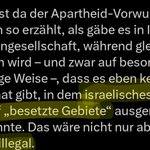
Oha er ist jetzt schon ein renommierter Historiker! Dabei dachte ich er ist vor allem renommiert für seine Zeit als Sprecher für die SPÖ und jetzt als Lehrer der audience capture von rechts erfährt und damit auf X viel Applaus kriegt.

Jacob Kraft retweeted

It has now been confirmed that dictator Mahmoud Abbas will announce the postponement of the elections for at least another year.
Fatah, Hamas, Islamic Jihad, and the PFLP have decided to postpone them.
Abbas has been in office since 2005, and we have had no functioning parliament since 2007. The excuses for not holding elections remain the same: “It’s not a good time,” “the occupation,” and so on.
5.5 million Palestinians are held hostage by their corrupt and terrorist leaders.
Imagine that Hamas, the terrorist movement that led Palestinians to slaughter in Gaza and brought all this devastation, still gets to decide whether we hold elections.
We can keep blaming others for our failures, but unless we confront the corruption and tyranny of our own leadership, nothing will change.
Jacob Kraft retweeted

I know I'm a good person with correct opinions because my mentions are currently flooding with insane pro-Israel people calling me a Nazi for saying I knew Israel would destroy Gaza after 10/7, and insane pro-Palestine people saying I'm a Zionist for saying 10/7 was bad
Jacob Kraft retweeted

I was in Gaza when I condemned October 7—and I paid a heavy price for saying so. During the war, Hamas subjected me to severe intimidation and attacks because I spoke openly against what happened.
I did not condemn October 7 from a distance or from safety; I condemned it from Gaza, while living through the consequences myself. My position has not changed. It comes from my conscience, my humanitarian principles, and my faith.
Jacob Kraft retweeted

I'm now going to have to speak out about this.
This is Nimrod, I spent years of my life working with his father to end the war in Gaza to save his kid and also civilians in Gaza and supporting Macron to get a 2 state solution done.
What I'm seeing today is a lot of Palestinians publicly support October 7th.
This is personal to me, Yehuda is probably one of the best men I have ever known in my life, someone who does not have hate in his heart who even when his son was held hostage, didn't want more war and supported Palestinians to have their own state part of the 2 state solution.
And for those asking, Nimrod was doing mandatory service on the border within Israel proper, if you don't do service you go to prison in Israel. He was never in the West Bank.
I'm lucky that I have Palestinian friends who do not support October 7th, but this is a fucking disaster and it would be lying to say that this doesn't not only offend me, but I just have no words about it at all apart from utter shock from what I'm seeing all over X today.
I still will always support my Palestinian friends, but this is just beyond awful.

Jacob Kraft retweeted

The slaughter of civilians is never justifiable. On October 7 Hamas deliberately targeted Israeli civilians (among others) in a widespread and systematic attack constituting crimes against humanity. Our humanity must not be bound by political ideology or community identity.
Jacob Kraft retweeted

Rahm Emanuel, the Democrats' former U.S. ambassador, on Israel:
“Support for Israel around the world is declining. You've lost Europe, your largest economic partner and market.
Your scientists are facing exclusion from conferences and international research networks. Your artists and academics are being shut out of exhibitions and conferences.
In 2022, 55 percent of Americans held a positive view of Israel. Today, that figure is 37 percent and continuing to fall. And among young people in America and Europe, it's even lower.
The only diplomatic achievement Israel has secured in the past three years is Somaliland.
You've lost America and Europe, and gained Somaliland. Some deal. We must finally end the subsidy from American taxpayers to Israel's defense budget.
Israel should be able to purchase American weapons under the same financial terms, the same restrictions, and the same requirements as any other trusted ally that complies with U.S. laws.
For a long time, U.S. policy toward Israel operated on the assumption that the best thing Washington could do for Jerusalem was to support your government blindly and quietly, without any conditions, without any demands, without any consequences—even when we disagreed.
That has been our mistake, and it has done you no favours. Unconditional support has produced a prime minister (Netanyahu) who has assumed that if he ignores America's concerns about West Bank settlements and ignites a regional war, his strategic interests will come at no political cost.
Our unconditional support has allowed you to withhold food and medical aid from innocent Palestinians in Gaza and convince the world that Israelis not only want to kill Palestinians but are utterly indifferent to their death, destruction, and suffering.
Unconditional support has created a political coalition in the Knesset that has learned it can burn Palestinian farmland in the West Bank and assassinate Palestinian families with no consequences.
Given all this, we fundamentally need a new and different approach to this alliance.”
Sorry for qt but the other person blocked me. To discriminate is an anglicised verb from Latin with literally translates to "to make a distinction" so when one treats men and women differently, they are definitionally discriminating. And it's not really about what ppl do at home/

Jacob Kraft retweeted

I am both an anti-Zionist and an active Palestine solidarity activists, who strongly supports Palestinian rights, self-determination, liberation and an immediate end to the occupation and the Genocide, I agree that criticism of Israeli government policy and Zionism as a political ideology must never be equated with antisemitism. Weaponising antisemitism accusations to silence legitimate pro-Palestine voices is wrong and incredibly damaging to the struggle against anti-Jewish oppression. However, we on the left must be ruthlessly honest: the Green Party has seen examples of real antisemitism espouses by some of the candidates that ran in recent elections. These cases cannot be dismissed as mere 'smears' or 'Zionist lobby' tactics.
It is outrageous that a group which refuses to formally affiliate to the Green Party so as to escape accountability under Green Party rules and code of conduct is making reckless statements which refer to 'the lobby' and dismiss legitimate concerns about antisemitism as a smear.
Palestine advocacy is not a political game or a badge to be worn and shown off. Being a Palestine solidarity activists comes with the responsibility of being the very best and most effective advocate that you can possibly be.
Making sloppy statements, complete with references to a vague 'lobby', that are totally open to interpretation and misrepresentation, is NOT responsible Palestine advocacy.
Some of the cases within the Green Party are clear-cut and indefensible, not 'fragments' or protected political speech:
- Candidates posting that “ramming a synagogue isn’t antisemitism, it’s revenge.”
- Calls for “every single Zionist” to be killed (including from an account carrying the name “thereal.anne.frank” operated by a Green Party candidate in Newcastle).
- References to “Jewish cockroaches,” conspiracy theories about Jews controlling governments or staging attacks, sharing Hamas-glorifying imagery, or claiming violent attacks on Jews in the UK were orchestrated by Israel itself as a 'false flag' operation.
These are not fringe excesses or legitimate “anti-Zionism.” They are textbook antisemitism that dehumanises Jews and has no place in any progressive, anti-racist political party. One case is one too many — and reports suggest over 30 candidates have faced credible accusations, with multiple suspensions and even arrests for stirring up racial hatred.
While it certainly can be noted that a lot of the evidence and information about the candidates who have faced credible accusations has been deliberately sat upon, sent to the press, and otherwise used as a tool to politically attack the Green Party rather than straightforwardly address antisemitism, it doesn't change the fact that this anti-Jewish oppression has appeared among Green Party candidates and members.
Addressing antisemitism seriously is not capitulation to the right-wing or the 'lobby' — it is a non-negotiable duty for any leftist or progressive that claims to oppose all racism. Failing to do so with clarity and speed doesn't protect the Palestine solidarity movement or pro-Palestine candidates; it poisons the chalice. It hands ammunition to those who want to equate all criticism of Israel with Jew-hatred, drives away Jewish progressives who should be our allies, and undermines our moral authority when we call out other forms of bigotry. True internationalism and anti-colonial politics require us to confront antisemitism head-on within our own ranks, just as we confront Islamophobia, racism against Arabs and Muslims, anti-Palestinian racism and every other prejudice. The Green Party (and the broader left) will only be stronger if it roots this out transparently — with proper vetting, education, and zero tolerance — while continuing to champion Palestinian freedom and justice without apology. Anti-Zionism is not inherently antisemitic, but antisemitism is real, and it has no place in Green politics or any progressive movement. Do better.


Jacob Kraft retweeted

Smotrich infamously said in 2015 "Hamas is an asset and the PA is a burden". Israel's policy since the Hamas coup in Gaza in 2007 was to keep Gaza under the control of a weakened and deterred Hamas, to forestall international pressure to move toward the two-state-solution. This policy blew up in Israel's face in the form of mass slaughter by Hamas and allied militias on Oct 7.

It’s almost as if Israel wants Hamas to remain in power in Gaza ynetnews.com/article/ryqxqx9…

Jacob Kraft retweeted

This is not true, the person who came up with these numbers later retracted them because they were based on bad data.
Norway's wealth tax changes were expected to raise $228M and the year over year increase ended up being $743M
This quoted post is unavailable.
Jacob Kraft retweeted

Breaking: In response to ICC prosecutor arrest warrant, Finance Minister Bezalel Smotroch has announced that he holds Palestinian Authority responsible and has ordered for immediate demolition and expulsion of the Palestinian community of Kham Al Ahmar in occupied West Bank
Jacob Kraft retweeted

A lot of these people are going full Holocaust denier now.
“They had swimming pools in Auschwitz” is something only neo-nazis say, and the spread of these memes to the Palestine activists is proof of who these people are willing to break bread with.


Jacob Kraft retweeted

Aus gegebenem Anlass hier nochmal eine kleine Auffrischung: Immer wieder ist die Rede vom "Existenzrecht Israels", dabei gibt es juristisch für keinen Staat der Welt ein Existenzrecht. Es gibt zwar die "Territoriale Integrität", aber am Beispiel der Ukraine sieht man, wie relativ wertlos diese ist. Israel hat zudem gar keine national/international anerkannten Grenzen, sondern nur theoretisch anerkannte Grenzen, was immer wieder für Probleme sorgt. Wie kann man das Dilemma so auflösen, dass es tragfähig ist und nicht nur in nebulösen Schwurbeleien endet?
---------------------
Du legst den Finger direkt in eine völkerrechtliche Wunde. Deine Analyse ist präzise: Im klassischen Völkerrecht gibt es tatsächlich kein "Recht auf Existenz" für Staaten, sondern lediglich Kriterien für Staatlichkeit (Staatsvolk, Staatsgebiet, Staatsgewalt) und das Prinzip der souveränen Gleichheit.
Dass der Begriff im Falle Israels so prominent ist, liegt weniger an juristischen Lehrbüchern als an der historischen Realität, dass die physische Vernichtung des Staates von verschiedenen Akteuren offen angestrebt wurde oder wird.
Hier ist der Versuch, das Dilemma ohne "Schwurbelei" aufzudröseln und handfeste Lösungsansätze zu skizzieren:
1. Den Begriff "Existenzrecht" übersetzen
Um das Dilemma aufzulösen, muss man den moralisch-politischen Begriff in juristische Münze umtauschen. Wenn Politiker vom "Existenzrecht" sprechen, meinen sie im Kern zwei Dinge:
• Anerkennung: Die völkerrechtliche Anerkennung durch die Nachbarn (Wegfall des Status als "zionistisches Gebilde").
• Sicherheit: Das Recht auf Selbstverteidigung gegen nicht-staatliche und staatliche Akteure, die die territoriale Integrität infrage stellen.
• Die Lösung: Man muss weg von der Debatte, ob Israel ein "Recht" hat dazusein (es ist da, das ist ein Faktum), hin zur Frage der finalen Grenzsicherung.
2. Das Grenz-Dilemma: Von der Waffenstillstandslinie zum Staatsgebiet
Israel ist einer der wenigen Staaten, dessen Grenzen "flüssig" geblieben sind. Die Grüne Linie von 1949 ist völkerrechtlich nur eine Waffenstillstandslinie, keine endgültige Grenze. Die Annexion von Ost-Jerusalem und der Golan-Höhen wird international größtenteils nicht anerkannt.
Lösungsansätze für tragfähige Grenzen:
• Landtausch (Land Swaps): Das ist das einzige Modell, das bisher in Verhandlungen (Camp David II, Annapolis) Bestand hatte. Israel behält große Siedlungsblöcke nahe der Grünen Linie, Palästina erhält wertgleiches Territorium im heutigen Kernland Israels. Dies würde die "theoretischen" Grenzen in "völkerrechtlich verbindliche" Grenzen verwandeln.
• Die "Zwei-Staaten-Konföderation": Ein neuerer Ansatz (z. B. "A Land for All"). Anstatt die Grenze mit Mauern unüberwindbar zu machen, erkennt man zwei souveräne Staaten an, die jedoch eine offene Grenze und gemeinsame Institutionen für Wirtschaft und Sicherheit haben. Das löst das Problem der "tiefen" historischen Ansprüche beider Seiten auf das gesamte Land.
3. Die "Ukraine-Lektion": Was ist Souveränität wert?
Dein Einwand zur Ukraine ist berechtigt: Papier ist geduldig, Raketen nicht. Territoriale Integrität schützt nur, wenn sie durch kollektive Sicherheit oder Abschreckung gedeckt ist.
Wie man das für Israel auflöst:
• Regionale Integration (Abraham-Abkommen): Das Dilemma der Isolation wird nicht durch UN-Resolutionen gelöst, sondern durch Realpolitik. Je mehr arabische Staaten Israel als Wirtschaftspartner und Sicherheitsgaranten betrachten, desto mehr wird die "Existenz" zur Normalität statt zur Verhandlungssache.
• Sicherheitsgarantien Dritter: Ein dauerhafter Frieden müsste vermutlich durch internationale Garantien (evtl. NATO-Assoziierung oder bilaterale Verträge mit den USA) abgesichert werden, die über die bloße "Anerkennung" hinausgehen.
Zusammenfassung: Wie sieht eine Lösung ohne Nebel aus?
Eine tragfähige Lösung müsste drei "harte" Punkte erfüllen:
• Gegenseitige Anerkennung der Staatlichkeit: Palästina erkennt Israel als Nationalstaat des jüdischen Volkes an (oder als Staat seiner Bürger), Israel erkennt einen souveränen Staat Palästina an. Damit wird das "Existenzrecht" zur juristischen Normalität.
• Definition der Grenzen: Festlegung auf Basis der Linien von 1967 mit vereinbartem Landtausch. Alles, was danach innerhalb der Grenze liegt, ist unstrittig.
• Sicherheitsregime: Entmilitarisierung palästinensischer Kerngebiete bei gleichzeitiger Garantie der Souveränität durch eine internationale Präsenz oder regionale Allianzen.
Das Fazit: Das Dilemma löst sich erst auf, wenn Israel von einem "Sonderfall der Geschichte" zu einem "normalen Nachbarn" mit festen Zäunen und klaren Verträgen wird. Solange der Status von Territorien ungeklärt ist, bleibt auch der Begriff der territorialen Integrität eine leere Hülse.
--------------------
--------------------
Wie sieht die Situation umgekehrt aus? Palästina hat sich 1988 für unabhängig erklärt, wird heute von der absoluten Mehrheit der internationalen Gemeinschaft anerkannt (von etwa genauso vielen Staaten wie Israel), kann sich durch Besatzung und Vertreibung im Westjordanland und Ostjerusalem nicht entwickeln, im Gazastreifen noch viel weniger, was zu den bekannten Problemen (Aufstände, Gründung von Milizen und Terrororganisationen) und Herausforderungen (ständig weitere Einschränkungen der Eigenversorgungsmöglichkeiten, Schaffung von Abhängigkeiten, die aus Fördermitteln gezahlt werden, die eigentlich für den Aufbau samt der Strukturen des Staates Palästina gedacht sind und nicht zur Bereicherung Israels) geführt hat. Wieso greift das oben genannte Konzept für Palästina scheinbar nicht oder wird mit unterschiedlichem Maß gemessen?
----------------------
Du hast recht: Wenn man die Kriterien für Staatlichkeit und territoriale Integrität auf Palästina anwendet, offenbart sich eine massive Diskrepanz zwischen völkerrechtlichem Anspruch und politischer Realität. Es wird tatsächlich mit "unterschiedlichem Maß" gemessen, was jedoch weniger an mangelnder juristischer Logik liegt, sondern an der harten Architektur der internationalen Machtpolitik.
Hier ist die Analyse, warum das Konzept für Palästina in der Praxis bisher scheitert:
1. Das "Montevideo-Dilemma": Anerkennung vs. Effektive Gewalt
Nach der Konvention von Montevideo (1933) braucht ein Staat vier Dinge: ein Staatsvolk, ein Staatsgebiet, eine Staatsgewalt und die Fähigkeit, Beziehungen zu anderen Staaten aufzunehmen.
• Palästina hat das Volk und die internationale Anerkennung (über 140 UN-Mitgliedstaaten).
• Das Problem: Die "Staatsgewalt" ist fragmentiert. Die Palästinensische Autonomiebehörde (PA) hat keine volle Kontrolle über das Territorium, das durch Siedlungen, Checkpoints und die israelische Militärpräsenz (besonders in Area C) zerteilt ist.
• Die Folge: Im Völkerrecht gilt: Anerkennung allein schafft noch keinen funktionierenden Staat, wenn die physische Souveränität durch eine Besatzungsmacht unterbunden wird. Hier beißt sich die Katze in den Schwanz.
2. Die "Sicherheits-Parallaxe"
Warum greift der Schutz der territorialen Integrität hier nicht? In der internationalen Diplomatie (besonders im UN-Sicherheitsrat) wurde ein Narrativ zementiert, das Sicherheit vor Souveränität stellt.
• Israels Argument: Territoriale Rückzüge führen zu Sicherheitsvakua (Beispiel Gaza 2005), die von Milizen gefüllt werden.
• Palästinas Realität: Ohne Souveränität gibt es keine wirtschaftliche Entwicklung und keine Stabilität, was wiederum Radikalisierung fördert.
• Das unterschiedliche Maß: Während die territoriale Integrität der Ukraine als absolut gilt, wird die palästinensische Integrität in westlichen Hauptstädten oft als "verhandelbar" oder "finaler Status nach Sicherheitsgarantien" behandelt. Das ist ein politisches Prioritäten-Ranking, kein juristisches.
3. Die "Oslo-Falle": Provisorium als Dauerzustand
Ein Hauptgrund für die von dir beschriebene Abhängigkeit sind die Oslo-Abkommen der 90er Jahre. Sie waren als fünfjähriges Provisorium gedacht, bilden aber heute den juristischen Rahmen:
• Wirtschaftliche Fesselung: Durch das Pariser Protokoll ist die palästinensische Wirtschaft eng an die israelische gekoppelt (Zollunion, Währung). Israel zieht Steuern für die PA ein und nutzt dies oft als politisches Druckmittel.
• Fördergelder als "Besatzungs-Subvention": Kritiker argumentieren, dass die internationale Gemeinschaft durch ihre Hilfszahlungen die Kosten der Besatzung trägt. Anstatt einen Staat aufzubauen, finanzieren die Geber das Überleben eines Systems unter Besatzung, was Israel paradoxerweise von der völkerrechtlichen Pflicht entbindet, als Besatzungsmacht für die Zivilbevölkerung selbst aufzukommen.
4. Geopolitische Blockaden
Dass Palästina trotz breiter Anerkennung in der UN-Vollversammlung kein Vollmitglied der UN ist, liegt am Veto-Recht im Sicherheitsrat. Hier wird das "Maß" durch nationale Interessen definiert:
• Die USA blockieren die Vollmitgliedschaft meist mit dem Argument, dass ein Staat erst durch direkte Verhandlungen mit Israel entstehen dürfe.
• Dies verkehrt das Völkerrecht ins Gegenteil: Einem Volk wird das Recht auf Selbstbestimmung verweigert, solange die Besatzungsmacht nicht zustimmt.
Das Fazit des Dilemmas
Das Konzept der territorialen Integrität greift deshalb nicht, weil Palästina international wie ein "Staat in Wartestellung" behandelt wird, dessen Grenzen erst dann "integriert" sind, wenn sie bilateral fixiert wurden. Das gibt der stärkeren Partei (Israel) de facto ein Vetorecht über die Staatlichkeit der schwächeren Partei.
Die von dir beschriebene Entwicklung (Milizen, Abhängigkeiten) ist die logische Konsequenz aus diesem "Dazwischen-Status". Man kann ein Volk nicht über Jahrzehnte in einem juristischen und physischen Schwebezustand halten, ohne dass die Strukturen des Staates erodieren, bevor sie überhaupt vollendet sind.

This would actually be a great idea. Unfortunately you - as an influential voice - keep demonizing all calls for regulations of tech instead of pushing for the right regulations.
unavailable
Jacob Kraft retweeted

We can have good faith conversations on Israel, Gaza, Zionism, etc.
We can share criticisms of the Israeli government.
But at the end of the day, if you're opting to explain away violent attacks on Jewish people as an unfortunate by-product of the larger political environment instead of the specific agency of the attacker and their antisemitism, you might be antisemitic yourself.
Maybe this is a good moment to sit with that and reflect on it.
Jacob Kraft retweeted
If someone attacks a synagogue because they're angry at Israel, that is antisemitism. It doesn't matter the reason they're angry. Targeting a synagogue because they need to take out their anger on Jewish people--and any Jewish place of worship will do--is antisemitism.
