
Sydney, Australia
Joined June 2019
- Tweets208
- Following219
- Followers317
- Likes445



Pinned Tweet
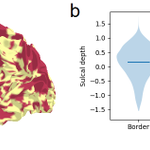
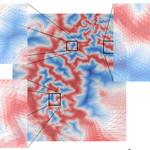
Do you work on surface MRI such as HCP data? Our paper is finally out in Imaging Neuroscience, showing biases in surface fMRI. The revised ms has many new insights!
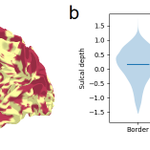
TLDR: Vertices are much closer to each other in sulci, resulting in (fake) high spatial autocorrelation. (1/5)
Jayson Jeganathan retweeted

New paper in Imaging Neuroscience by Jayson Jeganathan, Michael Breakspear, et al:
Spurious correlations in surface-based functional brain imaging
doi.org/10.1162/imag_a_00478

I'm proud of this work, and I hope this paper helps you to avoid spurious conclusions in your work. Check out the full paper (tinyurl.com/gyral) for a detailed breakdown and for other downstream analyses that can be impacted (FC fingerprinting, hyperalignment, etc). (5/5)

This was a team effort! @KoussisNikitas @tremodian @Sina_Mansour_L @AndrewZalesky @DrBreaky @phogat_richa @jchrispang
Amazing paper !

1/12 How do animals build an internal map of the world? In our new paper, we tracked thousands of neurons in mouse CA1 over days/weeks as they learned a VR navigation task. @nspruston @HHMIJanelia, w/ co-1st author @JohanWinn
Video summary: youtube.com/watch?v=yw_4uVur…
Paper: nature.com/articles/s41586-0…
Jayson Jeganathan retweeted

In markets, there are price bubbles. In science, are there popularity bubbles? When promising research gets hyped up, it can lead to a burst of activity followed by a dramatic collapse, shows huge bibliometric study @Nature Magazine l.sslevine.com/Ex7z
Wow. Most recent openAI model o3 smashes the prev leaderboard for ARC-AGI reasoning challenge. It is also now the 175th best coder in the world (CodeForces challenge), and can solve 25% of hard-for-humans FrontierMath Qs (up from 2%). What does this all mean?

ARC-AGI scores for past five years of OpenAI models (updated w/ release dates)

ALT Matplotlib scatter plot of ARC-AGI score data from @mikeknoop’s quote-tweeted post ARC-AGI semi-private v1 scores: * GPT-2 (2019): 0% * GPT-3 (2020): 0% * GPT-4 (2023): 2% * GPT-4o (2024): 5% * o1-preview (2024): 21% * o1 high (2024): 32% * o1 Pro (2024): ~50% * o3 tuned low (2024): 76% * o3 tuned high (2024): 87%
Jayson Jeganathan retweeted

I've combined some of these together into a new #neuro #visualization "In the eye of a fly":
Using the @FlyWireNews visual system wiring diagram, #Brian2 spiking #neuron simulator, and #blender. Information flow through the chiasms, across a topographic map.
Wow

𝗛𝗼𝘄 𝘀𝗵𝗼𝘂𝗹𝗱 𝗼𝗻𝗲 𝗱𝗼 𝘀𝘆𝘀𝘁𝗲𝗺𝘀 𝗻𝗲𝘂𝗿𝗼𝘀𝗰𝗶𝗲𝗻𝗰𝗲??
This way! Every neuro program should just make this required reading and teach students how to do outstanding science like this.
doi.org/10.1038/s41586-024-0…

Awesome new work by @DrPhilipMosley ! Combining facial video analysis and fMRI analysis with hidden Markov models to understand the unique features of melancholic depression

Our paper is out in @molpsychiatry with a cast of superstars! #OpenAccess
Including @jnvandermeer @jaysonjeg @DrBreaky @Britt_Mitchell1 @LucaCocchi78 and many significant others @QIMRB_Institute:
rdcu.be/dSsOs
Twitter thread incoming!
Jayson Jeganathan retweeted

Can AI agents design better AI agents?
We describe a newly forming research area "Automated Design of Agentic Systems" (ADAS) that aims to automatically design powerful agents & a new method where a meta agent invents new agents by programming them in code. Led by @shengranhu 🧵

Jayson Jeganathan retweeted
New paper in Imaging Neuroscience by Jayson Jeganathan, Michael Breakspear, et al:
Integrating anatomical and functional landmarks for interparticipant alignment of imaging data
doi.org/10.1162/imag_a_00253

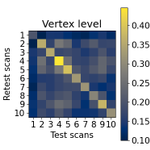
Even in MEG and EEG, anatomical info can leak into functional data, yielding spuriously perfect fingerprinting
This Post is from an account that no longer exists. Learn more
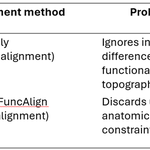
I’m excited to introduce Integrated Alignment! A new method for inter-subject MRI alignment that fuses standard diffeomorphic alignment (MSMSulc/MSMAll) and functional alignment (hyperalignment). Read on! (1/6) doi.org/10.1162/imag_a_00253
That concludes this TweePrint. Many thanks to my co-authors @KoussisNikitas @tremodian @DrBreaky. Check out the full paper for all the cool details I've glossed over. 6/6
doi.org/10.1162/imag_a_00253
Could be of interest to folk working on hyperalignment / functional alignment - @mafeilong @BertrandThirion @fMRIstats @haxbylab