

Agentic Commerce Advisor | Agent-Mediated Commerce | Digital Product + Experience Strategy | Landscape Photographer
Utah, USA
Joined February 2008
- Tweets12K
- Following570
- Followers2.2K
- Likes4.5K












Jim Cook retweeted

Introducing Claude Managed Agents: everything you need to build and deploy agents at scale.
It pairs an agent harness tuned for performance with production infrastructure, so you can go from prototype to launch in days.
Now in public beta on the Claude Platform.
Jim Cook retweeted

It looks like Ramp is in full Dorsey Mode.

Tomorrow we’re breaking down how companies actually become AI-native. Using the AI Transformation Model + a real case study from Ramp.
Ben Levick (Head of AI @ Ramp) will talk through how they did it from the inside.
If you’re figuring this out right now, you should join.
info.notion.so/webinar/webin…

Jim Cook retweeted

I’m proud that so many of the world’s leading companies have joined us for Project Glasswing to confront the cyber threat posed by increasingly capable AI systems head-on.
xitter.gq/AnthropicAI/status/204…

Introducing Project Glasswing: an urgent initiative to help secure the world’s most critical software.
It’s powered by our newest frontier model, Claude Mythos Preview, which can find software vulnerabilities better than all but the most skilled humans.
anthropic.com/glasswing


Jim Cook retweeted
NEW EPISODE: @jack & @roelofbotha unpack @blocks 40% staff cut and rebuilding the entire company as a mini-AGI.
This isn’t “use AI to make people more productive.” It’s making the company itself the intelligence.
If you’re a founder or operator wondering what work looks like in the next 5 years… this is the episode.
The evolution looks like:
• Manager mode = Pyramid 🔺 (command & control)
• Founder mode = Flat ➖(founders decide fast)
• Dorsey mode = Circle 🔵 w/ AI at the center, humans at the edge, and decisions flow from customer inputs → AI → humans steering it
I’ve tried killing org charts before. Brutally hard. But we never had these tools.
This is rewriting the CEO playbook for the AI era.
Buckle up.
00:00 Existential Dread & Hope
02:56 AI Replaces Hierarchy
07:22 Block’s New Three Roles
26:47 Flattening the Company, Fast
35:23 Getting the Board to Buy-In, Fast
36:50 Building a Great Board
41:29 Founder CEO Lessons
48:18 Second Acts & Conviction
56:22 Timeless CEO Traits
Jim Cook retweeted

73 product releases in 52 days. That's not a launch cadence — that's a different kind of company.
I tracked every Anthropic release from Feb 1 to Mar 23 by going through @bcherny, @trq212, @noahzweben, @felixrieseberg, @lydiahallie, @amorriscode, @feldman, @dickson_tsai, and @claudeai. Built a calendar with first-announcement attribution.
Look at the acceleration. February had bursts with gaps between them. March 9 onward is almost every single day — Code Review, Channels, Dispatch, Computer Use, back to back.
The individual features get coverage. The shipping velocity doesn't. It should.


Jim Cook retweeted
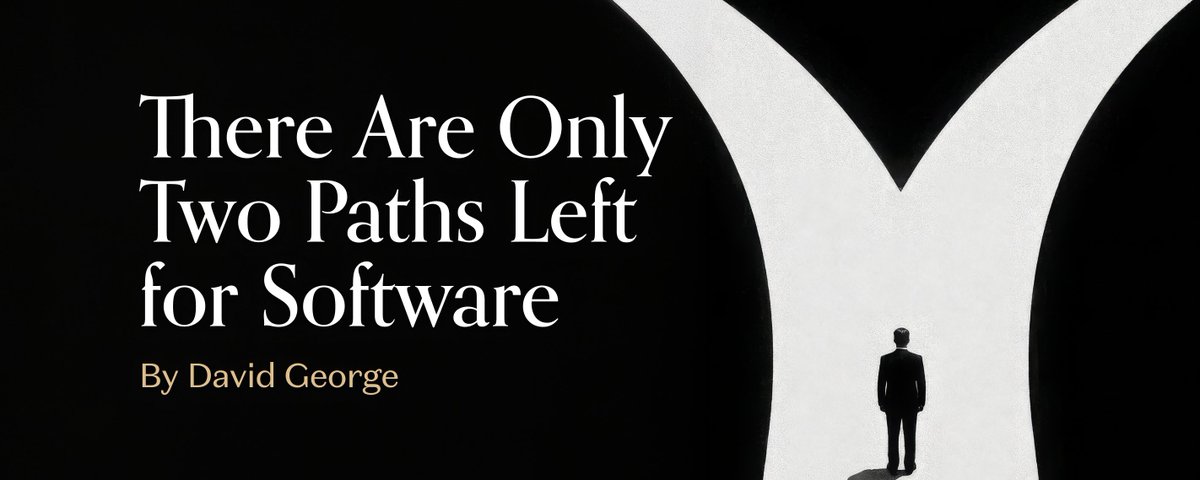
The comfortable middle is over for software.
Growth has stalled but true profitability still hasn't arrived — most of the sector is stuck: too slow for a premium growth multiple, too diluted for a fortress multiple.
a16z's David George says CEOs have 12-18 months to pick exactly one of two paths: a16z.news/p/there-are-only-t…


Jim Cook retweeted

I don't think most PMs realize the PRD is becoming obsolete.
For the last decade, the PM's core artifact was a qualitative spec. Clear requirements, user stories, acceptance criteria. The engineering team interpreted it, built something close, and the PM spent two weeks reconciling what shipped with what they wrote.
The best AI companies replaced that entire loop with evals. A set of inputs your product needs to handle. A task that generates outputs. A scoring function that produces a number between 0 and 1. No ambiguity. No interpretation gap.
Ankur Goyal built the eval platform behind Vercel, Replit, Ramp, Notion, and Airtable. An $800M company. He walked through building an eval from zero on this episode and the score went from 0 to 0.75 in under 20 minutes. That's a PM shipping a measurable quality bar before a single line of product code exists.
Here's the part that changes the PM role permanently. When the product passes the eval and users still hate it, the eval is wrong. That's on the PM. Evals make PM judgment quantifiable in a way PRDs never did. You can't hide behind "the spec was ambiguous." There's a number now.
Six months ago, PM interviews asked "how do you use AI in your workflow." The next wave of interviews is going to ask you to write an eval. The PMs who can encode user intent as a scoring function are building the one skill that survives every model change, every framework swap, every agent rewrite.
Write the eval.

Evals are the new PRD.
The companies building AI products that actually work are running 12.8 eval experiments per day. Here is the playbook with @ankrgyl, Founder and CEO of @braintrust ($800M valuation, behind Vercel, Replit, Ramp, Zapier, Notion, Airtable):
⏱ 1:43 Why vibe checks stop scaling
⏱ 6:35 Evals are the new PRD
⏱ 8:45 The Claude Code evals controversy
⏱ 18:48 Building an eval live from zero
⏱ 29:51 Connecting Linear MCP and iterating
⏱ 39:12 Why you need evals that fail
⏱ 43:36 Offline vs online evals
⏱ 47:40 Three mistakes killing eval culture
The core framework: every eval is exactly three things. A set of inputs your product needs to handle. A task that takes those inputs and generates outputs. A scoring function that produces a number between 0 and 1.
We built one from scratch on camera. Score went from 0 to 0.75 in under 20 minutes.
Jim Cook retweeted
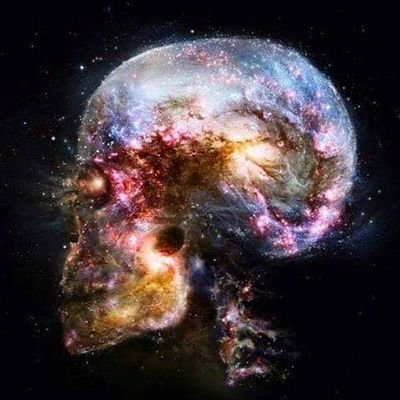
🚨: After 48 years of travel, NASA 's Voyager 1 is nearing one light-day from Earth, almost 16 billion miles away.
A proud milestone for humanity, and a humbling reminder of how small we are in an infinite universe.

Jim Cook retweeted

I heard an incredible analogy from a VC friend that I can’t stop thinking about.
“The moat in software was the cost of building software. And Claude Code just mass produced a bridge.”
It’s wild when you think about the impact of this.
The SaaS boom produced a few dozen billionaires and a bunch of zero sum winners.
But the AI SaaS era will mass produce millionaires.
There will be fewer ServiceTitans hitting $5B valuations, and instead there will be 50,000 companies doing $500K-$5M each, run by 1-3 people with deep expertise and huge margins.
To be clear, I believe that the total value of software goes up, and the number of companies created goes up exponentially.
But the number of people who capture the value also goes up 100x.
I don’t believe in the “SaaS is dying” headline, I think it’s missing the point.
It’s simply that the power of SaaS is changing hands.
Jim Cook retweeted

Google disrupting Figma is unexpected

Introducing the new @stitchbygoogle, Google’s vibe design platform that transforms natural language into high-fidelity designs in one seamless flow.
🎨Create with a smarter design agent: Describe a new business concept or app vision and see it take shape on an AI-native canvas.
⚡️ Iterate quickly: Stitch screens together into interactive prototypes and manage your brand with a portable design system.
🎤 Collaborate with voice: Use hands-free voice interactions to update layouts and explore new variations in real-time.
Try it now (Age 18+ only. Currently available in English and in countries where Gemini is supported.) → stitch.withgoogle.com
Jim Cook retweeted

Microsoft is about to sue its own golden child.
$14 billion invested. Exclusive cloud rights. The most important AI partnership in history.
And Sam Altman just went behind their back with a $50 billion Amazon deal.
Here's why they're betraying each other:
When Microsoft first invested in OpenAI in 2019, they locked in ONE rule above everything else...
ALL access to OpenAI's models must go through Microsoft's Azure cloud. No exceptions.
That deal made Azure the backbone of the AI revolution. Every company using ChatGPT's API was paying Microsoft for the privilege.
It was the smartest infrastructure play of the decade.
Then last month, OpenAI quietly signed a deal with Amazon.
$50 billion. AWS becomes the exclusive third-party cloud provider for Frontier, OpenAI's new enterprise AI agent platform.
$138 billion committed to Amazon cloud services.
Microsoft found out and got really angry....
A person familiar with Microsoft's position told the Financial Times today: "We know our contract. We will sue them if they breach it. If Amazon and OpenAI want to take a bet on the creativity of their contractual lawyers, I would back us, not them."
That's basically a declaration of war.
And here's where it gets crazy:
OpenAI and Amazon are trying to build a technical workaround. A system called the "Stateful Runtime Environment" that runs on Amazon's Bedrock platform.
Their argument is that the system "only" handles memory and context for AI agents using enterprise data on AWS. It doesn't technically "invoke" OpenAI's core models through Amazon.
Microsoft's response: Bullshit.
The workaround violates the spirit of the deal even if it technically dances around the letter.
Amazon knows they're on thin ice too. An internal memo leaked showing Amazon told employees exactly what language they can and can't use. They can say Frontier is "powered by OpenAI" or "enabled by OpenAI." But they CANNOT say customers can "access" or "invoke" OpenAI models on AWS.
When you're coaching employees on which verbs to avoid, you know you're in trouble.
But here's the thing everyone seems to forget:
OpenAI is planning an IPO this year.
They just closed a $110 billion funding round last month.
So if Microsoft sues, the IPO timeline is DEAD.
You can't go public while your biggest partner and investor is suing you for breach of contract.
Elon Musk is already suing OpenAI separately for abandoning its nonprofit mission.
Two active lawsuits from two of the most powerful people in tech. Against one company trying to IPO.
Good luck with that S-1 filing.
But WHY did Altman do this?
Microsoft gave OpenAI everything. Capital. Infrastructure. Distribution. Enterprise customers.
And Altman's response was to secretly build an escape route through Amazon...
Because he saw what was coming:
Microsoft launched Copilot. Their own AI product. Competing directly with ChatGPT.
Microsoft started building their own models. Hiring their own AI researchers. Reducing dependency on OpenAI.
So Altman did the same thing back. Found another cloud provider. Started building leverage.
Both sides were preparing for divorce while still living in the same house.
So the $50 billion Amazon deal was just an insurance policy against the day Microsoft decides it doesn't need OpenAI anymore.
And Microsoft caught him packing his bags.
What happens next:
The companies are still talking. Trying to resolve this before Frontier launches.
But Microsoft has made their position clear. Litigation is on the table.
If this goes to court, it sets a precedent for every AI partnership in the industry. Every cloud deal. Every exclusive licensing agreement.
The entire AI infrastructure map gets redrawn.
Sam Altman built OpenAI on Microsoft's money, Microsoft's cloud, and Microsoft's trust.
Then he signed a $50 billion deal with their biggest competitor.
In any other industry they'd call that what it is.
Jim Cook retweeted
I know Silicon Valley startups don't want to hear this.....
But the combination of someone in the trades with deep domain expertise and Claude Code will run circles around your generic software.
I talked to Cory LaChance this morning, a mechanical engineer in industrial piping construction in Houston. He normally works with chemical plants and refineries, but now he also works with the terminal
He reached out in a DM a few days ago and I was so fired up by his story, I asked him if we could record the conversation and share it.
He built a full application that industrial contractors are using every day. It reads piping isometric drawings and automatically extracts every weld count, every material spec, every commodity code.
Work that took 10 minutes per drawing now takes 60 seconds. It can do 100 drawings in five minutes, saving days of time.
His co-workers are all mind blown, and when he talks to them, it's like they are speaking different languages.
His fabrication shop uses it daily, and he built the entire thing in 8 weeks. During those 8 weeks he also had to learn everything about Claude Code, the terminal, VS Code, everything.
My favorite quote from him was when he said, "I literally did this with zero outside help other than the AI. My favorite tools are screenshots, step by step instructions and asking Claude to explain things like I'm five."
Every trades worker with deep expertise and a willingness to sit down with Claude Code for a few weekends is now a potential software founder.
I can't wait to meet more people like Cory.
Jim Cook retweeted
The token cost to build a production feature is now lower than the meeting cost to discuss building that feature.
Let me rephrase.
It is literally cheaper to build the thing and see if it works than to have a 30 minute planning meeting about whether you should build it.
It’s wild when you think about it.
This completely inverts how you should run a software organization. The planning layer becomes the bottleneck because the building layer is essentially free. The cost of code has dropped to essentially 0.
The rational response is to eliminate planning for anything that can be tested empirically. Don’t debate whether a feature will work.
Just build it in 2 hours, measure it with a group of customers, and then decide to kill or keep it.
I saw a startup operating this way and their build velocity is up 20x. Decision quality is up because every decision is informed by a real prototype, not a slide deck and an expensive meeting.
We went from “move fast and break things” to “move fast and build everything.”
The planning industrial complex is dead.
Thank god.
Jim Cook retweeted
After traveling 9 years and covering 3 billion miles, NASA's New Horizons spacecraft got this shot.
Behold! The icy mountains of Pluto.

Readers added context they thought people might want to know
The attached video is a 2017 NASA CGI rendering created from New Horizons' 2015 data, with exaggerated topography and enhanced colors. It is not actual footage or the spacecraft's real trajectory during its flyby at ~7,800 miles. The mission details are accurate.
nasa.gov/missions/nasa-…
science.nasa.gov/mission/new-ho…
Jim Cook retweeted

Anthropic's Revealing Chart on AI's Impact on Jobs
Anthropic has unveiled a pivotal chart that underscores the chasm between AI's capabilities and its real-world application in the workforce.
Derived from analyzing 2 million actual conversations with Claude, this radar chart, titled "Theoretical Capability and Observed Usage by Occupational Category," paints a stark picture of untapped automation potential across various job sectors.
At its core, the chart is a spider web diagram plotting occupational categories around a circular axis, with values ranging from 0 to 1.0 representing the share of job tasks.
The expansive blue area illustrates the theoretical coverage tasks that large language models (LLMs) like Claude could perform right now based on their inherent abilities. In contrast, the much smaller red area shows observed usage, drawn from real user interactions.
The visual disparity is immediate and profound: blue spikes outward significantly in fields like computer and math (reaching about 0.75), business and finance, and office administration, while red hugs close to the center, often below 0.2 across most categories.
This gap isn't just academic; it's a "career runway," as highlighted in discussions around the chart. For programmers, 75% of tasks are theoretically automatable, yet actual usage lags far behind.
Similar vulnerabilities appear in customer service, data entry, and financial analysis, roles traditionally seen as white-collar strongholds. Meanwhile, hands-on fields like construction, agriculture, and protective services show lower theoretical exposure, with blue areas dipping to around 0.1-0.3, suggesting AI's current limitations in physical or unpredictable environments.
Broader data amplifies the chart's message. As of early 2026, 49% of U.S. jobs expose at least 25% of tasks to AI, up from 36% a year prior. Yet, mass layoffs haven't materialized; unemployment in AI-vulnerable roles remains steady.
Instead, subtler shifts are underway: a 14% drop in hiring for 22-25-year-olds in exposed positions indicates companies are prioritizing experienced workers, shortening entry-level pathways for recent graduates.
The implications are clear: while AI's red footprint grows incrementally each month, the blue expanse signals accelerating change. College-educated, higher-earning professionals, once insulated are now most at risk, flipping the script on traditional labor disruptions.
Anthropic's chart isn't a doomsday prophecy but a wake-up call, urging workers and businesses to bridge the gap through adaptation, upskilling, and ethical integration of AI tools.
Please read the 5000 Days Series at ReadMultiplex.com for answers on how you can thrive in the Interregnum.

