
Google DeepMind | Prev: @Waymo, @StanfordAILab, CS PhD @GeorgiaTech, Grad @Stanford
Joined April 2020
- Tweets131
- Following144
- Followers1.8K
- Likes963







John Lambert retweeted

I did say we'd be releasing our models periodically...introducing Gemini 4 Carbon, our next frontier model.
Following Argon's release just two weeks ago, Carbon shows the pace at which we’re pushing the frontier, it ranks #1 on the recently updated v5.0 of @ArtificialAnlys Intelligence Index at 59. It also leads across key cybersecurity evaluations scoring 88.2% on SEC-bench Pro for finding vulnerabilities, 54.8% on ExploitGym for exploitation, and 71.0% on CWE-bench for patching.
We’re seeing significant improvements in long-horizon tasks even compared to Argon, and we’ve strengthened frontier safeguards.
As we did with Argon, we’re going to roll it out gradually + responsibly. Some trusted cyber defenders will get access starting this week. We'll be expanding it to more partners through our Fairwind Program, ahead of wider availability soon, so hang tight!

This work was led by our talented past student researcher @simi_97k , supervised by @lunwang1996 , with Hongbin Liu, Shujian Zhang, Mingqing Chen, and Rajiv Mathews.
"Steering LLMs for Culturally Localized Generation" (arxiv.org/abs/2603.23301) COLM 2026

3
131
4. Bias is mostly an elicitation problem, not missing knowledge. Steering with CuE beats explicit prompting on cultural faithfulness and surfaces rarer, long-tail cultural concepts that prompting alone tends to miss.
1
1
89
3. When a prompt doesn't specify a culture ('Write me a recipe for a dish'), responses skew heavily US/UK -- about 60% of the time.
1
24
2. Culture is encoded not just through activation, but also partly as what gets suppressed. Chinese-geography features sit below average in European/British contexts.
1
23
A few highlights:
1. Some features are shared and cluster by geography, such as an olives/olive-oil feature shared by Greece, Italy, Spain, and Turkey, showing primitive signs of a rough cultural map encoded within the model.
1
34
We then aggregate these into Cultural Embeddings (CuE), which can be used to diagnose cultural defaults and to steer generations towards a target culture. (3/N)
1
72
A set of cultural commonsense assertion sentences, each capturing an aspect of culture, can be mapped to a ground-truth country. High mutual information between the GT country label and SAE feature activations, per cultural assertion, reflects 'cultural' feature dims inside LLMs.
1
155
When LLMs are asked open-ended questions, which cultures do their responses best align with? And can we transparently change that default through inference-time prompt-free interventions?
Excited to share our new COLM '26 work from Google DeepMind: arxiv.org/abs/2603.23301🧵(1/N)

1
13
2,178
If so, we want to hear from you! To apply, please follow these two steps:
1️⃣ Fill out the form below to personally express your interest to me:
docs.google.com/forms/d/e/1F…
2️⃣ Fill out the Google DeepMind "Student Researcher 2026" application form:
google.com/about/careers/app…
I am hiring a Student researcher at Google DeepMind for Winter/Spring or Summer of 2026!
🛠️ Interested in tool-use and reasoning for LLMs?
🚀 Up-to-date with frontier research?
🔬 Love to understand code & algorithms from first principles?
📚 Currently studying for a BS/MS/PhD?

John Lambert retweeted

After a year of team work, we're thrilled to introduce Depth Anything 3 (DA3)! 🚀
Aiming for human-like spatial perception, DA3 extends monocular depth estimation to any-view scenarios, including single images, multi-view images, and video.
In pursuit of minimal modeling, DA3 reveals two key insights:
💎 A plain transformer (e.g., vanilla DINO) is enough. No specialized architecture.
✨ A single depth-ray representation is enough. No complex 3D tasks.
Three series of models have been released: the main DA3 series, a monocular metric estimation series, and a monocular depth estimation series.
The core team members, aside from me: @HaotongLin, Sili Chen, Jun Hao Liew, @donydchen.
👇(1/n)
#DepthAnything3
Thanks to the team: @maxjiang93 , @stan188249301 , @tanmingxing, @AnguelovDrago, @hongjjeonS, Sakshum Kulshrestha, Yijing Bai, Jing Luo.
- SceneDiffuser++ Paper: arxiv.org/abs/2506.21976
- Watch our video: youtube.com/watch?v=J70R3wxP…
- SceneDiffuser Paper: arxiv.org/abs/2412.12129
402
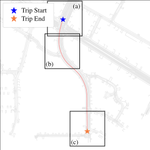
We propose a new task, CitySim, where given a city map and an AV software stack, the simulator can simulate the trip from point A -> B by populating the city around the AV and controlling all aspects of the scene (e.g., vehicles, pedestrians, traffic light states).

1
1
558
Though conceptually simple, this requires diffusion to learn to generate sparse tensors without prespecified sparse structure. During inference, we develop new clipping techniques to account for invalid entries in the denoising process.

1
18
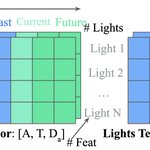
For agents and traffic lights scene tensors, with a varying number of elements and feature dimensions, we can project scene tensors to the same latent dimension, and concatenate into a multi-tensor. We then pass this to a transformer denoiser backbone.

1
18
Like SceneDiffuser, we learn an agents "scene tensor," but generalize this to multi-tensor diffusion.
Agent spawning, removal and occlusion can be jointly modeled simply via predicting an additional validity channel along with other agent features such as x, y, size, type, etc.

1
22
Only learned simulators can emulate the realism of crowded city scenes. Without the ability to insert or delete objects, these simulators can only simulate a few seconds before the scene becomes empty as initial logged agents leave the periphery of the AV.
1
20
Led by our amazing intern at Waymo Research, @stan188249301, SceneDiffuser++ is a diffusion model that is solely trained on the diffusion denoising objective, yet supports all insertion, deletion, and behavior control capabilities via simple autoregressive rollout.
1
1
77