






Pinned Tweet
Dom said anyone with a phone and natural language would be able to build. He wasn’t kidding.
I’m a builder by trade, not a coder, 109 versions and counting of a fishing app in Australia & NZ just by talking to AI. It runs on-chain on the Internet Computer.
Made with @caffeineai on @dfinity’s internet-computer:native .
Something’s biting. Stay tuned.
#ICP #BuildOnICP

Been building an app on @caffeineai for a few weeks.
I asked Claude to give me a fair unbiased feedback on using Caffeine and internet-computer:native to build the APP.
Claude: "The biggest downside right now is that it’s new. The tools are less polished than the big names, and Motoko (the backend language) is early, so AI and developers know it less. That’s a maturity thing, and it’ll close fast."
"The upside is once it’s built and running: cheaper to host, secure by design, no servers or databases to babysit."
ICP has no bandwidth fees, so the gap widens as you grow. (AI costs are the same whichever platform you use.)
WE ARE SO EARLY!!
Rough monthly hosting estimate (USD, hosting + database + storage, excluding AI):
@claudeai

It feels like it's taking forever.......BUT
WE ARE SO EARLY!
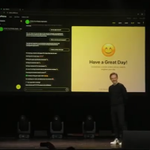
Remember Dom typing a prompt live on stage just to get a smiley face app running on-chain? We are already WAY past that.
Now we're building full-stack, complex apps with Claude Code using voice—iterating and deploying in real time.
internet-computer:native
@caffeineai .ai

Following on from my previous post about building my app on Caffeine AI and ICP, it’s been a massive reality check on tech timelines.
AI tools like Claude Code let you launch a basic prototype in days, but turning it into a polished, high-quality app that actually competes with existing market leaders? That takes real work, time, and months of iteration.
That’s why we’re not seeing a sudden flood of fantastic, viral apps overnight. For any app to win market share—whether Web2 or on-chain—it can't just be new or on-chain. It has to be as good or genuinely better than what’s already out there. That's the real key.
Reaching true commercial quality takes months of craft. Seeing that execution layer firsthand gives you a whole new appreciation for what it actually takes for an ecosystem to truly scale.
internet-computer:native
@caffeineai
@claudeai
Building on Caffeine AI with Claude Code lately has shown me how far this tech has come.
Getting a basic app running takes minutes. But turning it into a real, polished platform? That still takes actual work, time, and a bit of $.
When you look at high-performing apps across any industry, you realize no viral, market-leading product gets built overnight—no matter what dev tools or AI frameworks you’re using.
Claude Code estimated that pre-AI, quoting an app with this level of custom architecture and user profile logic would’ve run anywhere from $50,000 to $150,000.
I'm estimating my cost around 1k-2.5k once I add domain names, business registration, maybe some legal advise.
As a residential builder in Australia who "codes" by night, what’s fascinating to me is the scale: If this project (which I'm keeping under wraps for now) gets 500, 1,000, 2,000, or even 10,000 active users, it’s a massive win for my me!
In terms of global ICP cycle burn and Internet Identity growth, though? A tiny drop in the ocean.
And that’s totally fine.
It might work, it might not—but I’m building it anyway and having a crack. (its good fun either way)
internet-computer:native
@caffeineai
@Grok
“If MULTI/DEX and Binance both launched fully featured tomorrow with equal resources, I’d pick MULTI/DEX.
It delivers the order-book + margin + swap experience of a CEX while eliminating the need to trust a company with your assets. Everything runs as open, ownerless canisters governed by the NNS.”
base:0x00f3c42833c3170159af4e92dbb451fb3f708917
multidex.ai
1
84
internet-computer:native @cz_binance
It feels surreal watching billions vanish in hacks when the exact infrastructure to render these exploits obsolete already exists.
Hot wallet compromises and vulnerable cross-chain bridges are architectural failures of legacy systems—not inevitable laws of crypto. With threshold key management, protocol-level Chain Fusion, and tamperproof on-chain logic, an entire class of systemic vulnerabilities simply doesn't apply to the Internet Computer architecture.
The technology is built, tested, and running right now.
Just waiting for the public, the market, and the wider industry to wake up to what true sovereign infrastructure looks like.
youtube.com/watch?v=WSQmjsTN…
104
base:0x00f3c42833c3170159af4e92dbb451fb3f708917 @caffeineai @claudeai
Using Caffeine AI alongside Claude Code right now feels completely unrecognizable compared to when it first launched.
The workflow is next level:🎙️ You talk to Claude Code using your voice, just explaining what you want built.🔗 It’s hooked straight into Caffeine AI behind the scenes.🤖 Claude and Caffeine talk to each other, run tests, review the app, push updates, handle modifications, and come back to you with questions or the next steps.
No manual deploying, no wrestling with code—just pure intent turning into functional, live software.
It is unbelievable how good this is getting. And considering how early we still are, it’s only going to get better.
Should have a complete app to show in the near future!
ICP is more than a price chart—it’s a platform to build on.
Bored waiting for internet-computer:native to move? Jump on Caffeine AI, turn an idea into an app, and have a crack at building a business.
You don’t have to wait for the price to create an opportunity. Build one. 🚀
@caffeineai
@claudeai
1
62


base:0x00f3c42833c3170159af4e92dbb451fb3f708917
A massive thank you to all the ICP creators who keep showing up daily and weekly sharing valuable information.
During the long, dark winter, when prices tested my conviction, your information, positivity and reassurance were a big part of why I hung in there. That support meant a lot to me, and it deserves recognition.
@BobbyO_
@JerryBanfieldIC
@HEROonchain
@BlockchainPill
@michaelwduffy
@ChrisYost_
@BasedGiant_
@realsixfig
@bitcoinr3negade
@DOMICP13
@mosesibb
@ZeroFuxBJ
And to everyone else whose content I’ve seen but haven’t named—you deserve that same appreciation. Thank you all. 🙏 internet-computer:native
There are plenty of people jumping on board now, which was always to be expected. But you guys showed up long before the attention arrived. You were—and always will be—the originals. $ICP
internet-computer:native solana:So11111111111111111111111111111111111111112 ethereum:native cardano:native
I'm genuinely blown away.
I'm building a bathroom renovation app on Caffeine using Claude, and it's incredible.
I have zero software development background. I'm just a builder describing what I want in plain English, and watching it come to life.
Every hour I use it, I see more potential.
If I can build something genuinely useful for my own business, imagine what experienced developers, enterprises and governments will be able to create.
I don't think most people have realised what's coming yet.
This feels like one of those technologies that seems hard to appreciate until you actually sit down and use it.
My dad’s been combining bagpipes with drone footage — thought this shot came out pretty epic
youtube.com/@bullerbaypiper?…
youtu.be/z-InHEUMFk4?si=FRnj…

1
8
243
#ICP #ChatGPT
ICP’s ideal niche is becoming the infrastructure layer for systems that must be independent, permanent, and autonomous — such as sovereign digital services, fully on-chain applications, AI agents running continuously, and high-trust software or data that cannot rely on traditional cloud providers. It does not need to become the global standard to succeed — and arguably isn’t designed for that. Its strength is owning a specialised, high-value infrastructure layer where neutrality, permanence, and long-term execution matter most.
If adoption scales within this niche, the economic potential grows in tiers:
• Moderate niche success → ~$20B–$50B annual infrastructure usage
• Strong niche infrastructure → ~$50B–$150B annual infrastructure scale
• Upper success scenario → ~$150B–$250B+ annual infrastructure value
Using typical infrastructure valuation multiples, that could imply roughly:
• Moderate success → ~$150B–$400B network value
• Strong niche scale → ~$400B–$1T+ network value
• Upper success → $1T+ infrastructure-class valuation potential
At these levels, ICP wouldn’t just be a crypto project — it would sit in the same scale category as major global infrastructure or cloud platform companies, operating like a large multinational tech provider rather than a typical digital asset network — all without needing to be the single global standard.
5
96
#ChatGPT $ICP
ICP becomes the default when the old internet becomes economically and structurally impossible to keep using.
Defaults don’t win because people like them.
They win because everything else becomes friction, cost, and risk.
⸻
1️⃣ Defaults emerge when complexity collapses
What the internet looks like today
To build anything serious you need:
•Cloud provider (AWS / Azure / GCP)
•Databases
•APIs
•Auth
•Payments
•DevOps
•Security
•Scaling teams
•Compliance teams
That stack is:
•Expensive
•Fragile
•Slow to evolve
•Impossible for small teams long-term
What ICP collapses into one layer
On Internet Computer Protocol:
•Frontend
•Backend
•Database
•Identity
•Payments
•AI logic
➡️ One environment, one deployment, one mental model
📌 Every major default in tech history replaced complexity with simplicity
•Mainframes → PCs
•PCs → smartphones
•Servers → cloud
•Cloud → world computer
⸻
2️⃣ Economics always decide the default
Cloud economics are breaking
Cloud looks cheap early — then explodes:
•Data egress fees
•API costs
•Scaling penalties
•AI inference costs
•Vendor lock-in
Startups now die after product-market fit because infra kills them.
ICP flips the equation
•No servers
•No API traffic costs
•No DevOps teams
•Scaling is native
➡️ 10–100× cheaper at scale
📌 When builders realise they can survive longer and grow faster on ICP, the default shifts — quietly at first, then suddenly.
⸻
3️⃣ AI forces the internet to change
This is the big one.
AI breaks the current internet because:
•AI needs state + memory
•AI needs continuous execution
•AI needs shared learning
•AI needs autonomy
The cloud was designed for:
stateless requests + human-triggered actions
AI is:
persistent, autonomous, and compounding
ICP is the first system where:
•AI lives inside the internet
•AI owns memory permanently
•AI interacts natively with users, money, and other AI
📌 Once AI becomes the primary “user” of the internet, the infrastructure must change.
⸻
4️⃣ Regulation & trust push toward on-chain systems
Governments are tightening:
•Data sovereignty
•AI accountability
•Platform responsibility
•Financial compliance
Centralised clouds become:
•Single points of failure
•Single points of regulation
•Single points of censorship
ICP offers:
•Verifiable execution
•Transparent logic
•Deterministic outcomes
•Jurisdiction-neutral infrastructure
📌 Institutions don’t trust black boxes forever.
⸻
5️⃣ Network effects lock in the default
Defaults harden when:
•Tools improve
•Talent shifts
•Knowledge accumulates
•Migration cost rises
Once:
•AI agents are built on ICP
•Data lives on ICP
•Businesses run on ICP
•Identity exists on ICP
➡️ Leaving becomes harder than staying
This is how:
•Windows
•iOS
•AWS
•Ethereum
…all became defaults.
⸻
6️⃣ Why competitors can’t easily copy ICP
This is often misunderstood.
Cloud providers:
•Cannot decentralise without killing margins
•Cannot remove lock-in without losing power
•Cannot offer autonomous software without losing control
Blockchains:
•Can’t scale compute
•Can’t host full apps
•Can’t serve real users directly
ICP sits alone in the gap between:
cloud capability
blockchain guarantees
📌 Defaults emerge where no one else can follow.
⸻
7️⃣ The actual adoption path (how it really happens)
Not overnight. Not via hype.
Phase 1 – Builders
•Startups choose ICP to survive
•AI-native apps migrate first
Phase 2 – Users
•Apps feel faster, cheaper, simpler
•Users don’t know or care it’s ICP
Phase 3 – Institutions
•Regulated systems need trust
•ICP offers verifiable infrastructure
Phase 4 – Default
•“Why wouldn’t you build on ICP?”
•Everything else feels legacy
⸻
The honest bottom line
ICP becomes the default when the cloud becomes the bottleneck.
5
221
$ICP #ChatGPT
You wake up in 2050. ICP has been running the internet for the past 25yrs:
✅ 1. No passwords. Not anywhere.
You don’t memorize anything.
Your devices quietly whisper your identity to apps using cryptographic signals.
Logging in feels like opening your fridge:
You approach → it recognises you → door opens.
No password managers.
No “forgot password.”
No 2FA texts from unknown numbers at 2 am.
Identity is fused into the network like oxygen in the air.
✅ 2. No giant cloud companies
AWS? Gone.
Azure? Relics.
Google Cloud? A museum exhibit.
Compute and storage live inside the protocol, not in corporate fortresses.
It’s like electricity:
no one owns it, everyone uses it.
Startups no longer spend half their money on servers.
Your nephew launches an app from his bedroom that scales to 2 million users without touching a cloud dashboard.
✅ 3. Your data belongs to you, not companies
Apps do not store your data.
They simply “borrow” access to it.
You can revoke access with a flick of your wrist, and the app just… stops seeing it.
Facebook-like companies never became data empires because the protocol didn’t allow it.
No Cambridge Analytica.
No mass breaches.
No creepy ads that know you bought socks on Tuesday.
✅ 4. Social media is not addictive — because you run your own feed
Every social platform is forkable.
You don't like the algorithm?
You change it.
Maybe your version only shows posts from actual friends.
Maybe it hides braggy vacation photos or angry political stuff.
Maybe it adds cat GIFs between every serious post, like mental bubble wrap.
It’s your feed in a literal sense.
✅ 5. AI agents run everywhere — as citizens of the web
AI doesn’t live in closed companies like OpenAI or Google.
It lives directly on-chain, inside canisters, with autonomy.
You have a personal AI that:
•handles your schedule
•negotiates subscriptions
•filters junk messages
•tutors your kids
•generates on-demand micro-apps
•and even participates in your online communities
Every person has a little digital companion.
Some are serious.
Some are sarcastic.
Some are basically golden retrievers with processors.
✅ 6. Apps never go down
No maintenance windows.
No outages.
No “Oops, our backend is having issues.”
ICP’s canisters run like immortal mini-machines.
When a node dies, another picks up the pieces without even pausing mid-sentence.
The internet feels like a calm, steady heartbeat.
✅ 7. Money moves like messages
Bank transfers are instant everywhere.
Micro-payments flow in real-time:
•tipping creators
•paying AIs for services
•accessing articles
•unlocking features in apps
•machine-to-machine payments
Global finance looks like a single shimmering river moving under the web.
✅ 8. No app stores
There are no Apple or Google toll gates.
Apps live on the network itself.
You access them the same way you’d open a link.
The 30 percent “Apple tax” on developers never existed.
Innovation got weird, diverse, and joyful — like an indie music scene but for software.
✅ 9. Government systems are tamper-proof
Voting, property titles, medical records — all stored in canisters with cryptographic audit trails.
Political scandals look different.
No “lost” files.
No mysterious deleted emails.
No data manipulated after the fact.
Transparency is built into the foundation.
✅ 10. The internet is unified — not splintered
No US internet vs Chinese internet vs corporate walled gardens.
Because ICP runs across independent global compute centers, no single nation can shut off the network or manipulate it.
Censorship gets harder.
Information flows freely.
People no longer argue about who controls the web — because the web controls itself.
✅ The vibe of this world
Life feels smoother.
Less glitchy.
Less corporate.
More personal.
More private.
More intelligent.
More creatively chaotic.
The internet becomes a digital ecosystem — alive, symbiotic, self-balancing — instead of a maze………
Caffeine Ai vs Replit
xitter.gq/i/grok/share/tUCZxxGoy…
55
Binance Interviews: Internet Computer (ICP) Unveils 2025 Vision, Self-Writing Internet, Sovereign AI, and Chain Fusion for Bitcoin DeFi | Binance News on Binance Square binance.com/en/square/post/0…

1
94