

Postdoc @YaleMicroPath. Exploring Mg(II) homeostasis in an intracellular bacterial species.
New Haven, CT
Joined June 2011
- Tweets913
- Following1.8K
- Followers517
- Likes10.9K


Pinned Tweet
Super excited to share this preprint of our recent work from @Sankar_Lab at @ccmb_csir, where we report that CysZ is the bacterial ancestor of the mitochondrial ATP/ADP carrier -- the one and only ATP 'exporter' known to biology.

Bacterial ancestry of the mitochondrial ATP exporter biorxiv.org/content/10.64898… #biorxiv_evobio
jotin gogoi retweeted

ようやく、真核生物に最も近縁なアーキア(古細菌)に関する論文が、Natureでオンライン公開されました!
私たちがまだアーキアだった太古の時代。その姿や生き方に、これまで以上に迫ることができました。
論文はこちらです👇
nature.com/articles/s41586-0…
1/n

jotin gogoi retweeted

@IndianEmbassyUS @USAndIndia @USAmbIndia @USAndHyderabad @MEAIndia @DrSJaishankar
#MedicalEmergency Sister critical, on life support. Hyderabad family MUST travel TODAY. No visa appointments available.
URGENT intervention for #EmergencyVisa
Every moment counts. PLEASE HELP.
jotin gogoi retweeted

Today, the MitoCarta Tree of Life Consortium (MitoTOL) is releasing high-accuracy mitochondrial proteomes across diverse eukaryotes to empower studies of physiology, evolution, and disease:
cell.com/consortium/mitocart…
All data can be accessed at:
mitocarta.org
jotin gogoi retweeted

Raygun 1, our model for redesigning proteins the way evolution does, is out today in @Nature. For an arbitrary protein, it can:
- miniaturize (eGFP, shorter than any natural FP)
- magnify (EGF, into a tighter EGFR binder)
- modify (dozens of edits at once-- indels and subs)

jotin gogoi retweeted

1/ The world's songbirds sing in just 8 basic sounds. And where a bird lives decides which ones it uses.
My first PhD paper is out now in @ScienceMagazine (science.org/doi/10.1126/scie…) Here is what we found:

jotin gogoi retweeted

Nick Lane thinks that simple life is almost inevitable on any Earth-like planet.
His most provocative intuition pump for this: electrochemically, cells are basically just smaller copies of the Earth itself.
There's a gradient between the reduced core and mantle and the oxidized ocean, just like the gradient across a cell membrane.
Nick thinks this is because cell chemistry is completely continuous with the chemistry of earth.
jotin gogoi retweeted

There are simple equations that reveal a lot about biology.
For example, given the concentration of a molecule, one can quickly calculate the average spacing between those molecules in a cell.
The equation involves an assumption; namely, that a cell can be sliced into a cube, with one molecule sitting in the center of each box. Each box has a side length of d, and a volume of d × d × d, or d³.
Imagine zooming out of this hypothetical cell. The whole cell has a volume, V, and contains N molecules, which means it has N little boxes. So the total volume of the cell is given by the volume of one box times the number of boxes:
V = N × d³
Rearranging this equation, we get:
d³ = V / N
Now, the term N/V is just the same thing as density, or the number of molecules per unit volume. We can therefore flip it around and call it c, or "concentration." Rearranging once more, then, we get:
d³ = 1 / c, or equivalently, d = c^(-1/3)
This is a beautiful little equation!
Remember that c is the concentration of a molecule and d is the average spacing between those molecules. Now we can use this to figure out how tightly packed a particular molecule is within the cell.
Consider glutamate, which has a concentration of about 100 millimolar, or 0.1 moles per liter. Multiply by Avogadro's number and convert (1 cubic meter = 1,000 liters), and we get c = 6.022 × 10²⁵ m⁻³.
Finally, if we take the inverse cube root, we get d = 2.55 nanometers. So each molecule of glutamate sits, on average, about 2.55 nanometers from its neighbors, which is a distance smaller than the width of a typical protein.
It's fun to repeat this with other things, too. Try it for water, ATP, ribosomes, and so on. If you wanted to recreate a David Goodsell painting (see below), you could also use this equation to calculate how far apart each object in the painting ought to be!

ALT Myelin painting by David Goodsell. See https://ccsb.scripps.edu/goodsell/
jotin gogoi retweeted

Excited to share our discovery of a new programmable RNA-guided DNA-targeting system hiding inside bacteriophages that predates CRISPR.
We call it VIPR (Viral Interference Programmable Repeat), and it uses an entirely new logic to find its targets.
Thread + link below.

jotin gogoi retweeted

Bacteria move around using a molecular machine called the flagellar motor that rotates faster than the flywheel of a race car engine and switches directions in an instant. After 50 yrs, scientists have finally figured out how it works. “My lifelong quest is now fulfilled.” Link⤵️
jotin gogoi retweeted
.@michael_nielsen on AlphaFold - the AI bit is a small part of the total investment.
"A massive fraction of the success there is the Protein Data Bank. It's X-ray diffraction, NMR, cryo-EM, and the several billion dollars that was spent obtaining 180,000 protein structures."
jotin gogoi retweeted

Excited to share an amazing video on the NLRP3 inflammasome pathway generated by talented Ann from the Iwasa lab @janetiwasa @Ann_HuiLiu. It shows the real cryo-EM structures of the pathway from #NLRP3, #ASC, #caspase-1, #GSDMD, #IL-1b, to #NINJ1. #cryoem @LeXiao17 Enjoy
jotin gogoi retweeted

The TNQ Foundation honours mentors who have contributed four finalists each in the past decade with the TNQ Inspiring Science Mentor Award.
@sankarfr1 @Sankar_Lab @ccmb_csir @Chauhanlab_ILS
I am truly honored and grateful to the TNQ Foundation ( @TNQLectures ) for this tremendous recognition of our work. All this was possible due to the fantastic ethos of @Sankar_Lab at @ccmb_csir and the unwavering support and guidance of @sankarfr1.

The fourth finalist is @jotingogoi for his paper “A metal ion mediated functional dichotomy
encodes plasticity during translation quality control.”
jotin gogoi retweeted

#Addendum to 1970 paper, “CYTOPLASMIC FILAMENTS OF AMOEBA PROTEUS: I. The Role of Filaments in Consistency Changes and Movement,” includes 8 video sequences originally recorded on 16-mm films. No technology was available at the time to include this data. hubs.la/Q03_ZDQg0
I extend my heartfelt gratitude to everyone as embark on my next adventure as a Postdoc fellow at @YaleMed and mark the end of the most exciting and transformative chapter of my academic journey, and life, at @Sankar_Lab and @ccmb_csir

Sending all the best wishes to @jotingogoi as he embarks on his exciting Postdoc journey @YaleMed !! It's been incredible having you in the lab, We'll miss you big time. Good luck🎉. #Farewell
Cheers to new beginnings!! @ccmb_csir @sankarfr1



jotin gogoi retweeted

The complexities and entire gamut of functions of proteins cannot be captured in their static images. Studies from @DrSankarCCMB and @mvdeshmukh highlight the importance of detailed understanding of protein composition and dynamics.

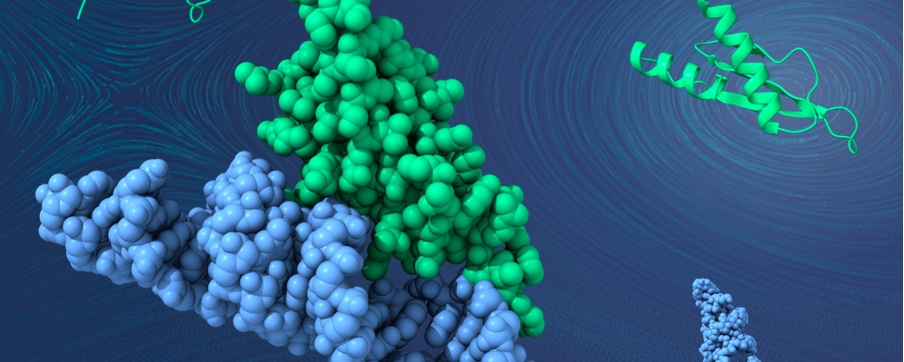
Delighted to see our recent study being featured by @IndiaBioscience in form of this insightful research highlight written by @SomdattaKarak

New research from @ccmb_csir reveals that tiny mistakes in protein synthesis might actually help cells survive stress!
These "errors" could trigger protective responses and boost adaptability.
📖 Written by @SomdattaKarak
Read the full article: buff.ly/sw3HvUW

10
276
jotin gogoi retweeted
Living cells are the master optimizers of resources they have. Here is an example of mistakes in protein translation possibly helping cells detect stressful conditions and bolster its protective mechanisms.
@SomdattaKarak writes on work by @jotingogoi in @DrSankarCCMB's lab.
New research from @ccmb_csir reveals that tiny mistakes in protein synthesis might actually help cells survive stress!
These "errors" could trigger protective responses and boost adaptability.
📖 Written by @SomdattaKarak
Read the full article: buff.ly/sw3HvUW