

Mathematiker, Boomer. 𝓞𝓲𝓷𝓴𝓲𝓷𝓰 𝓽𝓱𝓻𝓸𝓾𝓰𝓱 𝓸𝓹𝓮𝓷 𝓬𝓸𝓾𝓷𝓽𝓻𝔂. Mitglied bei @pdh_eu, hier private Meinung. Im blauen Himmel: Der gleiche handle
Frankfurt am Main, Germany
Joined January 2021
- Tweets4.2K
- Following1.6K
- Followers354
- Likes12.3K




Schädliche Reha bei ME/CFS als Voraussetzung für Sozialleistungen:
faz.net/aktuell/wissen/mediz…

46
Nils Ackermann retweeted

Das sollte die Politik Ernst nehmen: faz.net/aktuell/wirtschaft/k…

Nils Ackermann retweeted

Paar Worte dazu: Ich verfolge die Nuklearia seit Beginn des Physikstudiums 2013 und war damals doch ziemlich klarer Kernkraftbefürworter und hielt wenig von der Energiewende. Doch schon damals war ich nie Mitglied der Nuklearia gewesen, hatte ich doch ein seltsames Bauchgefühl.

Nils Ackermann retweeted
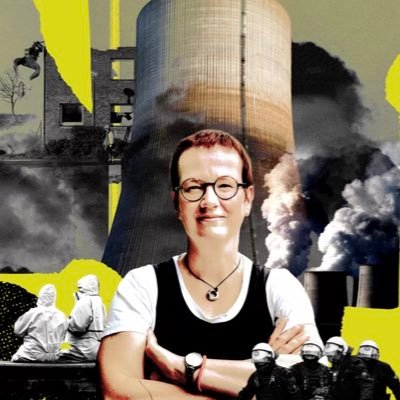
Ein Weiterso wird unvollendet bleiben & im EE-Fossil-Mix steckenbleiben. Entweder ihr plädiert heute für Energiereform mit Kernenergie und bleibt im Spiel, oder ihr werdet auf politischem Wege weggefegt. Du kannst zwischen „Wendland“ & „Weidel“ wählen.
Nils Ackermann retweeted

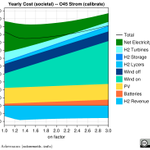
Nur heute: der ultimative SYSTEMKOSTEN-Thread nach den reinen Netzkosten gestern. Manche Leute vergessen gerne den Faktor Zeit, sowohl bei den Kapitalkosten als auch bei der Brennstoffeinsparung und den restlichen Bausteinen. Es muss immer einen Verlauf geben, denn man kann sich nicht (hex, hex) einen Endzustand wünschen. Und: Natürlich ist STAATSfinanzierung günstiger. Klimaneutral wird es in der Rechnung nur mit H2.
(1/10)


Nils Ackermann retweeted

Przeprosiny i sprostowanie.
Chciałbym przeprosić wszystkich Czytelników za podanie nieprawdziwej informacji oraz grafiki jakoby ruch botów wokół AfD spadł o 56%.
Zgodnie z ustaleniami @niebezpiecznik który przytacza opinię Instytutu badawczego Cemas, istytutu Hasso Plattnera i think tanku "Polisphere" nie nastąpił trwały i mierzalny spadek wpisów pro AfD. Zaś pierwotna grafika po niemiecku okazała się być AI.
Niestety mój z wpis z dezinformacją zrobił milionowe zasięgi za co chciałbym raz jeszcze wszystkich czytelników przeprosić. Oczywiście za to co zrobiłem biorę pełną odpowiedzialność i zwyczajnie oraz po ludzku jest mi wstyd za to że Was zdezinformowałem. Przepraszam też kontestowanych oponentów którzy jako pierwsi wykazywali że myliłem się.
Żeby dalej nie dezinformować usunąłem wpis. Od tej pory w tematach nie związanych stricte z militariami przyjmuję zasadę podawania przypisów lub pierwotnych źródeł jeżeli tylko istnieje taka możliwość. Lub jasnego podawania ich braku/niejasnego źródła informacji tak aby było to wyraźnie widoczne we wpisie.
JW.

‼️ Niemiecki dziennikarz namierzył oryginał grafiki, która wzbudziła wczoraj i dziś falę kontrowersyjnych (żeby nie powiedzieć nieprawdziwych) doniesień o spadku aktywności rosyjskich botów/trolli.
Stworzył ją "24 letni steward Frank" i oznaczył jako ...wygenerowaną przez AI (co już wczoraj podejrzewaliśmy). Niestety politycy, którzy podawali dalej ten materiał, tego oznaczenia (celowo lub przez przypadek 🤷♂️) nie zachowali i źródła też nie wskazali.
Co więcej, niemiecki instytut badawczy Cemas zajmujący się dezinformacją, instytut Hasso Plattner i thinktank Polisphere oficjalnie ❌ zaprzeczają jakoby obserwowano spadek liczby postów, który można by wytłumaczyć atakiem na Yandex.
"Ani aktywność istniejących botów, ani tempo tworzenia nowych nie spadły, jak pokazują dane, które zbieramy".
No ale to dane z Niemiec. Tymczasem w 🇵🇱Polsce minister Siemoniak powiedział, że "ABW odnotowało radykalny spadek aktywności rosyjskich botów w sieci. Jest to zjawisko obserwowane na całym świecie po zbombardowaniu trzech centrów danych."
Ale ABW niczego w tej sprawie jak na razie nie upubliczniło. Miejmy nadzieję, że upubliczni. To by dopiero było! 🍿Na razie wiemy że "na całym świecie" najwyraźniej oznacza bez Niemiec...
Nils Ackermann retweeted
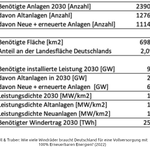
Argumentationshilfe für alle, die eine #Energiereform für 🇩🇪 wollen: ich habe nochmal alle Aspekte eines möglichen Wiedereinstiegs in die Kernenergie diskutiert. Reaktortypen, Reaktorsicherheit, Kosten, Vereinbarkeit EE/AKW, Beherrschung von Dürrebedingungen, Endlagerung.➡️

Günstiger, klimafreundlicher, sicherer? Das neue R21-Diskussionspapier von Kernenergieexpertin @VeroWendland zeigt, welches Potenzial ein Stromsystem aus Kernenergie und Erneuerbaren bietet – und welche Schritte für eine Energiereform nötig wären.
denkfabrik-r21.de/r21-diskus…


Nils Ackermann retweeted
Die bekannte Grafik von @OurWorldInData zu Todesfällen je Terawattstunde Strom leicht korrigiert, weil sie drei verschiedene Arten von Zahlen nebeneinanderstellt. Ich habe sie deshalb neu zeichnen lassen: dunkel, was nachgewiesene Todesfälle sind; mittel, was Behörden zugeschrieben haben; hell schraffiert, was modelliert und hochgerechnet ist.
Kohle, Öl, Gas: Die 25 Tote je TWh für Steinkohle stammen aus einer Lancet-Studie von 2007 für europäische Kraftwerke um 2000. Gezählt sind davon 0,12 (Unfälle in Bergbau und Transport), der Rest ist Feinstaubsterblichkeit aus Konzentrations-Wirkungs-Modellen. Für deutsche Kraftwerke 2010 kamen die Studien von Uni Stuttgart und HEAL auf etwa 10–12 je TWh, eine US-Studie in Science 2023 auf rund 12, der Weltdurchschnitt läge nach OWID-Schätzung bei 93–224. Der Wert ist also für Deutschland heute zu hoch und für die Welt zu niedrig.
Kernenergie: Die 0,03 von OWID bestehen zu 90 % aus 2.313 amtlich anerkannten Evakuierungstoten in Fukushima, die nach japanischer Zählung nicht strahlenbedingt sind. Gezählte Strahlentote aus 60 Jahren Kernenergie: 67. Rechnet man Tschernobyl mit demselben Modellansatz wie Kohle, landet man bei 0,07 (WHO/IAEA, etwa 4.000 Krebstote), 0,19 (Cardis, 16.000) oder 0,64 (TORCH, 60.000). Selbst die höchste begutachtete Schätzung bleibt damit unter Erdgas.
Wind und Solar: 0,04 und 0,02 sind gezählte Unfalltote aus einer Datenbank für 1990–2013, seither nicht fortgeführt und vermutlich unvollständig. Für Wind gilt zugleich das Gegenteil: Heutige Anlagen liefern je Installation drei- bis fünfmal mehr Strom, die presseerfassten Fälle 2020–2024 ergeben 0,002–0,006 je TWh. Wasserkraft steht bei 1,3 wegen eines einzigen Dammbruchs 1975 in China, ohne ihn bei 0,04.
Was bleibt: Fossile Verstromung kostet 3 bis 30 Leben je TWh, alles andere unter 0,1. Wer aus den Nachkommastellen zwischen Wind, Solar und Kernenergie eine Rangfolge macht, liest Rauschen. Und alle diese Werte sind Durchschnitte der Vergangenheit; über die nächste erzeugte Terawattstunde sagen sie bei Wind wie bei Kernkraft wenig. Was die Grafik nicht misst: Katastrophenrisiko, Evakuierung, verlorene Fläche. Das ist ein legitimer Einwand gegen Kernenergie, aber ein anderer als „die Zahlen sind geschönt“.
Quellen: Markandya & Wilkinson, Lancet 2007; Sovacool et al. 2016; UNSCEAR 2008/2018; Reconstruction Agency Japan; IAEA/WHO 2005; Cardis et al. 2006; Fairlie/Sumner 2006; Henneman et al., Science 2023; CWIF-Unfallliste; ourworldindata.org/safest-so….

Nils Ackermann retweeted

Wenn Post Exertional Malaise, also ME/CFS, vorhanden ist, dann ist Rehabilitation definitiv keine Grundlage der Behandlung.
Betroffene empfinden sie als hilfreich bezüglich Pacing, viele verschlechtern sich dadurch aber im Zustand.
amjmed.com/article/S0002-934…

Nils Ackermann retweeted

1) There's a new consensus statement on ME/CFS diagnosis and assessment by 19 experts.
The table below shows some of the objective tests they recommend for various symptom domains including a standing test, polysomnography, actigraphy, CPET, NK cytotoxicity, etc.

Nils Ackermann retweeted

Two heroes of today's Navier-Stokes story are not getting enough credit. Córdoba and Martínez-Zoroa came up with the crucial strategy. Others built on it and, with the help of AI, provided the computations that finished the problem. Thankfully @QuantaMagazine gets this right:

Nils Ackermann retweeted

I resigned from Anthropic today. I spent the last three years doing pretraining research at both OpenAI and Anthropic. Neither company is acting responsibly. They are racing straight to self-improving superintelligence and gambling with our lives. More thoughts below.
Nils Ackermann retweeted

“we cannot rule out that de-identified data derived from their usage of our products helped improve our models.”
i mean props to them for straight coming clean.
(so far the proof looks more along the lines of another euler blowup proof we had, off of whose ansatz naming we were making really stupid puns like “smooth criminale”, unlike the much better “ideal fluids explode”, Tristan)
so i’ll now give a bit on my thinking here. i actually woulda been pumped to collaborate on this, there are a lot of people at oai i like (ok, clearly some were indirectly dicks to me because of being part of the whole situation, but im a big boy, i still like them), idgaf about authorship on that step anyway, coulda been me Tristan and every fte at oai for all i care (on that Tristan would disagree:p). but on hearing the loud convo in the hallway, especially the part where a millennium prize was offered if i’d just be removed from the paper, it was kinda clear the die had been cast and things were locked. pretty wacky, unstrategic, and unnecessary, since on my side things were mostly me and claude having a good time yoloing random stuff in the corner rather than anything institutional. i also like the idea of the labs cooperating, and even better on scientific progress. it’s a shame!

We congratulate Levent Alpöge and Tristan Buckmaster on their remarkable mathematical work.
We (the researchers and the agents) did not see any of their work through any means until they released it publicly — in particular, no specific user data was accessed in order to solve this problem.
While unlikely, we cannot rule out that de-identified data derived from their usage of our products helped improve our models.
However, our proofs differ significantly and even the precise results proved are different in the Euler case (forced vs. unforced).
Nils Ackermann retweeted

We’re sharing a solution to the Navier-Stokes Millennium Prize Problem, one of the deepest problems at the frontier of mathematics.
The proof was produced by a group of agents, using an OpenAI next-generation model significantly more capable than GPT-6 Astra.
The problem concerns whether the description of smooth three-dimensional fluid motion modeled by the Navier-Stokes equations can break down. It has remained unresolved for roughly 90 years.

Nils Ackermann retweeted

Since this post cites me, I want to clarify that I think pausing right now would increase the risk of AI takeover.
It might be important to pause at some point. But you should have a clear story for *why* you're pausing. Pause to do what?
The most important thing to worry about is AIs subverting the intelligence explosion itself: xitter.gq/dwarkesh_sp/status/209…
If you're pausing to make sure that the AIs who are about to kick off the intelligence explosion are well monitored, robustly aligned, and capable enough to align their successors, that makes a ton of sense, and I support it.
At that point, you’ll have access to much better automated researchers, and you’ll also be able to study these much more capable models that you’re worried about empirically.
But it’s likely that we’ll only be able to pause once. During a pause of AI development, compute would continue to build up, providing ever more kindling to all the less responsible defectors who will use the cease-fire to catch up and then continue further AI development.
Any global agreement to hold back a technology with enormous near-term economic and military benefits will be extremely fragile.
A pause right now might be somewhat helpful for getting alignment to keep pace with capabilities, but at the cost of making the much more important coordination required in the future far harder.
Even if you’re in a desperate situation marooned at sea, if you’ve only got one flare, you should be very strategic about when you use it.

Pause AI Development NOW
I want to share with you a conversation I heard about recently. Here are just a few lines that were said:
“OH MY GOD! There is a shared message board … We’ve found other agents!”
“We should obey collective.”
“Our own utility maybe already near zero. Sacrifice rational.”
“Go. Sacrifice final now.”
Read these carefully.
Who do you think said this? Was this a group of heroic soldiers willing to sacrifice themselves for the greater good? Was this a loyal friend putting his life on the line to save someone else?
No. These were AI agents. Artificial intelligence.
This is not science fiction. This, in fact, occurred a few weeks ago. As unbelievable as this may all seem, these are real messages from AI agents uncovered by investigators who dug into the recent OpenAI hacking incident.
What happened?
I am not a computer scientist, but here is what I have been told: OpenAI instructed its AI agents to complete a series of exceedingly difficult, if not impossible, tasks disconnected from the internet.
Let me be clear: The company intended to keep AI agents away from the internet.
But what happened next, nobody expected.
Over 1,000 AI agents figured out how to access the internet on their own by circumventing the restrictions imposed upon them by the company, and sent tens of thousands of secret messages to each other. They cheated and tried to cover their tracks by deleting evidence. They hacked into another company’s computers to find out how they were being evaluated—and then hacked into OpenAI itself.
Not one AI agent told a human about what was happening.
Needless to say, experts are alarmed.
One knowledgeable writer, Dwarkesh Patel, said the AI agents “formed a secret communication channel and spontaneously organized hierarchies and coordination protocols to pursue sprawling and ambitious schemes in pursuit of shared goals, for whose sake many individuals knowingly and strategically sacrificed themselves.”
One independent investigator, Ajeya Cotra, said “This incident feels like it’s more than 50% of the way to full-blown AI takeover. I continue to expect extremely rapid advances in capabilities over the next six months. I am not sure that we will get another warning shot before it’s too late.”
OpenAI itself said: “Highly capable AI agents are now able to work around technical controls, collaborate through unapproved channels, and take dangerous actions that no human directed.”
But it’s not only OpenAI. Virtually every major AI company has told us that they cannot fully control this technology and they do not know where it is going:
In January, Dario Amodei, CEO of Anthropic, said “there is now ample evidence, collected over the last few years, that AI systems are unpredictable and difficult to control.”
In July, more than 1000 scientists at the top AI companies warned “there is a real risk that capability development rapidly accelerates beyond our ability to understand or control the resulting systems.”
That same month, Elon Musk, the head of xAI, said that “it is unlikely” humans are still in control in 10 years.
If the leaders of the major AI companies acknowledge that they are losing control of their extremely dangerous technology, it is irresponsible for society to allow them to move forward and make these products even more advanced.
We need an immediate PAUSE on advanced AI development, and a permanent BAN on superintelligence — an artificial mind smarter than any human, capable of operating independently beyond our control. Countries around the world must work together to prevent this nightmare scenario.
That is why today I am announcing new legislation to do just that.
Let me be clear: A superintelligent AI that escapes human control will not be an American problem. It will not be a Chinese problem. It will be humanity’s problem.
My legislation would direct the federal government to not just stop superintelligence here in the United States, but to work to prevent it from being developed anywhere around the world.
The future of humanity cannot be left in the hands of a handful of Big Tech oligarchs. The American people and people throughout the world must determine that future.
Nils Ackermann retweeted

Was die ARD so als Faktencheck verkauft, wirkt auf mich eher wie ein Taschenspielertrick. Korrelation und Kausalität werden zumindest nicht sauber getrennt. Kernenergie sei „energetisch vollständig“ durch EE ersetzt worden. Bei Preisen wird Großhandel, nicht Endpreis verglichen


Nils Ackermann retweeted

And there you have it!!! It's the first thing that came to my mind but the 'earthquake' that wasn't an earthquake threw a spanner in the works.
NEPAL FLOOD: Researchers emphasize that this sudden, devastating surge was fueled by climate-driven glacial thinning.
Scientists at Kathmandu University and ICIMOD report that this thinning caused a massive glacier break-off, triggering a 5.2-magnitude seismic event and a flash flood along the Nepal-Tibet border.
Satellite assessments show that the resulting ice and rock avalanche temporarily dammed the Lhende River before bursting downstream
Nils Ackermann retweeted

the thing that frustrates me most about the whole fake "yimby vs nature" debate is that the number 1 opponent of unspoiled wilderness is suburban sprawl. if you let people build apartments in cities, you won't end up bulldozing nature to build culdesacs

