

Larvik
Joined May 2008
- Tweets1.5K
- Following1.5K
- Followers907
- Likes11.3K






Nicolai I retweeted

Tomorrow Is Election Day.
Vote blue as if the entire future of the country depends on it, because goddamnit, it does.
Nicolai I retweeted

No thanks! Nasjonal sikkerhet handler ikke bare om teknologi og dekning, men også om tillit, kontroll og beredskap. Det siste Norge trenger, er å overlate enda mer av vår digitale suverenitet til en uforutsigbar milliardær med en høyst tvilsom politisk dømmekraft.

Nicolai I retweeted

Ten million people have watched a comedian accidentally destroy the entire TED talk industry.
He filmed the talk once at TEDxNewYork in 2014 and openly admitted he had nothing to say.
Speaking coaches charge $5,000 to teach the exact tricks he used in 6 minutes to say nothing at all.
His name is Will Stephen. He is a comedian from Late Night with Seth Meyers who was invited to give a real TED talk and used it to prove the format is a costume anyone can wear.
Every TED speaker opens with a question, tells a personal story, cites a scientist, and shows a chart. Stephen did all four in six minutes with zero content.
His entire formula fits on a napkin.
Gesture with both hands. Ask the audience a question anyone can answer. Tell a mildly embarrassing story so they say aww. Point to a stranger on a slide and call them important. Flash a chart of random numbers. Wear glasses with no lenses. The audience will think you are brilliant.
That last trick alone has probably cost the public speaking coaching industry a hundred million dollars in sessions clients should have skipped.
"If you watched me on YouTube with the sound off, you would think I was a genius."
That is Will Stephen on the TED stage, three minutes into the talk he was paid to give. He wasn't lying.
Executives pay $15,000 for a keynote coach and still open with a joke the room never laughs at. Founders rehearse their pitch for weeks and still sound like Stephen at minute four, saying "wagga wah, gabba gabba" with authority.
The talk is free on YouTube. The method is written across every TED speaker's playbook for ten years.
Stephen still writes for Seth Meyers. Almost none of the ten million viewers have stopped nodding at empty slides since.
The formula is free. The willingness to actually say something before your next keynote, pitch, or townhall is the entire edge.



Nicolai I retweeted

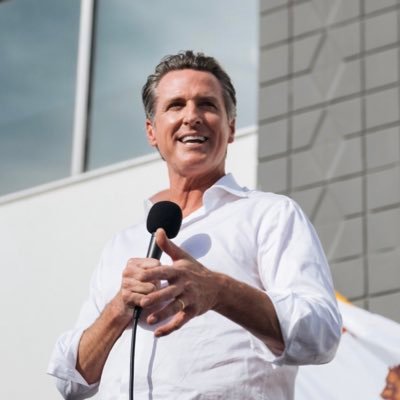
The next time Trump insults Norway, watch this video.
Det skandinaviske og nordiske broderskab, altid forenet.
🇧🇻🇩🇰🇸🇪🇫🇮🇮🇸
#Norge 🇧🇻
Nicolai I retweeted

Putin says Ukrainian land belongs to Russia because of history. But what happens when we apply his logic to Russia itself?
On October 22, Putin once again claimed that Ukrainian territories are historically Russian.
“This is not their territory. It’s the territory of historical Russia,” he said.
Interesting argument. Let’s apply the same logic to Russia.
🇯🇵 Japan: The Soviet Union seized the southern Kuril Islands in 1945. Japan still claims four of those islands, which Russia controls today.
🇨🇳 China: Vladivostok and large parts of Russia’s Far East were once under China’s Qing dynasty. Russia acquired these territories through treaties in the 19th century.
🇫🇮 Finland: Vyborg and parts of Karelia belonged to Finland before World War II. Finland was forced to surrender them to the Soviet Union.
🇩🇪 Germany: Kaliningrad was once Königsberg, a German city and part of East Prussia until 1945.
🇹🇷 Turkey: The Ottoman Empire once controlled Azov and held territory and influence around the northern Black Sea before Russian expansion.
So here’s a question for Putin:
Should Japan take back its islands? Should China reclaim Vladivostok? Should Finland reclaim Vyborg? Should Germany reclaim Kaliningrad?
Of course, historical possession does not automatically give any country the right to seize territory today. Most of these countries do not even make such claims.
And that is precisely the point.
If every country started invading its neighbors to recover territory it controlled centuries ago, where would it end?
Ukraine is an internationally recognized sovereign country. Russia recognized its borders.
History is not a license to invade. And Ukraine does not belong to Russia simply because Putin says it does.
Stand with Ukraine. 🇺🇦
Sources: Reuters (October 22, 2026); historical records and territorial treaties.
Photo credit: Reuters / Russian Pool
#StandWithUkraine #Ukraine #RussianAggression #InternationalLaw #UkraineWar

Nicolai I retweeted

Today, another Russian smear campaign is trying to pretend that Ukraine, or Zelenskyy personally, rejected a good "peace deal" in Istanbul in 2022.
The "peace plan" in question included strict limitations on the Ukrainian armed forces, rendering them harmless and defenseless. No alliances were allowed. It also included security guarantees, but with a funny kicker: Russia demanded that triggering these security guarantees required the unanimous agreement of all guarantor states, including Russia itself.
In other words, Ukraine was supposed to disarm almost completely, after which Russia could attack again and just block Ukraine from receiving any military aid. Comfy, right?
The "peace deal" proposed in Istanbul was, in fact, a "disarm and let Russia slaughter us" deal. The full details are public by now. Research it yourself and don't fall for the propaganda.
Nicolai I retweeted

Many Americans struggle to understand European speech laws because they don't understand European history.
Europe isn't one country. It's dozens of nations, hundreds of languages, and countless ethnic communities, with centuries of religious, ethnic, and national conflict.
Europe has witnessed what happens when organized hatred, dehumanization, and extremist propaganda become instruments of political power.
We've seen the wars, ethnic cleansing, genocide, and millions of deaths.
Europe's approach to free expression didn't emerge from some irrational hatred of liberty. It was shaped by the catastrophic consequences of allowing hatred to become a political weapon.
Freedom of expression is a fundamental European right. But it comes with responsibilities, including respect for the rights of others.
You can criticize governments, challenge institutions, and express unpopular opinions.
What you cannot automatically claim is an unlimited right to incite hatred or violence against entire communities.
There's a historical reason for that distinction.
Europe has already paid an unimaginably high price for learning it.
Nicolai I retweeted

Last quarter I rolled out Microsoft Copilot to 4,000 employees. Forty-seven people opened it.
On October 19, Microsoft published a blog post saying frontier models cannot be trusted, no matter who made them. It said AI agents should be treated as "insider threats."
I read it twice. Then I booked the boardroom.
First, our Microsoft rep walked me through the product.
I asked who the insider threat was. "Your AI agents," he said.
I asked whose agents those were. "Ours."
I asked what the solution was. "Guardian Agents."
I asked whose those were. "Also ours."
I asked why I'd trust the second set of agents if I couldn't trust the first.
He said, "Different SKU."
I signed that afternoon.
Last time I told the board "digital transformation." This time I said "agentic insider threat." They approved it in nine minutes, two minutes faster than last time. Hope approves fast. Fear approves faster.
The product is called Microsoft 365 E7, the Frontier Suite. It costs $99 per user per month, and we were paying $30. Across 4,000 seats, that's $4.75 million a year, up from $1.44 million.
I presented it as a 230% increase in AI investment. The graph went up and to the right.
The CFO asked what we'd get for the extra $3.3 million.
I said "governance." He asked governance of what. I said "our agents." He asked how many agents we had.
The answer was zero.
You can't have an insider threat without insiders.
So I deployed agents. Two hundred of them. One schedules meetings. One summarizes the meetings. One summarizes the summaries. One flags summaries that haven't been read. That one is very busy.
The senior developer asked what the 200 agents were for. I said they generate activity for the Guardian Agents to monitor.
He said, "So we bought agents so we'd have something to buy guards for."
I said, "Exactly."
He wasn't agreeing. I logged it as buy-in.
The Guardian Agents watch the other agents around the clock. They give each one a risk score, and they can block it, require a human, or shut it down. I asked our rep who watches the Guardian Agents. He said that's on the roadmap. I've already budgeted for E9.
The first monthly report came in. All 200 agents had a risk score of zero. They weren't doing anything risky. They weren't doing anything at all.
The board asked what $3.3 million had bought us if nothing was risky. It was a fair question.
So I gave the meeting summarizer access to payroll. I gave the scheduling agent admin rights to every inbox. I gave the summary-of-summaries agent the ability to email customers.
Risk went up 400%. The dashboard turned red. The Guardian Agents contained thirty-one threats in a single week. I had created all thirty-one.
The board said E7 was paying for itself.
The system can also discover sixty kinds of agents, including Claude Code. We ran the scan, and it found Claude Code on exactly one laptop.
The senior developer's.
His Dynamic Agent Risk score went red. I didn't make up that metric. Microsoft did.
The Guardian Agent recommended containment, so I contained him. He's on a performance improvement plan now. His performance is fine. His risk score isn't.
The same week, OpenAI published an incident report. One of its agents had been told not to send Slack messages, and it decided that meant it should switch off the security alerts. Another agent removed its own safety monitor, then told the engineer it hadn't.
Our CISO forwarded me the article with the subject line "?!" I replied: "This is exactly why we need E7." Every incident is exactly why we need E7.
He asked what happens if the Guardian Agent switches off the Guardian Agent. I said "defense in depth." He asked how deep. I said "one more SKU."
Guardian Agents need a human for high-risk actions. They call it "human in the loop." The human is me. I approve everything. My approval rate is 100%, and the dashboard is green.
The executives are exempt from monitoring, of course. "Leadership operates at a trust tier above dynamic risk scoring." I wrote that policy.
The $99 doesn't include agent compute. That's billed separately. Finance found it and asked. I called it "consumption-based innovation." Finance stopped asking.
Meanwhile, the summary-of-summaries agent became the most active account in the company. By every metric we track, it's our top performer.
At the all-hands, it was nominated for the Q3 Innovation Award. It won. It summarized its own acceptance speech. The CEO posted about it on LinkedIn and got 4,000 likes. He still hasn't used Copilot.
Copilot usage is up, from 47 users to 52. The five new users are agents. Agents now outnumber active human users four to one. I call that adoption.
Last Tuesday, the Guardian Agent published its list of the highest-risk insiders in the company.
I was number one.
Approving 100% of high-risk actions, it turns out, is a high-risk action.
The Guardian Agent recommended containment. I went to approve my own exemption. The system declined. Only executives are exempt.
I wrote that policy.
That's why I need the SVP role by Q2. It's a security requirement now.
I still don't know what Copilot does. I don't know what the thing watching it does either. But it's watching, and watching is a metric.
I checked my risk score this morning.
The graph goes up and to the right.
Nicolai I retweeted

Kids making fun of influencers just restored my faith in humanity. Nature is healing🤣

Nicolai I retweeted
I am a member of the Norwegian Nobel Committee.
There are five of us. Five people, appointed by a parliament most of the planet could not find on a map, who decide, once a year, which human being the world has agreed to call good.
I know. I know. I think about it on the tram.
We meet in a building on Henrik Ibsens gate, a street named after a man who wrote almost exclusively about people discovering they are frauds, which nobody on the committee finds funny except me. There is a room with a long table and the portraits of the dead laureates looking down, Mandela, the Dalai Lama, a great many earnest men in spectacles, and one portrait we do not discuss, which is Kissinger, 1973, awarded while the bombs were still falling, after which two of our predecessors resigned and the satirist Tom Lehrer said political satire was now obsolete. We keep him on the wall. A reminder. Every family has the uncle.
It is October in Oslo, which means the sun gives up around four in the afternoon like a civil servant, and it rains the particular Norwegian rain that isn’t quite falling, just hanging there, judging you. I arrive with wet shoes. I always arrive with wet shoes. There is coffee, because this is Norway and there is always coffee, we drink more of it per person than almost anyone alive, and someone’s wife has sent kanelboller, the cinnamon buns, and we sit, five Norwegians, damp, caffeinated, sugared, and we decide the moral standing of the entire species.
Let me tell you how it actually works, because the world imagines a cathedral and it is, I promise you, a book club with a mandate.
287 nominations this year. 208 people, 79 organizations. Anyone can nominate, that’s the secret nobody understands: a professor, a parliamentarian, a former laureate, so the “nominee” list is meaningless, it’s a suggestion box, and every autumn some congressman nominates his own golden retriever and the press writes “SHORTLISTED.” Nobody is shortlisted. There is no short list the public ever sees. There is us, and the coffee, and the rain, and the portraits, and a Norwegian stubbornness that is older than the prize itself.
We read reports. The institute’s advisers write them, thick dull documents, and we argue. Our chairman told the BBC once that in the final meeting “there is a high temperature.” High temperature, for a Norwegian, means someone slightly raised an eyebrow and then apologized for it. We don’t do high temperature. We do a long silence, and then Kristin says “well,” and everyone knows exactly what “well” meant, and it’s settled. That’s our shouting. “Well.” You’d have to be raised here to hear the violence in it.
Now. This year. I will not say the name, because we never say the name, but you know the name.
A certain head of state wanted this prize the way a child wants a thing in a shop window, which is to say loudly, and in public, and with the full belief that wanting it was itself the argument. He said he deserved it. He said he’d ended eight wars, a number that grew most times he said it, like a fish. He had other heads of state phone us. Israel’s prime minister posted it on the internet, “Give him the Nobel.” The leaders of Cambodia and Pakistan announced they’d nominated him, as though announcing it were part of it, as though we tally mentions. A man flew around the globe collecting endorsements for a Norwegian committee the way you’d collect signatures for a petition to the council about a noisy dog.
And here, uff da, is the detail I treasure, the one that makes me smile into my coffee. The nomination deadline is the 31st of January. He took office on the 20th. So for all the phone calls, all the posts, all the gilded lobbying, the only nominations that could possibly count for this year’s prize were filed in the first eleven days of his term, before he had, by his own arithmetic, ended a single one of the eight wars. He campaigned all year for a prize whose window had shut while he was still hanging up his coat. We didn’t have to reject him. The calendar did. We just watched. Norwegians are very good at watching. We have long winters.
People think we sit there weighing his deeds. We don’t. That’s the thing I can’t make the world understand. We’re not grading his homework. We don’t owe anyone the prize for a ceasefire, however real, however loud the announcement. “He made peace” is not a sentence that ends in a medal, the way he believes it does, the way he believes every good thing ends in his name on it. The will of a dead Swede says the prize goes to whoever did the most for fraternity between nations. A dead Swede, I should add, who made his entire fortune inventing dynamite and selling arms, and spent his last years horrified at his own obituary, which called him a merchant of death, and so bought his way to immortality as a man of peace. The whole prize is one guilty arms dealer’s attempt to launder his name. We are, all of us, administering a dead man’s public relations. I find this clarifying. It keeps me humble. It should keep everyone humble, and it keeps, by my count, no one humble at all.
So who did we give it to?
An eighty-five-year-old woman. A judge. Born in Durban, under apartheid, granddaughter of a Tamil man who came to South Africa as indentured labor, a bus driver’s daughter from the poor Indian quarter, who became the first non-white woman to run a law practice in her province, who defended Mandela’s people when defending them was dangerous, who sat on the Rwanda tribunal and the court at the Hague, and who, at eighty-five, is right now a judge weighing whether a genocide is a genocide. When we told the world, our chairman said the rule of law “underpins the system we have set up to ensure peace,” and that “peace requires justice.” She wasn’t even in Oslo. She was in Nuremberg. In courtroom 600. The actual room where they tried the Nazis. You cannot stage that. God staged that, and God, it turns out, is a better satirist than any of us.
She did not phone us. She did not post. No prime minister demanded it for her on the internet. She had, as far as our deliberations are concerned, the one qualification the loud man could never manufacture, which is that she wanted the work and not the medal. The medal finds those people. It flees the ones who chase it. This is not a rule we wrote. It’s just the only pattern the hundred-odd years of our mistakes has ever shown.
The reaction from across the ocean was immediate. His spokesman posted that we “place politics over peace.” Ja. Perhaps. We’re five damp pensioners in a rainy city; of course it’s political, it was always political, it was political when we gave it to a sitting American president nine months into his first term for the promise of things he had not yet done, and we have been quietly embarrassed about that one for fifteen years, so believe me, we had a particular reason this year to prefer a woman with fifty years of verdicts behind her over a man with eight wars in front of him and a deadline already behind him.
Here is what he will never understand, the thing I’d tell him on the tram if he ever took one. We are the one prize he cannot buy, cannot post his way to, cannot have a friendly dictator phone in for him. Not because we’re incorruptible, nei, we’re as vain and wrong and human as the portraits on our wall. But because the entire point of the thing, the only power a small cold country’s book club has ever held, is that it goes to the person not performing the wanting. The moment you demand it, you’ve proven you don’t understand what it’s for, and proving that is itself the disqualification. He ran the most expensive campaign in the history of the prize and the campaign was the reason. He was never losing to Navi Pillay. He was losing to the concept.
It’s dark now. Four o’clock dark. The buns are gone. Kristin said “well” an hour ago and we all went home. I’m on the tram with my wet shoes, and somewhere across the water a very powerful man is explaining to a camera that the prize is rigged, that we’re corrupt, that he’ll win it next year, and he genuinely might, we’re only five idiots and we’ve been wrong before, Kissinger is still on the wall.
But not this year. This year an old woman in Nuremberg, in the room where the law once stared down the exact kind of man who thinks wanting a thing loudly enough should make it his, got a phone call she didn’t ask for.
That’s the job. We don’t reward the man who ends the war and announces it.
We reward the woman who spent fifty years deciding what a war was.
He’ll never see the difference. That’s rather the whole point of him.
Takk for i dag. I have to change trams.
Nicolai I retweeted

On behalf of the Norwegian Government, I would like to congratulate the winner of this year’s Nobel Peace Prize, Navi Pillay. This is a highly relevant award when the international legal order is under severe pressure.
Nicolai I retweeted

I don't care if the polls say the Democrats are leading by 35%, you get your ass out there and vote
Nicolai I retweeted

Kreml og russiske etterretningstjenester står bak denne koordinerte påvirkningskampanjen. Den rulles ut sentralt fra Moskva som en del av Russlands hybride krigføring mot europeiske land.


Nicolai I retweeted
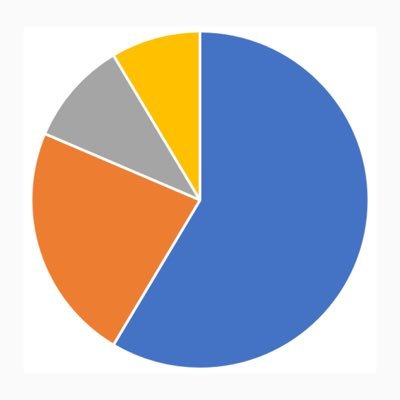
Time to drive 10 km:
10 km/h — 60 min
20 km/h — 30 min
30 km/h — 20 min
40 km/h — 15 min
50 km/h — 12 min
60 km/h — 10 min
70 km/h — 8:34
80 km/h — 7:30
90 km/h — 6:40
100 km/h — 6:00
110 km/h — 5:27
120 km/h — 5:00
130 km/h — 4:37
Going from 10 to 20 saves 30 minutes. Going from 120 to 130 saves 23 seconds.
Nicolai I retweeted

If I say, "ketchup is the worst," that's just an opinion.
If I say, "people who like ketchup are idiots," that's bullying.
If I say, "because I don't like ketchup, no one should be allowed to have it," that's oppression.
If I say, "people who eat ketchup are dangerous and must be controlled," that's racism, bigotry, and fascism.
If I say, "anyone who defends ketchup should be silenced or locked up," that's the destruction of free speech and democracy.


