

Author | Freedom Advocate | Dystopian Visionary. Ex-Off-Grid, Now Bridging Worlds. USA Today Bestseller. Championing liberty, faith, & the future. #AmishSciFi
Republic of Texas
Joined July 2008
- Tweets8.9K
- Following1.6K
- Followers2K
- Likes8.4K


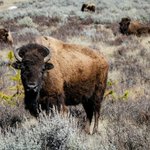





The Pilgrims didn’t get rescued by corn. They got half-killed by a diet of hardtack and salt pork, and still outlived the corn-eaters who lived there before them.
In school they taught you that half the Pilgrims died in that first winter. That part is true. Then they told you that the friendly Indians saved them by teaching them how to fertilize corn by burying a fish in the ground.
The Pilgrim death rate was 50%. That sounds bad, and it was. What they don’t tell you is that the death rate of the Indians on the Atlantic Coast before the Pilgrims arrived was 90%. Nine in ten of them died by plagues that wiped out the populations of the Indians before a single European stepped foot on Plymouth Rock. The Pilgrims arrived to an area cleared of inhabitants. Including the village of Patuxet where they settled.
And they knew things would be bad.
They left England knowing they might arrive late. They did—November 1620, too far north, and too late to plant. Of the 102 passengers, roughly half died by spring. Bradford wrote that “of one hundred and odd persons, scarce fifty remained.” The main killers were scurvy, exposure, and the diseases that follow both.
On the ship the menu was the standard long-haul preserved diet: hardtack, salt pork, dried beef and tongue, oatmeal, peas, and beer. Fresh meat and organ meats can supply sufficient and usable vitamin C. These versions could not. Heavy salting and drying destroy it. Replicated 17th-century shipboard rations contain none. The passengers arrived already depleted.
Once ashore they still had residual stores, then fish, then wildfowl and venison. Four men hunting one day filled the company for nearly a week. Bradford later noted “great store of wild turkeys,” waterfowl, and venison alongside a peck of meal per person. Meat and fat kept the survivors alive. When Massasoit’s men arrived for the 1621 harvest gathering they brought five deer. The meal that became Thanksgiving was, by every contemporary account, meat-heavy.
Squanto showed them how to plant corn with fish as fertilizer. The 1621 crop was useful. English wheat and barley largely failed that year, and dried cornmeal became a winter staple. But it was a get-through-winter thing. It was not the thing that kept them alive. The colony’s longer security came from unrestricted hunting, fishing, and shellfish—resources the English had no legal right to touch at home (the King and the Lords owned it all)—plus the livestock they eventually brought.
The schoolbook version says friendly Indians taught them corn and saved them. The record says a group organized around meat and fat walked off a ship that had fed them none of the fresh versions, lost half its people to the consequences, then lived on the animal foods New England actually offered in quantity. Corn was a useful winter addition. It was never the rescue.

The Texas Rangers ate what they killed and what they carried. And they’d catch up to you. In late October 1858, Comanche raiders struck the Jackson family on Pecan Bayou in Brown County. They killed the parents and two children, then rode west with twelve-year-old Tobe and nine-year-old Rebecca.
Not many miles from where I’m sitting.
Modern “experts” say you shouldn’t work out without eating carbs first. Won’t have enough energy. Won’t have the stamina.
History ran a test, and it was right here in my backyard.
It was October, like now, when the Comanche attacked a family out for a day ride. Killed both parents. Killed two of the children too. Stole the remaining two and headed northwest.
Captain John Williams’ Texas Rangers picked up the trail near the San Saba. They carried almost nothing: a Mexican blanket, salt, and strips of dried meat. No wagons. No fixed camp. They hunted deer and other game as they went, cooked little, ate the fat and the fish when streams allowed. When they needed to keep moving, they cut open the kill and just ate the fat. That’s where the energy was. The dried meat and fresh kills supplied the protein and fat that kept them moving day and night, tracking by the stars when the trail grew faint.
The Comanches ahead lived similarly. Buffalo meat, marrow, and rendered fat—often as pemmican—gave them dense, portable calories for long raids. They needed no grain fields. Neither did the Rangers. Both sides ran on animal fat and meat. The difference was endurance and will. The Rangers stayed on the sign for nearly two weeks until the raiders, pressed hard, released the children near present-day Nolan County – not far from Sweetwater. Tobe and Rebecca were weak but alive. The dried meat and the kills along the way had carried the pursuit.
The children returned under guard. Rebecca lived to raise a family.
The Rangers had matched the Comanche diet in the field: lean travel, fat, dried meat, and whatever the country gave. That was enough.
They didn’t need the gym or the carbs.

Fourteen days on nothing but buffalo. No bread. No salt. And it tasted mighty good.
Right here near Brownwood, Texas.
In 1874, twenty-five Texas Rangers scouting west of Brownwood lost their chuck wagon on the Salt Fork of the Brazos. They lived on buffalo meat alone until they found it again. The man who later told the story joined Jim Connell’s Company C that same year. Earlier that winter he had ridden out of the little settlement of Brownwood—then barely seventy-five men in the whole county—and come back with wagons full of buffalo hams, tenderloin, and every scrap of kidney fat they could cut.
The fat was the point if you wanted to live, thrive, and not get sick.
One night they camped near a ranch that had just killed three bears. Supper was buffalo, turkey breast, fat venison an inch thick under the hide, and bear, all fried together. He called it the best meal he ever ate.
This was not hardship food. It was the same diet that had already made the people who were here when the pioneers arrived the tallest humans on earth. As the dumb people say today, and I say it only ironically… “read that again.”
Franz Boas measured the equestrian tribes in the late 1800s. Plains men were notably taller than white Americans or Europeans of the same period. The tallest of them got 76 to 85 percent of their calories from buffalo—meat, saturated back fat, kidney fat, marrow, liver, and blood. Pemmican was dried meat packed in rendered fat. They were broad-chested, heavily muscled, and the most dangerous mounted fighters the frontier ever produced.
The Comanche had ruled the country around Brownwood for decades on exactly that fuel. They stole the land and the power from the tribes who were there before them, and so on, and so on. What they all had in common was they lived on the animals that could turn the grass and the sage into meat and plenteous fat.
When the Rangers and the first cattlemen moved in, they stepped into the same niche. Early settlers said the land was cattle country and should never have been cut up for farms. They ran huge herds on open range and ate what the range provided.
Cotton and the railroad arrived in the 1880s. Farmers from the southern states broke the prairie and planted grain. The diet changed. The people who came after ate more cornmeal and less fat. Average height on the reservations fell once the buffalo were gone and the commodity flour arrived.
And here’s the takeaway. Heart Disease wasn’t even a notable factor the top causes of death in Central Texas in 1880 when the plants arrived. The top ways to die were Pneumonia, Diarrheal diseases (mostly among infants), Malaria, and complications from childbirth – and the numbers here, too, were lower than elsewhere in America at the time. Only 30 years later, on the food they tell you today is healthier than meat and fat and eggs and dairy, heart disease becomes the number one killer. Today, when you start to get all the signs they say are indicative of a heart issue – they put you on pills and the diet that made heart disease a number one hit.
The old accounts do not record the Rangers or the stockmen complaining about the meat. They didn’t need to call it a Carnivore Diet. They recorded that it kept them strong enough to ride, fight, and come home.

People are always commenting about why the modern man is so passive and why he so easily compromises both his freedom and his beliefs for peace and some semblance of safety.
History has already run a test, you just never heard about it.
(I’ll be expanding this article on my Michael Bunker Christian Ministry Page with more of the theological distinctives, but on this page I’ll mainly just talk about the test, and how it went.)
I’ve been writing about this stuff for a few dozen years.
Many people left Rome after the martyrdom of the Apostle Paul, and fled into the remote Alpine valleys of France, Italy, and Switzerland. When the persecutions started because they were unwilling to compromise their beliefs, the protesters split. Some of them stayed in the lower valleys, and others fled up into the narrow high valleys and steep mountainsides.
The high Alps grew grass, not wheat. The people who lived there learned to live on the animals that could turn that grass into food. The lower valley people were able to grow grains, a little rye, chestnuts, and later potatoes.
The Waldensians of the Cottian Alps were among those who fled upwards. Driven into the remote valleys of Piedmont by persecution, they became shepherds and dairy farmers by necessity. The lower slopes produced a diet we’d call today “standard” for the time. The upper pastures produced something better: milk, butter, cheese, and meat. Hard cheeses that kept through the long winters. Butter and cream from cows and goats that spent their summers where grain would not grow. Meat from the herds when an animal was slaughtered, and game when it was available.
The high mountain refuseniks ate what the terrain allowed. The same constraint that made the Swiss of the high cantons into the “cow-Swiss” that Europe mocked and then could not beat.
The Waldensians refused the other option as well. When the Church demanded they recant, they did not. When edicts ordered conversion or exile, many chose the mountains and the passes instead. There was very little government and no professional army. These were herdsmen, pastors, and farmers who had spent their lives walking steep ground, carrying heavy loads, and living almost entirely on animal fat and protein. When the soldiers came, those same men took up arms. History records that the high mountain herdsman were taller, larger, and quicker than their adversaries.
They routinely defeated armies dozens of times their size.
In 1655, after the Piedmont Easter massacres, survivors formed guerrilla bands under leaders such as Joshua Gianavelo (who makes Braveheart look like a Care Bear) and held the upper valleys. They were eventually overwhelmed by sheer numbers (though they won every engagement) and fled further into Switzerland. But they never compromised. In 1689, Henri Arnaud, a pastor who had also served as a soldier, led roughly nine hundred Waldensian and Huguenot men back from Swiss exile. They crossed the high passes, fought skirmishes, and eventually held mountain positions, including the stronghold at Balsiglia, against forces many times their size. Political shifts later restored their right to remain. The point is simpler: when the alternative was to abandon what they believed, they fought.
The same pattern appears with the Swiss. Limited arable land, heavy reliance on dairy and meat, large and durable men, and a willingness to defend their ground that repeatedly defeated better-equipped armies. Again, contemporaries noted the size and stamina of the Alpine dairy farmers. The Waldensians operated in the same environment, on the same class of food, and showed the same refusal to yield.
Lowland peasants ate more bread, porridge, and pottage because that is what was cheap and available. They did not, as a rule, produce the same record of resistance. More often than not, they compromised, recanted, and blended in. The Waldensians’ diet was the practical result of living where the cows and sheep could graze and the grain mostly could not. Combined with a refusal to trade their convictions for safety, it produced communities that survived centuries of pressure that erased other groups.
The biology has not changed. Animal products from ruminants supply the protein, fat, and micronutrients required for hard physical work and recovery in a harsh climate. The Waldensians ate what the valleys gave them and declined to surrender what they held. That combination kept them in the mountains long after stronger powers expected them to be gone.
Today we cheekily call this a “Carnivore Diet” as if it is a fad or some new invention and content creators make money off of it. I call it the Waldensian Diet and it’s been around a very, very long time.

A lot of us are provably still shadowbanned and @elonmusk knows it and won't do anything about it.


So who, @elonmusk, is responsible now for the thousands of conservative accounts still throttled with no hope or method of resolution?
Michael Bunker retweeted
Bret Taylor ran Twitter from 2016 to when Musk took over. He is the one responsible for getting me kicked off as well as so many others. He was the one who controlled what could and couldn't be said.
The fact that he now runs openAI - which is CHATGPT and that is now the government's go-to is not good.
More censorship incoming, particularly if 2028 elections don't get a Rupublican elected.
He gone

Texas has a chance to get rid of a weak rino Bush republican John Cornyn today.
Get out and vote for @KenPaxtonTX
A rapper putting the title "the rapper" in their name is, in my opinion, as goofy as an author putting the word "author" in their social media name.


Cool @elonmusk , now unthrottle the conservative accounts who are blocked for no reason.

X launched a major anti-bot and anti-spam crackdown
"If a human is not tapping on the screen, the account and all associated accounts will likely be suspended—even if you’re just experimenting."
What it means:
- Detects non-human behavior (e.g., automated scripts, bots, extensions without real manual input like taps/touches/chaotic scrolling).
- Targets automation lacking genuine human interaction patterns.
- Suspensions hit the main account + linked ones.
- Even casual testing risks bans.


Let's run it back

This is a map representing how Texas counties voted on the question of secession back in 1861. I've been studying it for several days and cogitating and have these observations:
The map is almost a perfect overlay of Texas’s cultural fault lines in 1861. What jumps out first is how strongly the plantation belt of East Texas voted to leave the Union. From the Red River down through the Brazos and into the coastal counties, secession support is nearly continuous. These counties held the highest concentrations of enslaved people, in some cases 30–50 percent or more of the population. Their wealth, political leadership, and social structure were deeply tied to slavery, so their vote reflected both economic self-interest and political alignment with the broader Deep South.
In striking contrast, the strongest pockets of Unionist sentiment appear in the Hill Country, especially Gillespie, Kendall, Comal, and surrounding counties. These areas had large populations of German immigrants, many of whom came to Texas after the failed European revolutions of 1848. They tended to oppose slavery on political or moral grounds and had little economic stake in it. But there's also this: they had only recently settled the frontier and often depended on the U.S. Army for protection from Comanche raids. Secession meant the likely withdrawal of federal troops, which many saw as a direct threat to their survival.
There's also a belt of divided or Union-leaning counties stretching across parts of North Texas, particularly along the Red River and westward. Much of this region was still frontier in character, with fewer enslaved people and a population made up largely of small farmers rather than plantation owners. These communities had weaker ties to the slave economy and often stronger attachment to the federal government, which provided military protection and infrastructure.
I think the above observations almost self-evident once you understand the demographics and the commerce patters. What is more curious to me is South Texas. Despite having relatively few enslaved people compared to East Texas, many counties there still voted for secession. This reflected the influence of large ranching elites and established political leadership, particularly in older Tejano and Anglo settlements. My impression is that loyalty to local power structures and political identity often outweighed purely economic considerations.
Finally, the yellow counties in the west and northwest show me just how incomplete Texas settlement still was. Many of these counties had only been created in the 1850s and had too few residents or too little organization to hold a meaningful vote. Texas in 1861 was still a frontier state, with its political geography shaped as much by settlement patterns as ideology.
Viewed altogether, it's clear that Texas did not move toward secession as a unified block. Instead, votes followed the invisible boundaries of slavery, ethnicity, settlement age, patterns of commerce, frontier dependence etc.... The strongest support for the Union came from newer, less slave-dependent, and often immigrant communities. The strongest support for secession came from older, wealthier, slaveholding regions tied culturally and economically to the Deep South.
Thanks to the Texas Almanac for providing this great map!

Listen f*ckers, 75% of the population of our small city in Central Texas has never been downtown. They only shop at Big Box chains and eat at the chain restaurants. They don't need interstellar travel, they need souls.


