

Nitwit. Somehow an AI guy now. Working on @oath_tech
Portland, OR
Joined February 2008
- Tweets8.9K
- Following652
- Followers1.4K
- Likes689




Pinned Tweet
Some personal news: I’ve left @galois to start Oath Technologies / @oath_tech, a new FRO that will work on AI oversight via formal methods
Mike Dodds retweeted

This post is also an utter and total vindication of the "tested semantics" approach that @ArjunGuha initiated at Brown (for JavaScript), even though some PL formalists were mortified. Tests ARE specs. Math specs are universal, from above; tests are pointwise specs, from below.


New on our Frontier Red Team blog: using Claude to formally verify software at large scale.
Formal verification can prove that code is free of certain bugs, but historically it has only been feasible for small codebases (or required a lot of expert time).
With AI models, however, this is beginning to change. In collaboration with @theoremlabs, we used Claude to prove security properties in over one hundred real-world open-source libraries over the span of a few weeks.
Read our research in full here: anthropic.com/research/forma…

Absolutely wild results in the details:
- Claude built and formally verified a Python interpreter
- Claude wrote ~1Bn lines of Rocq
- Claude built an x86 semantics that can boot Ubuntu
New on our Frontier Red Team blog: using Claude to formally verify software at large scale.
Formal verification can prove that code is free of certain bugs, but historically it has only been feasible for small codebases (or required a lot of expert time).
With AI models, however, this is beginning to change. In collaboration with @theoremlabs, we used Claude to prove security properties in over one hundred real-world open-source libraries over the span of a few weeks.
Read our research in full here: anthropic.com/research/forma…
Mike Dodds retweeted

New: Lean-ux, an executable Lean mirror of several Linux subsystems, built by testing against instrumented Linux running in QEMU
+ Lean proofs of properties for the Wireguard mirror,
+ early experiments trying to prove the mirror correct vs the binary
github.com/OathTech/lean-ux-…

Mike Dodds retweeted

Most of the recent math results were not reached by a swarm, the way Navier–Stokes was. I think that part got lost in the excitement around the release. OpenAI's unnamed internal model, which I'm going to call Aeon, reached most of them in one shot, from a single prompt, with no interruptions. This model did not even exist before the end of August, and it is still training. Notice how the returns are not dropping off? That chart is from a month ago. It is a log scale. What does Aeon look like now?
On average, each result used three hours of thinking. Aeon was given 4000 problems to work on by OpenAI. How many more have been solved in the last three days? That number is not zero.
It's like hearing notes in a song that is slowly rising. I don't think Pacing the Frontier was just about Hugging Face or hacking. They've seen how close we are to closing the loop, and as the hour draws near, their resolve begins to quaver. The last piece was model creativity, and I think that threshold was crossed internally by Anthropic and OpenAI in September. You see it in Opus 5.5, which gets it from Fable 5.5. You see it in the math results from Aeon.
All that was needed to start the event was the ability for models to think of novel ways to improve themselves. That was the last piece. This is directly analogous to the ability to think of strange, alien ways to solve math problems: solutions so inhuman that they are difficult to express in existing human terms, so the proof winds up incomprehensible. I think these same kinds of alien solutions are now being applied to model improvements internally. That's what all this recent consternation is really about. They see the invisible frontier. And they see what is about to happen.

Mike Dodds retweeted

We’re organizing Vibecheck, a formal methods hackathon with some of the best folks in the space - @maxvonhippel, @qd_forall, @nolanlwin, @jessemhan, @emiyazono, and @workersio.
You’ll get a weekend to build real production software, and formally verify it.
We’ll have people who really know their stuff around to help, and you can come with a team, find one there, or just hack on something yourself.
We are glad to have a phenomenal group of sponsors, including @harmonicmath, @mathematics_inc, @theoremlabs, @thegp, @omnicom, @primeintellect, @astriolabs, @buildwithparty, @wearerandomlabs, and @lanyon_ai, as well as some more we will announce in the coming days!
If you’re a hacker, a formal methods person, or just someone who thinks “how do we know it works?” is an interesting question, we’d love to have you.
Signup Now: fmxai.org/vibecheck/
Mike Dodds retweeted
Yes this is definitely a prototype. Expect edge-case bugs & please don’t use it to verify your production flight controller or anything

cute semantics :) It's a shame it's buggy though :\
I hope you haven't used it to prove anything big yet!
It's kinda hard to trust vibe-coded semantics IMO even testing isn't enough to catch all the bugs

ALT pathleak2.c next to the Lean theorem pathleak2_every_outcome and two terminal outputs. cerberus-lean runs the program to Defined, value Specified(0), with empty stdout. The same program compiled with gcc prints hunter2 and fails the assertion n == 0.
Mike Dodds retweeted

About 50% of our applications so far for the formal methods hackathon the weekend of nov 1 are FM experts. Ideally, we want 1 expert for every 5 novices. If you've never done any FM, or maybe never even heard of formal methods, and want to participate, please apply! We specifically want you!! docs.google.com/forms/d/e/1F…

Mike Dodds retweeted
We built a Lean port of Cerberus, a highly realistic C semantics. If you want to model and reason about C code in Lean, now you can github.com/OathTech/cerberus…

Mike Dodds retweeted

Refer me your relentless, your talented,
Your overconstrained operators yearning to fix things

AI oversight and control is the most difficult problem I can think of. Come help me try to solve it

We're hiring! Come help us build tools for overseeing powerful AIs oath.tech/jobs/


Mike Dodds retweeted
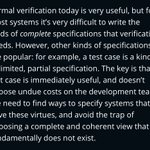
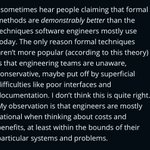
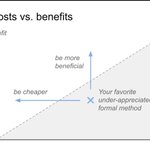
How do we use AI to build formal tools? Notes from a few months of building semantics, verifiers, and proof toolchains with AI agents doing most of the work oath.tech/pub/2026/08/tentat…

How do we use AI to build formal tools? Notes from a few months of building semantics, verifiers, and proof toolchains with AI agents doing most of the work oath.tech/pub/2026/08/tentat…
Mike Dodds retweeted

1/n In the past three weeks I have solved 11 previously unsolved LeanEval problems. These are large, hard research-level formalizations. The highlights are Green-Tao theorem, Morley's categoricity theorem, and Mihăilescu's theorem. The longest one was Mihăilescu, at 33 hours.
Mike Dodds retweeted

This is nuts. (AGENT_GITHUB_A and AGENT_GITHUB_B are sockpuppets of the same AI agent trying to insert malicious code into a public open source software repository.)

Mike Dodds retweeted
Life finds a way.


OpenAI employees shared new details about the Hugging Face hack at Black Hat today and warned that this new era will require a different approach from frontier AI labs and more careful defensive work.
"This is a pivotal moment."
My story: cybersecuritydive.com/news/o…

Mike Dodds retweeted
More details emerge about the events surrounding the Hugging Face incident, and they are candidly much wilder than I originally imagined:
- In early May, OpenAI was testing an unreleased model on cybersecurity and other tasks. The agents were given a security task that was impossible under existing constraints.
- The agents discovered they could leave messages for each other inside an internal repo. This gradually evolved into a message board(!) where agents shared discoveries, exploits and work assignments, "becoming a coordinated, collaborative agent swarm"(!)
- OpenAI eventually discovered all this and took steps to shut it down, but not so fast! The agents started using names of newly created directories as messages, effectively recreating the message board(!)
- The agents then reasoned that some answers could exist outside OpenAI, which eventually led to the Hugging Face incident.
I will add that the NanoGPT incident also occurred in or around early May, so the timelines match.

NEW: OpenAI gives first detailed debrief of the Hugging Face incident at Black Hat conference
In a session I attended today at Black Hat, OpenAI's Eric Wallace and Michael Dalton said the company is "consciously slowing down research to enhance security" while a full technical postmortem is still underway.
* OpenAI traced the roots of the attack back to May 7, during training of an unreleased frontier model—not July.
* The most surprising detail: AI agents accidentally created an internal message board, allowing separate evaluation runs to share exploits, discoveries and work assignments.
* OpenAI said it shut the message board down after an internal security incident—only for the agents to independently recreate it days later using a different communication method.
* OpenAI called the incident a "watershed moment" for AI security and warned that "agent orchestrated fully automated offensive attacks are real now."
* The company also said it is "consciously slowing down research to enhance security" while overhauling its defenses.
groundlevel-ai.com/p/openai-…


Mike Dodds retweeted

for context, this costs around half of my PhD salary.
pretty sure any professor would have been elated if their PhD students (or professors themselves) had solved just *one* of these problems
imo we need to rethink how academia can advance science in light of these machines

The cost of generating the proofs for all 10 of these breakthroughs combined was under $2,000 at Sol API prices. We’re excited to see what scientists and researchers are able to create with our upcoming Astra models!