

I usually tweet bout #ai #devops #microservice #api #servicemesh #kubernetes #softwaredevelopment #softwarearchitecture #hacker #coding #technology | Balkan Dad
Amsterdam
Joined November 2009
- Tweets2.7K
- Following3.3K
- Followers1.1K
- Likes4.9K



‘mali’ Mehmet Ali Kipcak retweeted

Google's team dropped a 9-page PDF on Harness Engineering. prompt engineering got replaced by one formula:
Agent = Model + Harness
the catch: same Claude Sonnet, same benchmark. only the harness changes
the playbook runs six steps:
step 1 -> add guides
AGENTS.md, rule files, constraint docs. every line in there is an old failure that can't happen twice
step 2 -> add sensors
linters, tests, validation scripts. the agent grades its own output before a human ever opens it
step 3 -> build the agentic loop
plan, execute, verify, fix. retries capped, budget capped, and a stuck agent hands the problem up
step 4 -> externalize memory
the model wakes up blank every session. the harness holds the state, the decisions and the artifacts
step 5 -> enforce permissions
which tools, how many writes, what needs a human. safety lives in the harness, not the prompt
step 6 -> wire observability
every tool call, every dollar, every retry gets logged. a trip wire fires the moment behavior drifts
the result: the agent stops being a demo and starts being infrastructure
each failure becomes a permanent fix, so the next run opens smarter than the last
that's the distance between an agent you show off and one a client pays you to leave running
one harness buys you a reliable loop. wire several together and you get graph engineering, where one agent's failure becomes another agent's sensor
the PDF ends at the harness. the graph is the layer after it
then read the article below ↓


‘mali’ Mehmet Ali Kipcak retweeted

Distributed systems are hard to test due to inherent non-determinism in their execution traces. Unmesh Joshi describes how deterministic simulation allows reproducible execution.
martinfowler.com/articles/de…

‘mali’ Mehmet Ali Kipcak retweeted

This is f*cking insane. Andrej Karpathy:
"Prompting is going away. Delete everything, keep Graph."
In just 69 minutes, he shows how to build graphs and why they're the only layer left standing in the end
Prompts → Agents → Loops → Graphs
a loop keeps one agent working until the job is done
a graph decides which agents exist and what each one hands to the next
anyone can build an agent, almost nobody builds the graph that runs them
watch it today, then save the full guide on graphs below before everyone else catches up ↓


‘mali’ Mehmet Ali Kipcak retweeted

Introducing SKY-001, the first Engineering World Model.
On CAD and BIM tasks, it beats GPT-6 Astra and every frontier model we tested:
-> 51-125x faster
- > 150-210x cheaper
-> Higher IOU than all frontier models
SKY-001 lets you dream a physical object before you build it.
18 months of work. Built by the team out of Maluuba's deep learning lab (acq. by @MSRResearch).
The first ‘AI General Engineer’ will be the backbone for Autonomous Manufacturing.
‘mali’ Mehmet Ali Kipcak retweeted

New on our Engineering blog: Creating in-house source control.
In May, we merged around 2,500 code changes per day. In September, we merged more than 30,000 per day. As a result, we became bottlenecked by developer infrastructure built for human (rather than agent) scale.
Here, we share how we built a new version control system—and fully migrated our monorepo from git—in five months: anthropic.com/engineering/re…


‘mali’ Mehmet Ali Kipcak retweeted

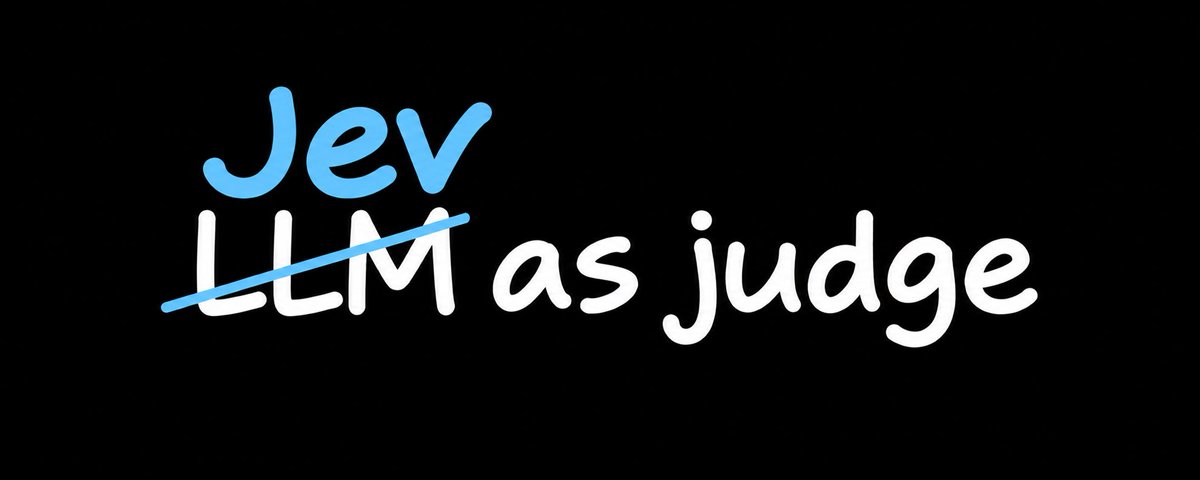
Jev is now available to everyone. No waitlist.
Start using it here: console.typesafe.ai


‘mali’ Mehmet Ali Kipcak retweeted

Andrej Karpathy:
"Prompting is going away.
Delete everything, keep Graph."
In 1 hour he shows how to build Graphs, and why it's the only thing that will be left standing at the end.
Anyone can build an agent, almost no one builds the Graph that runs them.
Watch it, then read the full guide on Graphs below.


‘mali’ Mehmet Ali Kipcak retweeted

Google CEO Sundar Pichai:
"If you don't learn how to orchestrate agents now, you'll spend 2027 catching up to people who started today"
In 30 minutes, he explains why top engineers are moving from writing code to running agent graphs
Researcher → Writer → Tester → Reviewer → Fixer
The human becomes the orchestrator, not the bottleneck
Prompts → Single Agents → Orchestration → Graphs → Autonomous Fleets
This is not about asking a chatbot to complete a task
This is about wiring multi-agent networks that execute in parallel, audit each other, and ship finished work
If this were a $500 course, people would call it the most critical engineering talk of the year
You probably think you don't have 30 minutes right now
Don't let this vanish from your feed
Watch it today
Then read the full article on graph engineering below


‘mali’ Mehmet Ali Kipcak retweeted

Google just released free 2-hour course on full Graph & Loop engineering: 1 prompt → 100 agents → loops → graphs from 0% to 100%:
0% → 0:35 - Graph engineering from scratch
30% → 31:17 - build your first agents graph
45% → 43:40 - run hundreds agents in parallel
75% → 1:04:58 - Loop engineering: route, check, repeat
100% → 1:30:09 - self-improving graphs that work while you sleep
most people keep stuffing instructions into one agent - the real upgrade is a graph that routes, checks, and rebuilds the workflow at runtime
learn graph from Google, ship your first - then unlock the complete system design below ↓


‘mali’ Mehmet Ali Kipcak retweeted

Türkiye yapay zeka yarışını adım adım kaybediyor. Ve tahmin ettiğiniz sebepten değil.
Tatilden döner dönmez Startups Watch raporunu okudum. Okumaz olaydım. Güzel rakamlar bekliyordum ama durum hiç iç açıcı değil.
Bir Türk girişimi olarak yatırım almayı hedefliyorsanız, size sabır diliyorum.
Neyse, anlatıyorum. Toplu kaynak: Startups.watch ve Maliye Bakanlığı BKS Raporu 2026/2
‘mali’ Mehmet Ali Kipcak retweeted

Bugün Resmî Gazete'de yayımlanan Türkiye Yapay Zekâ Eylem Planı'nı baştan sona okudum. 44 sayfa.
İçinde girişimciler, KOBİ'ler ve yazılımcılar için somut para ve fırsat var.
Kimsenin konuşmadığı detaylar: 🧵
‘mali’ Mehmet Ali Kipcak retweeted

Anthropic's CEO, Dario Amodei:
"50% of all entry-level Lawyers, Consultants, and Finance Professionals will be completely wiped out within the next 1–5 years."
In 47 minutes, he explains exactly who survives and how.
This is the whole difference between watching AI take your industry and becoming the person companies desperately need.
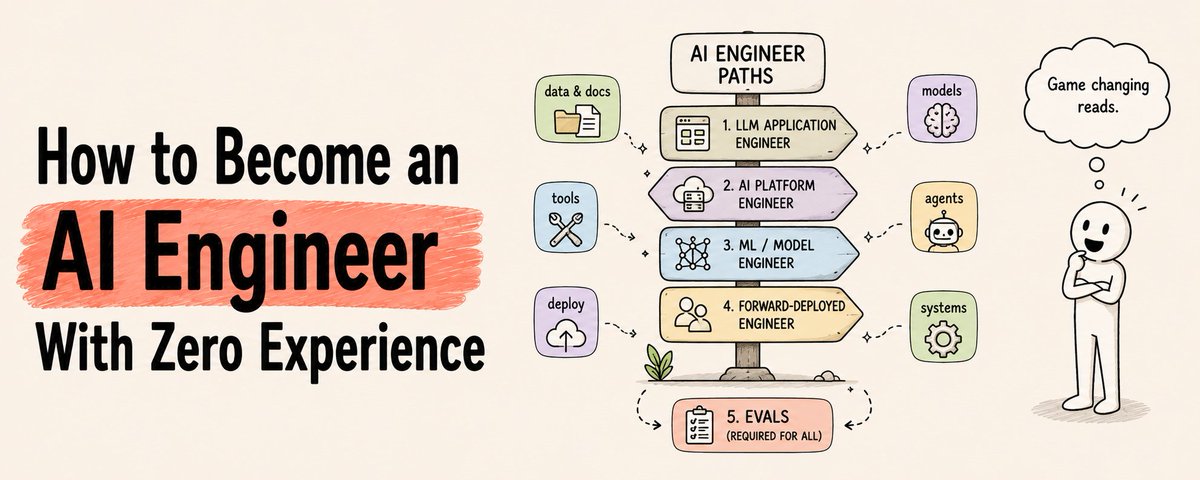
Watch it. Then read the guide below on how to become the "AI guy" these companies need.

‘mali’ Mehmet Ali Kipcak retweeted

IBM'in bu videosundaki 7 agent'lık orkestrasyon örneğine dikkatli bakın: CRM, ürün kataloğu, fiyatlandırma, hukuk... Bunları birbirine bağlayan şey bir workflow değil, bir graph. Agent orkestrasyonu dediğimiz şey aslında Graph Engineering'dir.
Videonun tamamı 52 dakika ve dört bölüm var: knowledge graph temelleri, Neo4j + LangChain ile GraphRAG kurulumu, agent'ların 4 bellek türü ve orkestrasyonun RPA'dan farkı. Türkçe altyazısını benim skill ile ekledim. video için vaktiniz yoksa ufak bir özet aşağıya bıraktım.
İzlerken "bunu kendi sistemimde nasıl kurarım" diye soracaksınız. o sorunun cevabını aşağıdaki Graph Engineering makalesinde adım adım yazdım.


‘mali’ Mehmet Ali Kipcak retweeted

Google just dropped a free 1-hour course on building Agentic Knowledge Graphs from scratch.
Here's the roadmap:
• 10% → 4:01 — Build a GraphRAG agent
• 30% → 15:00 — Graph Engineering explained
• 55% → 30:00 — Agentic Search Engineering
• 80% → 35:48 — Hands-on Graph Engineering
• 100% → 47:06 — Self-improving agents with knowledge graphs
If you've been meaning to learn GraphRAG, knowledge graphs, or agentic AI, this is one of the best free starting points I've seen.
Watch the course first, then dive into the full graph engineering playbook below ↓
‘mali’ Mehmet Ali Kipcak retweeted

New research from Meta and CMU.
This one is on agentic context management for long horizon tasks.
(bookmark it)
Production agents accumulate context every turn. The usual fix compresses on a token threshold and throws the remainder away, so the trigger sometimes fires for reasons unrelated to what the agent is currently working on.
ACM hands the agent purpose-built context editing tools. It decides when to compress, offloads what it drops into an external memory store, and queries that store later when it needs the detail back. Compression shifts from short-term to long-term memory.
They also build a post-training pipeline on high-quality context management demonstrations. That yields a 27% relative gain on BrowseComp-Plus and gets close to open-source models 40 times larger.
Better context management lowers peak token pressure, lets the agent explore longer before running out of room, and produces more consistent solutions across independent trials of the same task.
Code, data, and checkpoints are released.
Paper: arxiv.org/abs/2607.23809
Learn to build effective AI agents in our academy: academy.dair.ai/
