
Call it a motherhood-friendly tech community. We chat, up-skill via free and paid courses and meet-up! Our flagship tech training is the Digital Women Bootcamp.
Nigeria, Africa, Global
Joined September 2020
- Tweets1K
- Following705
- Followers397
- Likes844










mumswhocode retweeted

An opportunity for young Africans interested in Artificial Intelligence!
Carnegie Mellon University Africa is accepting applications for its Certificate in Artificial Intelligence for Africa.
The program is fully online and free for selected applicants.
It includes six courses covering AI, Python, machine learning, and generative AI, with practical exercises.
Who can apply?
Students and professionals with basic knowledge of programming, linear algebra, probability, and statistics.
Participants should be able to dedicate at least 5–6 hours per week.
Important dates:
* Application deadline: November 15, 2026
* Program starts: January 17, 2027
Selection is based on qualifications and available places.
More information and applications:
lnkd.in/dh9mcRtG
mumswhocode retweeted

What will it take for you to be in the top 1% of your field? Achieving this elite level of expertise and recognition requires a combination of deliberate practice, specialized knowledge, strategic networking, and consistent excellence that distinguishes you from your peers. The journey to the upper echelon demands not only technical mastery, but also the development of unique insights and contributions that advance your entire domain.
mumswhocode retweeted

Every week someone tells me they vibe-coded their app over the weekend and don't need developers anymore.
Before it touches a paying customer, make sure it includes:
> a schema someone designed, instead of one the AI improvised table by table
> login that still works when someone puts a plus sign in their email
> password reset links that expire and work once
> MFA, plus a recovery path for the user who lost their phone
> sessions that time out, and a way to kill every session for one user
> SSO for the enterprise customer who won't sign without it
> SAML, because that customer's IT team doesn't do magic links
> SCIM, so a fired employee loses access the moment IT offboards them
> roles and permissions deeper than "admin" and "everyone else"
> checks that stop user A from reading user B's data by changing one number in the URL
> tenant isolation, so one customer's bug never shows another customer's records
> an admin "log in as this user" button for support, with an audit trail on every use
> rate limits on login, so nobody can guess passwords at scale
> lockouts that stop attackers without locking out your CFO the night before the board meeting
> database migrations that run forward and roll back
> migrations that don't lock the main table at 2pm on a Tuesday
> indexes, because the query that was instant on 50 test rows times out on 5 million real ones
> connection pooling, so a traffic spike doesn't exhaust the database
> backups every night
> a restore from those backups, tested, because a backup you've never restored is a hope
> point-in-time recovery for the day someone runs a delete without a where clause
> soft deletes, so "I deleted it by accident" is a support ticket and not an incident
> validation on the server, not just in the form
> timezones stored right, so the 9am reminder doesn't fire at 4am
> the customer with an apostrophe in their last name
> emoji, accents and right-to-left text in every field
> money stored as integers, because 0.1 + 0.2 doesn't equal 0.3 in floating point
> currency, rounding and tax rules for every country you sell into
> a data model that survives your second customer asking for "one small change"
> idempotency keys, so a retried payment doesn't charge the card twice
> deduplication for the user who clicks submit four times
> pagination that still works on page 400
> exports, because sooner or later every customer wants their data in a spreadsheet
> imports that survive the CSV someone saved in 2009
> retention rules, and code that deletes what your contract says you'll delete
> secrets out of the code, out of the repo and out of the AI chat history
> rotating every key the AI pasted into a config file last month
> confirming every package the AI installed exists and is the one you meant
> dependency scanning, because the AI pulled in libraries nobody reviewed
> input sanitization everywhere a user can type
> protection against SQL injection, XSS, CSRF and the rest of the OWASP list
> file uploads that get scanned, size-limited and stored where they can't execute
> CORS rules that aren't "allow everything"
> security headers on every response
> encryption at rest and in transit
> least-privilege access for everyone, including the AI agent holding production credentials
> logs that record who did what, without recording passwords, tokens or card numbers
> a penetration test before your enterprise customer's security team runs their own
> answers to the security questionnaire every enterprise buyer sends, with evidence behind each one
> a disclosure process for the day a stranger emails you a vulnerability
> a plan for the day a laptop with production access gets stolen
> SOC 2, which means policies, evidence and an auditor, not a checkbox
> HIPAA, the moment a single patient record touches your system
> a BAA with every vendor that touches that data, including your AI model provider
> audit trails that show who viewed a record, not just who changed it
> PCI scope, and card numbers kept out of your database
> GDPR deletion requests that reach every table, backup and log
> data residency for the customer whose contract says EU only
> quarterly access reviews someone signs off on
> dev, staging and production environments that match each other
> infrastructure written as code, so the setup lives somewhere other than one person's memory
> a deploy pipeline that runs the tests before anything reaches customers
> one-click rollbacks, because Friday deploys happen
> zero-downtime deploys, because your customers don't have maintenance windows
> feature flags, so you can ship the code without shipping the feature
> autoscaling for the Monday morning spike
> a CDN, so the app loads fast in Singapore too
> DNS, SSL certificates, and renewals that don't expire on a Sunday
> background job queues, so slow work doesn't freeze the page
> retries with backoff, so one flaky API call doesn't become a lost order
> a dead-letter queue for the jobs that fail every retry
> cron jobs that don't run twice the day you add a second server
> caching, and clearing that cache when the data changes
> SPF, DKIM and DMARC, so your password resets don't land in spam
> bounce and complaint handling on every transactional email
> storage rules, so you stop paying to keep 2021's temp files
> cost alerts, so a runaway agent loop shows up the same day and not on the invoice (we learned this one for $1,382.59)
> a disaster recovery plan, written down and tested once a year
> a second region, if your contract promises uptime one region can't deliver
> structured logs you can search at 3am
> error tracking that groups the same bug instead of sending you 4,000 emails
> uptime checks from outside your own network
> alerts that page a human, tuned until they stop paging for nothing
> dashboards for latency, error rate and throughput
> tracing for one slow request across every service it touches
> an on-call rotation, and a person who picks up
> runbooks, so the engineer on call knows what "queue depth critical" means
> postmortems that change something
> a status page customers check before they email you
> unit tests written by someone who knows what the logic should do
> integration tests for every third-party API you depend on
> end-to-end tests for signup, checkout and the other flows that make you money
> load testing before the launch email goes out
> test data that looks like production without being production data
> regression tests, so fixing bug 41 doesn't bring back bug 12
> testing on the five-year-old laptop your biggest customer's ops team still uses
> accessibility compliance, because the enterprise contract requires it
> subscriptions, upgrades, downgrades and proration
> failed-payment retries and dunning emails
> invoices with the customer's PO number on them, because procurement won't pay without it
> sales tax and VAT
> refunds, credits and partial refunds
> usage metering that matches what you bill, to the cent
> annual contracts with custom terms your billing logic never planned for
> revenue reports your finance team can reconcile
> webhooks that verify signatures
> webhooks that retry, with a log of every failed delivery
> a versioned API, so you can change it without breaking your customers' integrations
> API keys customers can create and revoke
> API rate limits that protect you without blocking real integrations
> a plan for the day a third-party API changes its response format without telling you
> OAuth token refresh, because tokens expire at the worst possible moment
> a sandbox where customers can test their integration
> protection against prompt injection in every field that reaches the model
> customer and patient data kept out of prompts that leave your network
> a model spend cap per customer, so one heavy user can't run up your bill
> evals, so you find out when a model update makes your answers worse
> a fallback for the afternoon your model provider goes down
> a migration plan for the day your model gets deprecated
> prompt and output logs for debugging, minus whatever you're not allowed to keep
> a human approval step for anything the AI does that can't be undone
> pages that load on hotel wifi
> empty states, loading states and error states on every screen
> error messages a customer can act on, instead of "something went wrong"
> forms that keep what people typed when one field fails validation
> emails that render in every mail client your customers use
> notifications people can turn off
> undo
> keyboard navigation and screen reader support
> translations, with dates and numbers formatted for each locale
> a back button that does what people expect
> code a human can read
> code review on every change
> a branching strategy, so two people can work without overwriting each other
> monthly dependency upgrades, so you're never two major versions behind
> framework upgrades before the old version stops getting security patches
> deleting the dead code the AI left behind from its first three attempts
> splitting up the 2,000-line file the AI kept appending to
> architecture decisions written down, with the reasons
> a README that gets a new engineer running locally in under an hour
> documentation for whoever inherits this
> an admin panel for your ops team
> support tooling, so customer success can answer questions without pinging engineering
> a changelog customers can read
> terms and a privacy policy that match what the code does
> every account, domain and repo in the company's name, not the name of whoever built the prototype
> a bus factor higher than one
Oh, and besides keeping all of this working every day, forever… your vibe-coded app will still need people who know what they're doing:
> reading every line the AI wrote before it ships (a senior engineer)
> designing the data model before your second customer breaks it (a backend engineer)
> explaining why the AI's fix for one bug created two new ones (a senior engineer, again)
> deploys, rollbacks, servers and the cloud bill (a DevOps engineer)
> answering the page at 3am when payments stop (whoever's on call)
> patching the framework the week a vulnerability goes public (security)
> walking an auditor through how patient data moves (security and compliance)
> testing what the AI says it tested (QA)
> running a migration on a live database without losing a row (a backend engineer)
> saying no to the feature that breaks three others (a tech lead)
> turning "works on my laptop" into "works for every customer at once" (an architect)
> debugging the code when the AI that wrote it can't (a senior engineer)
> remembering why it's built this way, a year from now (someone who was there)
…wishing them the best 🫡
mumswhocode retweeted

This is the sweetest thing I’ve seen on the internet today.
So this woman launched a course on how to use Claude to edit videos.
She’s a stay-at-home mom, and her goal was to help other moms who want to start creating content edit their videos easily.
She was expecting to make around $30,000 from the launch, and somehow, she ended up making $584,000.
Then she shared her story and talked about how supportive her husband was.
You see, in this life, if you’re planning to get married, make sure you marry a supportive partner, whether you’re a man or a woman.
Marry someone who will support your dreams.
Someone who won’t feel like both of you are in competition
Just marry a supportive partner
mumswhocode retweeted

How this Nigerian creator turned Lagos danfo chaos into a viral game.
Adediran Opeyemi (@eureka_seamless) built a game inspired by Lagos buses, traffic, and everyday chaos. What started as a personal project is now attracting thousands of players and inspiring more games based on Nigerian culture.
Read the full feature: techpoint.africa/feature/ade…

Check in for a datacamp donates license and start building 🚀

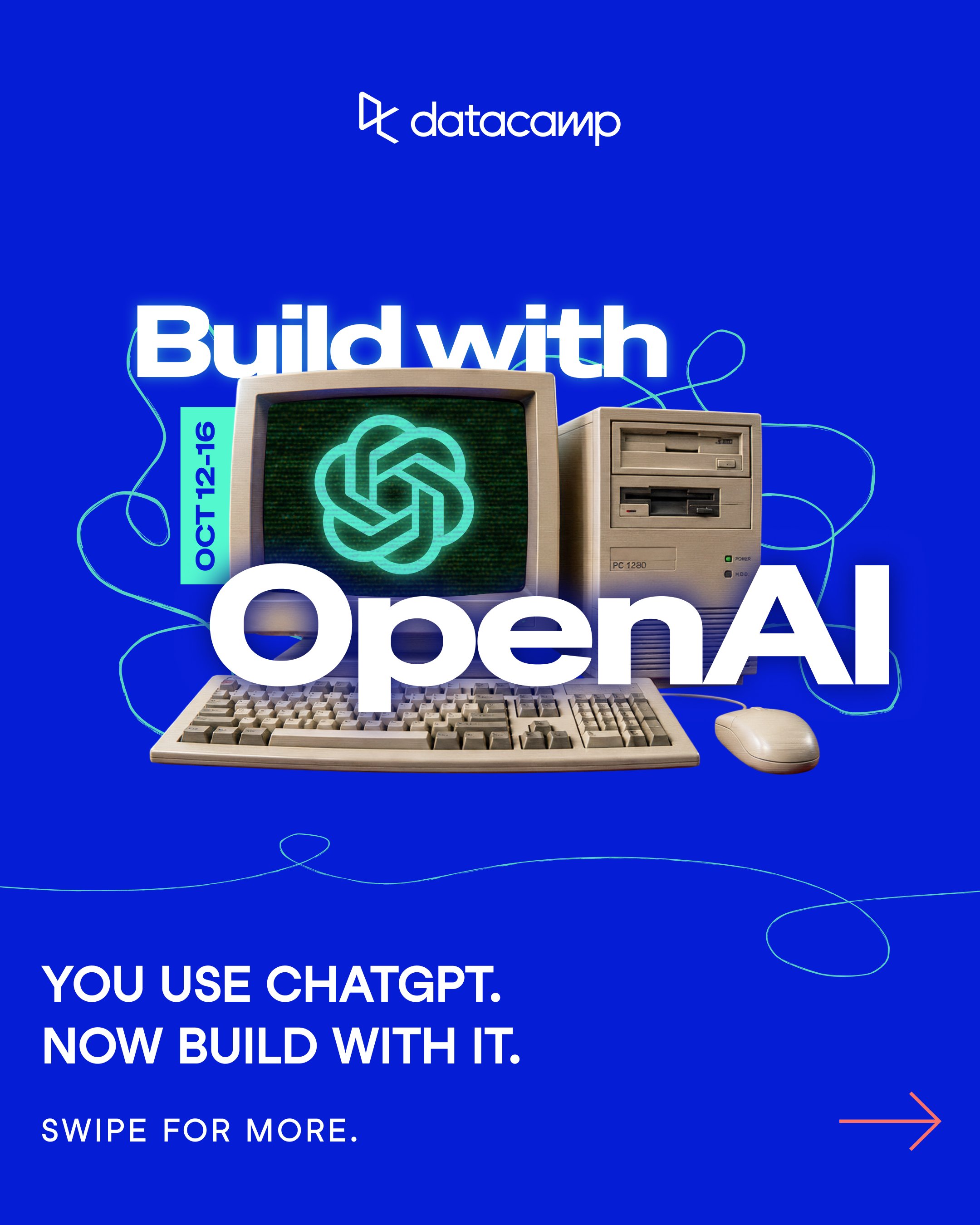
You use ChatGPT. Now build with it.
Three hands-on code-alongs across one week, free to join. A complete data story with text and visuals, a research report that runs itself every week, and a financial reporting agent. Built live with Codex, ChatGPT Projects, and Scheduled Tasks.
Leave each session with a repeatable workflow:
→ Tues, Oct 13 | Turn a dataset into a complete data story, and tailor it for any audience
→ Weds, Oct 14 | Build a weekly research report that runs itself on the free plan
→ Thurs, Oct 15 | Ship a financial reporting agent that processes data and produces structured reports
Plus a free resource stack: ChatGPT cheat sheet with 60+ prompts for data science, the Codex CLI tutorial, the GPT-6 Astra breakdown, and an interactive AI career builder.
One registration unlocks everything.
Register free → events.datacamp.com/build-wi…



mumswhocode retweeted

GitHub is basically giving away millions of dollars worth of software for free...
you just need to know where to look.
Here are 7 insanely useful GitHub repos you'll wish you found earlier:
1. github.com/debpalash/VoiceSt…
A fully local ElevenLabs. Clone a voice, design new ones, dub videos, transcribe, and generate audiobooks across 646 languages, all on your own machine with no account and no API key. ElevenLabs charges per character for this. 16.7K stars, AGPL-3.0.
2. github.com/paperclipai/paper…
If a single AI agent is an employee, this is the whole company. A dashboard that runs a team of AI agents like an org, with goals, budgets, and an org chart. Bring any agent from any provider, assign work, and watch the whole thing run from one screen. MIT.
3. github.com/HKUDS/Vibe-Tradin…
Describe a trading idea in plain English and it writes, tests, and exports the strategy. 29 expert agent teams, 6 data sources across stocks, crypto, and forex, and 7 backtest engines. The research desk a fund pays analysts to staff. Research and backtesting only, not live trades.
4. github.com/bilawalsidhu/gods…
A spy-satellite simulator in your browser, except the data is real. Live open-source spatial intelligence, ships, planes, satellites, on a photorealistic 3D globe. The kind of thing that looks like a movie prop and runs on your laptop for free.
5. github.com/THU-MAIC/OpenMAIC
An entire interactive classroom run by AI agents. One click drops you into an immersive, multi-agent lesson where different agents teach, quiz, and guide you. A private tutoring team on demand. 29.9K stars.
6. github.com/magnitudedev/magn…
Run powerful AI models on the hardware you already own. It scans your machine, recommends the best open models for it, and tunes them to your exact setup, on Apple Silicon, NVIDIA, AMD, or just a CPU. One click connects your agent. Stop paying per token.
7. github.com/every-app/open-se…
Own your SEO. Research keywords and spy on competitors on your own terms, with no monthly seat fee to a marketing suite. The paid SEO tools charge hundreds a month for exactly this. 100% open source, MIT.
Most people will scroll past this and keep paying for all of it.
The ones who bookmark it never go back.


mumswhocode retweeted

US Tech companies that sponsor visas and support relocation
docs.google.com/spreadsheets…

mumswhocode retweeted

Good afternoon.
Quick note from after work, while building FeedLoop.
If you need AI in your product but you are not ready to pay OpenAI prices just to test a feature, look at NVIDIA NIM.
One free developer key. One API. You send your text in; it sends an answer back. Same idea as ChatGPT, just running on NVIDIA’s servers so you can try it without a credit card.
I am using it for FeedLoop’s “analyse my survey” button. Users collect feedback, click once, and get themes plus what to do next.
It is for testing, not infinite production traffic. Still the fastest way I have found this week to ship an AI feature without burning cash.
Worth 10 minutes if you are stuck on the same problem.

mumswhocode retweeted

Before you learn Terraform, understand why to learn Terraform. Or should you?
Around 2006, AWS emerged and changed everything.
For the first time, you could spin up a server in minutes with a few clicks. No $50,000 hardware. No weeks of setup. Just click, click, done.
Pay only for what you use. Scale on demand.
Microsoft launched Azure. Google launched GCP. Cloud computing was born.
For startups, this was revolutionary. Launch without buying a single server.
But a new problem emerged.
Managing 5 servers manually? Easy. Managing 500 servers across multiple environments? Nightmare.
You'd log into the AWS console. Click to create a server. Select instance type. Choose network. Configure security groups. Add storage. Click, click, click, submit.
Need the same setup in staging? Repeat all those clicks. Production? Repeat again.
One wrong click and your production looked nothing like staging.
"It works in staging" became the new "it works on my machine."
Disaster recovery was a joke. Your infrastructure got deleted? Good luck remembering every single configuration you clicked through.
No documentation. No history. No way to track who changed what and when.
Configuration drift was constant. Three environments that should be identical gradually became completely different. Nobody knew why.
Want to recreate your infrastructure? Better hope someone documented every single step. Spoiler: nobody did.
Scaling was painful. Black Friday coming? Start clicking to provision servers two weeks early. One by one.
Teams worked in silos. Ops managed infrastructure through console clicks. Developers had zero visibility.
Compliance audits were nightmares. "Show us all infrastructure changes from last quarter." Impossible.
This is exactly what Infrastructure as Code solved.
The idea was simple. Stop clicking. Start coding.
Define your infrastructure in code files. Version control them. Deploy infrastructure the same way you deploy applications.
AWS built CloudFormation for AWS. Azure built ARM templates for Azure. Google built Deployment Manager for GCP.
Better than clicking. But there was a problem.
Different syntax for each cloud. Want to use AWS and Azure? Learn two completely different tools. Different commands. Different workflows.
Organizations were adopting multi-cloud strategies. Using AWS for compute. GCP for machine learning. Azure for enterprise apps.
Managing three different IaC tools was still painful.
Then came Terraform in 2014.
HashiCorp saw the gap. They built one tool that works with all clouds.
Same syntax. Same workflow. Whether you're on AWS, Azure, GCP, or even managing GitHub repositories.
Write once. Deploy anywhere.
Terraform used HCL (HashiCorp Configuration Language). Simple. Readable. Declarative.
You describe what you want, not how to create it.
Built in Go. Fast. Reliable. Creates resources in parallel.
But here's what made Terraform win: it was cloud-agnostic when everyone else was cloud-specific.
Your infrastructure became code. Track changes in Git. Review in pull requests. Roll back when needed. Recreate entire environments in minutes.
No more clicking. No more guessing. No more drift.
Why did Terraform win?
Perfect timing. Cloud adoption was exploding. Multi-cloud was becoming the norm.
Companies needed one tool to manage infrastructure across all clouds.
Terraform solved that exact problem.
It's idempotent. Run the same code 100 times, get the same result.
It's modular. Reuse code across projects.
It manages state. Knows what exists and what needs to change.
12 years later, Terraform is the de facto standard for IaC.
Now Terraform skills are in massive demand. Senior DevOps engineers with Terraform expertise command premium salaries.
Understanding this story is more important than memorizing terraform commands.
Now go learn Terraform already.
mumswhocode retweeted
These Linux commands helped me most in last 13 years of IT career
Daily stuff:
• ps aux | grep {process} - Find that sneaky process
• lsof -i :{port} - Who's hogging that port?
• df -h - The classic "we're out of space" checker
• netstat -tulpn - Network connection detective
• kubectl get pods | grep -i error - K8s trouble finder
Log related commands:
• tail -f /var/log/* - Real-time log watcher
• journalctl -fu service-name - SystemD log stalker
• grep -r "error" . - The error hunter
• zcat access.log.gz | grep "500" - Compressed log ninja
• less +F - The better tail command
Container cli:
• docker ps --format '{{.Names}} {{.Status}}' - Clean status check
• docker stats --no-stream - Quick resource check
• crictl logs {container} - Raw container stories
• docker exec -it - The container backdoor
• podman top - Process peek inside containers
System Detectives:
• htop - System resource storyteller
• iostat -xz 1 - Disk performance poet
• free -h - Memory mystery solver
• vmstat 1 - System vital signs
• dmesg -T | tail - Kernel's recent gossip
Network stuff:
• curl -v - HTTP conversation debugger
• dig +short - Quick DNS lookup
• ss -tunlp - Socket statistics simplified
• iptables -L - Firewall rule reader
• traceroute - Path finder
File and stuff:
• find . -name "*.yaml" -type f - YAML hunter
• rsync -avz - Better file copier
• tar -xvf - The unzipper (yes, we all google this)
• ln -s - Symlink wizard
• chmod +x - Make it executable
Performance:
• strace -p {pid} - System call spy
• tcpdump -i any - Network packet sniffer
• sar -n DEV 1 - Network stats watch
• uptime - Load average at a glance
• top -c - Classic process viewer
Git Essentials:
• git log --oneline - History simplified
• git reset --hard HEAD^ - The "oops" eraser
• git stash - The work hider
• git diff --cached - What's staged?
• git blame - The "who did this?" resolver
Quick Fixes:
• sudo !! - Run last command with sudo
• ctrl+r - Command history search
• history | grep - Command time machine
• alias - Command shortcut maker
• watch - Command repeater
Get a datacamp license and stay learning…
AI can write the code, but do you know if it's right?
The new Python Developer Associate Certification proves you can write functional Python, build with classes, and catch what AI gets wrong.
Get certified: datacamp.com/certification/p…

Do you remember when you joined X? I do! #MyXAnniversary
6 years ago @AghamaJesurobo took a bold step to build a community of moms who aspire to get into tech careers and thrive!
Over 2000 moms later and we are so proud of the impact we have made💃

Today, we are thrilled to launch the beta version of the MumsWhoCode Children’s Summer Programs Registry!
👉 Explore the Directory Live or list your own kids event for this summer holiday summercamp.mumswhocode.com
Share link with families, schools and educators

mumswhocode retweeted

Ship code. Win Rust School Demo Day. Skip the job hunt entirely.
Every winner now gets VIP access to Azura Talent - a dedicated team, full interview + comp prep, and warm intros to roles that never hit the job boards.
Build in public. Get placed in private. 🏆

mumswhocode retweeted

Today’s #TechTrivia spotlight is on Aghama Moriah Jesurobo, founder of @mumswhocode, a platform helping African mothers launch and grow careers in tech through mentorship, training, and support.
Her impact has reached 4,000+ women across 18 countries.
technext24.com/2026/05/11/te…


New home, same mission + May Newsletter (Global Mother's Day Edition) 🚀 open.substack.com/pub/mumswh…