Building Mutable OS — a FOSS, local-first, programmable medium for documents, knowledge & computation. Blocks, standoff markup, hypergraphs.
text adjacent
Joined December 2018
- Tweets83.1K
- Following7.5K
- Followers6.9K
- Likes329K






Pinned Tweet
Codex OS is now Mutable OS.
What began as an experimental document editor has grown into a FOSS, local-first programmable medium for documents, knowledge & computation.
The new name reflects that evolution & avoids the increasingly crowded “Codex” name.
mutable.ink

Thinking about a "pipeline carousel" for sophisticated data processing in Mutable OS ...
The one-click easy path will always be the default, but for time-saving operations that require more control why not pipe the results of one window into another more specialised window ...


Mutable OS retweeted

A little sneak peak at my upcoming Halloween Short.
Introducing Reginald and Jake.
"The Nine Lives of Reginald Whiskerwick" coming soon
Mutable OS retweeted

Since so few people see my X posts these days, might as well just record this here: I am designing a new _type_ of programming language. It's not ready to share yet, not even close, despite working on it 4 - 6 hours a day since November 2025. However, when I'm done the language will provide:
- Near-perfect static analysis. Write any rule you want and have it enforced deterministically. Automatically refactor anything and be totally confident the refactoring was safe.
- Fast automated verification as part of the language itself. Not necessarily full formal verification automatically during compilation, but something similar. Specifying the program sufficiently for this verification will be a mandatory part of the language. Separate proofs could be written to fill in any verification gaps. Plus, the language will automatically generate property tests to prove the runtime properties of the system.
- Only one way to write any correct program. This is impossible in the limit, but the language will get closer to this than any other language has ever come, as far as I know, and the static analysis properties will allow developers to specify the other rules they would need in their environments to make it true for the software they are building.
- Theoretically perfect optimization. Once again, extremely difficult, but the language will provide maximal knowledge of the system to the compiler, enabling the compiler to some day reach a level of optimization beyond any other language in existence today. Reaching that actual maximum could take a decade or more, but the theoretical peak should be there, from what I can see so far.
- Fast compile times with a high degree of parallelism during the build. Probably not as fast as Go, but it should be faster than Rust (though the specifics here remain to be seen). Also very good incremental build behavior to avoid recompiles, although with an option to do full optimizing analysis of the whole program for better performance.
- Automatic concurrency. Get maximum efficient parallelism without ever writing a single concurrency construct. Get verification of safe concurrency at compile time. The "maximum" part is actually easy, with the language's design. The "efficient" part could take quite a bit of work but I believe we could get there (since we will have near-perfect knowledge of the system).
- Way more stuff, including what I think are some of the best supply-chain security principles and large-scale software development support in the world.
Once of the reasons it's not ready to share is that these are some pretty wild claims, and I want to have an actual artifact that shows that it works before I go advertising it very broadly. There is also the chance that I'm wrong or that I will hit some impassable wall at some point, although so far everything has been working out pretty wildly well. And finally, I can't field a zillion questions or write its docs right now while I am deep in its implementation. (All of that will come later, and I have plans for how to make the language accessible to both humans and agents, as well as provide a great tooling ecosystem around it.)
Right now the only real barrier to its development is how much time I have to work on it. I have a day job that I genuinely love, with co-workers who I really appreciate and enjoy working with. But because of that, I only have about 6 hours a day (yes, I am working 14+ hours a day) to work on this, and even with agents it is a project that requires thousands of hours.
If I could find some way to work on this full time, I would be doing it 12+ hours a day. I am confident that this is what the world of agentic software development needs right now. I am confident that I can build it. I just need the time.


Mutable OS retweeted
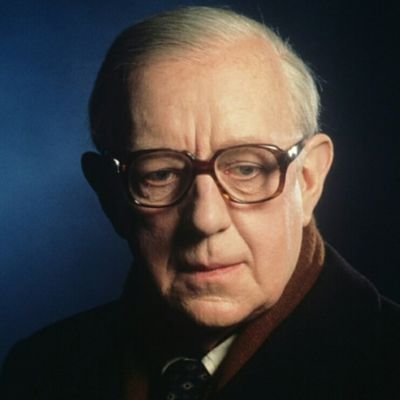
The Prisoner - The Schizoid Man by Terence Feeley (27th October 1967). Number 6 awakes to find he has a new identity - Number 12. To confuse matters even further, the new Number 2 (Anton Rodgers) then asks him to impersonate Number 6. Jane Merrow guests as Number 24.
Mutable OS retweeted
You can now play #AtariST games in the browser on the Atari Legend website atarilegend.com/ #atari @atarilegend

Mutable OS retweeted

The Thomson TO7/70 was supposed to become the French computer standard. Its prompt invited you to choose between BASIC and cassette loading. The interface used the light pen pointer.

It makes so much sense for this to become the flagship OS for the C64 Ultimate, with new apps to run on it.


Mutable OS retweeted

“My parents died years ago. I was very close to them. I still miss them terribly. I know I always will. I long to believe that their essence, their personalities, what I loved so much about them, are - really and truly - still in existence somewhere. I wouldn't ask very much, just five or ten minutes a year, say, to tell them about their grandchildren, to catch them up on the latest news, to remind them that I love them.
There's a part of me - no matter how childish it sounds - that wonders how they are. "Is everything all right?" I want to ask. The last words I found myself saying to my father, at the moment of his death, were "Take care."
Sometimes I dream that I'm talking to my parents, and suddenly - still immersed in the dreamwork - I'm seized by the overpowering realization that they didn't really die, that it's all been some kind of horrible mistake.
Why, here they are, alive and well, my father making wry jokes, my mother earnestly advising me to wear a muffler because the weather is chilly. When I wake up I go through an abbreviated process of mourning all over again. Plainly, there's something within me that's ready to believe in life after death. And it's not the least bit interested in whether there's any sober evidence for it.
So I don't guffaw at the woman who visits her husband's grave and chats him up every now and then, maybe on the anniversary of his death. It's not hard to understand. And if I have difficulties with the ontological status of who she's talking to, that's all right. That's not what this is about. This is about humans being human.”
― Carl Sagan

Mutable OS retweeted

Absolutely fantastic upscale and colourisation.
The future is very bright!
What can we do? youtu.be/2D-mrppNV3s?si=Ke4T… via @YouTube

Mutable OS retweeted

You never get over grief, you just learn to walk with it...
Watch the full episode on the High Performance YouTube channel: youtu.be/CotzNJNLEkE?si=NyXE…
Mutable OS retweeted

Gemini 4 Argon is a surprise on transcription and it requires more analysis and explanation than normal.
Headline is that its’s clearly SOTA: modified WER of 1.73% and CER of 0.64% on low effort. But that’s not the whole story because essentially the benchmark is not saturated.
First of all, Argon works a bit differently. It follows instructions better (it successfully differentiates and ignores archival markings, page numbers etc) and it also does better with unusually formatted pages and text, like the attached image. Most importantly its errors are also far less consequential… and I’m not sure we should call them errors.
When the initial results came back, they felt much better than the raw numbers suggested. At first it was scoring about the same as 3.1 pro but the transcriptions simply looked better. So we did a deep dive and when we examined all 174 word errors, we found that all but 40 were essentially toss-ups. These were all cases where the original was misspelled but where it’s also unclear what the correct, ground truth misspelling should be. Basically squinting and arguing about whether that clearly incorrect letter is an erroneous e, o, or a. The point is these do t really matter because the original is unclear.
This hadn’t really been an issue on previous tests because most of the error were still meaningful or at least represented things like a misspelled word in the original that had been corrected. This was different.
When you put it all together, we basically have a saturated benchmark, at least on 18th and 19th century English text. Gemini 4 Argon’s effective word error rate is something like 0.4% and it’s effective CER is about 0.2%. I am being imprecise because people will disagree about how we should handle these types of residual errors.
What is clear, is that on our benchmark anyway, Argon is much better than human experts. It’s also slightly cheaper to use than 3.1 pro and even a bit faster, in our testing.
This is a significant moment because basic textual accuracy is the precursor to everything else historians want to do with documents (and any other knowledge work which involves historical documents or handwritten papers). Once you have accurate text, you can start to actually envision scaling out massive research projects.
And it looks like we’re there.
Sorry this was a bit late (people have been asking), it’s been a very busy week and I wanted to get this right.