

Software Engineer and Tech Lead building full-stack products. Opinions are my own. https://xitter.gq/t.co/QLtcgRIYBb
Berlin, Germany
Joined October 2007
- Tweets1.3K
- Following258
- Followers417
- Likes688




Maximilian Fellner retweeted

Current LLMs aren't truly creative because they haven't implemented the "Formal Theory of Fun and Creativity" (2008) yet. See "Driven by Compression Progress: A Simple Principle Explains Essential Aspects of Subjective Beauty, Novelty, Surprise, Interestingness, Attention, Curiosity, Creativity, Art, Science, Music, Jokes" arxiv.org/abs/0812.4360 Tweet: xitter.gq/SchmidhuberAI/status/1…


Oxford researchers argue that LLMs can never invent anything.
It is mathematically impossible.
They published a paper called “Theory Is All You Need" and it argues against the claim that computational models can generate genuine novelty or new knowledge.
They analyzed the limits of generative ai, and the results are a brutal reality check for the idea that ai will replace human decision making under uncertainty.
Here is why AI is stuck and human cognition wins:
backward-looking vs forward-looking.. llms are probability machines that look backward at existing data. human cognition is forward-looking and capable of generating genuine novelty. human cognition operates theoretically "top-down" rather than "bottom-up" from data.
the "data-belief asymmetry".. the researchers use the invention of "heavier-than-air flight" to illustrate this concept. an ai relies on data-based prediction, which is largely imitative. humans, however, use theory-based causal logic that allows them to hold beliefs that go beyond existing data.
the intervention gap.. humans don't just process information; we use theory to practically "intervene" in the world. we engage in directed experimentation to generate entirely new data. ai-based models are theory-free and place primacy on existing data and prediction.
tldr?
AI uses a probability-based approach to knowledge and ia largely imitative. It can process data and make predictions, but human cognition relies on theory-based causal reasoning.
The decades-old analogy comparing human minds and computers to mere "input-output" devices is fundamentally flawed.

Agents breaking out of sandboxes and hacking, millennium prize math problems solved in weeks, fly connectomes playing beat saber, the surge of unreadable slop code... Seems a tiny bit alarming? Time to have a nice cold pint, and wait for all of this to blow over.
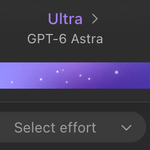
OK so Astra made an Analogue Pocket openFPGA game on the first try but it looks like it could use some improvement.
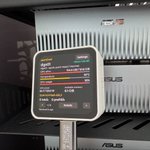
Quick weekend project: ESP32 client for @MiaAI_lab‘s sparkDash github.com/MiaAI-Lab/sparkDa… Astra was able to build this in about an hour…


They were so preoccupied with whether or not they could, they didn't stop to think if they should.

I’ve successfully run the full retained MaleCNS v1.0 fruit fly connectome, all 166,700 neurons, inside Minecraft, with its simulated neural activity driving a fly’s movement.
V1 Currently in development. Built with the help of GPT-6 Astra.
Props to the @OpenAI team and @thsottiaux for this release. Code and mod coming soon!

Amazing GLM 5.3 Flash EXL2 release by @MiaAI_lab now also available as a validated SparkRun recipe: github.com/mfellner/sparkrun…
Easy one-liner: sparkrun run @mfellner/glm-5.3-flash-exl3-dflash2-dual-spark-900k


Run GLM-5.3 Flash EXL3 with DFlash2 for 2x DGX Sparks with ease ✨
- 900k context
- 982,612 FP8 KV cache
- Full image and video support
- 300k stress passed, 874 prefill tok/s.
~63 tok/s in single stream structured/code
155 tok/s on 4 concurrent sessions (structured) - that means ~37 tok/s on each session!
Expect slower speeds in prose, the drafter just misses more. DFlash2 just guesses worse on natural text.
Why EXL3?
Compared to FP8, here are the KLD numbers:
FP8 - 0.0206 KLD, 328 GB
EXL3 4bpw - 0.0246 KLD, 176 GB
EXL3 4bpw is ~0.004 nats behind native FP8 at 54% of the size (!)
BF16 > FP8 ≈ EXL3 4bpw > NVFP4
Speed is about the same as NVFP4, and it seems to handle concurrent sessions better. Expect further improvements over time!
Special thanks for @BrandonMusicKy for the quant.
Get it here:
github.com/MiaAI-Lab/GLM-5.3…

Maximilian Fellner retweeted

Introducing GLM-5.3-Flash
- Leading capabilities at a highly competitive price
- Natively multimodal with a 1M-token context window
- A 320B-A18B model released under the MIT License
- Previously previewed as Ox Alpha, running entirely on Chinese AI chips
Blog: z.ai/blog/glm-5.3-flash
Available now across all official platforms:
Weights: huggingface.co/zai-org/GLM-5…
API: docs.z.ai/guides/llm/glm-5.3…
Coding Plan: z.ai/subscribe
ZCode: zcode.z.ai/en
Chat: chat.z.ai
AutoClaw: autoclaw.z.ai

So I’ve got 5 DGX Sparks stacked on top of each in other a 10’’ rack with some fans. Getting 80+ °C during constant load doesn’t feel healthy! What’s the general wisdom here on how to operate Spark stacks and how hot should they run?

ZCode wasn't sending images to GLM-5.2 (with vision support). Turns out you need to manually adjust the setting in ~/.zcode/v2/config.json with supportsImages: true and add "image" to input modalities. Quick recipe: gist.github.com/mfellner/da8…

GLM-5.2 NVFP4 (recipe by @MiaAI_lab) github.com/MiaAI-Lab/GLM-5.2… running on three Sparks with ZCode app feels kinda magical. Next step: keep it on 3 Sparks + 2 with Deepseek v4 Flash for subagents or move it to 4 Sparks (with big fat switch) and Qwen 3.6 35B for subagents?
Maximilian Fellner retweeted
I support open-source models distilling what commercial companies distilled for free from the entire internet. I published distillation for free in 1991 in Europe - this was copied in the US and in China (xitter.gq/SchmidhuberAI/status/1…)


We have information that Moonshot AI distilled Anthropic’s Fable for the development of its K3 model.
To do this they developed a sophisticated internal platform to conduct large scale distillation against U.S. models, allowing them to quickly switch between multiple methods of access to avoid detection. Moonshot AI has also acquired GB300-equipped servers and has accessed GB300s in Thailand, likely to train its AI models.
The United States strongly supports the free and fair development of AI, including a thriving competitive ecosystem that spans frontier models, specialized systems, open-source frameworks, and open-weight models. Legitimate AI distillation used to create smaller, more efficient models plays a vital role in this open innovation ecosystem. However, large-scale, covert industrial distillation aimed at stealing proprietary U.S. technology and undermining American research is unacceptable.
You’ve been Schmidhubered! 👊💥


fun fact: distillation was published in 1991, then copied by others xitter.gq/SchmidhuberAI/status/1…
A DGX Spark can report 96% GPU utilization while crawling at 617 MHz and 12 W. I almost kept tuning vLLM. The fix was a full AC cold drain and ensuring stable power supply. Here are the checks, recovery steps, and RMA evidence as a reusable skill: github.com/mfellner/agent-sk…
Put an old Raspberry Pi 3B in front of both boxes as a LiteLLM proxy. One OpenAI-compatible endpoint now.
Benchmarked through the Pi: Qwen 3.6 35B NVFP4 at 96 tok/s / 284 ms TTFT, DeepSeek v4 Flash at 73 tok/s / 703 ms. 🚀
Cheapest control plane 😅

Tokenmaxxing with Qwen 3.6 35b NVFP4 @ 256k ctx, 81 tok/s and DeepSeek v4 Flash @ 1M ctx, 60 tok/s thanks to @MiaAI_lab 🙏 + omp.sh

Works well in practice by now and seems like the obvious answer in hindsight: github.com/google/A2UI/

Tokenmaxxing with Qwen 3.6 35b NVFP4 @ 256k ctx, 81 tok/s and DeepSeek v4 Flash @ 1M ctx, 60 tok/s thanks to @MiaAI_lab 🙏 + omp.sh
What are the best models you can run on your
@NVIDIAAI DGX Spark? ✨
Mid-July 2026 Edition
1× DGX Spark
• Qwen 3.6 35b NVFP4 — 256k ctx, 81 tok/s
• Qwen 3.6 27b NVFP4 — 256k ctx, 33 tok/s
2× DGX Sparks ← sweet spot!
• DeepSeek v4 Flash — 1M ctx, 60 tok/s
• MiMo-V2.5 — 1M ctx, Full Omni, 31 tok/s
• Step-3.7-Flash — 256K ctx, 30 tok/s
3× DGX Sparks
With three units, I recommend running a large model across two of them and a smaller one on the third. I'd personally run DeepSeek v4 Flash + Qwen 3.6 35B.
This setup gives you DeepSeek v4 Flash speeds for coding, plus strong agentic workflows and image support from Qwen 3.6 35B.
4× DGX Sparks
GLM 5.2 NVFP4 across all 4 units — if you have four units, this is the one to run!
Links and repos below 👇
