

|| Investor since 2008 || Options Trader ||
Pacific Time Zone
Joined January 2024
- Tweets3.4K
- Following372
- Followers2.2K
- Likes603






Pinned Tweet
💵 Options selling made me over $27,000 this year while working a full-time job.
💼 Options selling is the best side-hustle there is and it has never been easier to start than now.
❓Do not know how to get started? See a quick-start guide in this thread 👇
I think Anthropic’s $ANT Q3 growth could be better than it looks because of the crackdown on distillation.
Revenue grew 47% to $17B. If they were cutting off paying accounts during the quarter, other customers had to replace that lost revenue just to keep the total flat, then generate the growth on top.
For illustration, if 5–7% of Q2 revenue came from accounts they removed and that revenue was gone entirely by Q3, growth from the remaining business would have been around 54–58%.
We don’t have the numbers to confirm that. The disclosed 5–7% covers all policy-violating customers over nine months, not just distillation or Q2. Enforcement increased in August and September, so assuming none of that revenue remained throughout Q3 would be too aggressive.
But that is the piece I think deserves more attention: how much revenue did they cut off while still growing 47%? Until we know, the headline could understate how fast the legitimate customer business was growing.
AI gets compared to the dot-com bubble every day. I went back and looked at the numbers.
April 1993 low to March 2000 peak: Nasdaq gained 682% in 2,510 days.
COVID low to October 2026 peak: Nasdaq gained 302% in 2,388 days.
Nearly the same time frame, but the dot-com run was much bigger. And the COVID rebound started after a 30% drop, compared with roughly 9% going into the April 1993 low.
Then look at valuations. Reuters reported a Nasdaq P/E around 190 at the dot-com peak. LPL/FactSet put the forward P/E around 75.
For a recent published comparison, Fidelity’s Nasdaq Composite index fund was at 30.8x trailing earnings and 23.2x forecast earnings in July 2026.
Quite a different picture.
$ORCL what an update…this is what the market and shareholders wanted to hear.
A lot of bad takes on Anthropic’s $ANT S-1 today. Some arguments are fundamentally flawed; several claims are outright wrong and reveal basic misunderstandings of IPOs, accounting and corporate finance.
As a Wharton graduate with nearly two decades of experience across technology consulting, private equity and startups, I expect financial analysis to distinguish accounting values, contractual obligations and cash flows. Let’s address the claims:
1. “Convertible notes hide operating expenses.”
Wrong. Financing a cost does not erase it. Operating costs are recognized as incurred, regardless of whether they are funded through debt or equity. Convertible notes do not make compute expenses disappear from the income statement.
2. “The $72B loss represents concealed compute spending.”
Wrong. The $72.4B charge reflects fair-value changes in convertible notes and other financing instruments, largely driven by Anthropic’s rising valuation. It is a noncash accounting loss, not $72B of undisclosed compute bills. The adjustment actually increased the reported loss.
3. “The $108B note balance means Anthropic borrowed $108B.”
Wrong. Fair value is not principal. Amazon originally invested $8B through convertible notes, some subsequently converted into preferred stock. The S-1 identifies $6.2B of remaining principal at June 30. The approximately $108.6B accounting balance reflects the instruments’ fair value, including their conversion rights.
4. “Without an IPO, its $100B-plus cash balance disappears immediately.”
The cited disclosure says no such thing. It describes conversion terms and repayment at applicable maturity dates for notes remaining unconverted because of ownership caps. The ability to issue up to $42B of additional notes also does not mean $42B has already been borrowed and is immediately due. Financing risk is real; the claimed immediate cash drain is unsupported at all.
5. “Investors can immediately dump shares received through conversion.”
Conversion and permission to sell are separate matters. Lock-ups, securities restrictions and ownership caps matter. Receiving shares does not automatically create an unrestricted cash exit.
6. “Commitments equal 169× operating profit, proving they’re unaffordable.”
A fundamentally flawed comparison. It divides multiyear compute purchases by one quarter’s annualized operating profit, which already deducts that quarter’s compute expenses.
Consider a business with $100M in annual revenue, $40M in supplier costs and $50M in other operating expenses. It earns $10M in operating profit. A five year supplier contract totals $200M, 20× annual profit, yet each year’s supplier costs are already covered before that profit is earned.
Affordability requires matching annual payments against revenue, other costs and liquidity. That headline multiple doesn’t do the work at all. 2028 revenue targets near $200B by the way.
7. “All $657B is unconditionally binding.”
The chart going around contradicts that claim: it labels $226.5B as conditional amounts, spending ceilings or arrangements with exit provisions. Those cannot all be treated as unconditional minimum payments. Read the contract terms.
8. “Investors would never accept dilution, and puts eliminate the problem.”
Investors routinely accept dilution to finance growth. Actual dilution depends on conversion terms and share counts, not simply an accounting liability divided by a headline valuation.
Puts hedge price declines. They do not restore ownership percentages, come free or override trading restrictions.
9. “Nscale’s price per GW proves compute expenses are really $80B instead of $20B. Amazon gave 75% discount on compute to $ANT”
That estimate treats gigawatts as standardized computing output. They are not: gigawatts measure power capacity. H100 and Vera Rubin systems do not deliver identical output per watt. NVIDIA claims Rubin can deliver up to 10× greater inference throughput per watt versus Blackwell, although results depend on the workload.
A valid comparison also needs matching hardware, service terms, contract durations and deployment dates. Nscale’s reported Rubin deployment starts in late 2027. Annual expenses divided by a capacity target are not a valid annual unit cost unless that capacity was available throughout the year.
Those mismatched figures do not establish $60B of hidden expenses.
Anthropic’s valuation, spending commitments and financing dependence deserve scrutiny. These rebuttals do not establish that it is safe or fairly valued. But several accusations being presented as financial analysis are demonstrably wrong or unsupported by the cited disclosures.
A bearish thesis still has to get the accounting right.
This guy runs a financial research firm lol


AI performance is the ultimate customer stickiness. Once your workflow is optimized for a top tier model, the friction to downgrade is just too high.
Switched to Astra from Sol and there is no turning back. It is addicting to work at this level of intelligence. And OpenAI is definitely beating Claude now. Great job @sama #OpenAI
$AMZN spokesperson already disputed this.

$NVDA and $CSCO charts are making rounds on X tonight. I understand why people compare $NVDA to $CSCO in 2000. Both became the obvious way to invest in a major technology shift. But once you look at the numbers, I think the comparison gets much weaker.
Cisco reached $80.06 in March 2000 at roughly 131× forward earnings. It eventually closed at $8.60 in October 2002, down about 89%. The internet delivered. Investors who paid that valuation still had a terrible outcome.
Nvidia closed today around $214, with a reported P/E around 27× trailing and 17.7× forward earnings. The exact forward multiple depends on which estimates you use, but we are nowhere near Cisco’s starting valuation.
Just as an illustration, putting Cisco’s peak earnings estimates at 17.7× instead of 131× gives you a stock price around $10.82 instead of $80.06. Obviously earnings expectations later fell too. Still, the price you pay changes the whole investment.
Cisco was guiding for 50–60% annual revenue growth in November 2000. Nvidia just reported quarterly revenue growth of 106% and guided to $108B next quarter. Current analyst estimates call for about 91% revenue growth in FY2027 and 68% in FY2028. Those are expectations, of course, not guaranteed results.
What makes me take the AI demand seriously is what is happening with the companies actually selling these services.
Anthropic reportedly went from $4.7B in quarterly revenue to $11.6B and then $16.8B across the first three quarters of 2026. That’s roughly 147% growth followed by 45%. Yes, growth slowed in percentage terms. It also added another $5.2B of quarterly revenue.
OpenAI reportedly generated $6.7B in Q2 and approached a $50B annualized revenue run rate by September. That run rate isn’t a full year of earned revenue, and accounting differs between the companies. But there is substantial paying demand here.
There are also concrete examples of compute limiting what they can sell. Microsoft said on its July earnings call that Azure demand still exceeded available capacity, and additional capacity brought online during the quarter was quickly monetized.
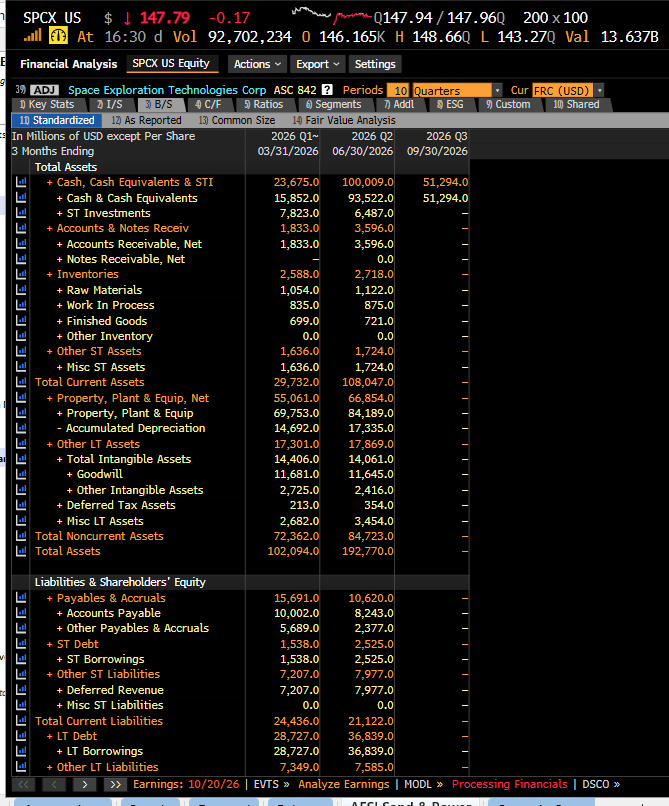
Anthropic gave an even more practical example in May: new compute agreements allowed it to double Claude Code’s five-hour usage limits and remove peak-hour reductions. Its SpaceX agreement provided access to more than 220,000 Nvidia GPUs. More compute meant customers could actually use the product more.
Then look at who is funding much of the infrastructure: Microsoft, Amazon, Google and Meta. These companies have large existing businesses generating cash. That gives them more room to keep investing than the telecom builders that were part of Cisco’s boom. Cisco had strong customers too, so I wouldn’t oversimplify that history.
I’m not dismissing the risks. This spending is consuming a lot of cash. Some AI builders are heavily dependent on borrowing. Today’s shortages can become tomorrow’s excess capacity, and some demand will go to competing chips.
But calling Nvidia “the next Cisco” skips too much. I see a much lower starting valuation, faster current growth, stronger major buyers and customers already paying billions for AI services. I’d rather debate how durable those earnings are than assume two similar stock charts must have the same ending.
Netflix:
“COMING SOON” …this looks amazing.
Me: 👀
Two weeks later: Alright, let’s watch it.
Netflix: What are you talking about? We have never heard of that movie in our lives. $NFLX
Here we got, another set of news.
$ORCL | Tencent is reportedly leasing access to ~100,000 advanced AI chips through Oracle in a five-year deal worth roughly $7 billion, according to the Financial Times.
The number matters. So does the customer. Oracle’s AI infrastructure story is often framed around OpenAI. A multibillion-dollar commitment from Tencent would show that demand for Oracle’s capacity extends well beyond one buyer.
The reported 30% upfront payment is also significant: roughly $2.1 billion of customer cash committed at the start of a capital-intensive buildout. That cash is not the same as immediately recognized revenue, but it could help Oracle fund delivery.
At a simple average, the contract represents about $1.4 billion per year. The actual revenue schedule and margins remain unknown. The more useful signal is that a major AI company reportedly chose to lock in Oracle capacity for five years.
There is a real risk to watch: the chips would be accessed in Southeast Asia by a Chinese company, putting the arrangement within reach of future U.S. policy scrutiny. Oracle and Tencent have not publicly confirmed the reported terms.
Still, this is exactly the kind of customer diversification Oracle investors have been looking for: another large buyer, a long commitment, and substantial cash upfront. The next question is how quickly Oracle can turn that demand into operating capacity and cash flow.
Everyone now talking about $MCD and how low it is…”putting entire portfolio into it”, etc…this just means it probably has 1 or 2 more legs lower before bottoming. Will play it with puts during IV expansion times.
Hey @duolingo, Megaboss Duo made me rage so hard in Brawl that I smashed my iPhone 🥵
Respectfully, if your owl can cause property damage, your owl can replace it 😀
Please advise on where I submit my claim for a new iPhone🦉📱💥 Otherwise, the streak ends here, no more lessons ☹️

Great news for $ORCL hit the wire.
Axios reports OpenAI’s annualized revenue run rate is approaching $70B, up more than 70% since the start of Q3, with enterprise revenue more than doubling.
For Oracle, the central question around its large OpenAI computing agreement has been whether its customer can generate enough revenue to support its long-term capacity commitments. OpenAI’s accelerating enterprise adoption strengthens the demand case and improves confidence that contracted OCI capacity can translate into usage and revenue.
A run rate is not cash flow, so OpenAI’s spending and Oracle’s buildout costs still matter. But this is evidence that the customer opportunity is scaling alongside the infrastructure being built to serve it. It’s taking a lot pressure off Oracle’s concentrated RPO that is still growing.
$ORCL let’s see if this move is for real or more fud coming to create even stronger base.

$ORCL has such a bad sentiment right now, with so much bad priced in…next big runner
Men used to storm beaches under enemy fire. Now half a beer gives them a three day recovery period.

