

Energy to Electrons to Intelligence
Joined February 2025
- Tweets2.8K
- Following538
- Followers207
- Likes2.2K




IMPOSSIBLE

Hydro-Québec achète l’ancien terrain de Northvolt ici.radio-canada.ca/nouvelle…

SpaceX just confirmed that it is behind a proposed 6 GW data center campus in Cochise County, Arizona, filed under the name Tombstone Ressources LLC.
The October 30 application covers 747 acres next to the Apache Generation Station and up to nine buildings of about 493 000 sq ft each, built in four phases (Phase 1 is about 1,5 GW). The campus would be owner-operated for AI model training and inference, primarily for the SpaceX and its affiliates.
Power comes from the grid through two cooperatives, with 24 GWh of battery storage, about 10 MW of gas standby generation per building, and dry cooling that the application puts at 7 to 10 acre-feet of water per year.
SpaceX says it would fund about $3.6B of transmission and substation upgrades, and that its power agreement could cut bills for the local cooperative's members by 10 to 40%, subject to Arizona Cormporation Commision approval. Initial construction power is targeted for March 2026, and the county hearing is December 9.
The application pairs a 6 GW ask with self-funded grid updates, the same pay-yout-own-way framing as OpenAI's and Google's announcements this week.


ALT Apache Generating Station
THIS IS BIG
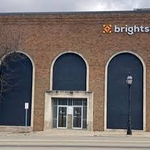
NVIDIA has reportedly proposed converting some of Brightspeed's 130+ telecom buildings into small AI data centers with about 1 GW of power, by NVIDIA's estimate.
The buildings span up to 20 states, and many already have power infrastructure and fiber, per the report.
Brightspeed is owned by Apollo and is reportedly nearing bankruptcy. NVIDIA submitted a written proposal on Wednesday and asked for more data and site visits. The sites would form an inference network made of the recent modular DSX POD architecture.
This is a proposal, not an agrre e t. The report doesnt not identify the buildings.


Simon retweeted

If the US turns against AI, innovation, and prosperity, Canada should seize the opportunity to become the most attractive place in the world for American companies and capital to invest, build, and grow.
A generational opportunity.
Simon retweeted

We built a new type of datacenter for AI inference. We call it NanoDC.
NanoDC is a solar-powered autonomous datacenter that can be deployed anywhere on the planet in 4 weeks.
11 Trillion will be invested in AI compute over the next 4 years. Most of this will be for inference and most of it will be severely delayed: stuck in grid interconnect queues, site permits, or supply chain issues. NanoDC sidesteps these issues completely.
NanoDC is built rapidly at a factory and shipped to the site ready to be turned on in 30 minutes. It generates its own power with solar and batteries. You open the door and the solar panels fold-out like an accordion. The compute is cooled with patent-pending high-density air cooling. It connects to the internet via Starlink.
No construction. No grid interconnect. No Water supply.
It never waits for transformers and turbine generators either.
Getting more compute is as easy as dropping more units and turning them on.
The first units will be live this month. Thousands will be shipping starting 2027.
Sunlight in. Tokens out.
Simon retweeted

NEWS: SpaceX may be behind plans for what would be Arizona's largest AI data center.
SpaceX hosted a community meeting on a 747-acre proposal in Cochise County, near the Apache Generating Station. The plan calls for up to nine computing buildings and on-site battery storage.
Local officials are reviewing the project under a special use permit, and the developer says it could create thousands of construction jobs.
SpaceX has not formally confirmed its role, but local reporting ties the company to the proposal.
Source: KOLD, KVOA, KJZZ


Orbital data centers may work, and I hope so.
But, I also believe deeply in terrestrial data centers, especially in modular ones. Latency will always stay a constraint for certain use of super intelligence.
Never let short term momentum distract you from the long term vision.
Think smart, manage risk and build for the long term.

Simon retweeted

OpenAI, Anthropic, and Meta are buying gas engines by the hundreds.
Big turbines are sold out for years, so the labs buy whatever ships fastest.
> Anthropic, 470 MW of small gensets
> Meta, 813 of the same boxes in El Paso
> OpenAI, ~500 Jenbacher engines at its Texas Stargate site
> xAI, 41 turbines on trailers
> Crusoe, 13 turbines built from old 747 engines
The new power plant is a field of engines.


bullish on reciprocating engines for BTM compute.
large turbines are optimized for centralized power generation, but reciprocating engines excel at modular BTM deployments, w/ shorter lead times and capacity that scales w/ GPUs.
BTM bypasses parts of the grid queue, not air permitting.
gas access and a viable permitting path can be worth more than proximity to the grid.

Simon retweeted

Crusoe CEO @ChaseLochmiller explains why signing a 5-year GPU compute contract with an AI startup is effectively making a loan to that company:
"We're underwriting your existence over the next few years."
"Asset-backed lenders in the GPU financing space initially were very focused on, let’s assume there’s zero terminal value of these GPUs. We're really just underwriting a contract, looking through to the credit of the offtake."
"Increasingly, people are looking at the underlying collateral as its own unique asset class. Jensen brought together all of these incredible asset allocators."
"Everybody that's normally competing on big deals is now having to work together because the size is so big."
"When we sign a Series A or Series B startup to a three- or four- or five-year commitment to buy compute, it’s sort of like we’re making a loan to them. We’re underwriting your existence over the next few years."
@CrusoeAI
Simon retweeted

Hydro-Quebec is struggling with low water levels in its reservoirs, pushing it to buy electricity on external markets — including US spot markets. Even if water levels return to normal by 2028, the utility assumes it might have to import more than it exports until 2041 as growing energy demand will outpace supply.
👀 TC Energy’s natural gas power plant in Becancour will be upgraded as part of the energy mix rollout; it has been essentially out of service since it was commissioned in 2006.

Hydro-Quebec, a Canadian renewable-energy powerhouse with major US export contracts, is stretching an investment plan by six years to 2041. Until then, it anticipates potentially being a net importer of electricity bloomberg.com/news/articles/…

Ouff, that’s rough.
Hydro-Quebec, a Canadian renewable-energy powerhouse with major US export contracts, is stretching an investment plan by six years to 2041. Until then, it anticipates potentially being a net importer of electricity bloomberg.com/news/articles/…
Simon retweeted

Today I'm introducing physical world intelligence for property, infrastructure and land.
banks lend money to buy and build. insurers pay when things go wrong. but they rarely see what's there.
we show it all in one operating system.
ageospatial.com (yc f26)


Elon Is Doing It Again: SpaceX Will Be The World’s Biggest AI Cloud
Making 13GW in 1.5 Years A Reality
newsletter.semianalysis.com/…

Microsoft's Donnacona data center is budgeted at 265M USD.
On the ~750 000 sq ft site, construction began in February 2024. The building was completed in November 2025 and work now continue indoors. The substation and noise walls are due in the second half of 2026. The MW are not disclosed (again) but the NRS collective estimates Donnacona at 116 MW.
Hydro-Québec is burying a 2.3 km, 69 kV line from its near-by substation to the site.
The Donnacona sites is the furthest along of the four, with the shell finished a year ago.
(4/5)

Microsoft's Saint-Augustin site is a ~368 000 sq ft lot, the smallest of its four Québec City area sites, and it has no published construction update.
The city council approved Microsoft's purchase in September 2021. The lot sits in the François-Leclerc industrial parl along Highway 40 and had a municipal value of $2.5M.
Microsoft said in 2023 that its four projects were already authorized. Since February 2023, only 100 MW has gone to new data centers in Québec, while 2,5 GW of requests are under review.
The MW allocation is the scarce part in Québec, and the lot is actually the cheap part.
(5/5)

Microsoft is spending $500M over two years on four data centers around the Québec City region.
The sites are L'Ancienne-Lorette, Donnacona, Saint-Augustin-de-Desmaures and Lévis. Microsoft said they would raise regional cloud capacity by 240% over three years (2023). The giant did not disclose the megawatts. The four sites are linked by an independent 220 km fiber line.
Three sites are under construction: Donnacona (2024 ), Lévis (2024) and L'Ancienne-Lorette (2024). Saint-Augustin is land, with no construction update published. Donnacona alone is budgeted at $265M.
The fleet is planned to be in service late 2026 or early 2027.
(1/5)

Microsoft's Lévis data center starts on a 25 kV distribution supply, and its 230 kV transmission line is not due until 2030.
Hydro-Québec was mandated in 2021 to build a 5.2 km line from the Lévis substation to Microsoft's future substation on the former Charny gold course. At the customer's request the schedule was deferred: clearing in 2028, construction in 2029 to 2030, service in 2030.
On site, construction began in April 2024. As of July 2025, the steel structure was up, the roof and envelope were installed. Generator tests were completed in April 2026. Microsoft bought the land in 2021 for 20M Canadian dollars, and says outside-air cooling cuts water use by up to 90%.
The building will be ready years before the transmission line.
(3/5)

Two new 230 kV underground lines will feed a private substation in L'Ancienne-Lorette. The lines cover 3.1 km, taking its power from the La Suète 230 kV substation near the Highway 40 Costco Wholesale.
At the site, Microsoft began construction in June 2024. In April 2026, generator tests were complete. Substation commissioning is planned for fall 2026.
Building construction is expected to finish in early 2027, and Microsoft says finished buildings do not mean the site is operating. The 2023 plans filed with the city show two single-storey building of over 258 000 sq ft combined. The MW is not disclosed.
Power will be the last thing needed to get operations started.
(2/5)

