

Energy to Electrons to Intelligence
Joined February 2025
- Tweets2.8K
- Following538
- Followers207
- Likes2.2K




Simon retweeted

If the US turns against AI, innovation, and prosperity, Canada should seize the opportunity to become the most attractive place in the world for American companies and capital to invest, build, and grow.
A generational opportunity.
Simon retweeted

We built a new type of datacenter for AI inference. We call it NanoDC.
NanoDC is a solar-powered autonomous datacenter that can be deployed anywhere on the planet in 4 weeks.
11 Trillion will be invested in AI compute over the next 4 years. Most of this will be for inference and most of it will be severely delayed: stuck in grid interconnect queues, site permits, or supply chain issues. NanoDC sidesteps these issues completely.
NanoDC is built rapidly at a factory and shipped to the site ready to be turned on in 30 minutes. It generates its own power with solar and batteries. You open the door and the solar panels fold-out like an accordion. The compute is cooled with patent-pending high-density air cooling. It connects to the internet via Starlink.
No construction. No grid interconnect. No Water supply.
It never waits for transformers and turbine generators either.
Getting more compute is as easy as dropping more units and turning them on.
The first units will be live this month. Thousands will be shipping starting 2027.
Sunlight in. Tokens out.
Simon retweeted

NEWS: SpaceX may be behind plans for what would be Arizona's largest AI data center.
SpaceX hosted a community meeting on a 747-acre proposal in Cochise County, near the Apache Generating Station. The plan calls for up to nine computing buildings and on-site battery storage.
Local officials are reviewing the project under a special use permit, and the developer says it could create thousands of construction jobs.
SpaceX has not formally confirmed its role, but local reporting ties the company to the proposal.
Source: KOLD, KVOA, KJZZ


Simon retweeted

OpenAI, Anthropic, and Meta are buying gas engines by the hundreds.
Big turbines are sold out for years, so the labs buy whatever ships fastest.
> Anthropic, 470 MW of small gensets
> Meta, 813 of the same boxes in El Paso
> OpenAI, ~500 Jenbacher engines at its Texas Stargate site
> xAI, 41 turbines on trailers
> Crusoe, 13 turbines built from old 747 engines
The new power plant is a field of engines.


bullish on reciprocating engines for BTM compute.
large turbines are optimized for centralized power generation, but reciprocating engines excel at modular BTM deployments, w/ shorter lead times and capacity that scales w/ GPUs.
BTM bypasses parts of the grid queue, not air permitting.
gas access and a viable permitting path can be worth more than proximity to the grid.

Simon retweeted

Crusoe CEO @ChaseLochmiller explains why signing a 5-year GPU compute contract with an AI startup is effectively making a loan to that company:
"We're underwriting your existence over the next few years."
"Asset-backed lenders in the GPU financing space initially were very focused on, let’s assume there’s zero terminal value of these GPUs. We're really just underwriting a contract, looking through to the credit of the offtake."
"Increasingly, people are looking at the underlying collateral as its own unique asset class. Jensen brought together all of these incredible asset allocators."
"Everybody that's normally competing on big deals is now having to work together because the size is so big."
"When we sign a Series A or Series B startup to a three- or four- or five-year commitment to buy compute, it’s sort of like we’re making a loan to them. We’re underwriting your existence over the next few years."
@CrusoeAI
Simon retweeted

Hydro-Quebec is struggling with low water levels in its reservoirs, pushing it to buy electricity on external markets — including US spot markets. Even if water levels return to normal by 2028, the utility assumes it might have to import more than it exports until 2041 as growing energy demand will outpace supply.
👀 TC Energy’s natural gas power plant in Becancour will be upgraded as part of the energy mix rollout; it has been essentially out of service since it was commissioned in 2006.

Hydro-Quebec, a Canadian renewable-energy powerhouse with major US export contracts, is stretching an investment plan by six years to 2041. Until then, it anticipates potentially being a net importer of electricity bloomberg.com/news/articles/…

Simon retweeted

Today I'm introducing physical world intelligence for property, infrastructure and land.
banks lend money to buy and build. insurers pay when things go wrong. but they rarely see what's there.
we show it all in one operating system.
ageospatial.com (yc f26)
Simon retweeted

We’re at the bleeding edge of grid energy storage and solutions, taking the average time to connect a datacenter to the grid from 4 years to under 1 year.
Simon retweeted

A story about how Jane Street unwittingly reinvented datacenters in 2012, involving office server rooms, natural disasters, market maker obligations, recovery sites, colocation facilities, and old limestone telco buildings in lower Manhattan.
When I joined Jane Street from college in 2010, all of the firm’s proprietary trading systems ran out of a 8’X12’ server room on the 33rd floor of 1 New York Plaza, on the southern tip of Manhattan. Jane Street’s ETF market-making, options vol pricing, intercountry ADR arbitrage, and pan-equity stat-arb operated from this small deployment. The room itself was an engineering feat: the Dell server arrays were too heavy for the 1960s building’s floors to support, so the racks were affixed to the ceiling with concrete.
By 2012 Jane Street was not yet a member of most major US exchanges, even NYSE, and had virtually no presence in colocation facilities. Nevertheless, it was a ~$2B company experiencing rapid growth, a designated liquidity provider in most listed ETFs, a significant percentage of US and international equity volume, and a critical operator in capital markets.
In October 2012, Hurricane Sandy devastated lower Manhattan. 1 New York Plaza, Jane Street’s home, flooded to street level and the basement power generators were fully submerged. The resulting gas leaks made the office building hazardous to enter, and power and water were weeks away from being restored. Unprecedentedly, all major US exchanges closed for two business days after the storm but would be back up by day three. Jane Street was in danger of failing its lead-market-maker obligations if it didn’t relocate its business in time.
Jane Street had recently set up a partial office in a central New Jersey office park to comply with FINRA/SEC regulatory obligations for business continuity planning. A few engineers and I showed up to the empty site during the hurricane to begin mass-redeploying the firm’s software and infrastructure for the next critical 48 hours. A truckload of Dell PowerEdge R610s arrived the next morning, some salvaged from 1 New York Plaza’s server room, carried down 33 floors in pitch black by Jane Street’s IT team. For the next few months, everyone at the company from Rob Granieri to new-hires rode rented regional travel buses from Manhattan to NJ to keep Jane Street alive and growing.
When we all returned to Jane Street’s repaired 1 New York Plaza office in January 2013, the technology team realized something that’s obvious now: hardware doesn’t need to be colocated with people. The NJ disaster site had accidentally become Jane Street’s first firm-wide datacenter. The site afforded significantly more space, cheaper electricity, ground-floor weight support, and abundant cooling. This decision, to leave Jane Street’s servers in post-hurricane locations, would have profound effects on the firm’s infrastructure footprint and growth.
In 2013 it became a top priority for the technology and infrastructure teams to move all latency-sensitive trading into colocation facilities in order to cross-connect directly to exchange matching engine switches. And the search began for a new primary datacenter to house the firm’s research cluster and non-latency-sensitive applications.
In 2015 Jane Street found its new electronic home: lower Manhattan, limestone and 32-story windows, originally owned by the New York Telephone Company. It had retina-scan security and neon-colored liquid cooling and everything else we know today. They joined other major financial firms and software companies who had operated there for years.
In modeling disaster scenarios, experts tend to underrate the technological redundancies that already exist, or can be willed into rapid deployment, to ensure the US financial system remains secure.
Simon retweeted

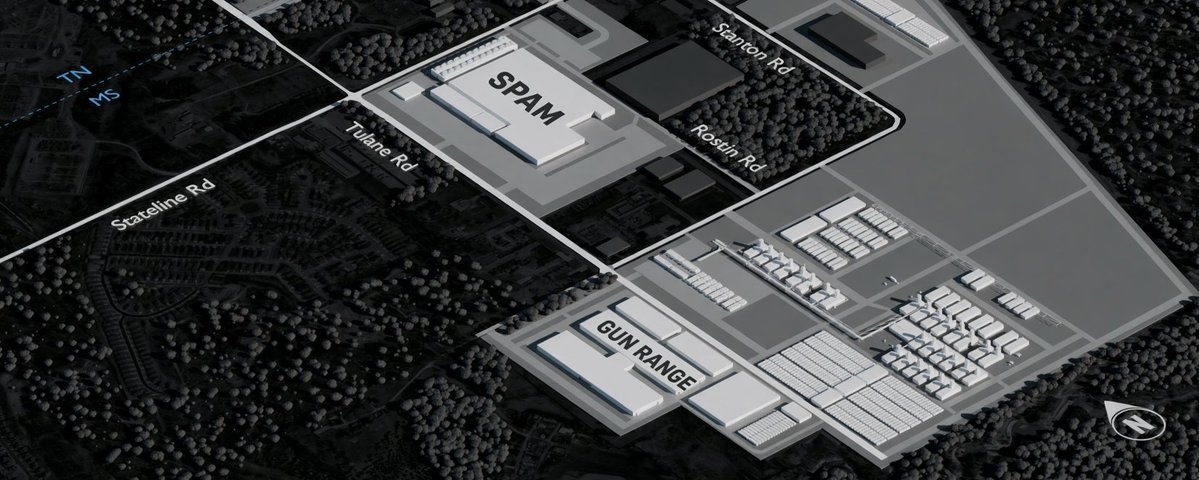
Spark modular data centers are coming off the line at @CrusoeAI’s newest factory in Colorado even as the factory itself is under construction! These units will soon deploy to land and power opportunities developed in-house by Crusoe, where the Sparks will serve Crusoe Cloud workloads for our customers. Spark is a key part of Crusoe’s vertical integration strategy.


Simon retweeted

Andrej Karpathy dropped a 2-hour masterclass on everything that he knows
It covers:
- Agents
- Harnesses
- Loops
- Graphs
This is a must watch.
Bookmark this post
Simon retweeted

A 5-year H100 contract is priced at $1.58/hr. On demand, that same GPU rents for $3.12/hr.
Neoclouds are accepting a ~50% discount to secure financing for their clusters. This is what we call the compute certainty tax.
How much upside have neoclouds sacrificed over the H100s lifetime? Read Ornn’s research on the cost of certainty over the first three years of the AI buildout: ornncompute.substack.com/p/t…


Simon retweeted

Today, there are 3 classes of compute: On-Demand is reliable but expensive, Reserved requires you to commit to your spend years out and Spot is cheap but can be reclaimed at a moments notice and anything running dies. What if we could just... continue a process on a new host? 🧵
Simon retweeted

We are entering one of the most interesting times in market history
The largest companies in the world are spending trillions of dollars to fund capex build outs
Financial engineering is back again. Off balance sheet arrangements, SPVs, backstops and guarantees providing lending capability to companies that could never access capital markets on their own
Then you have the picks and shovels plays, trading at egregious multiples but with forward earnings growth that don’t even look real
Companies that were mostly forgotten as sleepy boring businesses are now all of a sudden sexy again because they control a bottleneck in the ecosystem
Investors are swinging from branch to branch of each bottleneck in the supply chain to extract alpha wherever it exists
Meanwhile, we have three of the largest IPOs in history taking place in the span of just 18 months. Private market valuations are rising so fast, it feels like you don’t even have time to blink
Open source competition is setting a ceiling on frontier tokens, and every company is scrambling to incorporate AI in one way or another
Every moat is being questioned. Even if you were considered an AI winner last month, it doesn’t mean you will be on the forefront this month
The lesson we know from history is that whenever there is a large societal scramble to allocate capital this quickly, there will always be some mis-allocation of dollars
There is simply no way everyone in the ecosystem will earn a reasonable rate of return on every dollar deployed
To some extent, you are simply betting on the management team to execute on capital allocation and product velocity
This is why I believe that the best way to play AI is to bet on the best CEOs and founders you can find.
The future is so uncertain that betting on historical cash flows and competitive advantages is no longer enough
Simon retweeted

Every founder I've talked to in SF this past week is actively working on owning their own hardware/assets (chips, shells, factories, etc), non-trivially moreso than before
Something happened recently and it's now clear that the new post-intelligence world order will be dictated by those who can aggregate and allocate capital the best
SF is relearning how small of an asset class venture is, and that legibility to capital will become everything in order to compete in this next industrial revolution


Simon retweeted

🚨 Big news today: We’ve raised $100M for our Series A! 🎉 🚀
We believe demand for fast inference is many times larger than demand for slow inference, and it’s about to go exponential.
Thanks to our co-leads @BlackbirdVC and @Abstractvc. Two visionary partners join our journey 🎉 🚀