

Football || Music || Chels 💙
Joined April 2026
- Tweets570
- Following73
- Followers59
- Likes2.7K





Xavinho retweeted

My dear big bro, @ruffydfire ,
It costs approximately ₦100 million to build and equip a functional Primary Healthcare Centre (PHC) in Nigeria today.
That means 10,000 functional PHCs would cost:
₦100,000,000 × 10,000 = ₦1 trillion.
The Tinubu/APC administration claims to have saved ₦15.8 trillion from fuel subsidy removal, in addition to accumulating close to $100 billion in loans.
Yet, just ₦1 trillion would be enough to provide 10,000 functional PHCs across Nigeria, bringing essential healthcare closer to millions of Nigerians.
Under a Peter Obi administration, resources recovered from subsidy removal and our national wealth will not disappear into the pockets of those occupying Aso Rock. They will be deployed for the public good.
Beyond the 10,000 PHCs, HE Mr Peter Obi has also committed to building 40,000 new classrooms to address our out-of-school children crisis, alongside establishing cancer treatment and dialysis centres.
These are achievable priorities if we cut government waste, block leakages and end the theft of public resources.
The issue is not that Nigeria lacks resources; it is how those resources are managed and deployed.
Be assured of my highest regards always.
Idris Zekeri Junior
Xavinho retweeted

Hate to compare, but after Diogo Jota passed away the club honoured his contract in full to his family.
Musiala has a career-threatening health issue and they’re discussing ways to rip up his contract.
LFC had the same situation with Markus Babbel, Rob Jones, Heggem & Stensgard and in each situation they honoured their contract and in Babbel’s case even extended the contract until he was able to recover before moving on.
Some clubs have class, others pretend to have it.

🚨💣 BREAKING | Karl-Heinz Rummenigge has just confirmed on Sky what we exclusively revealed yesterday on Transfer Update. Some Bayern bosses, including Uli Hoeneß, Jan-Christian Dreesen and Rummenigge, are no longer ruling out a sale.
Rummenigge on Jamal Musiala:
“What Uli and Jan-Christian have said is okay. He has a health-related issue. It's also well known that he has a contract involving very substantial sums of money. As a club, we have to consider how to deal with that situation. I think that's responsible and perfectly normal."
Are Bayern concerned about Musiala?
“It’s not out of the question. We suspect it will be difficult for him to get back to his previous level.”
“We have to speak to the agency. A decision has to be made.”
Could Musiala be sold?
“I can’t imagine another club would buy him under these circumstances. We have to think about the financial implications.”
“Uli’s wording was correct. Very serious and fair. We have an interest in seeing him return and play well. If that doesn’t happen, then we will have to think about the situation.”
@SkySportDE 🇩🇪


Xavinho retweeted

How will Obi do it ? By doing it

Governor Otti allocates N960bn to capital projects in 2027, with education and health receiving 35 per cent of the total budget.
arise.tv/otti-unveils-n1-2tr…

Xavinho retweeted

39 years old. Still the master of his craft. 💫🇦🇷
Lionel Messi. Timeless. 🌕
#ballondor #messi
Xavinho retweeted
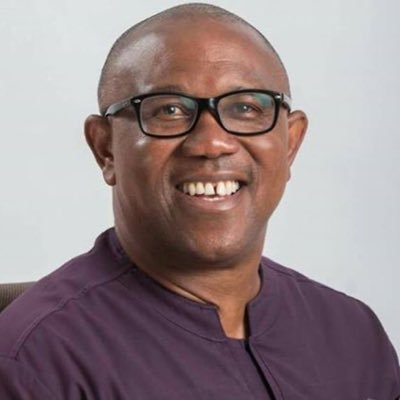
NIGERIANS, GO AND VERIFY (3)
Building the Future Through Education
Peter Obi
In the first two instalments of this series, I explained how we approached the task of building strong institutions and laying a solid foundation for the development of Anambra State. One of the most important institutions we invested in was education.
For me, education was not a political game or a convenient political promise. Even before I ventured into politics, I had always regarded it as the foundation of meaningful development and the most enduring investment any government can make in its people. I believe that the future of any society depends largely on the quality of its educational institutions, teachers, learning environment, and opportunities available to its young people.
This conviction informed our decision to invest across the entire educational spectrum, from primary schools to universities, technical institutions, and adult education.
Basic and Secondary Education
One of our first major decisions was to return mission and privately owned primary and secondary schools to their original proprietors while retaining government support. We also provided billions of naira to assist in rehabilitating the returned schools, restoring the partnership between government and religious institutions that had historically contributed to educational excellence.
This policy attracted international attention. Professor Paul Collier, the Oxford economist and World Bank consultant, led a World Bank-commissioned study of Anambra’s educational transformation. His team examined our decision to return schools to their original missionary owners while retaining government responsibility for funding teachers’ salaries and supporting infrastructure. The team described the partnership model as a revolution in public service delivery and recommended it as a model that could be replicated by other Nigerian states and developing countries. We believed then, as we do now, that government does not necessarily have to own every institution to discharge its responsibility effectively. What matters is ensuring that every child has access to quality education.
For those who claim that we built no schools, I invite them to verify our records. We constructed five-classroom blocks in virtually all of the 177 communities in Anambra State, one of the most extensive community-based school infrastructure programmes undertaken by any state government. The town union chairmen and community leaders of that period can attest to this.
We also renovated hundreds of dilapidated schools, including some where trees had literally grown through abandoned buildings. Comprehensive Secondary School, Onitsha, and Oraukwu Grammar School are examples.
Beyond infrastructure, we distributed approximately 40,000 computers to schools, including more than 22,500 HP laptops. We equipped secondary schools with Microsoft Academies and connected schools across the state to the internet. We supplied generators, established and stocked libraries, revived school sporting activities, and installed boreholes in over 300 schools, including all girls’ schools. We also provided funding to support sporting activities in all our secondary schools.
These technology investments attracted remarkable international recognition. Mr Fabrice Campoy, Managing Director of the Personal Systems Group at HP Inc., described our procurement and distribution of over 22,500 HP laptops as the biggest project of its kind in the Middle East and Africa. Similarly, Mr Ken Spann, then Country Manager and Head of Microsoft Nigeria, described the establishment of Microsoft Academies in more than 500 Anambra secondary schools as the most extensive deployment of its kind in Africa at the time.
Xavinho retweeted

We Encourage Citizens to Take a Photo of the Results Sheet at Their Polling Units and Upload it to the Respective Platforms - Itodo
Politicians go for the EC8A’s and EC8B's; they go for the result sheets because they want to manipulate the process. We have to strengthen independent tabulation of results.
Samson Itodo, Executive Director, YIAGA Africa


Xavinho retweeted
NIGERIANS, GO AND VERIFY (2)
Building the Institutions of the State
Peter Obi
In Series 1, I explained the philosophy that guided our administration in Anambra State: governance as a public trust, anchored on character, competence, capacity, and compassion. I also introduced the Anambra Integrated Development Strategy (ANIDS), our comprehensive framework for achieving balanced and sustainable development across all sectors.
But a development vision, however noble, cannot succeed without strong institutions to drive it. Before the government could effectively deliver on its promises in education, healthcare, infrastructure, security, and other sectors, we had to first restore the machinery of government itself. We could not build a prosperous state on a cracked and unstable foundation.
This was why one of our foremost priorities under ANIDS was to rebuild, strengthen, and reposition the institutions of government. When I assumed office, the physical and administrative architecture of governance was in a deplorable condition. Our task was not simply to construct buildings but to restore the institutions, systems, and structures through which government could function effectively.
We therefore began systematically rebuilding the infrastructure of governance across the executive, legislature, judiciary, civil service, and local government system.
Restoring the Seat of Government
The Government House in Awka, the state capital, had been vandalised and burnt by reactionary forces in 2004. We therefore had to rebuild, re-equip, and furnish it, restoring its dignity and functionality as the seat of executive government.
In the same vein, we rehabilitated the Governor’s Lodge in Amawbia and constructed a new Governor’s Lodge in Onitsha. These investments were intended not merely to provide accommodation but to strengthen executive presence and facilitate effective governance across the state’s major administrative and commercial centres.
Strengthening the Legislature and Judiciary
We rehabilitated the Anambra State House of Assembly Complex in Awka, providing our lawmakers with a more conducive and decorous environment in which to discharge their constitutional responsibilities. We also provided legislators with vehicles to facilitate the effective performance of their legislative duties.
We recognised that a functioning democracy requires strong institutions, including an effective legislature and an independent judiciary, each operating within its constitutional mandate.
In strengthening the judiciary, we provided brand-new vehicles to High Court judges. This was the first time such provision had been made for them in the history of the state. We also provided vehicles to magistrates for the first time since the creation of Anambra State.
These interventions were intended to strengthen the administration of justice, improve mobility, and enable judicial officers to discharge their responsibilities more effectively.
Rebuilding the Civil Service: The Chief Jerome Udoji State Secretariat Complex
Before our administration, many Ministries, Departments, and Agencies (MDAs) operated from scattered rented apartments, while civil servants lacked a centralised and decent working environment. This untidy arrangement undermined coordination, efficiency, and the dignity of public service.
We addressed this situation by constructing the two-phase, ultra-modern Chief Jerome Udoji State Secretariat Complex, comprising Blocks 1 and 2. The project brought the MDAs together under one roof, improved administrative coordination, and provided civil servants with a more suitable environment in which to serve the people.
The complex was named after Chief Jerome Udoji, the first indigenous Chief Secretary (the equivalent of today’s Secretary to the State Government) of the Eastern Region during the First Republic. This was also a recognition of his contribution to public administration and the civil service tradition.


Xavinho retweeted

In this life, if you don’t understand that you are the one in charge of your destiny and your progress, you will wait till it’s too late.


Xavinho retweeted
NIGERIANS, GO AND VERIFY (1)
Introduction: Governance as a Public Trust
Peter Obi
When I took office as Governor of Anambra State, our beloved state was at a critical juncture. Leadership had become increasingly disconnected from the people, and many of the essential institutions needed to support a modern society were weak, ineffective, or absent altogether. We understood that governance could not continue according to established habits. It needed to be reconceived as a solemn public trust founded on transparency, prudence, accountability, and demonstrable results.
Our governing philosophy rested on four principles: character, competence, capacity, and compassion. We understood that leadership was not a platform for self-promotion, political slogans, or the pursuit of personal acclaim. Its purpose was to improve the circumstances of ordinary citizens. It meant converting public resources into concrete benefits and ensuring that government’s foremost responsibility was to serve the people. Achieving this demanded more than good intentions; it required a clear vision, careful planning, and disciplined execution.
Among our earliest findings was that the state lacked a unified development plan to direct its priorities and determine how resources should be allocated. We therefore promptly created the Ministry of Economic Planning to establish the institutional foundation for deliberate, coordinated, and sustainable development. After completing the necessary groundwork and consultations, we launched the Anambra Integrated Development Strategy (ANIDS).
At that time, the Millennium Development Goals (MDGs) were being pursued worldwide across eight clearly defined priorities: eliminating extreme poverty and hunger; achieving universal primary education; advancing gender equality and empowering women; reducing child mortality; improving maternal health; combating HIV/AIDS, malaria and other diseases; promoting environmental sustainability; and fostering a global partnership for development.
We adopted ANIDS as our overarching development philosophy and strategic framework for advancing these objectives, tailoring them to the distinctive circumstances, needs and development priorities of Anambra State. Instead of viewing the MDGs as remote international benchmarks, we worked to convert their aims into practical policies, programs and measurable results that would produce tangible improvements in the lives of our people.
We also undertook a deliberate effort to redefine the state’s identity, changing its public image from ‘Home for All’ to ‘The Light of the Nation’. This was not merely a change in slogan; it reflected our resolve to restore public confidence in government, renew civic pride and show that Anambra could serve as a model of purposeful leadership and development.
The ANIDS Blueprint: A Comprehensive Framework for Development
ANIDS served as the foundation for our commitment to broad-based and balanced development. We did not accept the idea that government could focus on a single sector while leaving others behind. We recognized that education, healthcare, infrastructure, security, agriculture and capable public institutions were mutually dependent. Advancement in one area could not be sustained without commensurate progress elsewhere. Accordingly, we pursued development across every sector, guided by defined priorities, disciplined planning and prudent stewardship of public resources.
Central to this vision was the restoration of the dignity of the Anambra person. We understood that dignity could not be restored through rhetoric alone. It was evident in the condition of roads and other infrastructure, the availability of healthcare, the quality of education, the performance of public institutions and the way government treated its workers, pensioners and traditional institutions.
Xavinho retweeted

I DID IT. 🎓
First Class, Computer Engineering (4.91/5.00)
Overall Best Graduating Student, University of Uyo
The highest CGPA in the university's history
Thank you to my lecturers, especially Prof. Philip Asuquo and Assoc. Prof. Bliss Stephen, for their guidance and commitment.
To my support group @iameskor_, @Mfonisoh1 , @WinifredJohnnn , @SamuelRiches11, @mabadejedanphp, @Samthegodfada, @KGodsproof, @jay_omon_ , thank you for every word of encouragement and for always having my back.
All glory to God. 🙏


Xavinho retweeted
LET MY RECORD SPEAK
I just arrived United States this evening to honour an important invitation and participate in a series of engagements beginning at 9am tomorrow morning in Washington DC.
Throughout my election campaigns, I have sought to emphasise policies, ideas, and practical solutions that can deliver the change Nigeria urgently requires and help our nation overcome its current challenges.
Nevertheless, because certain individuals have repeatedly scrutinised my past, even as they appear uneasy about their own records, I have chosen to allow the facts to speak for themselves. Starting today and running for ten days, I will present some of the accomplishments recorded during my tenure as Governor of Anambra State. This series will outline my interventions, achievements and the responsibilities entrusted to me. I have titled it my Record of Service.
In every position I have held, I have consistently given my utmost effort in fulfilling my responsibilities. Although no one can always attain every intended result, I have never been found lacking in dedication or effort. I have always given the task my full commitment.
As campaign activities gather momentum, I will also continue to keep you updated on my daily engagements and other significant developments.
In particular, in light of allegations that I abandoned Anambra State during the erosion crisis, among other assertions, I consider it necessary to present the facts to the public. I have never evaded any responsibility entrusted to me, and I will certainly not shirk my responsibility to help address Nigeria’s challenges.
I am confident that, ultimately, facts outlast allegations, while records carry greater weight than rhetoric.
Let my record speak for itself! -PO
Xavinho retweeted
Drone shows, billboards on every corner, sharing packages, sharing money, paying celebrities, floating billboard , paying influencers …..
Honestly wouldn’t it be cheaper to just provide good governance.
Xavinho retweeted

I’ve compiled the hard copy into a single 237-page PDF, just 31 MB. Enjoy! ❤️
drive.google.com/drive/folde…


