







Chakrabarti Lab retweeted

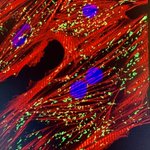
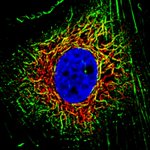
Delighted to share the last paper of the lab, published in @ScienceMagazine , uncovering a new role for Golgi-derived vesicles and phosphoinositides in regulating mitochondrial fusion! 👇👇
science.org/doi/10.1126/scie…

Excited to share a new study from my lab outlining the role of actin filaments in IP3R mediated ER calcium release.
An INF2-dependent actin-mediated step in inositol 1,4,5-trisphosphate ... sciencedirect.com/science/ar…
Chakrabarti Lab retweeted

An INF2-dependent actin-mediated step in Inositol 1,4,5-trisphosphate receptor cluster formation and activity biorxiv.org/content/10.64898… #biorxiv_cellbio
Chakrabarti Lab retweeted

New research from Lee, Higgs et al. @GeiselMed shows how #INF2, a key #actin regulator, is activated by calcium-calmodulin and free actin monomers. Actin-binding proteins like profilin and thymosin aren't just helpers - they directly tune INF2 activity. hubs.la/Q03ZT5_k0

Chakrabarti Lab retweeted
MOSPD3 mediates the ER recruitment of ATG2A to promote autophagy biorxiv.org/content/10.64898… #biorxiv_cellbio

Chakrabarti Lab retweeted

To accelerate the publication process, @BiologyOpen are testing an initiative that prioritises fast but fair peer review. This approach pays reviewers while requiring them to complete high-quality reviews in a set timeframe. Apply to be a reviewer for BiO biologists.com/bio-fast-and-…

ALT Fast & Fair peer review. A new initiative offering high-quality peer review within 7 working days of submission.
Excited to get the first publication out from my lab at @MitoCareCenter !!! Phenomenal effort by Amrapali Ghosh, Tak Shun Fung and team…. Congrats to the whole team !!!
linkedin.com/posts/rajarshi-…

Chakrabarti Lab retweeted

The secret life of LIRs: Binding to Atg8-family proteins is just a fraction of what LIRs can do....

New Perspective: Brian North, Christopher Shoemaker @shoemaker_lab et al. @GeiselMed highlight emerging evidence that LIRs act as protein interaction hotspots, coordinating diverse protein–protein interactions across the #autophagy pathway. hubs.la/Q03yMFKv0

Chakrabarti Lab retweeted

Wow very big news for biomedical research

Last year, $9B of the $35B that the National Institutes of Health (NIH) granted for research was used for administrative overhead, what is known as “indirect costs.” Today, NIH lowered the maximum indirect cost rate research institutions can charge the government to 15%, above what many major foundations allow and much lower than the 60%+ that some institutions charge the government today. This change will save more than $4B a year effective immediately.

Chakrabarti Lab retweeted

New review by the Thompson lab @MSKCancerCenter.
embopress.org/doi/full/10.10…


Chakrabarti Lab retweeted

Lysosomal damage triggers a p38 MAPK-dependent phosphorylation cascade to promote lysophagy via HSP27 ft. @lizgallagher900, Peace Oloko, @tessa_fitch, @ErikaHolzbaur (@UPennPhysiology), Elizabeth Brown & @spruce_lynn (@CHOP_Research) cell.com/current-biology/abs…?

Chakrabarti Lab retweeted
Scientists discover ‘division of labor’ in mitochondria | Science | AAAS science.org/content/article/…


First preprint from my laboratory, commendable efforts from @TakShunFung and Amrapali Ghosh and a superb collab with @MarcoTigano and @hhiggslab
biorxiv.org/content/10.1101/…


Chakrabarti Lab retweeted

Our manuscript "High-Throughput Identification of Calcium Regulated Proteins Across Diverse Proteomes" biorxiv.org/content/10.1101/… is on BioRxiv! This has been a fun collaboration with the Schweppe Lab @dschweppe1 @uwgenome @Rose_B_Fields and our lab @uwpharmacology. Tweetorial below
Chakrabarti Lab retweeted

After a VERY long journey we are happy to share our characterization of the MAPL KO mouse. See how MAPL loss leads to lean phenotypes, dysregulated bile acid metabolism, wild changes in the gut, ultimately leading to hepatocellular carcinoma.
doi.org/10.15252/embr.202357…
