

Co-founder & CEO of VEED. Sharing stories on the Napkin Math podcast https://xitter.cf/t.co/pmfueAWGsD
London
Joined April 2012
- Tweets3.8K
- Following2K
- Followers20.1K
- Likes7.8K





Pinned Tweet
Introducing the new VEED.
Our product rebuilt from ground up.
Finally, AI videos worth posting from one prompt. You enter an idea and VEED:
- Creates the script
- Gives viral templates + characters
- Adds captions + music
Free AI credits for first 300 comments.

Top 8 pricing mistakes most founders make:
1. Paywalling before users experience the value.
Nobody wants to pay for something they haven't experienced. The best time to charge is when they don't want to stop using your product.
2. Treating free users as lost revenue.
Your free plan isn't charity. It's your acquisition engine. Cursor gets this right. You use it, get hooked, hit your limit, and suddenly paying feels like the obvious decision.
3. Copying competitors.
You'd be surprised how much groupthink there is in tech. Founders forget that competitors don't have the same customers or the same churn rate. Copying their $29/month plan because they're bigger than you isn't a "strategy."
4. Confusing customers.
Don't use five tiers, seven add-ons, hidden limits, and unclear pricing. For example, when I go to a store and there's no price on the item of clothing I want, I normally just walk out. Maybe it's because I'm British. I just can't deal with the confrontation.
5. Using seat-based pricing.
Seat-based pricing is so 2021. I have a user who has one seat, pays $20 a month, and has made 35,000 videos. They're getting a lot more value than the seat-based pricing reflects.
6. Being afraid to raise prices.
Founders will spend six months building features to grow revenue by 10%, but won't test a 10% price increase.
7. Giving away wrong things for free.
Free should help users experience the core value, not replace the entire paid product. Give away enough to build a habit. Charge when users want more of what they already love. Duolingo does this best.
8. Having unclear positioning.
Discounts won't fix bad positioning. Maybe users don't want a discount. Maybe you just didn't communicate your product's value clearly enough in the first place.
What else would you add?
OmniHuman v2 vs. VEED Fabric 1.0
Used same audio and same image.
– Fabric is 2.6× faster (46.7s vs. 121.6s)
– Fabric has better micro-expressions
– Fabric has better lip-sync
IMO, Fabric wins.
BTW, congrats to ByteDance on the launch!

Give Fabric a spin here: fal.ai/models/veed/fabric-1.…

New Napkin Math episode just dropped.

$1M startup ideas are everywhere. You just need to unlearn your scarcity mindset.
After years of running @RamenClubHQ, I noticed many of the best ones aren't "new".
3 frameworks I keep seeing from founders:
1. Build a direct competitor with your own spin (e.g. Tiiny Host)
2. Take a proven idea to a new market (e.g. Data Fetcher)
3. Spot growing search trends, build on them (e.g. Hovercode)
Full episode: bit.ly/StartupFrameworks
In 5 years, most software won't have users. It'll have agents.
The products that win will be the ones agents prefer, not the ones humans have learned to use.
Optimising for agents will be a ket focus. Agents will read plain English: marketing copy, FAQs, help centre content etc. to make all critical decisions.
Brands will have to compete to be chosen by agents, just as they did to rank on Google in last 2 decades.

Agentic obliteration is coming.
Entire markets were reorganized around the internet in the early 2000s. Tower Records, Blockbuster, and the Yellow Pages fell, and iTunes, Netflix, and Google took their place, taking advantage of cheap distribution.
It happened again in the 2010s around cloud and mobile. BlackBerry, Kodak, and taxis fell, and the iPhone, Instagram, and Uber took their place, taking advantage of a computer in everyone’s pocket.
Now it’s going to happen with agents. Incumbents can’t simply tear down their UIs and business models to pivot. Public shareholders won’t allow it. Access to intelligence has been democratized, and categories that have historically monetized gatekept institutional knowledge will be most susceptible.
Law is obviously at risk (Harvey and Legora are exploding). Medicine will also change (Doctronic is already renewing prescriptions in Utah). And personal finance will be equally challenged.
Should be an interesting decade.
Marketing moves I’d bet my life on:
1. Getting your product discovered on AI platforms, in app stores, and by AI agents.
2. Relaunching the product by repackaging it around new use cases to make noise on socials.
3. Creating YouTube and short-form content that combines product with viral formats, tools, and trends.
4. Building high-intent landing pages for specific use cases and competitor alternatives.
5. Doing founder-led sales until you understand exactly why customers buy.
6. Building product loops that naturally bring in the next user.
7. Co-marketing and collaborating with companies that have earned trust in the market.
8. Creating free tools that solve real problems: templates, generators, and interactive tools.
9. Hosting events and dinners with top customers to build deeper relationships.
What else would you add?
We built most advanced video localisation agent.
It turns one video into endless localised ads.
Our agent (built on OpenEdit + Opus 5.5) handles dubbing, local accents, outfits, backgrounds, subtitles.
Do you think it can be useful?
AI didn’t change the fundamentals of building a successful startup:
– Making something people actually want
– Finding your wedge and going deeper
– Prioritising distribution obsessively
– Moving faster than everyone else
– Talking to users every week
It just made fundamentals compound faster.

This video was edited by VEED's AI Agent
It costs less then $1 in token spend
Prompt below ↓
What do you think?
DM me if you want try it out
Prompt: edit this video for x, engaging, add caption, premium motion graphics, sound effects, music. it should look like a completely edited video form a editor with experience of 10 years. smooth motion, no jerk. follow animation principles while making motion graphics. the hook should have high retention
Give it a spin here: fal.ai/models/veed/clean-aud…

For startup M&A, timing the market is more important than time in market.

The last 18mos has seen an insane nearly ~$200B of AI startup exits via M&A.
The median age is 4yrs old.
It is absolutely possible to return a multibillion dollar venture fund with phenomenal IRR, even if you aren’t in big AI! This is one of the hottest liquidity markets ever.

This is wild 🤯
One-shotted Apple HomeView's launch video
With our new video editing agent
Hosted version of Opus 5.5 + OpenEdit
Comment & I'll share $50 credits to try it out

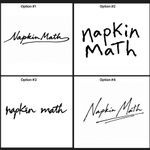
Napkin Math podcast is having a rebrand...
Need help in finalising the new logo
Which one do you prefer?


Want to test our new video editing agent?
Its a hosted version of Opus 5.5 + Open Edit.
Let me know below.
$50 free credits to play with too!
Agents are starting to erode marketplace network effects.
This weekend my agent found a collector’s item I’d been looking for. It was on a German marketplace, in Hamburg.
It signed up, messaged the seller and worked out how to get it collected.
More sellers attract more buyers, which attract more sellers. That works because people don’t want to search 100 different sites.
But agents will happily do that work for us. A small merchant’s Shopify page is suddenly in the running.
How much does having the most supply matter when your agent can look everywhere?
