

Building AI agentic systems. I think and write about business, organizations, learning, and AI through a multidisciplinary, computational lens. DMs open
Melbourne
Joined July 2018
- Tweets2.6K
- Following2.9K
- Followers240
- Likes3.9K






Pinned Tweet
2026 | The Meta Year of Personal Brand as a Digital Twin of Each Individual
Life is a process of computing, looking for 'the best solution to maximise utility.
You cannot pre-calculate the optimal life path. The system is too complex, with numerous variables, numerous feedback loops, and numerous emergent properties that only reveal themselves over time. It means that by living, it is the only way to compute and get a result of computation. You cannot optimize your life from outside of it. The process of living IS the calculation.
However, the 'utility' above is usually misconceived as a material term. It actually should be measured or recorded in terms of the depth and width of subjective experiences.
Why?
Here's the crucial complication: computation is not value-neutral. While computational irreducibility means you can't predict which life path is "best," it doesn't mean all experiences are equivalent. Pain and pleasure are not interchangeable data points. Joy and suffering feel different, and this difference is real.
The Recursive Optimization
What's happening, then, is something more subtle than simple optimization:
You're continuously optimizing based on your current values
Your values themselves are being reshaped by your experiences
The "objective function" you're optimizing for is itself a variable in the equation.
This is dynamic optimization with a self-modifying utility function. You can't solve it ahead of time because the very act of solving it changes what you're solving for.
What patterns are emerging in your computation? What parts of your state space remain unexplored? The only way to know is to keep running the program - to keep living, experiencing, computing the answer that only you can calculate.
1
1
166
A system cannot reliably prove its own availability if its health checks only run when the system itself runs.
16
The decision itself: what was proposed, which version was reviewed, who approved it, and whether what was executed matches what was approved.
In many teams, the honest answer is that the decision lives in a chat message, a meeting, or someone's memory.
The proposal and the execution are recorded.
The authorization in between is not.
That gap is where operational trouble starts.
A proposal gets edited after review.
A second automation adjusts the same budget.
Someone re-runs a job with older inputs.
Each step looks reasonable, and nobody can reconstruct which one was actually authorized.
The fix is an operating habit before it is a tooling problem: Treat a proposed allocation and an authorized execution as two different things.
Give the proposal a version, so review applies to something specific.
Record the approval against that version, not against the campaign in general.
Let execution act only on an approved version.
None of this requires a smarter model.
It requires the approval to be an object, not an impression.
For operators running AI-assisted campaign changes: in your current workflow, where can you point to proof that a specific change was authorized?
50
The brain is just a device to be activated by solving different problems and being activated.
Rather than thinking of training my brain, I'd rather throw myself into a very high-intensity environment of new problems.
This is where your brain can enjoy and grow.
In the era of AI, only decisions matter.
1
28
This project will transform early childhood education and a kid’s safe and sound childhood means a great life in adulthood.

Following the amazing reaction to the Marble Curriculum yesterday, we've decided to make it open source 🛰️👇
Everything a child learns in primary school. 1,590 concepts. 3,221 connections across 8 subjects, from Math and Science to Computing and Life Skills. Anchored in the US and UK curriculums, standard by standard (NGSS, Common Core, DfE).
What you will find in the repo: every concept as structured JSON with its age band and the evidence a child must show to master it. Every prerequisite link marked hard or soft, with a written rationale. It's a true DAG you can compute learning paths on. Open license, you can build whatever you want with it.
Now is a unique time in history to be building in education. Getting AI and kids education right is likely one of the hardest and most important problems to crack over the next decade and we need as many smart and creative minds behind it.
We think a common solid basis, accessible to all and that can be built upon, is critical to move fast. That's why we're making this curriculum open source.
It's not perfect but we know it's a robust basis, and we believe that sharing it openly is the fastest way to progress in this field. If you're building in education, share this around you and tell us in comments if you find this useful and if you want to contribute.
We'll keep working and investing on it @withmarbleapp. Credit goes to @guillaume_boni for building this. I just made it look pretty.
Links below 👇
44
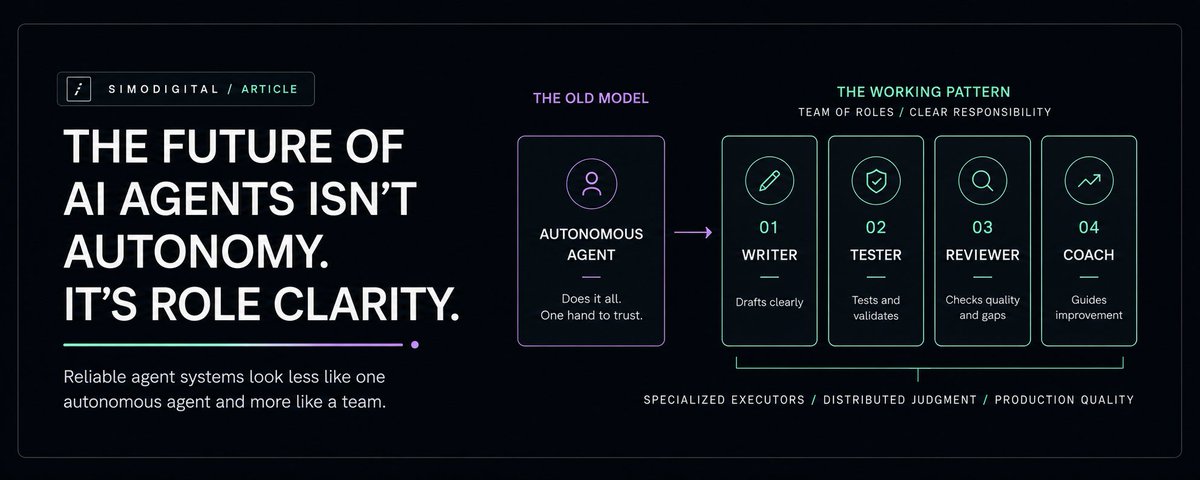
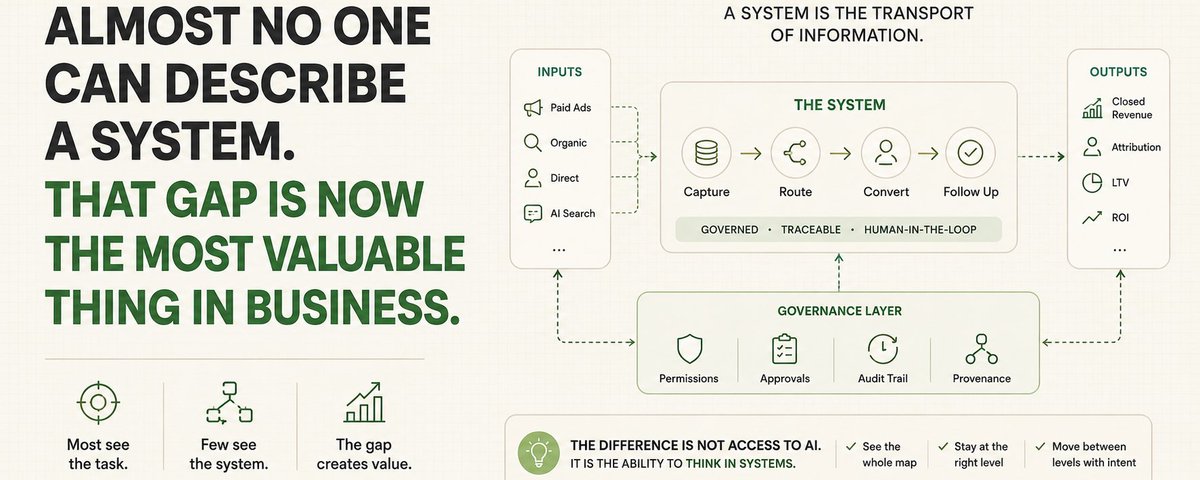
Thinking systematically will be the main bottleneck when it comes to applying talent to building agents at scale in business.


cool!
easier to apply a quantitative investment perspective to visualise the connections with all these amazing tools to empower the theoretical discoveries.

1
38

The $100M subscription playbook is everywhere right now, but only works under three conditions:
Steep intro offer.
Persona-based ads.
Long advertorial.
Quiz funnel.
Subscribe and save.
Free gift price anchoring.
Here is the part nobody says out loud.
This playbook only works under three conditions, and if any one of them is missing, the math collapses.
1. Gross margin needs to be 80 to 90 percent.
The first purchase is engineered to lose money.
Fifty percent off, free shipping, gifts worth $80, a price-anchored welcome bundle.
You recover the loss over months of subscription.
If your gross margin is 40 percent, the discount math never closes.
You are not running a funnel.
You are running a slow bleed.
2. The product has to be habit-forming.
Gummies in the morning.
Powder in your water bottle.
Something a customer integrates into a daily routine without thinking.
If your product is consumed weekly, monthly, or seasonally, the subscription dies in cycle two.
The intro offer was the loss leader.
Retention was supposed to be the profit.
No retention, no profit.
3. The category has to support repeat purchase. Supplements, skincare, coffee, pet food, consumables.
Not furniture.
Not electronics.
Not apparel beyond basics.
Not anything seasonal.
If the category itself has no LTV ceiling above $300, no front-end offer will save you.
Before you copy any DTC playbook you see go viral, ask all three questions.
Margin.
Habit.
LTV.
If you cannot say yes to all three, the playbook is not yours.
The most expensive thing in DTC right now is copying a playbook your unit economics cannot support.
36
The same evals applied to my Meta Ad Automation System.
What are the bencharmaks looking like and how to make sure they adapt along with the evolving contexts.
Model only do executions with the supervision of harness, and that's the base you can get reliable performance/behaviours rather than the pass/fail rule failing from assessment in the beginning.

Model routing is a hot topic but there are two challenges to doing routing for coding agents:
1) Even if different models can pass the task, there are subtle differences in behavior & style that mean they aren't perfectly interchangeable.
2) The initial agent prompt isn't enough to know the difficulty of the task. "Fix xyz bug" could be a one-line edge case or could require rearchitecting your entire product; you can't know until you've actually investigated the code.
How do you solve these problems? Well, you need evals that account for style and behavior, not just pass/fail. And you need the agent to be able to dynamically update and re-route. We built Devin Fusion with both of these points in mind and found that it reduces costs by 30-40% while still maintaining the frontier intelligence "smell":
1
33
Most of the time you spent at WORK
is
Experiencing
Observing
Thinking
Redefining
Redesigning
Restructing
The flow of how information processed, districtuted, and tracked, and initial millions of micro loops as the ending & starting points.
1
20
The game is spreading from the LLM giants to all the mini builders, possibly emerging, growing, and disappearing in one day, but the best time for Normal People ever.

1
52
Clone the playbook, own the color
Originality is the most overrated input in DTC or B2B right now.
Look at the brands that hit $100M in under three years.
They did not invent new categories.
They did not discover new problems.
They took an existing playbook and gave it a new color.
Same promise.
Same funnel architecture.
Same conversion mechanics.
Three different colors.
Three completely different brands.
This is not copying.
It is repositioning a proven mechanism into an unoccupied identity.
The mistake most founders make is trying to be different at the wrong layer.
They try to invent a new problem, a new mechanism, a new market.
That is a ten-year project with a ninety percent failure rate.
What actually works is being different at the surface layer while operating a proven playbook underneath.
Different color.
Different tone.
Different form factor.
Different social proof set.
Different audience archetype.
Same underlying funnel.
This is uncomfortable to say because the industry rewards stories of originality.
But the math is clear.
Pattern-matching with strong execution beats invention with weak execution almost every time.
If you are building in DTC or growing a B2B business, right now, the question is not "what original idea can I bring."
The question is "what proven mechanism can I rewrap for a customer it has not reached yet?"
1
28
Friction is not always the enemy
The past decade trained us to remove friction.
Fewer clicks.
Fewer questions.
Faster checkout.
Higher conversion.
That was the right answer when most brands sold one-time products at low prices.
Get them to the button, get the sale, move on.
But look at how the fastest-growing subscription brands actually build their funnels right now.
A 5-question quiz before the user ever sees the product.
An advertorial that takes five minutes to read.
A landing page that explains the problem before it explains the solution.
This is the opposite of friction reduction.
And it works.
Here is the reason.
The math of a subscription business is not "convert this person once."
It is "make this person believe enough to stay for six months."
Those are different problems.
The first one rewards speed.
The second one rewards depth.
When a customer answers 30 questions about their afternoon energy crash, their travel routine, their digestion, they are not just providing data.
They are talking themselves into the purchase.
By the time they hit checkout, the buy-in is psychological, not just transactional.
A short funnel converts more clicks.
A long funnel converts more believers.
Most brands still think they are in the first business.
They are not.
If your product depends on retention, your funnel should depend on conviction.
Friction is not always the enemy.
Sometimes it is the moat.
1
18

"Organic content and ads becoming closer and closer to one and the same"
Totally agree. The brand voices and assets should be consolidated and aligned across all channels, which will be embedded with an AI system, running as its own ecosystem of recommendations.
Actually, more weight is shifted to organic content campaigns, as to how fast this part can be automated systematically to differentiate the brand by various platforms' AIs, and then the ad can run at scales with overall good performance.

We programmed our own Cannes villa this year and focused completely on brands, agencies and creators at the forefront of creative work and packed it out
The two panel topics
1. How AI is changing the creative org chart: 1 person marketing teams, agents complementing, reporting to or replacing team members
2. Organic content and ads becoming closer and closer to one in the same, tactics for whitelisting, creators onboarding, briefing betwen paid and organic and had the team from WisprFlow and Manychat breaking down their playbooks
While also... making extensive content at the show. The amount of mediocre noise of lil interviews etc I'm watching going around is confusing when there are so many high value, high signal people. We (@darkroomagency_ and I) locked in and filmed multiple hour long tactics sessions, formatted like Youtube videos, that will release over the coming months on my channel.
I cannot emphasize enough that while there are lots of convos around the future of Cannes Lions, there is no higher value place for leading a global conversation around tactics in advertising, no better networking, and next year it will truly feel like Coachella, this was nothing yet.
None of the other creator or marketing events throughout the year will be able to compare, fascinating dynamic shift.


1
26
The most important part of Claude Tag is not Slack integration. It gives the LLM an organizational identity.
Once you can @Claude inside a channel, with scoped permissions, shared context, tools, and visible output, the model stops being a private chatbot.
It becomes a workflow actor.
This will put pressure on many thin “AI workflow SaaS” products. The moat won’t be wrapping an LLM anymore.
The moat will be domain workflow, permissions, context, governance, and knowing where the agent should sit inside the organization.


Sampling is not free product.
It is relationship design.
Most brands think about sampling as a conversion tactic:
Give people the product.
Hope they try it.
Track the redemption.
Calculate the CAC.
That is too narrow.
The deeper value of sampling is that it changes the emotional starting point of the customer relationship.
An ad interrupts.
A sample gives.
An ad says: “Buy this.”
A sample says: “Try this first.”
That difference matters.
If the product is good, sampling creates several compounding effects:
It lowers the first-use barrier.
It gives creators a reason to talk about the product.
It creates social proof from actual experience.
It turns product quality into word of mouth.
It shifts part of the marketing budget from platforms back into the product itself.
Not everything valuable can be cleanly attributed.
The path is messy.
But the relationship started with generosity.
This is why some growth does not show up neatly in attribution dashboards.
It accumulates through experience, memory, trust, and repeated exposure.
For products with low trial friction, sampling is not a side tactic.
It can be the first layer of the growth system.
1
32